Under the Tuscan Sun Budget
 Comedy
Updated
Synopsis
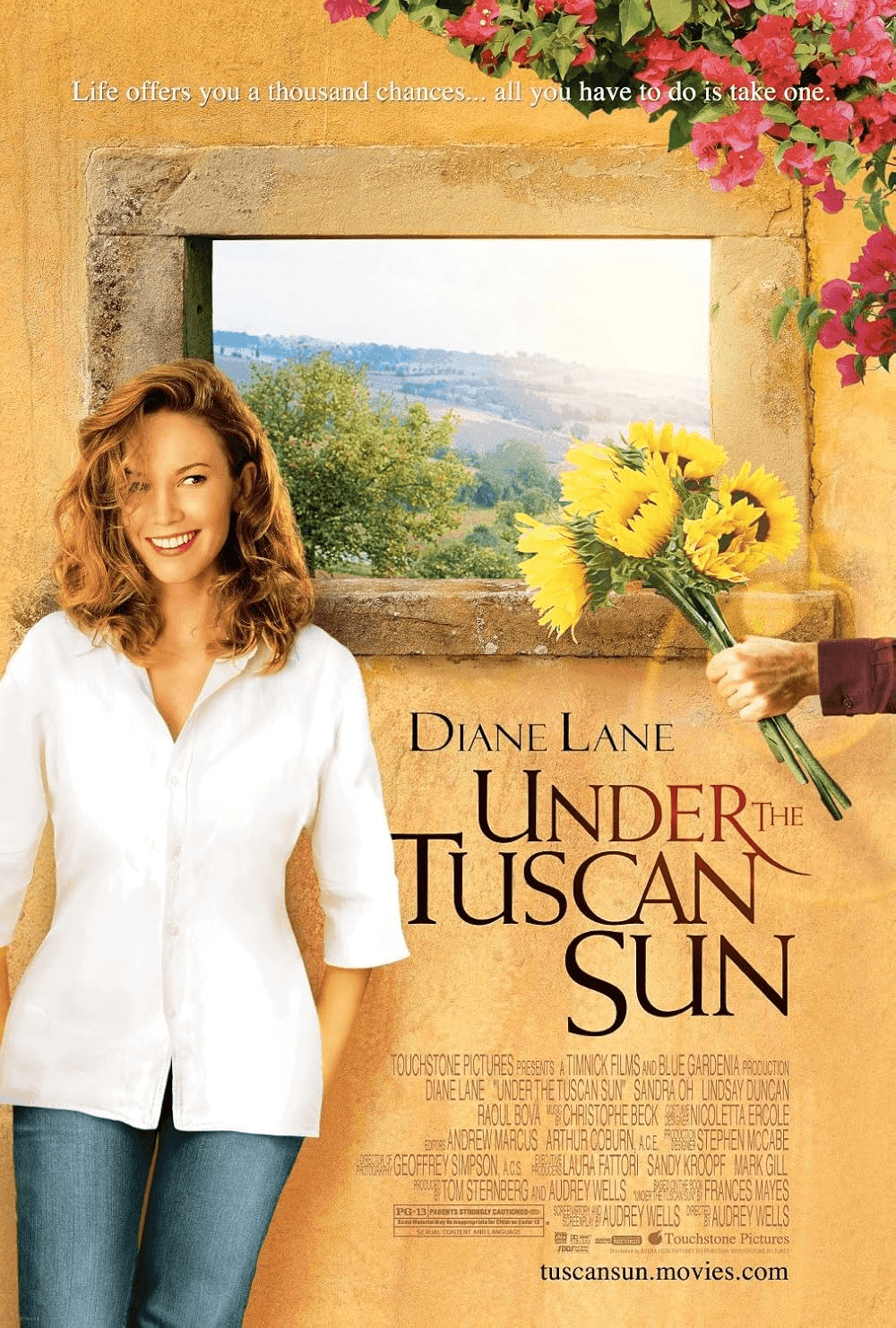
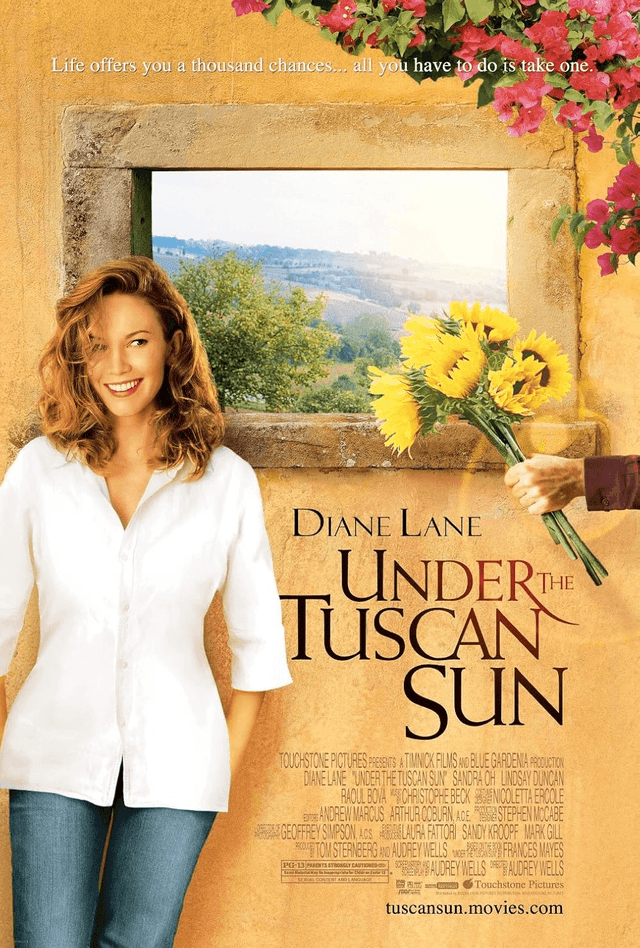
Recently divorced San Francisco writer Frances Mayes impulsively buys Bramasole, a crumbling villa in the Tuscan countryside, on a tour bus stop in Cortona. As she rebuilds the house with a local Polish work crew and navigates the eccentric expatriate community, she slowly rebuilds her own emotional life.
What Is the Budget of Under the Tuscan Sun (2003)?
Under the Tuscan Sun (2003), directed by Audrey Wells and distributed by Touchstone Pictures, was produced on a reported budget of $18,000,000. The Italian-villa romance, very loosely adapted from Frances Mayes's 1996 memoir of the same name, was financed by Touchstone in partnership with Timnick Films, with Italian co-production support and additional financing from Blue Gardenia. The $18,000,000 commitment was modest by 2003 studio standards, reflecting the contained Italian-villa setting, the limited cast, and a deliberate decision by Touchstone to position the film as an adult-female-targeted alternative to the male-driven studio fall releases.
The financial structure was built around Diane Lane's post-Unfaithful Academy Award nominee visibility and the deliberate choice to film entirely in Italy with a smaller crew. Lane took a feature-lead rate, with Sandra Oh, Lindsay Duncan, Raoul Bova, and Vincent Riotta filling out the supporting ensemble. Director and screenwriter Audrey Wells, fresh off The Truth About Cats & Dogs and Guinevere, commanded a writer-director rate appropriate to her post-Cats & Dogs visibility. The bulk of the budget went to Italian location shooting in Tuscany and Rome, the practical villa-rebuild sequences, and a Christophe Beck score.
Key Budget Allocation Categories
The $18,000,000 budget for Under the Tuscan Sun was distributed across several core production areas:
- Above-the-Line Talent: Diane Lane led the cast as Frances Mayes at a feature-lead rate appropriate to her post-Unfaithful Academy Award nominee visibility. Sandra Oh played her pregnant best friend Patti, Lindsay Duncan the eccentric British expatriate Katherine, Raoul Bova the romantic interest Marcello, and Vincent Riotta the local Italian real-estate broker Martini. Director and screenwriter Audrey Wells commanded a combined writing and directing rate.
- Italian Location Shooting: Principal photography took place primarily in Cortona and surrounding Tuscan villages, with additional work in Rome, Florence, Positano, and along the Amalfi Coast. The production based out of Cortona and used Italian local crews, with the centerpiece villa Bramasole being an actual practical Tuscan property that the production rebuilt for the film. The location footprint included substantial freight, lodging, and per-diem costs.
- Practical Villa Rebuild: Production designer Stephen McCabe oversaw a substantial practical rebuild of the Bramasole villa exterior and interior, with the production rebuilding aspects of the real property and dressing the interior across multiple stages of the on-screen renovation. The villa work was the single largest below-the-line line item.
- Christophe Beck Score: Composer Christophe Beck, then transitioning from his television work on Buffy the Vampire Slayer into feature scoring, delivered an Italian-flavored chamber-orchestral score blended with traditional Italian folk and operatic textures. The soundtrack budget covered original composition, recording sessions in Los Angeles and Rome, and licensing of Italian-pop and opera needle drops used in the festival and romance sequences.
- Italian Co-Production Costs: The film operated under an Italian co-production structure with local Italian production support, allowing access to Italian production incentives and crew. The structure required Italian co-producer and crew quota adherence, with on-location production-services costs absorbed by the production budget.
- Marketing and Theatrical Release: Touchstone opened the film wide on September 26, 2003 on 1,180 screens, with an estimated prints and advertising spend in the $15,000,000 to $20,000,000 range to support the early-fall counter-programming positioning. The marketing campaign emphasized Diane Lane's Italian-villa idyll, the Tuscan-tourism appeal, and the post-divorce-renewal narrative.
How Does Under the Tuscan Sun's Budget Compare to Similar Films?
At $18,000,000, Under the Tuscan Sun sits in the typical range for early-2000s adult-female-targeted dramas. The comparison set illustrates how its commercial outcome compared with its peers:
- Unfaithful (2002): Budget $50,000,000 | Worldwide $119,178,134. Diane Lane's previous Adrian Lyne thriller cost nearly three times Under the Tuscan Sun and grossed roughly twice worldwide, illustrating the gap between a star-launched adult-female drama and an established Lane vehicle.
- Sweet Home Alabama (2002): Budget $30,000,000 | Worldwide $180,635,634. The Reese Witherspoon adult-female romantic comedy cost less than twice Under the Tuscan Sun and grossed roughly three times worldwide, showing what a stronger romantic-comedy hook could deliver in the same demographic.
- Maid in Manhattan (2002): Budget $55,000,000 | Worldwide $154,906,693. The Jennifer Lopez romantic comedy cost three times Under the Tuscan Sun and grossed roughly three times worldwide, suggesting the budget-to-revenue ratio for Under the Tuscan Sun was actually superior despite the lower absolute gross.
- How to Lose a Guy in 10 Days (2003): Budget $50,000,000 | Worldwide $177,460,028. The Kate Hudson and Matthew McConaughey romantic comedy cost nearly three times Under the Tuscan Sun and grossed three times worldwide, illustrating the comedy-driven side of the same demographic.
- Something's Gotta Give (2003): Budget $80,000,000 | Worldwide $266,732,328. The Nancy Meyers Jack Nicholson and Diane Keaton late-life romance cost more than four times Under the Tuscan Sun and grossed nearly five times worldwide, showing the upper ceiling of the adult-female-targeted category in the same window.
Under the Tuscan Sun Box Office Performance
Under the Tuscan Sun opened wide on September 26, 2003 on 1,180 screens, earning $9,338,919 in its opening weekend and finishing third at the domestic box office behind The Rundown and Underworld. The opening was a strong result for an $18,000,000 adult-female-targeted release on under 1,200 screens, and the film held with notably strong weekend-over-weekend retention, ultimately running in domestic release through January 2004.
Against an $18,000,000 production budget, the film needed approximately $45,000,000 worldwide to reach profitability after marketing. Here is the financial breakdown:
Box Office Breakdown
Under the Tuscan Sun (2003)

Under the Tuscan Sun returned approximately $1.66 in worldwide theatrical revenue for every $1 invested when measured against total estimated production and marketing spend, making it a clear theatrical success for Touchstone. The domestic share of $43,610,723 against an international share of $15,016,789 was a 74/26 split heavily weighted toward North America, although the film performed solidly in Italy, the United Kingdom, Germany, and Australia.
The film recouped further through home video, pay-television, and ongoing cable and streaming licensing through the 2000s and 2010s, becoming a steady library catalog title and one of the most frequently aired adult-female-targeted dramas on cable through the decade. The commercial success cemented Diane Lane's leading-lady positioning and added measurable economic impact to Tuscan tourism, with Cortona reporting sustained visitor increases attributed to the film throughout the 2000s.
Under the Tuscan Sun Production History
Development began at Touchstone in 2001 when screenwriter Audrey Wells secured the rights to Frances Mayes's 1996 memoir Under the Tuscan Sun: At Home in Italy, which had been a bestseller through the late 1990s and had spawned a follow-up memoir Bella Tuscany. Wells, who had written and directed The Truth About Cats & Dogs (1996) and Guinevere (1999), elected to adapt the property as a writer-director project, framing the narrative as a fictionalized version of the memoir with a romantic-renewal narrative structure that the source memoir largely lacked.
Casting Diane Lane as Frances Mayes in early 2002 anchored the project on the strength of her post-Unfaithful Academy Award nomination, the role giving her the rare opportunity to carry a film as the central lead rather than as the romantic interest of a male protagonist. Sandra Oh joined as the pregnant best friend Patti, with Lindsay Duncan, Raoul Bova, Vincent Riotta, and Mario Monicelli rounding out the ensemble. The production was a deliberate effort by Touchstone to anchor a counter-programming slate during the fall 2003 release window.
Principal photography ran from May to September 2002 primarily in Cortona, Italy, with additional work in Rome, Florence, Positano, and the Amalfi Coast. The production based out of Cortona and used Italian local crews under an Italian co-production structure with local production support. The centerpiece villa Bramasole was an actual practical Tuscan property that the production rebuilt for the film, with the rebuild sequences captured across multiple stages of the production schedule to allow the on-screen renovation to be filmed in continuity.
Christophe Beck recorded the chamber-orchestral score in fall 2002 and early 2003, with the film completed for a September 26, 2003 release. The marketing campaign emphasized Diane Lane's Italian-villa idyll, the Tuscan-tourism appeal, and the post-divorce-renewal narrative. The film opened to strong word-of-mouth retention and held in domestic release through January 2004, ultimately exceeding the studio's initial commercial expectations by a measurable margin.
Awards and Recognition
Under the Tuscan Sun received a Golden Globe nomination for Diane Lane for Best Actress in a Musical or Comedy. Lane lost the Golden Globe to Diane Keaton for Something's Gotta Give. The film received no Academy Award nominations, although Lane was a recognized presence in the 2003 awards-season conversation following her 2002 Best Actress nomination for Unfaithful.
The film received Movieguide Award and Hollywood Foreign Press Association recognition for its positive portrayal of an adult-female protagonist navigating divorce and renewal, an unusually rare focus for a studio release in the early 2000s. Christophe Beck's score earned no major industry recognition. The film has retained ongoing visibility through cable and streaming play and as a frequent reference point in discussions of Diane Lane's 2000s leading-lady work and the post-Eat Pray Love wave of Mediterranean-renewal narratives.
Critical Reception
Under the Tuscan Sun received mixed-to-positive reviews. The film holds a 62% approval rating on Rotten Tomatoes based on 162 critic reviews, with a critical consensus that called Diane Lane charming but the screenplay overly soft. On Metacritic, the film scored 56 out of 100, indicating mixed or average reviews. Audiences surveyed by CinemaScore gave the film an A-minus, well above the critical aggregate and a clear signal that the target adult-female demographic responded enthusiastically to the material.
Critics broadly praised Diane Lane's lead performance, Sandra Oh's supporting work, Geoffrey Simpson's Tuscan cinematography, and Christophe Beck's score, but objected to the loose adaptation of Frances Mayes's memoir, the screenplay's heavy reliance on coincidence and romantic-resolution tropes, and the underdeveloped Lindsay Duncan character. Roger Ebert in the Chicago Sun-Times gave the film three stars and wrote that "Diane Lane makes the movie work; without her, it would dissolve like sugar in espresso." A.O. Scott in The New York Times called it "an aimable, lush distraction that knows exactly what its audience wants."
Adult-female demographic press were more enthusiastic. The film generated substantial coverage in O, The Oprah Magazine and other adult-female outlets, with Frances Mayes herself making the press-tour circuit. The mixed-to-positive critical reception combined with the strong commercial performance has positioned Under the Tuscan Sun as a touchstone early-2000s adult-female drama, frequently cited in retrospective discussions of Diane Lane's leading-lady career and the broader Italian-renewal genre that would extend through Eat Pray Love (2010) and beyond.
Frequently Asked Questions
How much did Under the Tuscan Sun (2003) cost to make?
The reported production budget was $18,000,000. Touchstone Pictures financed the film in partnership with Timnick Films and Blue Gardenia Productions, with Italian co-production support. The budget covered the contained Italian-villa setting, the limited cast, and a deliberate Touchstone positioning as an adult-female-targeted counter-programming alternative for fall 2003.
How much did Under the Tuscan Sun earn at the box office?
The film grossed $43,610,723 domestically and $15,016,789 internationally, for a worldwide total of $58,627,512. It opened to $9,338,919 in the United States on September 26, 2003, finishing third on its opening weekend behind The Rundown and Underworld, and held in domestic release through January 2004 with strong weekend-over-weekend retention.
Was Under the Tuscan Sun a box office success?
Yes. Against an $18,000,000 production budget and an estimated $15,000,000 to $20,000,000 in marketing spend, the film returned approximately $1.66 in worldwide gross for every $1 invested. Touchstone earned an estimated theatrical profit of around $20,000,000, with home video and ongoing cable and streaming licensing multiplying the return further over the following decade.
Who directed Under the Tuscan Sun?
Audrey Wells wrote and directed the film. Wells had previously written and directed The Truth About Cats & Dogs (1996) and Guinevere (1999). The screenplay was very loosely adapted from Frances Mayes's 1996 memoir, framing the narrative as a fictionalized version with a romantic-renewal narrative structure that the source memoir largely lacked.
Where was Under the Tuscan Sun filmed?
Principal photography took place from May to September 2002 primarily in Cortona, Italy, with additional work in Rome, Florence, Positano, and the Amalfi Coast. The production used Italian local crews under an Italian co-production structure. The centerpiece villa Bramasole was an actual practical Tuscan property that the production rebuilt across multiple stages of the schedule.
Is Under the Tuscan Sun based on a true story?
Yes, very loosely. The film is adapted from Frances Mayes's 1996 memoir Under the Tuscan Sun: At Home in Italy, which chronicled Mayes's real purchase and restoration of a Tuscan villa called Bramasole in the early 1990s. The film fictionalizes the memoir substantially, adding a divorce narrative, a romantic plot, and a series of comedic incidents that do not appear in Mayes's source text.
Who plays Frances in Under the Tuscan Sun?
Diane Lane plays Frances Mayes, the recently divorced San Francisco writer who impulsively buys the Tuscan villa Bramasole. Lane came to the role on the strength of her 2002 Academy Award nomination for Unfaithful, and the role gave her a rare opportunity to carry a film as the central lead rather than as the romantic interest of a male protagonist.
Did Under the Tuscan Sun affect Tuscan tourism?
Yes. Cortona and the broader Tuscan region reported sustained visitor increases attributed to the film throughout the 2000s, with the actual Bramasole villa becoming a regular stop on Tuscan walking tours. The film has been credited as one of the earliest examples of the 2000s and 2010s wave of Mediterranean-tourism narratives that would extend through Eat Pray Love (2010).
What did critics think of Under the Tuscan Sun?
The film received mixed-to-positive reviews, with a 62% approval rating on Rotten Tomatoes and a 56 out of 100 score on Metacritic. Audiences gave it an A-minus CinemaScore, well above the critical aggregate. Roger Ebert gave it three stars, writing that Diane Lane made the film work. Critics praised Lane's performance and Geoffrey Simpson's Tuscan cinematography but objected to the loose memoir adaptation and reliance on romantic-resolution tropes.
Did Under the Tuscan Sun win any awards?
Yes, modestly. Diane Lane received a Golden Globe nomination for Best Actress in a Musical or Comedy, losing to Diane Keaton for Something's Gotta Give. The film received no Academy Award nominations, although Lane was a recognized presence in the 2003 awards-season conversation following her 2002 Best Actress nomination for Unfaithful.
Filmmakers
Under the Tuscan Sun (2003)

Build budgets like this one in Saturation
Start from an industry-standard feature film template, import the schedule and rates you already have, and let the cost report keep itself current as you spend. Real-time collaboration, no spreadsheets.