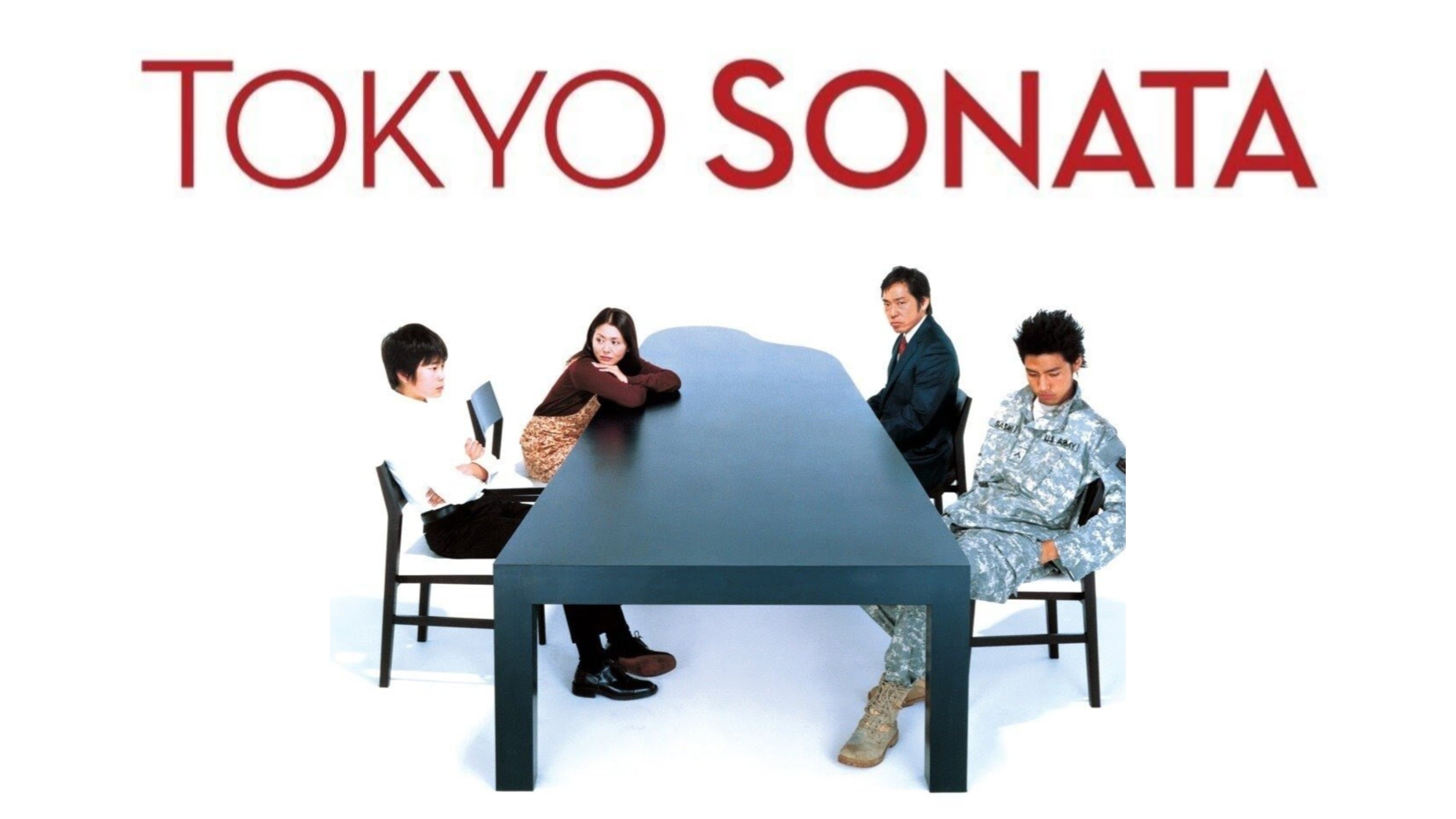
Tokyo Sonata Budget
Updated
Synopsis
The winds of change blow as a family grapples with unemployment, alienation, mistrust and a lack of communication. When a Japanese salaryman loses his job to outsourcing to China, it's simply the beginning of a series of shattering incidents, leading to the implosion of the family unit.
What Is the Budget of Tokyo Sonata?
Tokyo Sonata (2008) was produced on an estimated budget of approximately $2 million. As a Japanese-Dutch-Hong Kong co-production, the film pooled resources from multiple national funding bodies and independent financiers to bring Kiyoshi Kurosawa's first major dramatic work to the screen. The modest budget reflects the intimate scale of the story, which unfolds almost entirely within domestic interiors and everyday Tokyo streetscapes rather than requiring large-scale set pieces or visual effects.
The financing structure drew on Japanese production company Entertainment Farm, Dutch co-producer Fortissimo Films (a longtime champion of Asian arthouse cinema), and Hong Kong's MediaCorp Raintree Pictures. This multinational arrangement gave the project access to European and Asian distribution networks from the outset, positioning it for festival exposure and specialized theatrical release across multiple territories.
Key Budget Allocation Categories
- Above-the-Line Talent covered director Kiyoshi Kurosawa's fee, screenwriting costs shared between Kurosawa and Max Mannix, and compensation for lead actors Teruyuki Kagawa, Kyoko Koizumi, Yu Koyanagi, and Kai Inowaki. All were established performers in Japanese film and television, though none commanded Hollywood-scale salaries.
- Production Design required the construction and dressing of the Sasaki family home, which serves as the film's emotional center. The house needed to feel convincingly middle-class while subtly reflecting the family's eroding stability as the narrative progresses.
- Location and Studio Work encompassed permits and logistics for filming across Tokyo, including office districts, employment centers, and residential neighborhoods. The production shot on location rather than building sets for exterior scenes, keeping costs manageable.
- Cinematography was handled by Akiko Ashizawa, whose naturalistic lighting approach emphasized available light and minimal rigging. This aesthetic choice served both the film's realist tone and its budget constraints.
- Music and Sound included the score by Kazumasa Hashimoto, whose restrained piano compositions anchor the film's emotional register. The climactic Debussy performance required specific recording and licensing considerations.
- Post-Production covered editing, color grading, and sound mixing. The film's straightforward visual style kept post costs lower than a typical genre production, with no CGI or special effects work required.
How Does Tokyo Sonata's Budget Compare to Similar Films?
- Still Walking (2008) by Hirokazu Kore-eda operated on a comparable budget of roughly $2 million and explored similar domestic territory. Both films demonstrate how Japanese auteurs consistently produce intimate family dramas at a fraction of the cost of Western independent features.
- Departures (2008) was produced for approximately $6 million and won the Academy Award for Best Foreign Language Film that same year. Its larger budget allowed for more elaborate production design and a broader promotional campaign, illustrating the ceiling for prestige Japanese productions.
- The Class (2008) by Laurent Cantet cost roughly $2.5 million and shared Tokyo Sonata's festival trajectory, winning the Palme d'Or at Cannes the same year Kurosawa's film took the Un Certain Regard prize. Both films extracted maximum dramatic impact from contained, realistic settings.
- Shoplifters (2018) by Kore-eda was made for approximately $5 million a decade later and followed a similar path from Cannes to worldwide arthouse success. The budget comparison shows how costs for Japanese independent productions have remained relatively stable over the years.
Tokyo Sonata Box Office Performance
Tokyo Sonata received a limited theatrical release in the United States through Regent Releasing, opening on a handful of screens in New York and Los Angeles before expanding modestly to other major cities. The film's domestic (Japanese) release was handled by PictureDept., where it performed respectably within the arthouse circuit. Precise worldwide box office figures for the film were not widely tracked by major aggregators, as is common for lower-budget international co-productions distributed primarily through specialized channels.
With a production budget of approximately $2 million, the film needed to generate roughly $4 million in combined theatrical, festival, and home video revenue to reach break-even when factoring in prints, advertising, and distribution fees. The film's commercial life extended well beyond its theatrical window through DVD sales, broadcast licensing across Europe and Asia, and streaming availability in later years. Festival screening fees from its extensive run at Cannes, Toronto, New York, and dozens of other international festivals also contributed meaningful revenue.
While Tokyo Sonata was never positioned as a commercial blockbuster, its long tail across multiple distribution windows and its enduring critical reputation have ensured ongoing revenue generation. The film's ROI, measured across all platforms and territories, is considered positive by industry analysts who track the Japanese arthouse sector.
Box Office Breakdown
Tokyo Sonata

Tokyo Sonata Production History
Tokyo Sonata originated from Kiyoshi Kurosawa's desire to move beyond the horror and thriller genres that had defined his international reputation. After gaining worldwide recognition with Cure (1997) and Pulse (2001), Kurosawa wanted to direct a family drama that addressed the economic anxieties gripping Japan in the mid-2000s. The initial concept focused on a salaryman who loses his job but cannot bring himself to tell his family, a premise rooted in real social phenomena reported widely in Japanese media during the period.
The screenplay was co-written by Kurosawa and Australian screenwriter Max Mannix, whose involvement brought an outsider perspective to the distinctly Japanese subject matter. The writing process reportedly went through numerous drafts as the collaborators worked to balance the story's social realism with Kurosawa's instinct for surreal, unsettling tonal shifts. The final script wove together four parallel storylines following each member of the Sasaki family as they independently confront the gap between social expectation and personal desire.
Principal photography took place across Tokyo in late 2007 and early 2008. Kurosawa cast Teruyuki Kagawa, known for his work in genre films and television dramas, as patriarch Ryuhei Sasaki. Kyoko Koizumi, a popular singer and actress, played wife Megumi in what many critics would later call a career-defining performance. The casting of young actors Yu Koyanagi and Kai Inowaki as the two sons completed the family unit at the story's center.
The production's multinational financing through Japanese, Dutch, and Hong Kong partners was brokered largely through Fortissimo Films, which had a track record of packaging Asian arthouse projects for international markets. This arrangement gave the film a built-in festival strategy and pre-sold distribution rights in key territories before cameras rolled. The completed film premiered in the Un Certain Regard section at the 2008 Cannes Film Festival, where it generated strong critical attention and set the stage for its worldwide arthouse release.
Awards and Recognition
Tokyo Sonata earned the Jury Prize in the Un Certain Regard section at the 2008 Cannes Film Festival, a significant honor that validated Kurosawa's transition from genre cinema to social drama. The Cannes recognition proved pivotal in securing distribution deals and festival invitations worldwide, amplifying the film's visibility far beyond what a $2 million Japanese drama would typically achieve.
At the Asian Film Awards, the film received nominations across several categories and brought renewed international attention to the depth of Japanese dramatic filmmaking. In Japan, Tokyo Sonata was recognized at the Kinema Junpo Awards, one of the country's most respected critical bodies, where it placed prominently on year-end best-of lists. The film also won the Best Film award at the Sitges Film Festival in Spain, notable because Sitges is traditionally a genre festival, underscoring how the film bridged Kurosawa's horror roots with his new dramatic direction.
Multiple international critics' organizations cited Tokyo Sonata in their year-end rankings, and the film appeared on numerous "best of the decade" retrospectives in the years following its release. Its awards trajectory demonstrated that a modestly budgeted Japanese drama could compete with and outperform far more expensive productions on the global festival circuit.
Critical Reception
Tokyo Sonata holds an 89% approval rating on Rotten Tomatoes, reflecting near-universal praise from English-language critics. Reviewers consistently highlighted the film's ability to find genuine tension and emotional resonance in the mundane details of family life, with the father's secret unemployment serving as a pressure cooker that gradually destabilizes every relationship in the household.
Teruyuki Kagawa's performance as Ryuhei drew particular attention for its physical precision. Critics noted how he conveyed shame, desperation, and stubborn pride through posture and silence rather than dramatic outbursts. Kyoko Koizumi's portrayal of Megumi was equally lauded, with many reviewers pointing to her quiet transformation across the film's second half as the moment when the drama shifts from social observation to something more unpredictable and emotionally harrowing.
Western critics frequently contextualized the film within the 2008 global financial crisis, finding universal relevance in what might otherwise have seemed a specifically Japanese story. Several prominent reviewers called it Kiyoshi Kurosawa's finest work, arguing that his background in horror gave him an unusual sensitivity to the dread lurking beneath ordinary domestic surfaces. The film's final act, which takes an unexpected turn toward the surreal, divided some viewers but was broadly defended as a logical extension of the story's themes about the gap between the lives people perform and the lives they actually want.
In Japan, the critical response was similarly warm, with reviewers praising Kurosawa for addressing the country's economic malaise without resorting to melodrama or easy reassurance. The film is now widely regarded as one of the defining Japanese dramas of the 2000s and a landmark in Kurosawa's career, proving that his command of atmosphere and tension could serve realist storytelling as effectively as it had served horror.
Frequently Asked Questions
How much did it cost to make Tokyo Sonata (2008)?
The production budget was $2,000,000, covering principal photography, cast and crew salaries, locations, sets, post-production, and music. Marketing and distribution (P&A) costs are estimated at an additional $1,000,000 - $1,600,000, bringing the total studio investment to approximately $3,000,000 - $3,600,000.
How much did Tokyo Sonata (2008) earn at the box office?
Tokyo Sonata grossed $278,356 domestic, $665,191 international, totaling $943,547 worldwide.
Was Tokyo Sonata (2008) profitable?
The film did not break even theatrically, earning $943,547 against an estimated $5,000,000 needed. Ancillary revenue may have improved the picture.
What were the biggest costs in producing Tokyo Sonata?
The primary cost drivers were above-the-line talent (Teruyuki Kagawa, Kyoko Koizumi, Kai Inowaki); talent compensation, authentic period production design, and meticulous post-production; international production across Japan, Netherlands.
How does Tokyo Sonata's budget compare to similar drama films?
At $2,000,000, Tokyo Sonata is classified as a micro-budget production. The median budget for wide-release drama films in the 2000s ranges from $30 - 80M for mid-budget to $150M+ for tentpoles. Comparable budgets: Seven Samurai (1954, $2,000,000); The Great Dictator (1940, $2,000,000); Sing Sing (2024, $2,000,000).
Did Tokyo Sonata (2008) go over budget?
There are no widely reported accounts of significant budget overruns for this production. However, studios rarely disclose precise budget overrun figures publicly. The reported production budget reflects the final estimated cost.
What was the return on investment (ROI) for Tokyo Sonata?
The theatrical ROI was -52.8%, calculated as ($943,547 − $2,000,000) ÷ $2,000,000 × 100. This measures gross revenue against production budget only - it does not account for P&A or exhibitor shares.
What awards did Tokyo Sonata (2008) win?
10 wins & 10 nominations total.
Who directed Tokyo Sonata and who were the key crew members?
Directed by Kiyoshi Kurosawa, written by Sachiko Tanaka, Kiyoshi Kurosawa, Max Mannix, shot by Akiko Ashizawa, with music by Kazumasa Hashimoto, edited by Kôichi Takahashi.
Where was Tokyo Sonata filmed?
Tokyo Sonata was filmed in Japan, Netherlands.
Filmmakers
Tokyo Sonata

Official Trailer
Build budgets like this one in Saturation
Start from an industry-standard feature film template, import the schedule and rates you already have, and let the cost report keep itself current as you spend. Real-time collaboration, no spreadsheets.