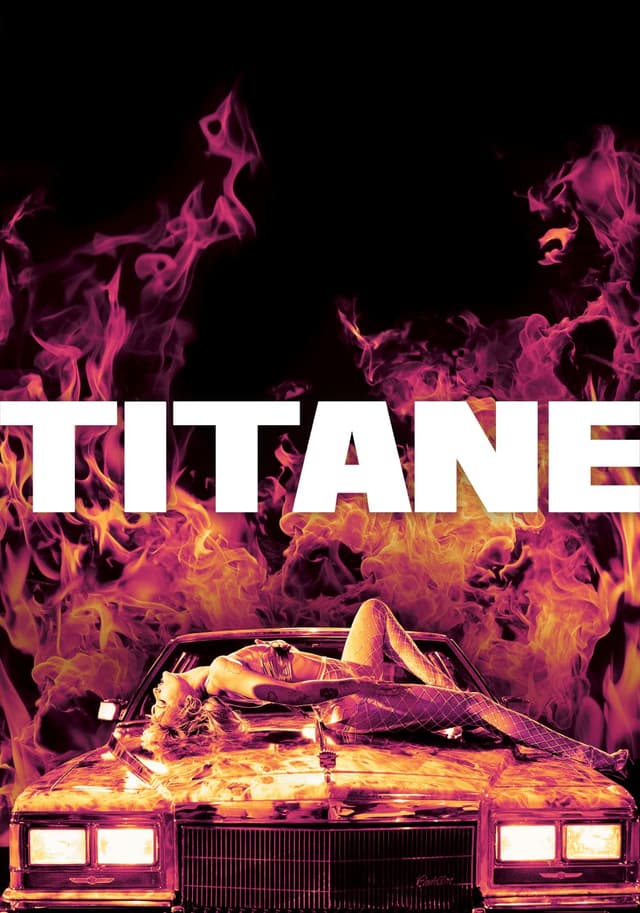
Titane Budget
 DramaThrillerHorror1h 48m
Updated
Synopsis
A woman with a metal plate in her head from a childhood car accident embarks on a bizarre journey, bringing her into contact with a firefighter who's reunited with his missing son after 10 years.
What Is the Budget of Titane?
Titane was produced on an estimated budget of approximately $7 million (around 6 million euros), a figure typical of ambitious French genre filmmaking. Writer-director Julia Ducournau secured financing through a combination of French production companies, regional film funds, and Belgian co-production support, allowing her to realize a vision that mainstream Hollywood studios would almost certainly have refused to greenlight.
For a film that blends body horror, crime thriller, and family drama into something genuinely uncategorizable, that budget proved more than sufficient. Ducournau and her team leveraged practical effects, inventive staging, and the raw physicality of their cast to deliver sequences that feel far more expensive than their cost would suggest.
Key Budget Allocation Categories
- Practical Effects and Prosthetics covered the film's extensive body horror sequences, including Alexia's physical transformation, the titanium plate imagery, and multiple scenes of graphic violence. Practical work was prioritized over CGI to maintain the visceral, tactile quality Ducournau demanded.
- Production Design built the contrasting worlds of the film: the sterile, neon-lit car show environments, the claustrophobic domestic spaces of Vincent's fire station quarters, and the decaying locations where Alexia commits her crimes. Each setting reinforces the story's themes of artifice versus authenticity.
- Cast and Performance centered on two principal actors. Vincent Lindon, one of France's most respected leading men, anchored the emotional core. Agathe Rousselle, making her feature debut with zero prior acting credits, underwent intensive physical preparation for a role that required sustained nudity, violence, and bodily transformation.
- Cinematography by Ruben Impens employed precise, often handheld camerawork that shifts between clinical detachment and intimate proximity. The lighting design, particularly the contrast between the cold fluorescents of public spaces and the warm domesticity of Vincent's home, required careful planning on a limited schedule.
- Original Score by Jim Williams created an unsettling soundscape that moves between industrial textures and tender orchestral passages. Williams, who also scored Raw for Ducournau, understood how to use music to bridge the film's tonal extremes without softening them.
- Location Filming took place across multiple sites in France and Belgium, with the production moving between urban, suburban, and industrial settings. Coordinating fire station sequences, car show setups, and night exteriors on a tight schedule required efficient location management.
How Does Titane's Budget Compare to Similar Films?
- Raw (2016) had a budget of approximately $3.5 million and grossed $4.3 million worldwide. Ducournau's debut established her as a provocateur, and its commercial performance gave financiers confidence to nearly double the investment for Titane.
- The Neon Demon (2016) cost roughly $7 million and earned $3.4 million globally. Nicolas Winding Refn's beauty-industry horror shares Titane's interest in female bodies as sites of violence and transformation, though it underperformed at the box office despite festival buzz.
- Possessor (2020) was produced for approximately $5 million and grossed $1.7 million. Brandon Cronenberg's body horror thriller operates in similar genre territory, demonstrating how mid-budget arthouse horror can deliver striking visuals without blockbuster spending.
- Under the Skin (2013) cost around $13 million and earned $7.3 million worldwide. Jonathan Glazer's sci-fi body horror required more complex visual effects, but like Titane, it proved that transgressive genre filmmaking can find an audience through festival prestige and critical acclaim.
- Crimes of the Future (2022) had an estimated $27 million budget and grossed $7.6 million. David Cronenberg's return to body horror came at a significantly higher price point, suggesting that Ducournau achieved comparable shock value and critical attention at roughly one quarter of the cost.
Titane Box Office Performance
Titane earned $2,541,375 at the domestic (US) box office and approximately $19 million worldwide. For a French-language body horror film rated NC-17 in the United States, those numbers represent a genuine commercial achievement. Neon, the North American distributor known for championing challenging international cinema (Parasite, Portrait of a Lady on Fire), handled the release with a platform strategy that capitalized on the Palme d'Or win.
Using a standard break-even threshold of roughly twice the production budget to account for prints, advertising, and distribution costs, Titane needed approximately $14 million worldwide to recoup. With $19 million in global theatrical receipts, the film cleared that bar and entered profitability before accounting for home video, streaming licensing, and television sales.
The return on investment calculates to approximately 171%: ($19,000,000 minus $7,000,000) divided by $7,000,000 times 100. That figure places Titane among the more commercially successful Palme d'Or winners of the past decade, particularly impressive given its extreme content and NC-17 rating, which limited theatrical screens in the US.
Box Office Breakdown
Titane

Titane Production History
Julia Ducournau began developing Titane while her debut feature Raw was still making its way through the festival circuit in 2016 and 2017. The core concept, a woman with a titanium plate in her skull who develops an erotic connection with automobiles, had been gestating for years, rooted in Ducournau's fascination with the relationship between human flesh and metal, and the ways identity can be reshaped through physical trauma.
Casting proved pivotal. For the role of Alexia, Ducournau chose Agathe Rousselle, a model and visual artist with no film acting experience. The director was drawn to Rousselle's physicality and willingness to inhabit the role completely. Vincent Lindon, who signed on as the aging fire captain Vincent, brought decades of dramatic credibility to a part that required profound emotional vulnerability alongside physical intensity. The contrast between Rousselle's untrained rawness and Lindon's masterful restraint became one of the film's defining tensions.
Principal photography took place in late 2019 and early 2020, shooting across locations in northern France and Belgium. The production completed filming shortly before COVID-19 lockdowns shut down the French film industry, a stroke of timing that allowed post-production to proceed on schedule. Ducournau and editor Jean-Christophe Bouzy shaped the film's rhythm during lockdown, refining the abrupt tonal shifts that would become one of its most discussed qualities.
Titane premiered in competition at the 2021 Cannes Film Festival on July 13, 2021. The screening provoked walkouts and standing ovations in roughly equal measure. When jury president Spike Lee announced the Palme d'Or winner, Ducournau became only the second woman in the festival's 74-year history to receive the prize, after Jane Campion won for The Piano in 1993.
Awards and Recognition
Titane's most significant honor was the Palme d'Or at the 2021 Cannes Film Festival, the highest prize in international cinema. The win was historic: Ducournau became the second solo female director to receive the award, and Titane was the most overtly transgressive film to claim the Palme since at least Cronenberg's Crash in 1996 (which won the Special Jury Prize, not the Palme itself).
France selected Titane as its official submission for the Academy Award for Best International Feature Film. The film made the shortlist of 15 titles but was not among the final five nominees, a result that likely reflected the Academy's discomfort with the film's extreme content rather than any question about its artistic merit.
Beyond Cannes and the Oscar campaign, Titane collected prizes across the international festival and critics' circuit. It won Best Film at the London Film Festival, earned multiple French Cesar nominations, and appeared on dozens of year-end best-of lists from major publications including Cahiers du Cinema, Sight & Sound, and The New York Times. Vincent Lindon received particular praise for his performance, earning several critics' circle nominations for Best Supporting Actor.
Critical Reception
Titane holds a 90% approval rating on Rotten Tomatoes, reflecting near-universal critical admiration tempered by acknowledgment that the film is not for everyone. The critical consensus recognized Ducournau as a major directorial talent while noting that the film's graphic content would inevitably polarize general audiences.
Supporters praised the film's audacity and emotional depth. Critics highlighted how Ducournau uses extreme imagery not for shock value alone but to explore genuine themes of identity, parenthood, and the human need for connection. The relationship between Alexia and Vincent, which begins as a deception and evolves into something resembling real familial love, was frequently cited as the film's emotional anchor, with Lindon's performance described as one of the finest of his career.
Detractors, while often acknowledging the film's technical accomplishment, found the tonal shifts between body horror and tender family drama jarring rather than illuminating. Some critics felt the first act's violence was gratuitous, while others argued that the film's genre-blending ambitions occasionally outpaced its narrative coherence. The NC-17 rating in the United States, driven by graphic sexuality and violence, limited the film's commercial reach but arguably enhanced its mystique.
Titane's legacy continues to grow as a landmark of 2020s cinema. It expanded the boundaries of what a Palme d'Or winner could be, demonstrated that radically transgressive filmmaking could achieve both critical prestige and commercial viability, and confirmed Ducournau as one of the most distinctive voices in contemporary world cinema.
Frequently Asked Questions
How much did it cost to make Titane (2021)?
The production budget was $6,600,000, covering principal photography, cast and crew salaries, locations, sets, post-production, and music. Marketing and distribution (P&A) costs are estimated at an additional $3,300,000 - $5,280,000, bringing the total studio investment to approximately $9,900,000 - $11,880,000.
How much did Titane (2021) earn at the box office?
Titane grossed $1,442,988 domestic, $3,539,347 international, totaling $4,982,335 worldwide.
Was Titane (2021) profitable?
The film did not break even theatrically, earning $4,982,335 against an estimated $16,500,000 needed. Ancillary revenue may have improved the picture.
What were the biggest costs in producing Titane?
The primary cost drivers were above-the-line talent (Vincent Lindon, Agathe Rousselle, Garance Marillier); talent compensation, authentic period production design, and meticulous post-production; international production across Belgium, France.
How does Titane's budget compare to similar drama films?
At $6,600,000, Titane is classified as a micro-budget production. The median budget for wide-release drama films in the 2020s ranges from $30 - 80M for mid-budget to $150M+ for tentpoles. Comparable budgets: Sisu (2022, $6,600,000); Do the Right Thing (1989, $6,500,000); Shame (2011, $6,500,000).
Did Titane (2021) go over budget?
There are no widely reported accounts of significant budget overruns for this production. However, studios rarely disclose precise budget overrun figures publicly. The reported production budget reflects the final estimated cost.
What was the return on investment (ROI) for Titane?
The theatrical ROI was -24.5%, calculated as ($4,982,335 − $6,600,000) ÷ $6,600,000 × 100. This measures gross revenue against production budget only - it does not account for P&A or exhibitor shares.
What awards did Titane (2021) win?
Nominated for 1 BAFTA Award29 wins & 131 nominations total.
Who directed Titane and who were the key crew members?
Directed by Julia Ducournau, written by Julia Ducournau, shot by Ruben Impens, with music by Jim Williams, edited by Jean-Christophe Bouzy.
Where was Titane filmed?
Titane was filmed in Belgium, France.
Filmmakers
Titane

Official Trailer
Build budgets like this one in Saturation
Start from an industry-standard feature film template, import the schedule and rates you already have, and let the cost report keep itself current as you spend. Real-time collaboration, no spreadsheets.