This Is the End Budget
 ActionComedy1h 46m
Updated
Synopsis
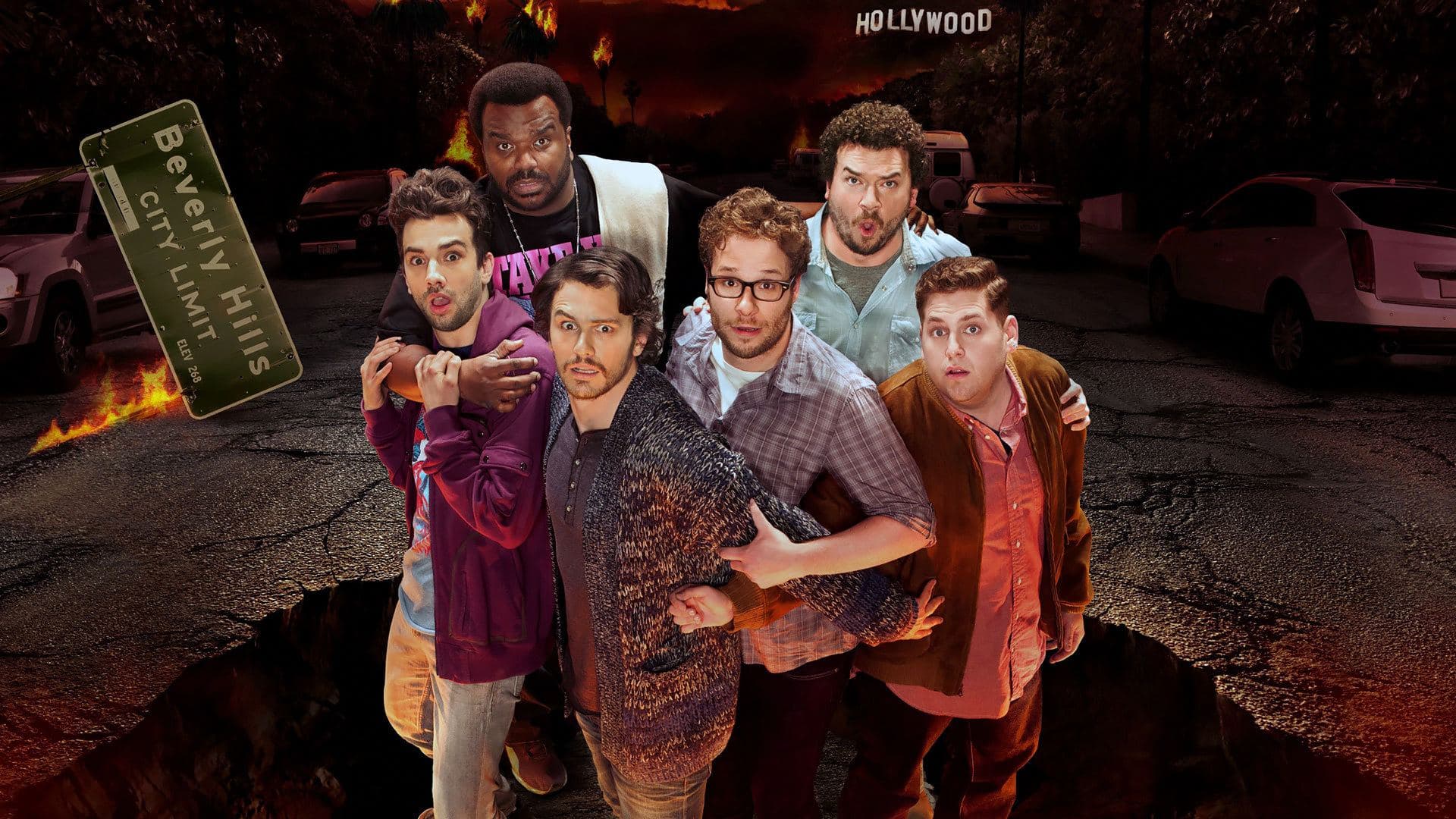
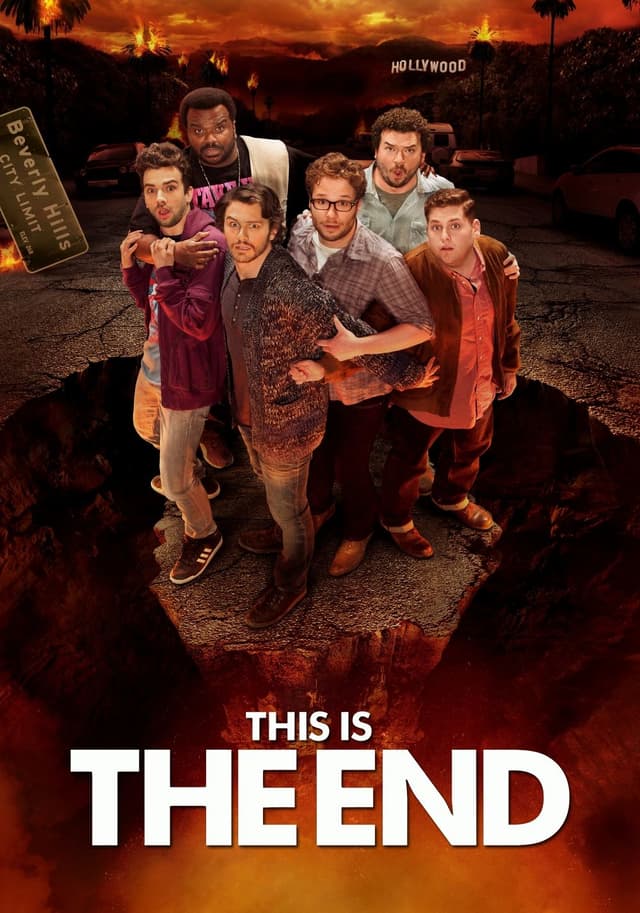
The comedy This Is The End follows six friends trapped in a house after a series of strange and catastrophic events devastate Los Angeles. As the world unravels outside, dwindling supplies and cabin fever threaten to tear apart the friendships inside. Eventually, they are forced to leave the house, facing their fate and the true meaning of friendship and redemption.
What Is the Budget of This Is the End?
This Is the End was produced on a budget of $32 million by Columbia Pictures and Point Grey Pictures, the production company founded by Seth Rogen and Evan Goldberg. The film marks the feature directorial debut of both Rogen and Goldberg, who also co-wrote the screenplay. The premise, in which a group of celebrities playing fictionalized versions of themselves must survive the biblical apocalypse while trapped in James Franco's Hollywood Hills mansion, originated from a 2007 short film called Jay and Seth vs. The Apocalypse, which Rogen and Jay Baruchel had made for roughly $800.
The $32 million budget positioned the film in the mid-range for studio comedies of its era, comparable to productions like Pineapple Express ($26 million) and Neighbors ($18 million). Sony greenlit the project based on the strength of Rogen and Goldberg's screenwriting track record, which included Superbad, Pineapple Express, and the screenplay for The Green Hornet. The budget needed to cover substantial visual effects work for the apocalypse sequences, including sinkholes, demonic creatures, fire, and a climactic ascent to heaven, all of which pushed the film well beyond the typical cost structure of a dialogue-driven comedy.
Key Budget Allocation Categories
- Visual Effects and Apocalypse Sequences: A significant portion of the budget went to visual effects that brought the end of the world to life on screen. The film features a massive sinkhole swallowing party guests at Franco's house, demonic creatures roaming the streets of Los Angeles, fire raining from the sky, and a full rapture sequence complete with blue beams pulling the righteous into heaven. These sequences required extensive CGI work from multiple VFX houses, pushing the budget well above what a conventional comedy ensemble would cost.
- Soundstage Construction in New Orleans: Rather than shooting at an actual Los Angeles mansion, production built a detailed replica house on a soundstage in New Orleans to take advantage of Louisiana's generous film tax incentives. The set was designed to be progressively destroyed over the course of the shoot, allowing the filmmakers to stage the collapse, barricading, and eventual demolition of the house in a controlled environment. Building the house from scratch gave them the freedom to rig practical effects, controlled fires, and structural destruction that would have been impossible in a real location.
- Ensemble Cast Compensation: The film's cast includes Seth Rogen, James Franco, Jonah Hill, Jay Baruchel, Craig Robinson, and Danny McBride as the six principal characters, all playing exaggerated versions of themselves. The extended cameo roster, which includes Michael Cera, Rihanna, Emma Watson, Paul Rudd, Channing Tatum, and the Backstreet Boys, added to the talent budget. While several actors reportedly took reduced fees based on their relationships with Rogen and Goldberg, the sheer number of recognizable names required meaningful allocation.
- Practical Effects and Pyrotechnics: The production relied heavily on practical fire, smoke, and destruction effects to complement the CGI. Scenes of the house burning, the yard collapsing, and the characters navigating a destroyed Los Angeles were staged with real pyrotechnics on the New Orleans soundstage. The combination of practical and digital effects gave the apocalypse sequences a physicality that pure CGI comedies of the period often lacked.
- Post-Production and Comedy Editing: Extensive improvisation on set generated a large volume of footage that required careful editing to maintain comedic pacing across a 107-minute runtime. The editing process involved testing multiple versions of scenes with different improvised takes, and the film went through several test screenings that shaped the final cut. Sound design for the apocalypse sequences also required substantial post-production work to blend horror-scale destruction audio with the comedic tone.
How Does This Is the End's Budget Compare to Similar Films?
- Pineapple Express (2008): Budget $26M | Worldwide $101M. Rogen and Goldberg's earlier collaboration as writers had a slightly lower budget but achieved comparable worldwide grosses. This Is the End's higher budget reflects the added cost of visual effects for the apocalypse concept, a dimension Pineapple Express did not require.
- The World's End (2013): Budget $20M | Worldwide $46M. Edgar Wright's similarly themed apocalyptic comedy, released the same summer, cost $12 million less and earned significantly less worldwide. The comparison highlights how Rogen and Goldberg's self-aware celebrity premise had broader commercial appeal than Wright's pub-crawl concept, despite the latter's stronger critical reception.
- Superbad (2007): Budget $20M | Worldwide $170M. The Rogen and Goldberg-scripted high school comedy achieved higher worldwide grosses on a lower budget, but Superbad required no visual effects. This Is the End's VFX-heavy approach traded some of the cost efficiency of a pure dialogue comedy for spectacle that broadened its appeal beyond the core Rogen audience.
- Neighbors (2014): Budget $18M | Worldwide $270M. The Rogen-starring comedy released the following year achieved more than double the worldwide gross on a significantly lower budget, demonstrating the commercial ceiling for R-rated comedies with strong premises. Neighbors' lower budget reflects the absence of VFX-intensive sequences.
- The Interview (2014): Budget $44M | Worldwide $12M. Rogen and Goldberg's follow-up as co-directors cost $12 million more than This Is the End but grossed a fraction of its worldwide total, largely due to the Sony hack controversy that limited its theatrical release. The comparison underscores how This Is the End's $32 million budget represented a well-calibrated investment for the returns it generated.
This Is the End Box Office Performance
This Is the End opened on June 12, 2013, earning $20.5 million in its domestic opening weekend, placing second behind Man of Steel. The film went on to gross $101,470,202 domestically and $126,041,322 worldwide against its $32 million production budget. For a studio comedy to cross $100 million domestically in 2013 was a strong result, particularly for an R-rated film built around an ensemble of comedians rather than a traditional movie-star vehicle.
Using the standard break-even estimate of roughly twice the production budget to account for prints and advertising costs, This Is the End needed approximately $64 million worldwide to reach profitability. The film surpassed that threshold comfortably, with its $126 million worldwide gross representing a return on investment of approximately 294%: ($126,041,322 minus $32,000,000) divided by $32,000,000 times 100. The strong domestic performance, where the film earned more than three times its production budget, drove the majority of the returns.
The film's box office trajectory showed steady legs after its opening weekend, holding well against summer blockbuster competition including World War Z and Monsters University. Home video and streaming revenue extended the film's commercial success significantly, as the comedy's quotable dialogue, celebrity cameos, and rewatchability made it a strong performer in ancillary markets.
Box Office Breakdown
This Is the End

This Is the End Production History
The project traces its origins to Jay and Seth vs. The Apocalypse, a two-minute short film that Rogen and Jay Baruchel shot in 2007 with a consumer-grade camera and no budget. The short depicted the two friends trapped in an apartment during an unspecified apocalyptic event, playing themselves and relying entirely on their improvised banter. Rogen and Goldberg spent years developing the concept into a feature, initially struggling to find the right structure before landing on the idea of expanding the cast to include their real-life friend group playing heightened versions of themselves.
Sony initially hesitated on the concept, which was unusual by studio standards: a comedy in which real celebrities die graphically and behave badly under their own names had no clear precedent. The project moved forward after Rogen and Goldberg agreed to direct it themselves at a budget level Sony considered manageable. Casting the six leads was straightforward because Rogen, Franco, Hill, Baruchel, Robinson, and McBride were already close friends and frequent collaborators. The cameo casting was similarly organic, with actors from Rogen's social circle agreeing to appear in the opening party sequence.
Principal photography took place primarily on a soundstage in New Orleans, where the production built James Franco's house as a complete interior and exterior set. Shooting in New Orleans gave the production access to Louisiana's tax incentives, which offset a meaningful portion of the budget. The house set was designed to be systematically destroyed over the course of the 38-day shoot, with different stages of damage pre-built so scenes could be filmed out of sequence. The party sequence at the beginning of the film, which features dozens of celebrity cameos and ends with a massive sinkhole, was one of the most complex sequences to stage.
Rogen and Goldberg encouraged extensive improvisation on set, shooting scenes multiple times with different comedic approaches. Michael Cera's performance as a drug-fueled, aggressive version of himself was almost entirely improvised, and Danny McBride's increasingly unhinged behavior in the house was built from improvised confrontations that the other actors reacted to in real time. The directors assembled multiple cuts of the film and tested them with audiences to determine which improvised moments landed most effectively. The Backstreet Boys cameo in the film's heaven sequence was a late addition that emerged during the editing process.
Awards and Recognition
This Is the End received limited awards attention from traditional bodies but performed well in genre and audience-voted categories. The film won the People's Choice Award for Favorite Comedy Movie and was nominated for several MTV Movie Awards and Teen Choice Awards. At the Canadian Screen Awards, the film received recognition reflecting Rogen and Goldberg's Canadian roots and the involvement of several Canadian cast members.
The film's cultural impact exceeded its formal awards recognition. It established Rogen and Goldberg as viable feature directors, leading directly to their next directorial effort, The Interview, and eventually to projects like Sausage Party and the television series The Boys and Invincible through their Point Grey Pictures banner. The film also cemented the "celebrities playing themselves" comedy subgenre, influencing subsequent projects that used real-name casting as a comedic device. Industry recognition of Rogen and Goldberg's directorial debut came primarily through their expanded deal with Sony and the commercial proof that they could deliver a VFX-heavy comedy on budget and on schedule.
Critical Reception
This Is the End holds an 83% approval rating on Rotten Tomatoes based on 232 reviews, with a critics consensus praising the film's willingness to let its cast mock themselves and each other without restraint. Metacritic scored it 67 out of 100, indicating generally favorable reviews. The film's audience score skewed higher than its critical score, reflecting the gap between critics who evaluated it as cinema and audiences who evaluated it as a comedy experience.
Critics who praised the film highlighted the comedic chemistry of the ensemble, the commitment to the apocalyptic premise, and the surprising effectiveness of the visual effects in supporting rather than overwhelming the comedy. The Hollywood Reporter called it "a riotously funny exercise in celebrity self-deprecation," while Variety noted that Rogen and Goldberg's directorial debut showed genuine visual ambition beyond the standard comedy coverage. The Michael Cera party sequence and the Danny McBride confrontation scenes were consistently cited as comedic highlights.
Negative reviews focused on the film's reliance on shock humor, its uneven pacing in the middle act when the characters are confined to the house, and a third act that some critics felt sacrificed the grounded interpersonal comedy for CGI spectacle. Several critics noted that the film's humor depended heavily on the viewer's familiarity with the actors' public personas, making it less accessible to audiences outside the core demographic of comedy fans who followed Rogen's circle. The religious imagery in the finale divided reviewers, with some finding it a clever payoff to the apocalyptic premise and others considering it a tonal mismatch with the irreverent comedy that preceded it.
Frequently Asked Questions
How much did it cost to make This Is the End (2013)?
The production budget was $32,000,000, covering principal photography, visual effects, cast and crew salaries, locations, sets, post-production, and music. Marketing and distribution (P&A) costs are estimated at an additional $16,000,000 - $25,600,000, bringing the total studio investment to approximately $48,000,000 - $57,600,000.
How much did This Is the End (2013) earn at the box office?
This Is the End grossed $101,470,202 domestic, $24,571,120 international, totaling $126,041,322 worldwide.
Was This Is the End (2013) profitable?
Yes. Against a production budget of $32,000,000 and estimated total costs of ~$80,000,000, the film earned $126,041,322 theatrically - a 294% ROI on production costs alone.
What were the biggest costs in producing This Is the End?
The primary cost drivers were above-the-line talent (James Franco, Jonah Hill, Seth Rogen); visual effects, practical stunts, and A-list talent compensation.
How does This Is the End's budget compare to similar action films?
At $32,000,000, This Is the End is classified as a low-budget production. The median budget for wide-release action films in the 2010s ranges from $30 - 80M for mid-budget to $150M+ for tentpoles. Comparable budgets: A History of Violence (2005, $32,000,000); Alive (1993, $32,000,000); Bad Times at the El Royale (2018, $32,000,000).
Did This Is the End (2013) go over budget?
There are no widely reported accounts of significant budget overruns for this production. However, studios rarely disclose precise budget overrun figures publicly. The reported production budget reflects the final estimated cost.
What was the return on investment (ROI) for This Is the End?
The theatrical ROI was 293.9%, calculated as ($126,041,322 − $32,000,000) ÷ $32,000,000 × 100. This measures gross revenue against production budget only - it does not account for P&A or exhibitor shares.
What awards did This Is the End (2013) win?
10 wins & 23 nominations total.
Who directed This Is the End and who were the key crew members?
Directed by Seth Rogen, Evan Goldberg, written by Seth Rogen, Evan Goldberg, shot by Brandon Trost, with music by Henry Jackman, edited by Zene Baker.
Where was This Is the End filmed?
This Is the End was filmed in United States of America.
Filmmakers
This Is the End

Official Trailer
Build budgets like this one in Saturation
Start from an industry-standard feature film template, import the schedule and rates you already have, and let the cost report keep itself current as you spend. Real-time collaboration, no spreadsheets.