Thirteen Ghosts Budget
 Horror
Updated
Synopsis
After inheriting an enormous glass-walled mansion from his eccentric occultist uncle Cyrus, struggling single father Arthur Kriticos moves his children and their au pair into the house, only to discover the entire structure is a custom-built containment device housing twelve violent ghosts. As walls slide open and the spirits prey on the family one by one, Arthur and a defecting psychic must crack the building's Latin spell before the thirteenth ghost completes the ritual.
What Is the Budget of Thirteen Ghosts (2001)?
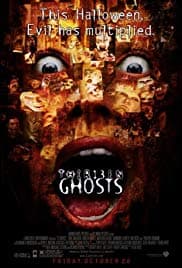
Thirteen Ghosts (2001, also stylized Thir13en Ghosts), directed by Steve Beck and distributed by Warner Bros. Pictures, was produced on a reported budget of $42,000,000. The supernatural horror remake of William Castle's 1960 film 13 Ghosts was financed through Dark Castle Entertainment, the Joel Silver-Robert Zemeckis horror banner established in 1999 to remake classic Castle horror titles. The picture was the second Dark Castle release after House on Haunted Hill (1999).
Above-the-line costs centered on Tony Shalhoub as the lead Arthur Kriticos, with Embeth Davidtz, Matthew Lillard, Shannon Elizabeth, and Rah Digga in the principal cast and F. Murray Abraham appearing in a flashback as the eccentric uncle Cyrus. The picture's defining technical investment was the elaborate single-set glass-walled mansion build, with each room functioning as both a practical set and a containment device for the film's twelve ghost designs.
Key Budget Allocation Categories
Thirteen Ghosts's $42,000,000 budget was distributed across several core production areas:
- Cast Compensation: Tony Shalhoub (Big Night, Galaxy Quest, then pre-Monk) led at a scaled rate, with Embeth Davidtz, Matthew Lillard (Scream, Scooby-Doo), Shannon Elizabeth (American Pie), and rapper Rah Digga in supporting roles. F. Murray Abraham appeared in a flashback as Cyrus Kriticos at a one-week compensation package.
- Glass Mansion Set Construction: The single defining production cost was the elaborate Basil Kriticos mansion, a custom-built glass-walled multi-room structure that functioned as both the film's primary location and a mechanical containment device. Production designer Sean Hargreaves and the practical-effects team built the set in Vancouver, British Columbia, with moving Latin-inscribed glass walls, hidden mechanisms, and twelve distinct ghost-environment chambers.
- Ghost Designs and Practical Effects: KNB EFX Group designed and constructed the twelve ghosts to the elaborate specifications of Cyrus's "Black Zodiac" mythology, with each spirit receiving full-body prosthetics, custom costuming, and a distinct visual identity. The picture's home video special features included extensive ghost-design documentaries.
- Vancouver Production Block: Principal photography took place in Vancouver, British Columbia, leveraging the Canadian Film or Video Production Tax Credit and the British Columbia Production Services Tax Credit to anchor below-the-line costs.
- Visual Effects: CG work covered ghost movement enhancements, the mansion's mechanical sliding-glass transformations, and various supernatural-energy and Latin-text-illumination sequences. The VFX budget supplemented but did not supplant the picture's heavy practical-effects investment.
- Score and Sound Design: Composer John Frizzell scored the film with an atmospheric, dread-forward orchestral approach. Sound design by James L. Aubrey covered the mansion's mechanical-architecture sound effects and the ghost-encounter set pieces.
How Does Thirteen Ghosts's Budget Compare to Similar Films?
At $42,000,000, Thirteen Ghosts sits in the mid-range of the early-2000s studio horror bracket:
- House on Haunted Hill (1999): Budget $19,000,000 | Worldwide $42,176,331. The previous Dark Castle Entertainment William Castle remake cost less than half what Thirteen Ghosts cost and grossed essentially the same worldwide, illustrating the budget creep across the early Dark Castle slate.
- The Others (2001): Budget $17,000,000 | Worldwide $209,947,037. Alejandro Amenabar's contemporary supernatural horror cost 40% of Thirteen Ghosts and grossed more than 3x worldwide, illustrating the upside ceiling for the genre in 2001.
- Ghost Ship (2002): Budget $20,000,000 | Worldwide $68,389,144. The subsequent Dark Castle Entertainment release cost less than half what Thirteen Ghosts cost and grossed essentially the same worldwide, marking a budget pullback that followed Thirteen Ghosts's mixed reception.
- Final Destination 2 (2003): Budget $26,000,000 | Worldwide $90,310,597. New Line's contemporary studio horror franchise sequel cost 62% of Thirteen Ghosts and grossed 1.3x worldwide.
- Scream 3 (2000): Budget $40,000,000 | Worldwide $161,834,276. Dimension's contemporary slasher franchise sequel cost essentially the same as Thirteen Ghosts and grossed 2.4x worldwide.
Thirteen Ghosts Box Office Performance
Thirteen Ghosts opened on October 26, 2001 to $15,165,355 across 2,724 theaters, finishing first on a weekend that included From Hell and Bandits. The pre-Halloween release window worked in the picture's favor, with the film holding through the holiday corridor before fading in late November.
Against a $42,000,000 production budget, the film needed approximately $90,000,000 worldwide to break even when accounting for marketing and distribution costs. Here is the financial breakdown:
Box Office Breakdown
Thirteen Ghosts (2001)

Thirteen Ghosts returned approximately $0.89 to $0.95 in theatrical revenue for every $1 invested when measured against total estimated production and marketing spend, a near-break-even theatrical result that proved profitable on home video and cable rotation. Domestic gross of $41,867,960 against an international share of $26,600,000 reflected a release pattern that translated reasonably to overseas English-speaking and European markets.
The film became a meaningful home-entertainment performer through Dark Castle's aggressive DVD release schedule, with special-feature ghost-design documentaries and director's commentary supporting a strong sell-through window. The picture is widely regarded as a profitable long-tail asset for the Dark Castle slate, even if its theatrical performance modestly disappointed Warner Bros.'s expectations at release.
Thirteen Ghosts Production History
Dark Castle Entertainment was established in 1999 by Joel Silver, Robert Zemeckis, and Gilbert Adler with a mandate to remake classic William Castle horror titles. Following the 1999 release of House on Haunted Hill (their remake of the 1959 Castle film), the team identified 13 Ghosts (1960) as their next title and developed the project through 2000 and 2001. Neal Marshall Stevens and Richard D'Ovidio co-wrote the screenplay, with Stevens drafting the early treatment.
Steve Beck was attached to direct his feature debut on the strength of his visual-effects supervision background (he had been visual-effects director on Disney's The Hunchback of Notre Dame and other late-1990s studio features). Tony Shalhoub was cast as Arthur Kriticos in the first half of 2001, with Matthew Lillard joining as the defecting psychic Dennis Rafkin and F. Murray Abraham taking the flashback role of the eccentric uncle Cyrus.
Principal photography ran from spring through summer 2001 in Vancouver, British Columbia. The elaborate glass-walled mansion was constructed on a Vancouver stage as a single mechanical set, with moving Latin-inscribed walls, hidden ghost-containment chambers, and distinct environment designs for each of the twelve ghosts in Cyrus's "Black Zodiac." Post-production through autumn 2001 prepared the film for the October release.
Awards and Recognition
Thirteen Ghosts received no significant industry awards recognition on its initial release. The film was not nominated at major mainstream Hollywood industry ceremonies. It did receive Saturn Award nominations from the Academy of Science Fiction, Fantasy, and Horror Films, including Best Horror Film, though it did not win the category.
Beyond its initial awards run, the film has been retroactively included on multiple "guilty pleasure" horror retrospectives and is regularly cited in coverage of the early-2000s Dark Castle Entertainment slate. The ghost designs by KNB EFX Group have appeared in horror-makeup retrospectives and are widely cited by genre commentators as the film's most enduring legacy element. The picture has not received anniversary home-media reissues.
Critical Reception
Thirteen Ghosts received broadly negative reviews on initial release. The film holds a 15% approval rating on Rotten Tomatoes based on 109 critic reviews, with a critical consensus that called it a stylish but hollow update of the William Castle original. On Metacritic, the film scored 18 out of 100, indicating "overwhelming dislike." Audiences surveyed by CinemaScore gave the film a C, a notably weak result for a horror release within its core demographic.
Critics objected to the picture's reliance on jump-scare set pieces, the underdeveloped script, and the heavy-handed Latin-spell mythology that prioritized production design over coherent storytelling. The New York Times' Stephen Holden wrote that the film "amounts to a series of expensive jump scares in search of a plot," while Variety's Dennis Harvey called it "a remake whose only redeeming element is its consistently inventive ghost design." Roger Ebert gave the film one-and-a-half stars out of four, writing that "the movie is so ridden with shocks and surprises that they cancel each other out."
Defenders within the genre-press and horror-enthusiast community have argued that the practical-effects ghost designs and the single-set mechanical-mansion concept represent genuine craft achievements that subsequent home-video releases and special features documented thoroughly. The picture has appreciated modestly in cult standing through its DVD and Blu-ray availability and is regularly cited in horror-of-the-early-2000s retrospectives as a production-design highlight despite its narrative weaknesses.
Frequently Asked Questions
How much did it cost to make Thirteen Ghosts (2001)?
The reported production budget was $42,000,000. Warner Bros. Pictures and Columbia Pictures co-financed the film through Dark Castle Entertainment, the Joel Silver and Robert Zemeckis horror banner established in 1999 to remake classic William Castle horror titles.
How much did Thirteen Ghosts earn at the box office?
The film grossed $41,867,960 domestically and approximately $26,600,000 internationally, for a worldwide total of $68,467,960. It opened to $15,165,355 across 2,724 theaters on October 26, 2001, finishing first on a pre-Halloween weekend.
Was Thirteen Ghosts profitable?
Theatrically, the film essentially broke even or modestly lost money against the total estimated production and marketing spend. However, home entertainment, cable licensing, and DVD special features pushed the picture into profit during its post-theatrical window, with Dark Castle's aggressive DVD release model recovering the production cost.
Who directed Thirteen Ghosts?
Steve Beck directed the film as his feature debut on the strength of his visual-effects supervision background (he had been visual-effects director on Disney's The Hunchback of Notre Dame). He directed one subsequent feature (Ghost Ship in 2002) before transitioning back to visual-effects supervision.
Who stars in Thirteen Ghosts?
Tony Shalhoub stars as Arthur Kriticos, with Embeth Davidtz as nanny Maggie Bess, Matthew Lillard as defecting psychic Dennis Rafkin, Shannon Elizabeth as Arthur's daughter Kathy, Alec Roberts as son Bobby, rapper Rah Digga as au pair Maggie, and F. Murray Abraham as eccentric uncle Cyrus Kriticos in flashback sequences.
Where was Thirteen Ghosts filmed?
Principal photography took place in Vancouver, British Columbia, in spring and summer 2001, leveraging the Canadian Film or Video Production Tax Credit and the British Columbia Production Services Tax Credit. The elaborate glass-walled mansion was constructed on a Vancouver stage as a single mechanical set with moving Latin-inscribed walls.
How does Thirteen Ghosts compare to House on Haunted Hill (1999)?
House on Haunted Hill, the previous Dark Castle Entertainment William Castle remake, cost $19M and grossed $42.2M worldwide. Thirteen Ghosts cost more than twice as much ($42M) and grossed only 62% more worldwide ($68.5M), illustrating the budget creep across the early Dark Castle slate that subsequent Ghost Ship (2002) attempted to correct.
Is Thirteen Ghosts a remake?
Yes. The film is a remake of William Castle's 1960 horror feature 13 Ghosts, which was famously released using the "Illusion-O" gimmick that gave audiences red-and-blue ghost-viewer glasses. The 2001 remake retains the basic premise of a family inheriting a haunted mansion containing twelve ghosts and adds an elaborate "Black Zodiac" mythology.
What did critics think of Thirteen Ghosts?
The film received broadly negative reviews, with a 15% approval rating on Rotten Tomatoes (109 critics) and an 18 out of 100 on Metacritic. Audiences gave it a C CinemaScore. Roger Ebert gave the film one-and-a-half stars, writing that "the movie is so ridden with shocks and surprises that they cancel each other out."
Who designed the ghosts in Thirteen Ghosts?
KNB EFX Group designed and constructed the twelve ghosts, with each spirit receiving full-body prosthetics, custom costuming, and a distinct visual identity based on Cyrus's "Black Zodiac" mythology. The ghost designs are widely cited as the film's most enduring legacy element and have appeared in subsequent horror-makeup retrospectives.
Filmmakers
Thirteen Ghosts (2001)

Build budgets like this one in Saturation
Start from an industry-standard feature film template, import the schedule and rates you already have, and let the cost report keep itself current as you spend. Real-time collaboration, no spreadsheets.