There's Something About Mary Budget
 RomanceComedy2h
Updated
Synopsis
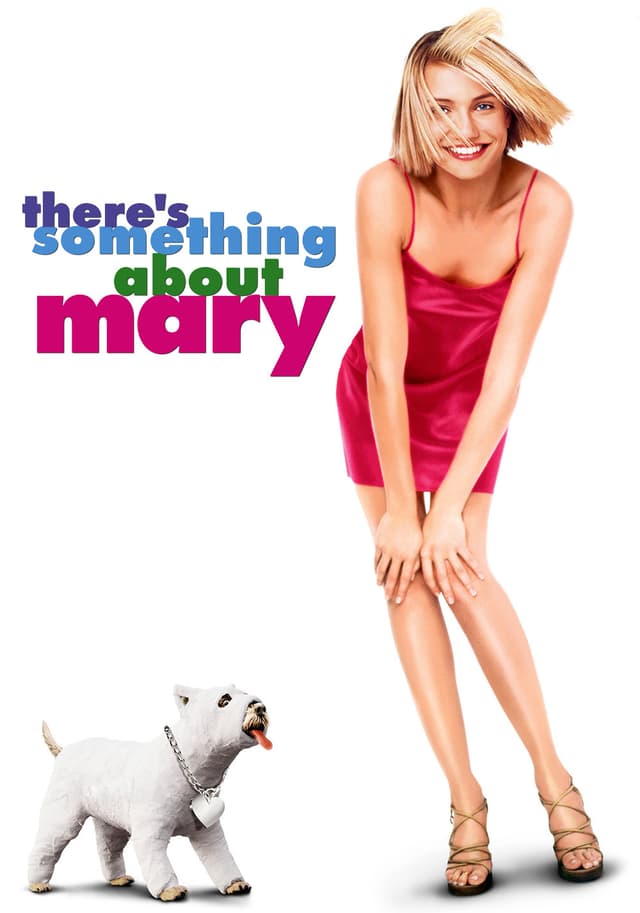
"There's Something About Mary" is a romantic comedy that revolves around the misadventures of Ted Stroehmann, played by Ben Stiller, who is hopelessly in love with his high school crush, Mary Jensen, portrayed by Cameron Diaz. After a disastrous prom night, Ted is left heartbroken but never forgets Mary. Years later, he decides to reconnect with her, only to find himself entangled in a web of comedic chaos as various suitors, including the eccentric Pat Healy (Matt Dillon) and the quirky Dom Woganowski (Lee Evans), vie for Mary's affection. The film cleverly blends humor and romance, showcasing the lengths to which people will go for love, while also delivering memorable moments and outrageous situations that have made it a cult classic.
What Is the Budget of There's Something About Mary (1998)?
There's Something About Mary was produced on a budget of approximately $23 million, a relatively modest sum for a studio comedy from 20th Century Fox in the late 1990s. The Farrelly brothers had previously made Dumb and Dumber for about $17 million and Kingpin for $25 million, so the budget for Mary fell squarely within their established range.
The investment proved extraordinarily profitable. The film opened on July 15, 1998, and went on to gross $176,484,651 domestically and $193,400,000 internationally, reaching a worldwide total of approximately $369.9 million. That return made it the fourth-highest-grossing film of 1998 globally, behind Armageddon, Saving Private Ryan, and Godzilla.
For 20th Century Fox, the film represented a windfall: every dollar spent on production returned roughly $16 at the worldwide box office before accounting for marketing and distribution costs. Even factoring in a standard P&A spend estimated at $25 to $30 million, the studio recouped its full investment many times over, cementing the Farrelly brothers as one of the most commercially reliable comedy duos working in Hollywood at the time.
Key Budget Allocation Categories
- Above-the-Line Talent: Cameron Diaz, then best known for The Mask (1994) and My Best Friend's Wedding (1997), received a substantial fee that reflected her rising star power. Ben Stiller, Matt Dillon, and Lee Evans rounded out the principal cast. The Farrellys also considered Owen Wilson, Jon Stewart, Vince Vaughn, and Cuba Gooding Jr. for the role of Pat Healy before landing on Dillon, and Bill Murray was approached for the same part. Brett Favre, who appeared as himself, was the third choice after Drew Bledsoe and Steve Young both passed. Above-the-line costs likely consumed $8 to $10 million of the $23 million budget.
- Miami Location Production: Rather than shooting in a studio backlot, the production relocated to Miami, Florida, where most principal photography took place. Specific venues included the Big Pink Restaurant in South Beach, the Miami-Dade Cultural Center, the Cardozo Hotel on Ocean Drive, and Churchill's Pub in Little Haiti. Shooting on location in Miami during the summer heat added logistical complexity and expense but gave the film an authentic, sun-drenched look that became central to its visual identity.
- Makeup and Practical Effects: Makeup effects designer Tony Gardner, known for his prosthetic and practical effects work, was brought in to execute the film's more physically demanding gags. The infamous zipper scene and other signature moments required careful practical coordination between the makeup department and the actors. Gardner's team worked closely with the Farrellys to ensure the physical comedy landed without requiring extensive digital cleanup.
- Music and Soundtrack: Jonathan Richman, the indie rock singer-songwriter behind the Modern Lovers, was cast as a literal troubadour narrator who appears on screen throughout the film, playing songs that comment on the action. This unconventional approach replaced a traditional score with original folk-pop songs performed live on set. Richman's presence added an unusual production cost, as he was both a credited on-screen actor and the film's primary musical voice, accompanied by drummer Tommy Larkins.
- Post-Production and Marketing: Editor Christopher Greenbury assembled a final cut of 119 minutes. The film's marketing campaign leaned heavily on the zipper scene and the hair gel sequence in its trailers, making strategic use of the film's most outrageous moments to drive curiosity. 20th Century Fox's P&A spend for a film of this profile in 1998 would typically have run $25 to $30 million, pushing total investment to roughly $50 to $53 million against a $369.9 million worldwide gross.
How Does There's Something About Mary's Budget Compare to Similar Films?
The late 1990s saw a wave of gross-out comedies that redefined what studio comedy could earn at the box office. There's Something About Mary sits at the top of that wave, outperforming its peers by a wide margin relative to its production cost.
- Dumb and Dumber (1994): Budget $17M | Worldwide $247M -- the Farrelly brothers' debut feature established their formula with an even smaller budget and strong returns, but Mary more than doubled its worldwide gross.
- Kingpin (1996): Budget $25M | Worldwide $25.8M -- the Farrellys' second film essentially broke even on production costs, making Mary's success all the more remarkable as a course correction for the brothers.
- American Pie (1999): Budget $11M | Worldwide $235M -- released a year after Mary and clearly influenced by its success, American Pie targeted a younger demographic with a smaller budget and achieved strong returns, launching a franchise.
- Me, Myself and Irene (2000): Budget $51M | Worldwide $149.2M -- the next Farrelly brothers film carried more than double the production budget of Mary but earned less than half the worldwide gross, illustrating how exceptional Mary's performance truly was.
There's Something About Mary Box Office Performance
There's Something About Mary opened on July 15, 1998, distributed by 20th Century Fox. Its opening weekend of $13,740,644 ranked third for the weekend but gave little indication of what was to come. Word-of-mouth drove sustained audience turnout over weeks and months, pushing the domestic total to $176,484,651 and the international total to $193,400,000. The worldwide gross reached $369,884,651, making it the fourth-highest-grossing film of 1998.
The film's total investment, combining the $23 million production budget with an estimated $27 million in P&A, came to approximately $50 million. Theaters retain roughly 50% of ticket revenue, so the studio share from the $369.9 million worldwide gross was approximately $185 million. Against a $50 million all-in investment, the film cleared break-even decisively and returned a profit estimated at well over $130 million to 20th Century Fox.
Box Office Breakdown
There's Something About Mary

On production budget alone, the film earned roughly $16.09 for every $1 invested. Even accounting for the full P&A spend, the studio recouped all costs and generated significant profit. The theatrical performance was followed by strong home video sales during the peak of the VHS rental market, adding further revenue that was never captured in box office tallies.
There's Something About Mary Production History
The script for There's Something About Mary originated with writers Ed Decter and John J. Strauss, who sold the concept to 20th Century Fox before the Farrelly brothers became attached to direct and rewrite it. Peter and Bobby Farrelly shaped the material substantially, incorporating their signature approach of mining physical and social discomfort for comedy while grounding characters in genuine affection. The opening scene, in which teenage Ted Stroehmann catches himself in a zipper, was inspired by a real incident from the Farrelly family's childhood.
Casting took considerable time. Ben Stiller eventually won the lead role of Ted Stroehmann over Owen Wilson and Jon Stewart. For the scheming private eye Pat Healy, the Farrellys approached Bill Murray before deciding he was too old for the role, then considered Vince Vaughn and Cuba Gooding Jr. before casting Matt Dillon. Chris Farley was considered for the role of Warren (Mary's brother with developmental disabilities), but his health was deteriorating rapidly due to drug addiction and he died during pre-production in December 1997. Comedian Lee Evans was brought in from the UK to play the limping rival Tucker. Brett Favre agreed to play a fictionalized version of himself after Drew Bledsoe and Steve Young both passed on the opportunity.
Principal photography took place primarily in Miami, Florida, during the summer of 1997. The production chose Miami for its distinctive visual character, shooting at the Cardozo Hotel on Ocean Drive, the Big Pink Restaurant in South Beach, the Miami-Dade Cultural Center downtown, and Churchill's Pub in Little Haiti. Jonathan Richman and drummer Tommy Larkins were written into the film as on-screen narrators after the Farrellys decided a conventional score would undercut the film's offbeat tone.
The film was released on July 15, 1998, and built momentum through sustained word-of-mouth. Cameron Diaz's performance as Mary Jensen, in particular, generated significant critical attention and awards recognition. The film ran in theaters well into the fall of 1998, accumulating its record-breaking gross over an extended run rather than a single massive opening weekend.
Awards and Recognition
There's Something About Mary earned substantial recognition across multiple award bodies, with Cameron Diaz receiving the most concentrated attention for her performance as Mary Jensen.
Diaz won the New York Film Critics Circle Award for Best Actress for her work in the film, as well as the American Comedy Award for Best Actress in a Motion Picture and the Blockbuster Entertainment Award for Best Actress in a Comedy. At the 1999 MTV Movie Awards, the film won four of eight nominations, including Best Movie and Best Female Performance for Diaz. The film also received nominations at the Golden Globes for Best Motion Picture (Musical or Comedy) and Best Actress in a Musical or Comedy for Diaz.
The American Film Institute recognized the film as one of the greatest comedies in American cinema, ranking it 27th on AFI's 100 Years...100 Laughs in 2000. The film received additional AFI nominations for 100 Years...100 Passions (2002), the 10th Anniversary Edition of 100 Years...100 Movies (2007), and 10 Top 10 in the Romantic Comedy category (2008). Gene Siskel, reviewing films for the final time before his death in 1999, ranked There's Something About Mary ninth on his Best Films of 1998 list.
Critical Reception
There's Something About Mary was met with strong critical approval, earning an 84% approval rating on Rotten Tomatoes from 87 reviews, with an average rating of 7.2 out of 10. The site's consensus notes the film 'proves that unrelentingly, unabashedly puerile humor doesn't necessarily come at the expense of a film's heart.' Metacritic scored the film 69 out of 100 based on 29 reviews, indicating generally favorable notices.
Roger Ebert awarded the film three out of four stars, writing that it 'flies in the face of manners, values, political correctness, and decorum.' Ebert praised the Farrellys for finding genuine warmth beneath the film's provocations, noting that the movie's sympathy for its characters elevated it above straightforward shock comedy. CinemaScore audiences gave it a 'B+' grade on an A+ to F scale.
What distinguished the film's critical reception was the near-universal praise for Cameron Diaz. Critics who expressed reservations about the film's more extreme comedic moments still acknowledged that Diaz gave Mary Jensen a dignity and intelligence that made the audience root for her. That balance -- an outrageous comedy built around a genuinely likable, grounded central character -- became the template the Farrelly brothers would attempt to replicate in subsequent films, though never with the same financial or critical success.
Frequently Asked Questions
How much did There's Something About Mary cost to make?
The production budget was $23,000,000. Twentieth Century Fox produced the film, with Conundrum Entertainment and the Farrelly Brothers' own production company co-producing the R-rated comedy.
How much did There's Something About Mary earn at the box office?
The film grossed $176,484,651 domestically and $193,000,000 internationally, for a worldwide total of approximately $369,000,000. It was the fourth-highest-grossing film of 1998 in the United States, behind Saving Private Ryan, Armageddon, and Godzilla.
Who directed There's Something About Mary?
Peter Farrelly and Bobby Farrelly directed the film, their third feature after Dumb and Dumber (1994, $17,000,000 budget, $247,300,000 worldwide) and Kingpin (1996, $27,000,000 budget, $25,000,000 worldwide). The film established the Farrelly Brothers as the dominant R-rated comedy directors of the late 1990s.
Who stars in There's Something About Mary?
Cameron Diaz plays Mary Jensen, with Ben Stiller as Ted Stroehmann, Matt Dillon as Pat Healy, Lee Evans as Tucker, and Chris Elliott as Dom Woganowski. Brett Favre appears as himself in a cameo, having replaced original choice Steve Young.
How did Cameron Diaz's hair gel scene get filmed?
The famous "hair gel" scene used a mixture of egg whites and hair gel as the substance applied to Cameron Diaz's hair. Diaz reportedly did not know the punchline of the scene until reading the script aloud and reacted on screen with a degree of genuine surprise that the Farrelly Brothers preserved in the final cut.
What did critics think of There's Something About Mary?
Reviews were strongly positive, with an 83% approval rating on Rotten Tomatoes and an 86 out of 100 score on Metacritic. The film was named one of the year's best by multiple critics including Janet Maslin of The New York Times. It received a Golden Globe nomination for Best Motion Picture, Musical or Comedy.
Where was There's Something About Mary filmed?
Principal photography took place in Miami, Florida, Cumberland, Rhode Island, and Newton, Massachusetts, the Farrelly Brothers' home region. The Rhode Island and Massachusetts location work later contributed to the establishment of state film tax credits in both jurisdictions.
Was There's Something About Mary nominated for any Oscars?
The film did not receive any Academy Award nominations, but it became a template for the dirty-comedy nominations conversation that has continued for decades. It did receive multiple Critics' Choice and MTV Movie Award wins for Diaz and Stiller.
Did There's Something About Mary get a sequel?
No. The Farrelly Brothers and Cameron Diaz have repeatedly stated they did not want to undermine the original with a sequel. The film exists as a single-feature commercial peak in the Farrelly Brothers' career, eclipsed in worldwide gross only by their Dumb and Dumber To (2014, $169,800,000 worldwide).
How does There's Something About Mary compare to other Farrelly Brothers films?
There's Something About Mary's $369,000,000 worldwide gross significantly outperformed Dumb and Dumber (1994, $247,300,000 worldwide), Me, Myself & Irene (2000, $149,300,000 worldwide), Shallow Hal (2001, $141,100,000 worldwide), and the Farrelly Brothers reunion Stuck on You (2003, $66,900,000 worldwide). It remains their commercial high-water mark.
Official Trailer
Build budgets like this one in Saturation
Start from an industry-standard feature film template, import the schedule and rates you already have, and let the cost report keep itself current as you spend. Real-time collaboration, no spreadsheets.