The Witch Budget
 HorrorFantasyDrama1h 32m
Updated
Synopsis
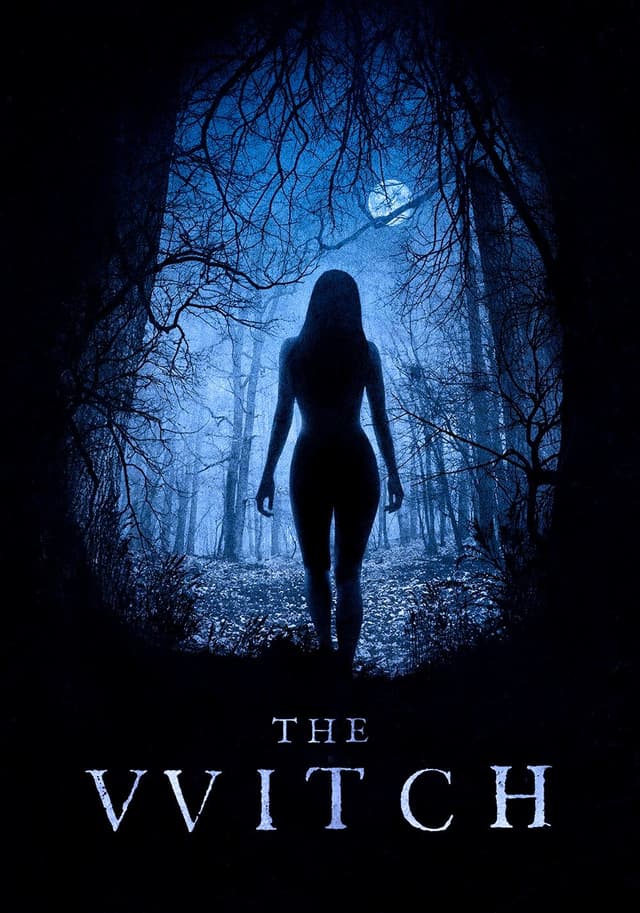
In 1630, a farmer relocates his family to a remote plot of land on the edge of a forest where strange, unsettling things happen. With suspicion and paranoia mounting, each family member's faith, loyalty and love are tested in shocking ways.
What Is the Budget of The Witch?
The Witch (2015), subtitled "A New-England Folktale," was produced for an estimated $3.5 million. Written and directed by Robert Eggers in his feature film debut, the project was developed through several independent financing channels before Parts & Labor and RT Features came aboard as production companies. The modest budget reflected the film's period setting and intimate cast, though it demanded significant investment in production design, costumes, and location work to recreate 1630s colonial New England with historical accuracy.
Key Budget Allocation Categories
- Production Design and Period Sets: Constructing an authentic 17th-century homestead from scratch in rural Ontario required hand-hewn timber framing, period-accurate furnishings, and a working farm set complete with livestock pens, a garden, and surrounding forest clearings.
- Costume Design: Linda Muir's wardrobe department created historically faithful garments using hand-stitched fabrics and natural dyes, referencing actual colonial textile records to ensure each piece matched the era's construction methods.
- Cinematography and Lighting: Jarin Blaschke shot the entire film using only natural light, candles, and firelight. This approach required precise scheduling around weather conditions and golden-hour windows, adding complexity to the production timeline.
- Location and Weather Costs: Filming took place in Kiosk, Ontario, a remote area of northern Canada standing in for colonial New England. The isolated location increased transportation and lodging expenses, while unpredictable weather conditions caused scheduling disruptions.
- Music and Sound Design: Mark Korven composed the score using period instruments including the nyckelharpa, a Swedish keyed fiddle, and a waterphone. The unconventional instrumentation required specialized musicians and recording sessions.
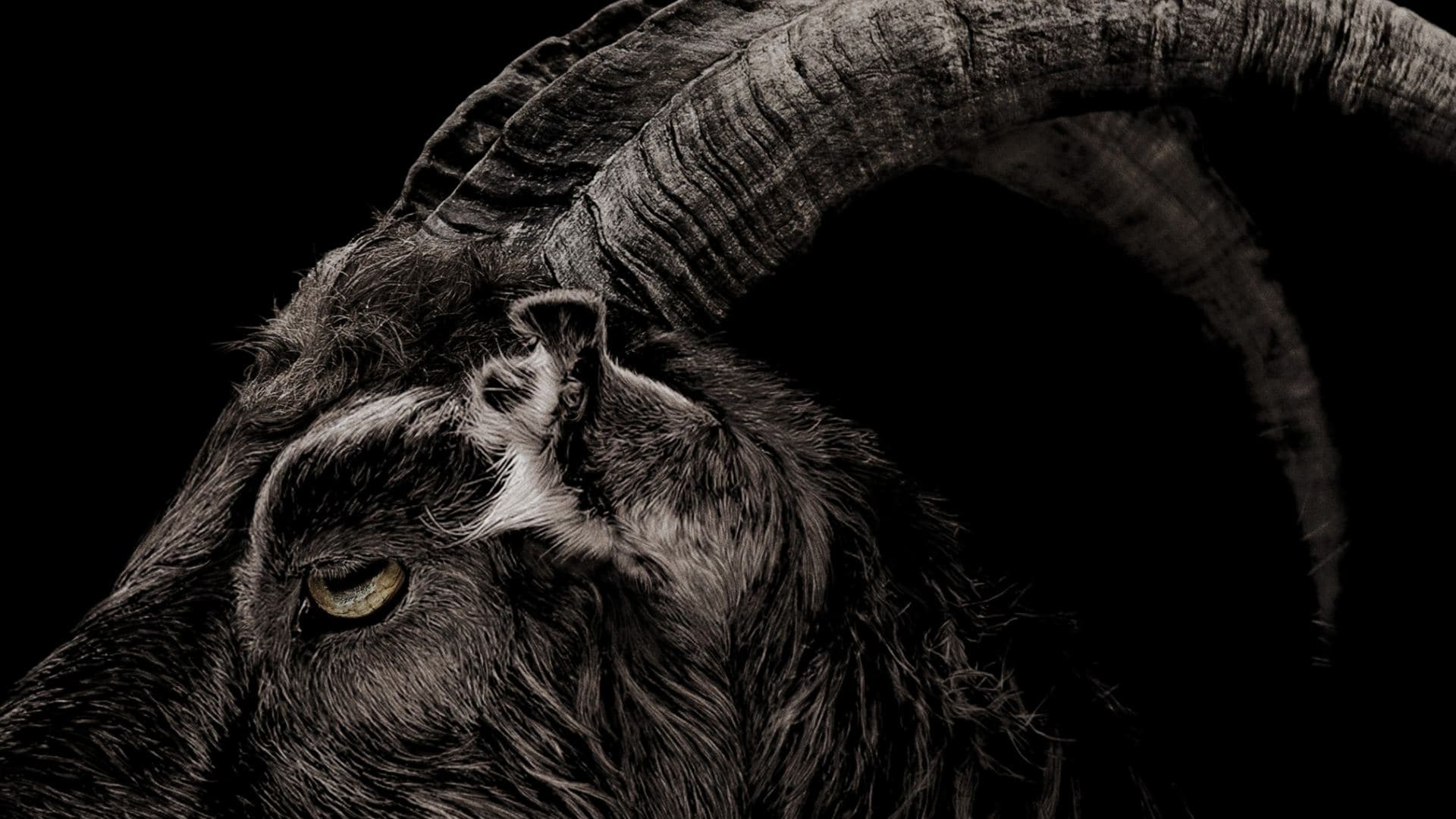
- Animal Wrangling: The film featured goats, a horse, a raven, and a hare, all requiring trained animal handlers, on-set safety supervision, and multiple takes to capture the performances Eggers envisioned.
How Does The Witch's Budget Compare to Similar Films?
- It Follows (2014): Budget $2M | Worldwide $23.3M. David Robert Mitchell's indie horror achieved strong returns on a smaller budget, though it relied on contemporary settings that required less production design investment than The Witch's period reconstruction.
- The Babadook (2014): Budget $2.4M | Worldwide $10.3M. Jennifer Kent's Australian psychological horror demonstrated that contained single-location stories could succeed on minimal budgets, though The Witch's ensemble cast and outdoor locations pushed costs higher.
- Hereditary (2018): Budget $10M | Worldwide $80.2M. Ari Aster's A24 debut operated at nearly three times The Witch's budget, reflecting the distributor's growing confidence in elevated horror after The Witch's commercial success.
- Midsommar (2019): Budget $9M | Worldwide $48M. Aster's follow-up required extensive set construction in Hungary for its fictional Swedish commune, a comparable production design challenge to The Witch's colonial homestead but at a significantly higher price point.
- The Lighthouse (2019): Budget $11M | Worldwide $18.3M. Eggers' own sophomore film received a substantially larger budget for its Nova Scotia lighthouse set and period detail, though it earned less worldwide than The Witch despite higher production costs.
The Witch Box Office Performance
The Witch opened on February 19, 2016 in 2,046 theaters, earning $8.8 million in its opening weekend. The film went on to gross $25,138,705 domestically and $40,421,947 worldwide. For a film budgeted at $3.5 million, the theatrical run alone represented a significant commercial success.
Using the standard break-even estimate of roughly twice the production budget to account for prints and advertising costs, The Witch needed approximately $7 million to recoup its investment. The worldwide gross of $40.4 million exceeded that threshold by a wide margin. The return on investment calculation, (Worldwide Gross minus Budget) divided by Budget times 100, yields an ROI of approximately 1,055%. This performance validated A24's acquisition strategy and helped establish the distributor as the leading brand for prestige horror.
Box Office Breakdown
The Witch

The Witch Production History
Robert Eggers began developing The Witch while studying directing at the Atlantic Theater Company in New York. Drawing on years of personal research into early American history and folklore, he wrote a screenplay that incorporated actual language from 17th-century journals, court records, and prayer manuals. The dialogue's archaic cadence was a deliberate choice to immerse audiences in the period rather than modernize the characters' speech patterns.
The project gained traction through independent financing, with producers Jay Van Hoy and Lars Knudsen of Parts & Labor and Rodrigo Teixeira of RT Features securing the budget. Principal photography took place over 25 days in Kiosk, a small community in Nipissing District, Ontario. The remote location offered dense boreal forest that could convincingly double for the wilderness surrounding a 1630s Puritan settlement.
Cinematographer Jarin Blaschke's commitment to natural lighting created both artistic distinction and practical challenges. Interior scenes relied entirely on candles and firelight, requiring custom-built rigs and extremely sensitive film stock. Exterior shoots were scheduled around narrow windows of usable daylight, and overcast skies or sudden weather changes could shut down production for the day. The crew also contended with swarms of black flies in the Ontario wilderness.
Anya Taylor-Joy, then a virtually unknown 17-year-old, was cast as Thomasin after an extensive search for young actors capable of handling the period dialogue. The role became her breakout performance and launched a career that would include Split, The Queen's Gambit, and Furiosa. Ralph Ineson and Kate Dickie were cast as the Puritan parents, bringing classical theater training that grounded the film's heightened language in emotional reality.
The Witch premiered at the 2015 Sundance Film Festival, where it won the Best Director award in the U.S. Dramatic Competition. A24 acquired North American distribution rights out of the festival, recognizing the film's potential to reach audiences beyond the typical horror demographic. The distributor's marketing campaign leaned into the film's period authenticity and critical acclaim, positioning it as a prestige release rather than a genre commodity.
Awards and Recognition
The Witch earned significant recognition on the festival and awards circuit. At Sundance 2015, Robert Eggers won the Directing Award for U.S. Dramatic Film. The film subsequently received the Gotham Independent Film Award for Breakthrough Director, cementing Eggers' reputation as a distinctive new voice in American cinema.
The film earned Independent Spirit Award nominations and won several critics' circle prizes throughout its release window. Jarin Blaschke's cinematography received particular praise, with multiple critics' organizations recognizing the natural-light photography as one of the year's most accomplished visual achievements. Anya Taylor-Joy received numerous breakthrough performer citations, including recognition from the Empire Awards and various critics' groups.
Beyond traditional awards, The Witch received an unusual endorsement from the Satanic Temple, which organized exclusive screenings and praised the film's portrayal of Thomasin's journey as a female empowerment narrative. This cultural moment amplified the film's visibility and contributed to its strong theatrical performance.
Critical Reception
The Witch holds a 90% approval rating on Rotten Tomatoes and is widely regarded as a landmark of the "elevated horror" movement that gained prominence in the mid-2010s. Critics praised Robert Eggers' meticulous period detail, the unsettling atmosphere sustained through deliberate pacing, and the film's willingness to prioritize dread over jump scares.
Jarin Blaschke's cinematography drew comparisons to the paintings of Andrew Wyeth and the naturalism of Terrence Malick, with reviewers noting that the natural-light approach gave the film a texture unlike anything else in contemporary horror. Mark Korven's score, built from period instruments and dissonant vocal arrangements, was cited as essential to the film's creeping sense of unease.
Anya Taylor-Joy's performance as Thomasin received near-universal acclaim, with critics identifying her as a major emerging talent. The ensemble cast, particularly Ralph Ineson's tormented patriarch and Harvey Scrimshaw's possessed younger brother, were praised for committing fully to the archaic dialogue without lapsing into artifice.
Some audiences found the slow pacing and period language challenging, leading to a notable gap between the film's critical scores and general audience reception. This division itself became part of the broader conversation about what "elevated horror" meant and whether the label served or undermined the genre. Regardless of that debate, The Witch established Robert Eggers as one of the most distinctive filmmakers of his generation and proved that micro-budget historical horror could find a substantial theatrical audience.
Frequently Asked Questions
How much did it cost to make The Witch (2016)?
The production budget was $4,000,000, covering principal photography, cast and crew salaries, locations, sets, post-production, and music. Marketing and distribution (P&A) costs are estimated at an additional $2,000,000 - $3,200,000, bringing the total studio investment to approximately $6,000,000 - $7,200,000.
How much did The Witch (2016) earn at the box office?
The Witch grossed $25,138,705 domestic, $15,285,240 international, totaling $40,423,945 worldwide.
Was The Witch (2016) profitable?
Yes. Against a production budget of $4,000,000 and estimated total costs of ~$10,000,000, the film earned $40,423,945 theatrically - a 911% ROI on production costs alone.
What were the biggest costs in producing The Witch?
The primary cost drivers were above-the-line talent (Anya Taylor-Joy, Ralph Ineson, Kate Dickie); practical creature effects, atmospheric cinematography, and psychologically engineered sound design; international production across Brazil, Canada, United Kingdom, United States of America.
How does The Witch's budget compare to similar horror films?
At $4,000,000, The Witch is classified as a micro-budget production. The median budget for wide-release horror films in the 2010s ranges from $30 - 80M for mid-budget to $150M+ for tentpoles. Comparable budgets: Peter Pan (1953, $4,000,000); Farewell My Concubine (1993, $4,000,000); Dersu Uzala (1975, $4,000,000).
Did The Witch (2016) go over budget?
There are no widely reported accounts of significant budget overruns for this production. However, studios rarely disclose precise budget overrun figures publicly. The reported production budget reflects the final estimated cost.
What was the return on investment (ROI) for The Witch?
The theatrical ROI was 910.6%, calculated as ($40,423,945 − $4,000,000) ÷ $4,000,000 × 100. This measures gross revenue against production budget only - it does not account for P&A or exhibitor shares.
What awards did The Witch (2016) win?
43 wins & 72 nominations total.
Who directed The Witch and who were the key crew members?
Directed by Robert Eggers, written by Robert Eggers, shot by Jarin Blaschke, with music by Mark Korven, edited by Louise Ford.
Where was The Witch filmed?
The Witch was filmed in Brazil, Canada, United Kingdom, United States of America.
Filmmakers
The Witch

Official Trailer
Build budgets like this one in Saturation
Start from an industry-standard feature film template, import the schedule and rates you already have, and let the cost report keep itself current as you spend. Real-time collaboration, no spreadsheets.