The Weather Man Budget
 Drama
DramaUpdated
Synopsis
Chicago weatherman David Spritz, considered a local celebrity but a personal failure, navigates a midlife crisis as his career rises and his family unravels. As he weighs a job offer from a national morning show in New York, he confronts his deteriorating relationship with his children and his Pulitzer Prize-winning father.
What Is the Budget of The Weather Man (2005)?
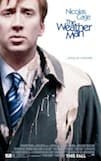
The Weather Man (2005), directed by Gore Verbinski and distributed by Paramount Pictures, was produced on a reported budget of $22,000,000. The melancholy character drama, written by Steven Conrad and starring Nicolas Cage as a Chicago television weatherman in midlife crisis, was financed by Paramount in partnership with Escape Artists and Iceberg Productions. The $22,000,000 commitment was modest for a film starring a recent Academy Award winning lead and directed by a filmmaker coming off the original Pirates of the Caribbean: The Curse of the Black Pearl, which had grossed $654,000,000 worldwide.
The financial structure reflected the project's independent character despite the studio backing. Nicolas Cage and Michael Caine took compensation packages weighted toward backend participation rather than full upfront fees, allowing the modest budget to absorb location shooting across Chicago and New York and a Hans Zimmer score. The remainder of the budget went to supporting cast Hope Davis, Gemmenne de la Peña, and Nicholas Hoult, period-appropriate production design, and Phedon Papamichael's cinematography that emphasized cold-weather Chicago atmospherics.
Key Budget Allocation Categories
The $22,000,000 budget for The Weather Man was distributed across several core production areas:
- Above-the-Line Talent: Nicolas Cage led the cast as David Spritz, taking a compensation package weighted toward backend participation rather than his typical $20,000,000 plus upfront fee. Michael Caine, an Academy Award winning supporting player, took a similar backend-weighted deal to play David's father Robert Spritzel. Director Gore Verbinski, coming off the $654,000,000 worldwide gross of Pirates of the Caribbean, accepted a director fee well below his post-Pirates rate to anchor the project.
- Chicago Location Work: The film shot extensively on location across Chicago in winter and early spring, with key scenes at the Chicago River, the Lincoln Park Zoo, the Magnificent Mile, and various Lake Michigan vantage points. Cold-weather location work added shooting-day costs, with the production using local crews and Illinois production resources.
- New York City Photography: Additional scenes were shot in New York City, primarily covering the network morning-show interview sequences and the closing fantasies of David's new life. The dual-city production added travel, freight, and per-diem costs.
- Hans Zimmer Score: Composer Hans Zimmer, fresh off his Academy Award nomination for The Last Samurai, scored the film with a chamber-scale orchestral approach that emphasized melancholy strings and piano. The score was recorded with a smaller ensemble than Zimmer's blockbuster work but still required full studio time and orchestration.
- Production Design: Production designer Tom Duffield (Beetlejuice, Edward Scissorhands) dressed the Spritz family home, the television station weather studio, and the cold suburban locations to underscore the film's emotional palette. The budget covered set dressing, location modifications, and the construction of the weather-studio set.
- Marketing and Theatrical Release: Paramount opened the film in a limited release on October 28, 2005 in 14 theaters, expanding wide to 1,510 screens on November 4, 2005. The marketing budget was modest by Paramount standards, estimated at $15,000,000 to $20,000,000, reflecting the studio's reduced commercial expectations after disappointing test screenings.
How Does The Weather Man's Budget Compare to Similar Films?
At $22,000,000, The Weather Man sits in the typical range for mid-2000s mid-life-crisis character dramas. The comparison set illustrates how its commercial outcome diverged from its peers:
- About Schmidt (2002): Budget $30,000,000 | Worldwide $105,834,556. Alexander Payne's Jack Nicholson midlife-crisis drama cost slightly more and grossed more than seven times worldwide, demonstrating what an Oscar-bait release strategy and stronger reviews could deliver in the same emotional register.
- Sideways (2004): Budget $16,000,000 | Worldwide $109,706,931. Payne's subsequent middle-aged-disappointment dramedy cost less than The Weather Man and grossed more than seven times worldwide, illustrating the gap between a film that found its audience and one that did not.
- Lost in Translation (2003): Budget $4,000,000 | Worldwide $118,685,201. Sofia Coppola's Bill Murray melancholic comedy cost less than 20% of The Weather Man and grossed more than eight times worldwide, showing how a smaller, more critically embraced film could outperform a larger studio cousin.
- Garden State (2004): Budget $2,500,000 | Worldwide $35,815,433. Zach Braff's independent suburban-malaise comedy cost a tenth of The Weather Man and grossed more than twice worldwide, illustrating the indie alternative to Paramount's studio approach.
- The Squid and the Whale (2005): Budget $1,500,000 | Worldwide $11,478,021. Noah Baumbach's contemporaneous family-disintegration drama cost a fraction of The Weather Man and grossed close to it worldwide, suggesting Paramount's budget was substantially overcommitted relative to the film's likely audience.
The Weather Man Box Office Performance
The Weather Man opened in limited release on October 28, 2005 in 14 theaters, earning $148,768. The film expanded wide to 1,510 screens on November 4, 2005, earning $4,200,072 in its wide opening weekend and finishing fifth at the domestic box office behind Chicken Little, Saw II, Jarhead, and Zathura: A Space Adventure. The wide expansion underperformed against the modest theater count, indicating limited audience interest beyond the limited-release critic circuit.
Against a $22,000,000 production budget, the film needed approximately $50,000,000 worldwide to reach profitability after marketing. Here is the financial breakdown:
Box Office Breakdown
The Weather Man (2005)

The Weather Man returned approximately $0.36 in worldwide theatrical revenue for every $1 invested when measured against total estimated production and marketing spend, marking it a clear theatrical loss for Paramount. The domestic share of $12,477,472 against an international share of $1,876,066 was a 87/13 split heavily weighted toward North America, reflecting both the Chicago specificity of the setting and Paramount's minimal international theatrical push.
The film recouped substantially through home video, pay-television licensing, and over the long term streaming residuals, becoming a steady library catalog title and a frequent reference point in discussions of Nicolas Cage's mid-2000s dramatic work. The theatrical run alone, however, left Paramount short of the break-even line by a meaningful margin.
The Weather Man Production History
Development began at Paramount in 2002 when Steven Conrad delivered the original screenplay, which had been making the rounds in Hollywood for several years. Conrad, best known at the time for his unproduced spec scripts, had written the script as a personal meditation on midlife disappointment and the gap between professional success and emotional fulfillment. Producer Todd Black and Jason Blumenthal of Escape Artists optioned the screenplay and brought it to Paramount.
Nicolas Cage was attached as David Spritz in early 2003, fresh off Adaptation and his Academy Award nomination. Gore Verbinski, who had directed Cage in The Mexican (2001), was attached to direct in late 2003 immediately before the breakout success of Pirates of the Caribbean: The Curse of the Black Pearl made him one of the most in-demand directors in Hollywood. Verbinski elected to honor the Weather Man commitment as a smaller-scale palate cleanser between Pirates installments, a creative decision that was widely covered in trade press.
Michael Caine joined the cast in early 2004 as Robert Spritzel, David's Pulitzer Prize winning father. Hope Davis played David's ex-wife Noreen, with Gemmenne de la Peña and Nicholas Hoult as their children. Principal photography ran from December 2004 through March 2005, primarily on location in Chicago in winter weather, with additional New York City photography in February and March. The cold-weather Chicago shoot was deliberately scheduled to capture the gray Lake Michigan atmosphere that defines the film's emotional palette.
Hans Zimmer recorded the score in summer 2005, with the film completed for an October 28, 2005 limited release. The marketing campaign emphasized Nicolas Cage's dramatic range and the Gore Verbinski connection to Pirates, although test screenings had shown audiences struggled with the film's melancholy tone. The wide expansion on November 4 underperformed, and Paramount pulled back the theater count rapidly through November and December.
Awards and Recognition
The Weather Man received no major awards nominations. The film failed to register at the Academy Awards, Golden Globes, BAFTA Awards, Independent Spirit Awards, or Screen Actors Guild Awards. Nicolas Cage's lead performance, while widely praised by critics who responded to the film, did not generate awards traction, in part because the film's commercial collapse limited its visibility during the precursor windows.
Hans Zimmer's score earned no major industry recognition, although it has become a referenced piece in Zimmer retrospectives for its more restrained chamber approach compared to his blockbuster work. The film has retained a modest cult following among Nicolas Cage enthusiasts and fans of melancholy character dramas, with several critics revisiting it favorably in retrospective pieces during the 2010s.
Critical Reception
The Weather Man received mixed reviews. The film holds a 60% approval rating on Rotten Tomatoes based on 152 critic reviews, with a critical consensus that called it a melancholy but well-acted character study that struggled to find its tonal footing. On Metacritic, the film scored 56 out of 100, indicating mixed or average reviews. Audiences surveyed by CinemaScore gave the film a C-plus, well below the typical Nicolas Cage drama floor and a clear signal that the melancholy tone alienated the general audience drawn by the marketing.
Critics broadly praised Nicolas Cage's lead performance, Michael Caine's supporting work, Phedon Papamichael's cold-weather cinematography, and Hans Zimmer's score, but objected to the script's tonal unevenness, the unflattering portrayal of David's family members, and Gore Verbinski's pacing of the midlife-crisis material. Roger Ebert in the Chicago Sun-Times gave the film three stars and wrote that "Cage's performance is so good that it almost transcends a movie that doesn't quite know what it wants to be," while Manohla Dargis in The New York Times called it "a misfire that wastes a fine Nicolas Cage performance."
Reception among indie-leaning critics was more favorable. Variety's Todd McCarthy praised the script as one of the more honest treatments of midlife disappointment in recent studio filmmaking. The mixed reception combined with the commercial collapse has positioned The Weather Man as a noteworthy curio in both Nicolas Cage's and Gore Verbinski's filmographies, more discussed in retrospective Cage appreciations than treated as a major work at the time of release.
Frequently Asked Questions
How much did The Weather Man (2005) cost to make?
The reported production budget was $22,000,000. Paramount Pictures financed the film in partnership with Escape Artists and Iceberg Productions. Both Nicolas Cage and Michael Caine reportedly took compensation packages weighted toward backend participation rather than full upfront fees to keep the budget at this level.
How much did The Weather Man earn at the box office?
The film grossed $12,477,472 domestically and $1,876,066 internationally, for a worldwide total of $14,353,538. It opened in limited release on October 28, 2005 in 14 theaters, then expanded wide to 1,510 screens on November 4, 2005, earning $4,200,072 in its wide opening weekend.
Was The Weather Man a box office success?
No. Against a $22,000,000 production budget and an estimated $15,000,000 to $20,000,000 in marketing spend, the film returned approximately $0.36 in worldwide gross for every $1 invested. Paramount absorbed an estimated theatrical loss of around $25,000,000, although home video, pay-television, and streaming residuals have recouped substantial revenue over the long term.
Who directed The Weather Man?
Gore Verbinski directed the film, working from a screenplay by Steven Conrad. Verbinski took the assignment immediately after the breakout success of Pirates of the Caribbean: The Curse of the Black Pearl, treating the smaller-scale Weather Man as a palate cleanser between Pirates installments.
Where was The Weather Man filmed?
Principal photography took place from December 2004 through March 2005, primarily on location in Chicago in winter weather. Key scenes were shot at the Chicago River, Lincoln Park Zoo, the Magnificent Mile, and various Lake Michigan vantage points. Additional scenes were filmed in New York City in February and March 2005.
Who plays David Spritz in The Weather Man?
Nicolas Cage plays David Spritz, a Chicago television weatherman in midlife crisis. The role was a deliberate dramatic palate cleanser for Cage after a string of action and genre films, written by Steven Conrad as a personal meditation on midlife disappointment.
Who scored The Weather Man?
Hans Zimmer scored the film with a chamber-scale orchestral approach that emphasized melancholy strings and piano. The score was a deliberately restrained departure from Zimmer's blockbuster work and has become a referenced piece in retrospective discussions of his more intimate film scoring.
What is the rating of The Weather Man?
The film is rated R by the Motion Picture Association of America for strong language and sexual content. The R rating, combined with the melancholy tone of the marketing materials, contributed to the film's soft commercial performance against younger-skewing comedies opening in the same November window.
What did critics think of The Weather Man?
The film received mixed reviews, with a 60% approval rating on Rotten Tomatoes and a 56 out of 100 score on Metacritic. Audiences gave it a C-plus CinemaScore. Critics praised Nicolas Cage's lead performance, Phedon Papamichael's cinematography, and Hans Zimmer's score but objected to the tonal unevenness and the unflattering portrayal of David's family.
Did The Weather Man win any awards?
No. The film received no major awards nominations and failed to register at the Academy Awards, Golden Globes, BAFTA Awards, or Independent Spirit Awards. Its commercial collapse limited its visibility during the precursor windows, although it has retained a modest cult following among Nicolas Cage enthusiasts.
Filmmakers
The Weather Man (2005)

Build budgets like this one in Saturation
Start from an industry-standard feature film template, import the schedule and rates you already have, and let the cost report keep itself current as you spend. Real-time collaboration, no spreadsheets.