The Void Budget
Updated
Synopsis
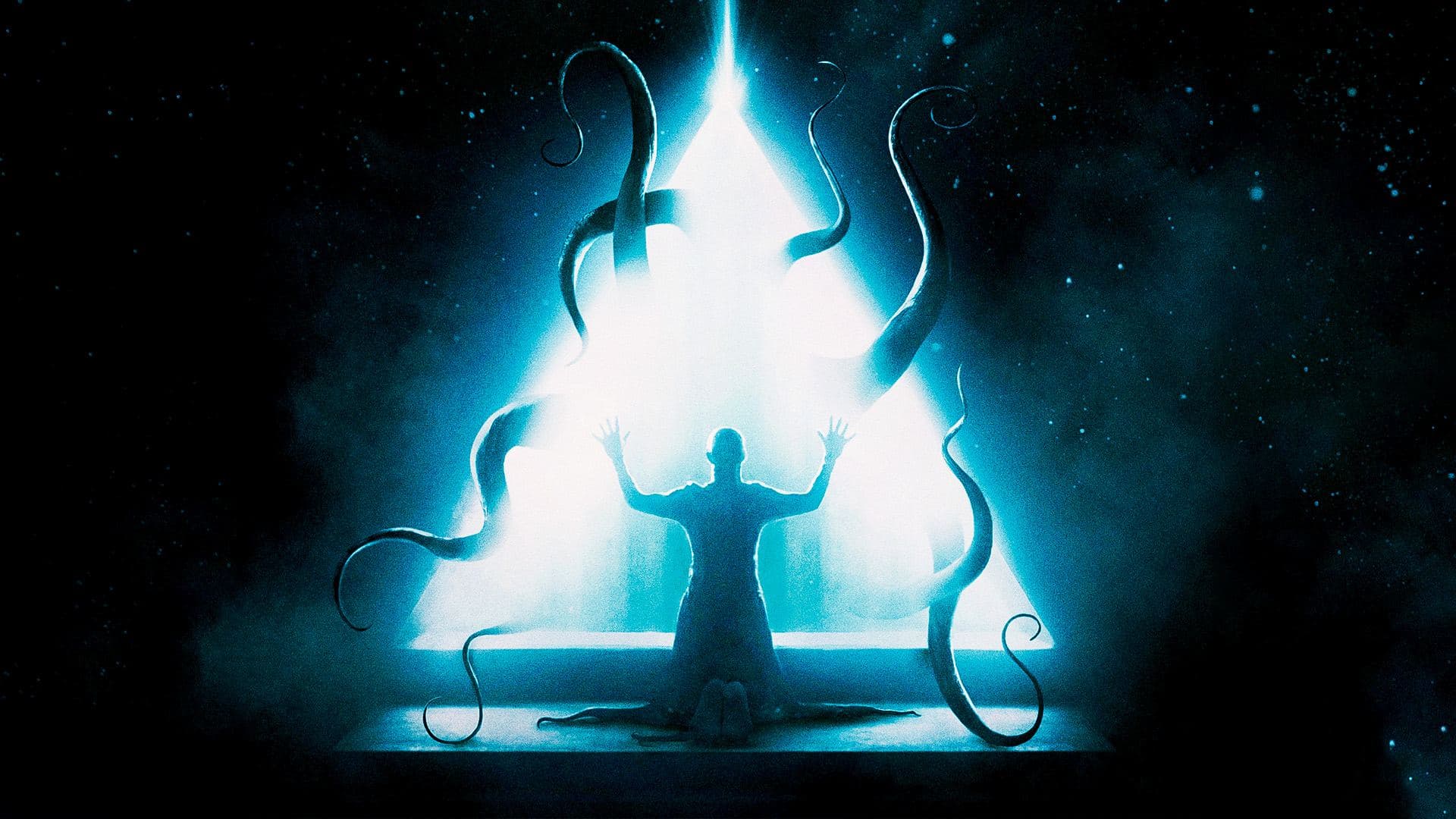
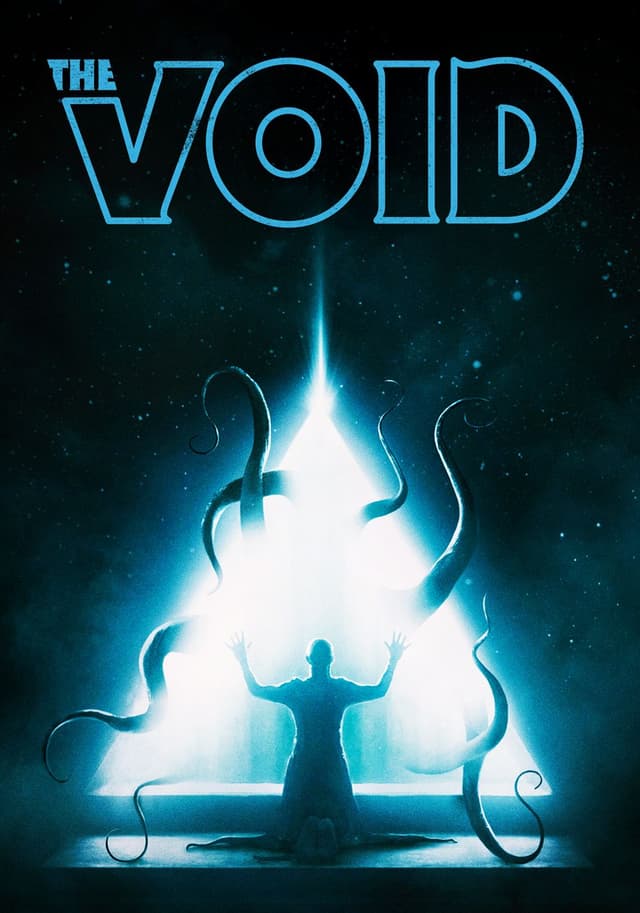
A police officer named Daniel Carter brings an injured man to a rural Ontario hospital where the night staff includes a doctor, a nurse, and a trainee. As hooded cultists surround the building and the staff begin to transform into otherworldly creatures, Carter must navigate a Lovecraftian descent into a portal opening beneath the hospital.
What Is the Budget of The Void (2016)?
The Void (2016), co-directed by Jeremy Gillespie and Steven Kostanski and distributed by Screen Media Films, was produced on a reported budget of approximately CAD 82,000 in initial Indiegogo crowdfunding plus additional Canadian private investment that brought the total production budget to approximately CAD 1,000,000 to CAD 1,500,000, equivalent to roughly $750,000 to $1,150,000 USD. The film became a defining work of the Astron-6 collective and a flagship example of practical-effects-driven Canadian horror cinema in the streaming era.
The budget reflected the film's independent-horror-genre positioning. Astron-6, the Winnipeg- and Toronto-based filmmaker collective behind Manborg (2011), Father's Day (2011), and The Editor (2014), built The Void as a deliberate love letter to John Carpenter, Lucio Fulci, and Clive Barker, with the production cost weighted heavily toward practical creature effects rather than a marquee cast or location scale. Cave Painting Pictures and JoBro Productions co-produced.
Key Budget Allocation Categories
The Void's estimated CAD 1,000,000 to CAD 1,500,000 budget was distributed across several core production areas:
- Practical Creature Effects: The film's defining visual asset is its hand-built creature design, executed by Steven Kostanski and the Astron-6 effects team in the tradition of John Carpenter's The Thing (1982) and Stuart Gordon's From Beyond (1986). Practical effects accounted for the single largest line item in the budget, including foam latex prosthetics, full-body monster suits, articulated puppets, and on-set lighting designed for practical-effect photography.
- Above-the-Line Talent: Co-directors Jeremy Gillespie and Steven Kostanski split director duties; Kostanski also led practical effects. Lead Aaron Poole, an Astron-6 collaborator, anchored the cast alongside Kenneth Welsh and Ellen Wong. Cast salaries were structured at indie-feature scale, with several Astron-6 collective members working at reduced rates as a contribution to the project.
- Ontario Production: Principal photography ran in Sault Ste. Marie, Ontario in early 2016, taking advantage of the Ontario Film and Television Tax Credit. The abandoned hospital that serves as the film's central location was a real Sault Ste. Marie building, and the production used minimal location-dressing to deliver an authentic decaying institutional environment.
- Crowdfunding and Indie Financing: The film raised CAD 82,510 on Indiegogo in 2015, which provided initial production capital and audience-building. Additional private Canadian investment, deferred-fee participation by cast and crew, and a pre-sale to Screen Media Films completed the financing stack.
- Cinematography: Director of photography Samy Inayeh shot the film on Red Epic Dragon digital cameras with practical lighting setups designed to flatter the creature effects rather than digital effects post-treatment. The aesthetic deliberately referenced late-1970s and 1980s horror.
- Score and Music: Composers Joseph Murray, Lodewijk Vos, and Menalon scored the film with a synthesizer-driven palette that explicitly evokes John Carpenter's self-composed scores. The score budget covered original composition and modest licensing.
How Does The Void's Budget Compare to Similar Films?
At an estimated $750,000 to $1,150,000 USD, The Void sits at the lower end of independent horror cinema. The comparison set illustrates the budget envelope:
- The Editor (2014): Budget approximately CAD 250,000 | Worldwide N/A. The previous Astron-6 collective feature, also co-directed by Jeremy Gillespie, cost roughly a fifth of The Void and demonstrates the collective's escalating production scale.
- It Follows (2014): Budget approximately $2,000,000 | Worldwide $23,251,447. David Robert Mitchell's independent horror, released two years earlier, cost roughly twice The Void and earned twenty times its budget worldwide.
- Hush (2016): Budget approximately $1,000,000 | Worldwide N/A (Netflix). Mike Flanagan's contemporary Netflix-acquired indie horror cost the same amount and chose a streaming-only distribution path.
- Pyewacket (2017): Budget approximately CAD 2,000,000 | Worldwide $59,400. Adam MacDonald's contemporaneous Canadian indie horror illustrates the price tier directly above The Void.
- The Witch (2015): Budget $4,000,000 | Worldwide $40,400,000. Robert Eggers' indie horror festival breakout at four times The Void's budget demonstrates the upside potential for low-budget genre cinema with strong critical traction.
The Void Box Office Performance
The Void had its world premiere at the 2016 Fantasia International Film Festival in Montreal on August 1, 2016, where it won the Best Picture (Cheval Noir) award and the Best Special Effects award. The film received a limited US theatrical release through Screen Media Films on April 7, 2017, in 30 theaters, alongside simultaneous video-on-demand availability.
The film generated limited theatrical box office of approximately $151,393 in domestic US release across its limited theatrical run. International theatrical was negligible, with the film reaching most international audiences through video-on-demand and home video. Against the estimated $750,000 to $1,150,000 USD production budget, here is the financial breakdown:
Box Office Breakdown
The Void

The film's commercial path ran primarily through video-on-demand, Blu-ray release through Scream Factory, and ongoing horror-streaming licensing. The Void has remained in continuous circulation across genre streamers including Shudder, and its festival-pedigreed practical-effects reputation has driven sustained long-tail catalog value.
The Void Production History
Development on The Void began within the Astron-6 collective in 2014, with Jeremy Gillespie and Steven Kostanski writing the screenplay over a year of part-time work. The Indiegogo crowdfunding campaign in January 2015 raised CAD 82,510 against a CAD 100,000 stretch goal, providing initial development capital and building an early genre-fan audience.
Principal photography ran in February 2016 in Sault Ste. Marie, Ontario, taking advantage of the Ontario Film and Television Tax Credit. The shoot was tightly compressed at approximately 20 days, with the abandoned hospital location providing most interior locations. Practical effects setups added per-day complexity but allowed the production to capture in-camera what would otherwise have required expensive post-production VFX.
Post-production took place in Toronto through summer 2016, with the film completed in time for its August 2016 Fantasia world premiere. Screen Media Films acquired US distribution rights at Fantasia, with releases following in select international markets through 2017. The film became a touchstone for the practical-effects revival in independent horror cinema.
Awards and Recognition
The Void won the Cheval Noir (Black Horse) for Best Picture and Best Special Effects at the 2016 Fantasia International Film Festival in Montreal, the most significant genre-cinema festival in Canada. The film also screened at Sitges Film Festival, the leading European fantasy and horror festival, where it received additional genre-press attention.
Within the horror-cinema community, The Void received Fangoria Chainsaw Award nominations and recognition from genre publications including Rue Morgue and Bloody Disgusting. The film's practical-effects work earned particular recognition and has been cited as a defining example of the 2010s revival of in-camera creature horror following decades of CG dominance.
Critical Reception
The Void received mixed-to-positive reviews. The film holds a 75% approval rating on Rotten Tomatoes based on 71 critic reviews, with the critical consensus calling it a visually inventive throwback that delivers on practical-effects horror despite a familiar narrative. On Metacritic, the film scored 67 out of 100, indicating generally favorable reviews.
Critics broadly praised the practical creature effects, the synth-driven score, the explicit John Carpenter and Lucio Fulci references, and the deliberate aesthetic recreation of late-1970s and 1980s horror. They objected to a derivative storyline that critics felt traded narrative originality for genre pastiche, a thin character development arc, and a third act that some reviewers found chaotic.
The Hollywood Reporter's Frank Scheck wrote that the film "delivers genuinely unsettling practical-effects horror that horror fans will treasure," while Variety's Joe Leydon called it "an ambitious if not always satisfying love letter to 1980s body horror." Horror-genre press was more enthusiastic, with Bloody Disgusting and Fangoria praising the film as a defining example of independent horror's practical-effects revival.
Frequently Asked Questions
How much did it cost to make The Void (2016)?
The reported production budget was approximately CAD 1,000,000 to CAD 1,500,000, equivalent to roughly $750,000 to $1,150,000 USD. The film raised CAD 82,510 on Indiegogo in 2015 to seed production, with the balance supplied by Canadian private investment, a Screen Media Films pre-sale, and the Ontario Film and Television Tax Credit.
Who directed The Void?
Jeremy Gillespie and Steven Kostanski co-directed The Void. Both are members of the Astron-6 filmmaker collective, the Winnipeg and Toronto-based group behind Manborg (2011), Father's Day (2011), and The Editor (2014). Kostanski also led the film's practical effects work.
Are the creatures in The Void real or CGI?
The creatures are almost entirely practical effects, executed by Steven Kostanski and the Astron-6 effects team in the tradition of John Carpenter's The Thing (1982) and Stuart Gordon's From Beyond (1986). The film uses foam latex prosthetics, full-body monster suits, and articulated puppets, with minimal CGI augmentation. The practical approach is central to the film's aesthetic identity.
Where was The Void filmed?
Principal photography ran in February 2016 in Sault Ste. Marie, Ontario, Canada. The abandoned hospital that serves as the film's central location was a real Sault Ste. Marie building. The production used the Ontario Film and Television Tax Credit and ran approximately 20 days.
What is The Void about?
A police officer named Daniel Carter brings an injured man to a rural Ontario hospital. As hooded cultists surround the building and the night staff begin transforming into otherworldly creatures, Carter and the trapped staff must navigate a Lovecraftian descent into a portal opening beneath the hospital.
How much did The Void make at the box office?
The film generated approximately $151,393 in domestic US theatrical box office across its limited 30-theater run starting April 7, 2017. International theatrical was negligible, with the bulk of audience reaching the film through video-on-demand, the Scream Factory Blu-ray, and ongoing horror-streaming distribution.
What did critics think of The Void?
The Void received mixed-to-positive reviews. The film holds a 75% approval rating on Rotten Tomatoes based on 71 critic reviews and a 67 out of 100 score on Metacritic. Critics praised the practical creature effects, the synth-driven score, and the John Carpenter homage, while objecting to a derivative storyline and thin character development.
Did The Void win any awards?
Yes. The film won the Cheval Noir (Black Horse) for Best Picture and Best Special Effects at the 2016 Fantasia International Film Festival in Montreal, the most significant genre-cinema festival in Canada. The film also screened at Sitges Film Festival and received Fangoria Chainsaw Award nominations.
Where can I watch The Void?
The Void is available on multiple streaming services including Shudder (in territories where Shudder operates), and on physical home video through Scream Factory's Blu-ray edition. The film has remained in continuous horror-streaming circulation since its 2017 home video release.
Is The Void connected to other Astron-6 films?
The Void is the most commercially distributed Astron-6 collective project to date and represents a step up in production scale from the collective's earlier features Manborg (2011), Father's Day (2011), and The Editor (2014). Director Steven Kostanski has continued working in horror with subsequent features including Psycho Goreman (2020).
Filmmakers
The Void

Official Trailer
Build budgets like this one in Saturation
Start from an industry-standard feature film template, import the schedule and rates you already have, and let the cost report keep itself current as you spend. Real-time collaboration, no spreadsheets.