The Upside Budget
 ComedyDrama2h 6m
Updated
Synopsis
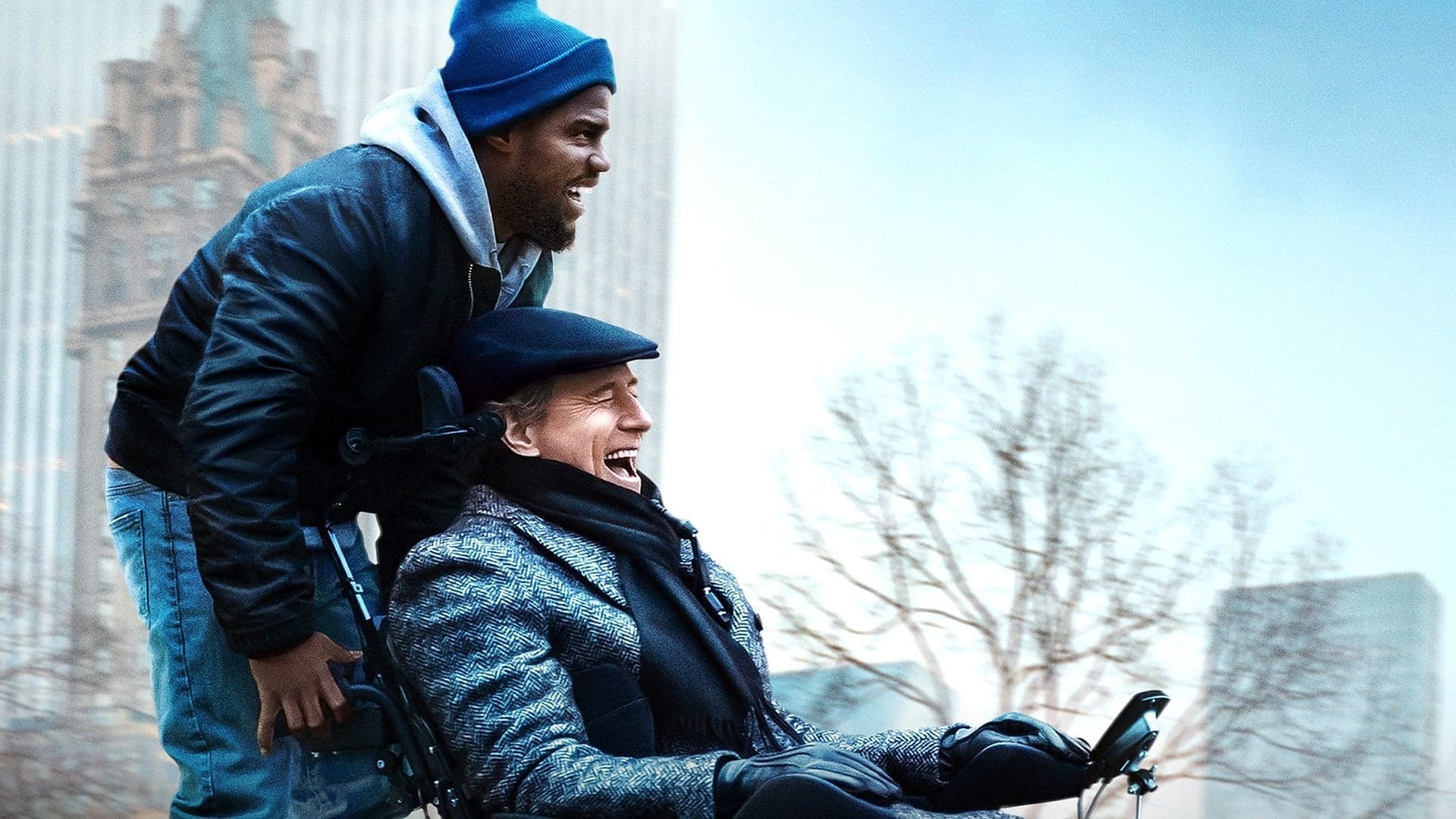
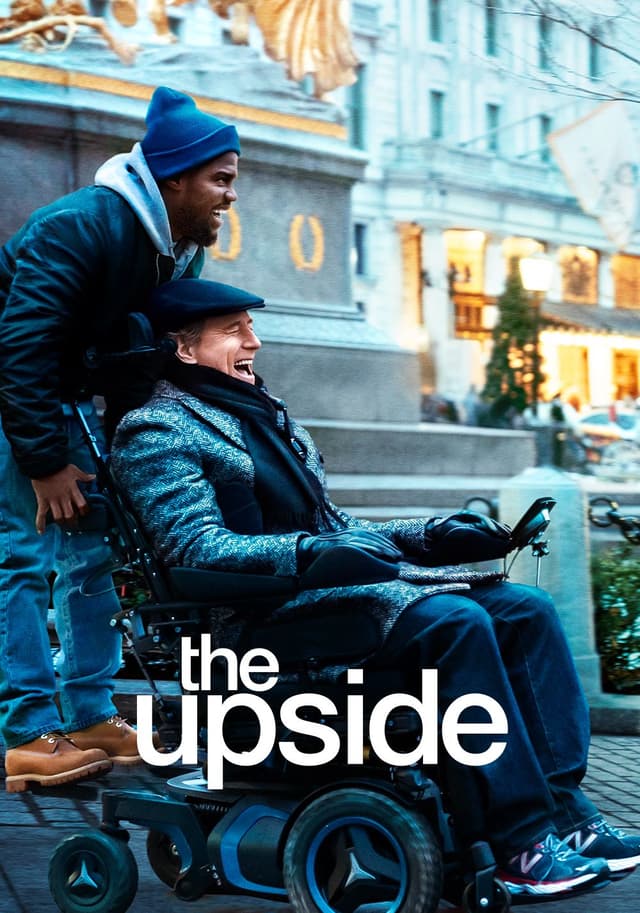
Phillip is a wealthy quadriplegic who needs a caretaker to help him with his day-to-day routine in his New York penthouse. He decides to hire Dell, a struggling parolee who's trying to reconnect with his ex and his young son. Despite coming from two different worlds, an unlikely friendship starts to blossom.
What Is the Budget of The Upside?
The Upside was produced on a budget of $37.5 million, a moderate figure for a character-driven comedy-drama starring three A-list actors. As an American remake of the French blockbuster The Intouchables (2011), the project carried built-in audience awareness but still needed to justify its spending through star power and production value rather than visual effects or action sequences.
The budget reflects the cost of securing Kevin Hart, Bryan Cranston, and Nicole Kidman, all of whom commanded significant salaries by 2017 when principal photography took place. Director Neil Burger, known for Limitless and Divergent, brought studio-level craft to what is fundamentally an intimate two-hander about an unlikely friendship between a wealthy quadriplegic and his newly hired caretaker.
Key Budget Allocation Categories
- Above-the-Line Talent: The combined salaries for Hart, Cranston, and Kidman represented the largest single budget category. Hart was at the peak of his commercial drawing power, and Cranston carried prestige value from his Breaking Bad and Trumbo acclaim.
- Production Design: The film required detailed interior sets for Dell's (Cranston) upscale New York penthouse, which needed to convey both luxury and the practical modifications of a quadriplegic's living space.
- Location Filming: Shot primarily in Philadelphia and New York, the production used a mix of practical locations and soundstage work. Urban location shoots in major East Coast cities carry above-average permit and logistics costs.
- Prosthetics and Physical Effects: Cranston's portrayal of a quadriplegic required careful attention to physical continuity, including specialized wheelchair setups and on-set medical consultants to ensure authenticity.
- Music and Score: Composer Rob Simonsen delivered an original score that balanced emotional warmth with restraint. The soundtrack also licensed several well-known tracks to underscore key character moments.
- Post-Production: Minimal visual effects kept post costs modest, though the editing process was extended as the film sat on the shelf for over a year before its eventual release in January 2019.
How Does The Upside's Budget Compare to Similar Films?
- The Intouchables (2011): Budget $13M | Worldwide $426M. The original French film cost roughly one-third of its American remake and became the highest-grossing non-English-language film in history at the time, setting an extraordinarily high bar for The Upside.
- Green Book (2018): Budget $23M | Worldwide $321M. Released just weeks before The Upside, this similarly themed buddy drama about an unlikely cross-cultural friendship won Best Picture and demonstrated the commercial viability of the genre at a lower price point.
- The Blind Side (2009): Budget $29M | Worldwide $309M. Another true-story drama about an unlikely bond across social lines, The Blind Side proved that heartfelt execution and a charismatic lead could generate massive returns without blockbuster-level spending.
- Ride Along (2014): Budget $25M | Worldwide $154M. Kevin Hart's biggest pre-Upside hit as a leading man showed that his box office ceiling in a buddy comedy format was well above the $37.5M investment The Upside required.
- 1+1 (Remake Rights): Budget $37.5M | Worldwide $122M. The Upside landed in line with its budget class, though its delayed release and mixed critical reception prevented it from reaching the heights of its French source material.
The Upside Box Office Performance
The Upside earned $108,327,830 domestically and $122,089,159 worldwide against its $37.5 million production budget. For a film that was shelved for over a year and dumped into a January release window, these numbers represent a genuine commercial surprise.
Factoring in marketing and distribution costs, the break-even threshold was approximately $75 million in worldwide gross (roughly 2x the production budget). The Upside cleared that mark on domestic revenue alone, finishing well in the black. Using the standard ROI formula: ($122,089,159 - $37,500,000) / $37,500,000 x 100 = 225.6% ROI on production costs.
The film opened to $19.6 million over the Martin Luther King Jr. holiday weekend, claiming the number one spot and dethroning Aquaman after three weeks. It held the top position for two consecutive weekends and became the highest-grossing January release at the time. STXfilms and Lantern Entertainment benefited from minimal competition in the corridor and strong word-of-mouth driven by an A+ CinemaScore from audiences.
Box Office Breakdown
The Upside

The Upside Production History
Development on an English-language remake of The Intouchables began shortly after the French original became a global phenomenon in 2011, grossing over $426 million worldwide. The Weinstein Company acquired the remake rights, and the project cycled through several configurations before landing on Neil Burger as director with a script by Jon Hartmere.
Kevin Hart and Bryan Cranston were announced as leads in 2016, with Nicole Kidman joining shortly after as the executive assistant who serves as the pragmatic counterweight to the central friendship. Principal photography took place in late 2017, primarily in Philadelphia with additional shooting in New York City.
The Weinstein Company had originally planned a late 2017 release, but the Harvey Weinstein scandal in October 2017 upended those plans entirely. The company filed for bankruptcy in early 2018, and the film's distribution rights were acquired by Lantern Entertainment (later folded into Spyglass Media Group). STXfilms partnered on the theatrical release.
Further complications arose in December 2018 when Kevin Hart stepped down as host of the 91st Academy Awards after past homophobic tweets resurfaced. The controversy raised questions about whether the film's release, scheduled for January 11, 2019, would be affected. STXfilms held firm on the date, and the controversy ultimately had no measurable impact on ticket sales. If anything, Hart's heightened media presence during the period may have increased awareness of the film.
Awards and Recognition
The Upside did not receive major awards attention from critics' organizations or the Academy, which was unsurprising given its January release date and mixed critical reception. The film's 40% score on Rotten Tomatoes placed it outside the conversation for year-end honors.
Bryan Cranston received praise from disability advocacy groups for his committed portrayal, though the casting of an able-bodied actor as a quadriplegic also drew criticism from activists who argued the role should have gone to a performer with a disability. The debate reflected a broader industry conversation about representation that intensified in the late 2010s.
Where The Upside did excel was in audience recognition. Its A+ CinemaScore, the highest possible grade from exit polling, indicated that the viewers who showed up loved the film regardless of critical consensus. The film also performed strongly in home media and streaming, extending its commercial life well beyond its theatrical run.
Critical Reception
Critics were divided on The Upside, which holds a 40% approval rating on Rotten Tomatoes from 196 reviews. The critical consensus acknowledged the chemistry between Hart and Cranston but found the film overly formulaic compared to its French predecessor. Many reviewers noted that the remake softened the edges of The Intouchables, trading the original's sharpness for a more conventional Hollywood crowd-pleaser.
Positive notices highlighted Hart's restrained performance as a departure from his usual high-energy comedy persona. Cranston was widely praised for bringing dignity and humor to a role that could easily have descended into sentimentality. Their scenes together carry the film, with several critics singling out a paragliding sequence and a late-night opera scene as genuine highlights.
Negative reviews pointed to the screenplay's reliance on familiar beats and its reluctance to engage meaningfully with race and class dynamics that the premise naturally raises. Some critics also questioned the decision to remake a film whose appeal was rooted in its specifically French sensibility, arguing that the translation to an American context flattened what made the original distinctive. Audiences, however, disagreed emphatically: the 86% audience score on Rotten Tomatoes and the A+ CinemaScore told a story of a film that connected deeply with the people who actually watched it.
Frequently Asked Questions
How much did it cost to make The Upside (2019)?
The production budget was $37,500,000, covering principal photography, cast and crew salaries, locations, sets, post-production, and music. Marketing and distribution (P&A) costs are estimated at an additional $18,750,000 - $30,000,000, bringing the total studio investment to approximately $56,250,000 - $67,500,000.
How much did The Upside (2019) earn at the box office?
The Upside grossed $108,252,517 domestic, $17,603,663 international, totaling $125,856,180 worldwide.
Was The Upside (2019) profitable?
Yes. Against a production budget of $37,500,000 and estimated total costs of ~$93,750,000, the film earned $125,856,180 theatrically - a 236% ROI on production costs alone.
What were the biggest costs in producing The Upside?
The primary cost drivers were above-the-line talent (Kevin Hart, Bryan Cranston, Nicole Kidman); star comedian salaries, location filming, and aggressive marketing campaigns.
How does The Upside's budget compare to similar comedy films?
At $37,500,000, The Upside is classified as a low-budget production. The median budget for wide-release comedy films in the 2010s ranges from $30 - 80M for mid-budget to $150M+ for tentpoles. Comparable budgets: House on Haunted Hill (1999, $37,000,000); Magnolia (1999, $37,000,000); Twilight (2008, $37,000,000).
Did The Upside (2019) go over budget?
There are no widely reported accounts of significant budget overruns for this production. However, studios rarely disclose precise budget overrun figures publicly. The reported production budget reflects the final estimated cost.
What was the return on investment (ROI) for The Upside?
The theatrical ROI was 235.6%, calculated as ($125,856,180 − $37,500,000) ÷ $37,500,000 × 100. This measures gross revenue against production budget only - it does not account for P&A or exhibitor shares.
What awards did The Upside (2019) win?
2 wins & 3 nominations total.
Who directed The Upside and who were the key crew members?
Directed by Neil Burger, written by Jon Hartmere, shot by Stuart Dryburgh, with music by Rob Simonsen, edited by Naomi Geraghty.
Where was The Upside filmed?
The Upside was filmed in United States of America.
Filmmakers
The Upside

Official Trailer
Build budgets like this one in Saturation
Start from an industry-standard feature film template, import the schedule and rates you already have, and let the cost report keep itself current as you spend. Real-time collaboration, no spreadsheets.