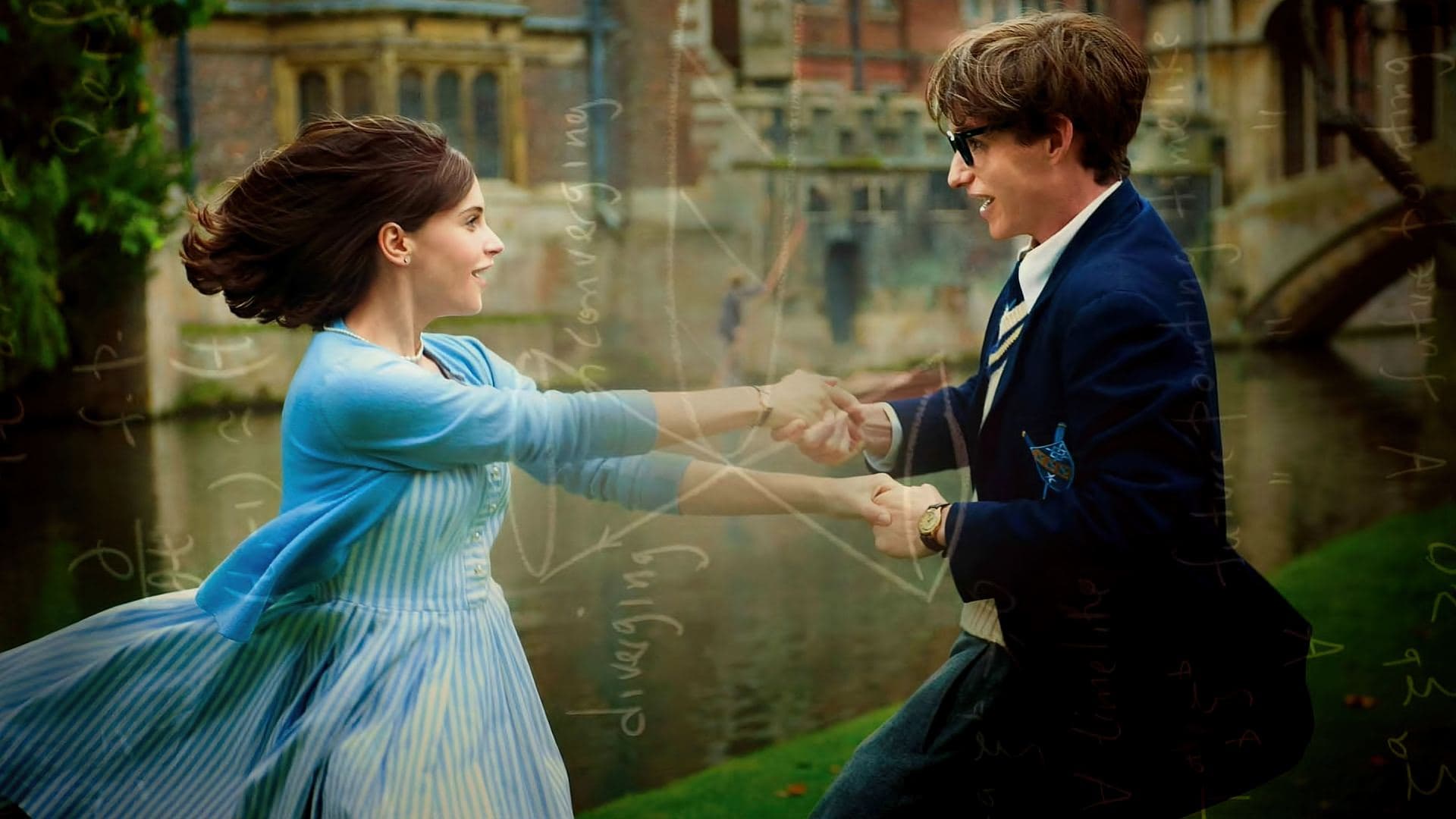
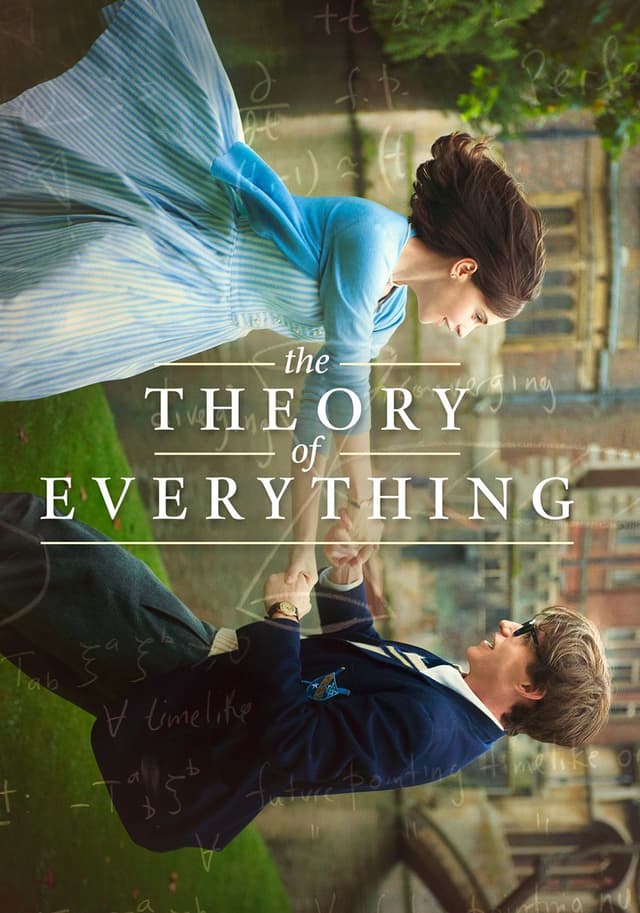
The Theory of Everything Budget
 DramaRomance2h 3m
Updated
Synopsis
The Theory of Everything is the extraordinary story of one of the world’s greatest living minds, the renowned astrophysicist Stephen Hawking, who falls deeply in love with fellow Cambridge student Jane Wilde.
What Is the Budget of The Theory of Everything?
The Theory of Everything (2014) was produced on a budget of $15 million by Working Title Films and Futuristic Films, two of the most accomplished British production companies in the prestige biography space. The film was financed and distributed by Focus Features in the United States and Universal Pictures internationally, both divisions of NBCUniversal, providing the film a global theatrical platform capable of supporting a broad awards season campaign.
At $15 million, the budget placed The Theory of Everything at the upper tier of prestige biography productions, above the micro-budget end common for independent biographical dramas but well below the $30-60 million range of studio-backed biopics. The modest budget relative to the film's ultimate cultural impact reflects Working Title's longstanding expertise in delivering high-quality UK productions efficiently, allowing the film's value to come through performance and authentic location work rather than spectacle.
Key Budget Allocation Categories
- Eddie Redmayne Performance Preparation: Redmayne spent months working with movement coaches, physical therapists, and a motor neuron disease specialist to physically portray Hawking's progressive ALS across more than two decades of screen time. His rising profile following Les Miserables (2012) and the intensive preparation period made his above-the-line deal one of the largest line items in the budget, likely in the $1.5 to $2 million range.
- Felicity Jones Above-the-Line: Jones plays Jane Hawking as the film's emotional anchor, with the story told largely from her perspective. As a co-lead opposite Redmayne across the full runtime, her above-the-line deal formed a significant portion of the talent budget, though her profile at the time of production was lower than Redmayne's following his Les Miserables and My Week with Marilyn notices.
- Cambridge Location Shoot: Securing filming access to King's College Chapel, the Cambridge University Library, and multiple university grounds required extensive negotiations and location fees. Period costuming across the 1963-1980s timeline, including authentic 1960s Cambridge student attire and Hawking's progression through different wheelchair models, added significant wardrobe and production design costs to the UK location work.
- Joahann Johannsson Score: The Icelandic composer's original orchestral score, performed live with a chamber ensemble, earned an Academy Award nomination for Best Original Score. Johannsson's minimalist aesthetic matched director James Marsh's observational approach, and his fee as a rising composer in the prestige film space was a meaningful below-the-line investment for the production.
- Period Production Design: The film spans more than twenty years from the early 1960s through the mid-1980s, requiring period-accurate costumes, vehicles, furniture, and set dressing across multiple decades. Production designer John Paul Kelly sourced or constructed period-specific elements including the era-appropriate Cambridge college interiors and domestic settings that chart the Hawkings' changing circumstances over time.
How Does The Theory of Everything Compare to Similar Films?
The Theory of Everything sits within a well-established tradition of British prestige biography films about scientists and historical figures with physical or intellectual adversity at their center. Its $15 million budget and $123.7 million worldwide gross compare favorably with films sharing similar DNA.
- The Imitation Game (2014): Budget $14M | Worldwide $233.6M. Released in the same awards season as The Theory of Everything, also a British biography of a mathematician facing adversity, also produced with Working Title involvement, also distributed by a Focus Features affiliate. Its higher gross reflects a more dramatic narrative arc and wider commercial appeal, but both films occupy the same production tier.
- A Beautiful Mind (2001): Budget $60M | Worldwide $313.5M. The earlier template for the scientist-with-a-condition biography, directed by Ron Howard for Universal. Its four times larger budget reflects the Hollywood studio model of the early 2000s versus the more disciplined UK production approach, and its four Oscar wins including Best Picture established the template The Theory of Everything followed thirteen years later.
- My Left Foot (1989): Budget $625K | Worldwide $14.7M. The earlier precedent for a physical-transformation performance winning Best Actor, with Daniel Day-Lewis as Christy Brown. Produced on a fraction of the budget with similarly intense physical preparation by the lead, and similarly built its audience through awards recognition rather than wide-release marketing spend.
- Darkest Hour (2017): Budget $30M | Worldwide $151.2M. Another Working Title prestige biography, this one of Winston Churchill directed by Joe Wright, also arriving on an awards season campaign, also earning Best Actor for its male lead (Gary Oldman). The doubled budget compared to The Theory of Everything reflects the scale difference between a chamber drama and a wartime procedural.
The Theory of Everything Box Office Performance
The Theory of Everything earned $35.9 million domestically and $123.7 million worldwide through Focus Features (US) and Universal Pictures (international). The film opened in limited release on November 7, 2014, building word of mouth and awards momentum before expanding to wider release through the winter. Eddie Redmayne's Academy Award win in February 2015 extended the theatrical run, and the film ultimately grossed more than eight times its production budget.
Against a $15 million production budget and an estimated $12 million in prints and advertising, the total investment in The Theory of Everything was approximately $27 million. With theaters retaining roughly 50 percent of box office gross, Focus Features and Universal's share of the worldwide gross was approximately $61.9 million, representing a strong return on investment for the prestige biography category. The film was considered a significant commercial success for a UK drama of its modest scale.
Box Office Breakdown
The Theory of Everything

The Theory of Everything earned roughly $8.25 for every $1 invested in production, one of the strongest returns in the prestige biography genre. Accounting for the estimated $12 million in P&A, the total investment of $27 million against an estimated studio share of $61.9 million still represents a substantial profit before home video, television licensing, and streaming rights, which would have extended the revenue significantly over the years following theatrical release.
The Theory of Everything Production History
The project originated with screenwriter Anthony McCarten's adaptation of Jane Hawking's 2007 memoir Travelling to Infinity: My Life with Stephen, which chronicles her marriage to Stephen Hawking from their early days as Cambridge students through his diagnosis with motor neuron disease, the development of his theoretical physics work, and the eventual end of their marriage. McCarten, a New Zealand-born playwright and novelist, spent several years developing the adaptation before attaching producers Tim Bevan and Eric Fellner of Working Title Films alongside Lisa Bruce.
Director James Marsh came to the project with a background in documentary filmmaking rather than narrative drama. His 2008 documentary Man on Wire, about tightrope walker Philippe Petit's 1974 walk between the Twin Towers, had won the Academy Award for Best Documentary Feature, and his observational approach to non-fiction filmmaking informed his direction of The Theory of Everything. Marsh treated the biographical material as a character study rather than a conventional biopic, allowing the film to breathe around the performances rather than driving toward plot points.
Eddie Redmayne was cast as Stephen Hawking following a competitive process, and his preparation for the role consumed months before principal photography began. Working with a motor neuron disease specialist, movement coaches, and physical therapists, Redmayne developed a physical vocabulary for Hawking at each stage of his ALS progression, from the first signs of clumsiness as a Cambridge student in 1963 through his late-1980s confinement to a wheelchair and loss of speech. Felicity Jones was cast as Jane Hawking, with the film drawing its emotional center from Jane's perspective on their relationship and her own sacrifices during the decades of Hawking's rise to international prominence.
Principal photography took place extensively on location at the University of Cambridge, including King's College Chapel, the Cambridge University Library, and various college grounds that provided authentic settings for Hawking's academic environment across the 1960s and 1970s. The authentic Cambridge locations gave the film a visual fidelity that constructed sets could not have provided, grounding Redmayne's physical performance in a genuinely recognizable environment. The film premiered at the Toronto International Film Festival in September 2014 before opening in limited US release in November, where its awards campaign was launched with the full support of Focus Features and Universal's international marketing apparatus.
Awards and Recognition
The Theory of Everything received five Academy Award nominations at the 87th Academy Awards in February 2015: Best Picture, Best Actor (Eddie Redmayne), Best Actress (Felicity Jones), Best Adapted Screenplay (Anthony McCarten), and Best Original Score (Joahann Johannsson). Redmayne won the Academy Award for Best Actor, beating Michael Keaton (Birdman), Bradley Cooper (American Sniper), Benedict Cumberbatch (The Imitation Game), and Steve Carell (Foxcatcher) in one of the most closely contested acting races in recent memory.
Redmayne's sweep of the major awards circuit included the BAFTA Award for Best Actor in a Leading Role, the Golden Globe Award for Best Actor in a Motion Picture Drama, the Screen Actors Guild Award for Outstanding Performance by a Male Actor in a Leading Role, and the Critics Choice Award for Best Actor. Felicity Jones was nominated but did not win in the corresponding actress categories at most awards bodies. Joahann Johannsson's score was nominated at the Oscars, BAFTAs, and Golden Globes, establishing him as one of the leading film composers of his generation before his death in 2018.
Critical Reception
The Theory of Everything received strong critical reception on release, earning a 79 percent approval rating on Rotten Tomatoes with a critical consensus crediting the film's two central performances as the primary source of its value. Reviewers broadly agreed that Redmayne's physical transformation was extraordinary and Jones's quieter work as Jane Hawking was equally essential to the film's emotional coherence, even if Jones's performance received less awards attention during the season.
A.O. Scott's review in The New York Times praised the film's restraint and its refusal to sentimentalize Hawking's story, noting that Marsh's documentary instincts kept the film from the hagiographic excess that plagues many scientist biopics. Some critics noted the film's relative reticence to engage with Hawking's scientific ideas in depth, treating his theoretical physics work as backdrop to the romantic and personal drama rather than exploring the intellectual content of the work itself. This was a deliberate creative choice on McCarten's part, staying close to Jane Hawking's memoir perspective, which focused on the domestic experience of living with Hawking rather than the scientific.
The film's long-term reputation has settled as one of the finest biographical dramas of the 2010s, regularly cited alongside The Imitation Game and The Danish Girl as the period's exemplary prestige biography productions. Its academy recognition launched Redmayne into the front rank of British actors, and the film continues to be widely seen as a definitive portrait of Stephen Hawking, who died in 2018. Hawking himself reportedly watched the film and approved of Redmayne's portrayal, a significant endorsement for a living subject biography.
Frequently Asked Questions
How much did it cost to make The Theory of Everything (2014)?
The production budget was $15,000,000, covering principal photography, cast and crew salaries, locations, sets, post-production, and music. Marketing and distribution (P&A) costs are estimated at an additional $7,500,000 - $12,000,000, bringing the total studio investment to approximately $22,500,000 - $27,000,000.
How much did The Theory of Everything (2014) earn at the box office?
The Theory of Everything grossed $35,893,537 domestic, $87,833,151 international, totaling $123,726,688 worldwide.
Was The Theory of Everything (2014) profitable?
Yes. Against a production budget of $15,000,000 and estimated total costs of ~$37,500,000, the film earned $123,726,688 theatrically - a 725% ROI on production costs alone.
What were the biggest costs in producing The Theory of Everything?
The primary cost drivers were above-the-line talent (Eddie Redmayne, Felicity Jones, Charlie Cox); talent compensation, authentic period production design, and meticulous post-production; international production across United Kingdom, United States of America.
How does The Theory of Everything's budget compare to similar drama films?
At $15,000,000, The Theory of Everything is classified as a low-budget production. The median budget for wide-release drama films in the 2010s ranges from $30 - 80M for mid-budget to $150M+ for tentpoles. Comparable budgets: A Dangerous Method (2011, $15,000,000); Ben-Hur (1959, $15,000,000); Land of the Dead (2005, $15,000,000).
Did The Theory of Everything (2014) go over budget?
There are no widely reported accounts of significant budget overruns for this production. However, studios rarely disclose precise budget overrun figures publicly. The reported production budget reflects the final estimated cost.
What was the return on investment (ROI) for The Theory of Everything?
The theatrical ROI was 724.8%, calculated as ($123,726,688 − $15,000,000) ÷ $15,000,000 × 100. This measures gross revenue against production budget only - it does not account for P&A or exhibitor shares.
What awards did The Theory of Everything (2014) win?
Won 1 Oscar. 25 wins & 128 nominations total.
Who directed The Theory of Everything and who were the key crew members?
Directed by James Marsh, written by Anthony McCarten, shot by Benoît Delhomme, with music by Jóhann Jóhannsson, edited by Jinx Godfrey.
Where was The Theory of Everything filmed?
The Theory of Everything was filmed in United Kingdom, United States of America.
Filmmakers
The Theory of Everything

Official Trailer
Build budgets like this one in Saturation
Start from an industry-standard feature film template, import the schedule and rates you already have, and let the cost report keep itself current as you spend. Real-time collaboration, no spreadsheets.