The Terminal Budget
 ComedyDrama2h 8m
Updated
Synopsis
An Eastern European tourist unexpectedly finds himself stranded in JFK airport, and must take up temporary residence there.
What Is the Budget of The Terminal?
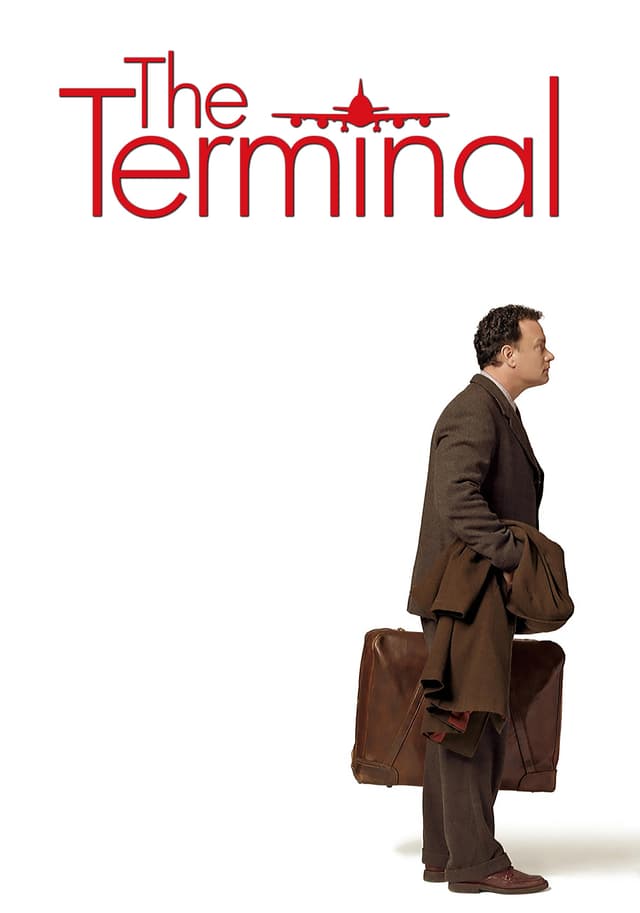
The Terminal (2004) was produced with a budget of $60 million, funded by DreamWorks Pictures. For a character-driven comedy-drama set almost entirely in one location, this was a substantial investment, driven largely by the construction of a massive, fully functional airport terminal set. The film reunited director Steven Spielberg with Tom Hanks for their fourth collaboration, following Saving Private Ryan, Catch Me If You Can, and The Road to Perdition (which Spielberg executive produced).
At its core, the budget reflected Spielberg's commitment to practical filmmaking. Rather than rely on digital environments, the production built a real terminal from the ground up, complete with working retail stores, restaurants, escalators, and departure gates. This approach gave the actors a tangible world to inhabit but required a significant portion of the overall budget.
Key Budget Allocation Categories
- Set Construction: The centerpiece expense. A 150,000-square-foot replica of a modern airport terminal was built inside a decommissioned hangar at Palmdale Regional Airport in California. The set included working escalators, functional storefronts, polished floors, and realistic signage, making it one of the largest interior sets ever constructed for a film.
- Above-the-Line Talent: Tom Hanks commanded a top-tier salary as the lead, and Spielberg's director fee reflected his status as one of Hollywood's most bankable filmmakers. Catherine Zeta-Jones, Stanley Tucci, Chi McBride, and Diego Luna rounded out a strong ensemble cast.
- Production Design and Art Direction: Production designer Alex McDowell oversaw the creation of every storefront, restaurant, and public space in the terminal. Each shop required branded signage, inventory, and period-appropriate details to sell the illusion of a living airport.
- Cinematography: Janusz Kaminski, Spielberg's longtime cinematographer, lit the enormous interior set to simulate natural daylight, fluorescent airport lighting, and time-of-day shifts across the story's months-long timeline.
- Music and Score: John Williams composed the score, marking another collaboration with Spielberg. Williams' orchestral work required a full recording ensemble and multiple sessions.
- Dialect and Performance Coaching: Tom Hanks developed a distinctive Eastern European accent for the character Viktor Navorski, working with dialect coaches to create a Bulgarian-influenced speaking pattern that remained consistent throughout the film.
How Does The Terminal's Budget Compare to Similar Films?
- Cast Away (2000): Budget $90M | Worldwide $429M. Hanks' earlier survival drama cost more due to remote location shoots in Fiji and the Pacific, while The Terminal kept costs lower by filming entirely on a soundstage.
- Catch Me If You Can (2002): Budget $52M | Worldwide $352M. Spielberg's previous Hanks collaboration was slightly cheaper, benefiting from existing locations rather than massive set builds.
- The Truman Show (1998): Budget $60M | Worldwide $264M. An identical budget for another film about a man trapped in an artificial world. Both invested heavily in constructing believable, self-contained environments.
- Lost in Translation (2003): Budget $4M | Worldwide $45M. Sofia Coppola's fish-out-of-water story in Tokyo proves the premise can work on a fraction of the budget when shooting on location rather than building from scratch.
- The Terminal (2004): Budget $60M | Worldwide $219M. Spielberg's film earned a solid return, though it ranked among his more modest commercial performances of the decade.
The Terminal Box Office Performance
The Terminal opened on June 18, 2004 and earned $18.7 million in its opening weekend, debuting at number two behind Dodgeball: A True Underdog Story. The film went on to gross $77,872,883 domestically and $141,544,372 internationally, for a combined worldwide total of $219,417,255.
Against a $60 million production budget, the break-even threshold (accounting for marketing and distribution costs, typically estimated at twice the production budget) was approximately $120 million. With $219.4 million in global receipts, The Terminal cleared that threshold comfortably. The return on investment calculates to roughly (219.4M minus 60M) divided by 60M, or approximately 265%. While not a blockbuster by Spielberg standards, the film was a profitable venture that performed especially well in international markets, where it earned nearly two-thirds of its total gross.
Box Office Breakdown
The Terminal

The Terminal Production History
The project originated from a screenplay by Andrew Niccol, who drew loose inspiration from Mehran Karimi Nasseri, an Iranian refugee who lived in Terminal 1 of Paris Charles de Gaulle Airport for 18 years starting in 1988. Nasseri's extraordinary real-life situation, caused by lost immigration documents, became an international curiosity and inspired multiple creative works. Spielberg acquired the rights and brought in Sacha Gervasi and Jeff Nathanson to rework the script, shifting the setting to New York's JFK Airport and transforming the story into a warm, comedic fable.
Rather than film at an actual airport, where security restrictions and operational logistics would have been prohibitive, Spielberg commissioned the construction of a full-scale terminal at a decommissioned aircraft hangar in Palmdale, California. Production designer Alex McDowell and his team spent several months building the set, which included two levels, 35 retail storefronts, a Burger King, a bookstore, and working departure boards. The set was so detailed that real airline employees reportedly mistook it for a functioning terminal during visits.
Tom Hanks spent months preparing for the role, developing Viktor Navorski's accent from scratch with dialect coaches. He based the character's speech patterns on a blend of Bulgarian and other Eastern European influences, aiming for something that sounded authentic without pinpointing a specific nationality. Hanks also studied immigrant experiences and language acquisition to inform his physical performance.
Principal photography ran from late 2003 into early 2004, with Spielberg maintaining his characteristic efficient shooting pace. Despite the scale of the set, the production wrapped on schedule. The film was released in the summer of 2004, positioned as a lighter Spielberg offering between the heavier Catch Me If You Can and the upcoming War of the Worlds.
Awards and Recognition
The Terminal received modest awards attention, landing primarily in technical and craft categories. The film earned nominations from the Art Directors Guild for Excellence in Production Design and was recognized for its remarkable set construction by several industry organizations. John Williams' score received attention from the World Soundtrack Awards, where it was nominated for Soundtrack Composer of the Year.
Tom Hanks' performance earned a Golden Globe nomination consideration but ultimately did not secure a formal nod. The film was acknowledged at various international ceremonies, including Saturn Award nominations from the Academy of Science Fiction, Fantasy and Horror Films. While The Terminal did not compete for major Academy Awards, its technical achievements in production design and cinematography were widely praised within the industry.
Critical Reception
The Terminal holds a 61% approval rating on Rotten Tomatoes, placing it in the category often described as "minor Spielberg." Critics generally praised Hanks' committed physical comedy and the astonishing production design while noting that the screenplay's sentimental tendencies sometimes undercut the premise's sharper possibilities. Roger Ebert gave the film three out of four stars, calling it "a sweet film with a-big-heart" and admiring Hanks' ability to anchor the story without relying on dialogue-heavy scenes.
Several reviewers pointed out the tension between the film's lighthearted fairy-tale tone and the genuinely difficult realities of stateless refugees and immigration bureaucracy. The romance subplot between Viktor and Amelia Warren (Catherine Zeta-Jones) drew mixed reactions, with some critics finding it underdeveloped compared to the more engaging ensemble dynamics with the airport workers played by Stanley Tucci, Chi McBride, Diego Luna, and Kumar Pallana.
Over time, The Terminal has been reassessed more favorably as a modest, well-crafted character study within Spielberg's filmography. Its practical set remains a landmark achievement in production design, and Hanks' performance continues to be cited as an example of physical comedy rarely seen in mainstream American cinema of the 2000s.
Frequently Asked Questions
How much did it cost to make The Terminal (2004)?
The production budget was $60,000,000, covering principal photography, cast and crew salaries, locations, sets, post-production, and music. Marketing and distribution (P&A) costs are estimated at an additional $30,000,000 - $48,000,000, bringing the total studio investment to approximately $90,000,000 - $108,000,000.
How much did The Terminal (2004) earn at the box office?
The Terminal grossed $77,872,883 domestic, $141,544,372 international, totaling $219,417,255 worldwide.
Was The Terminal (2004) profitable?
Yes. Against a production budget of $60,000,000 and estimated total costs of ~$150,000,000, the film earned $219,417,255 theatrically - a 266% ROI on production costs alone.
What were the biggest costs in producing The Terminal?
The primary cost drivers were above-the-line talent (Tom Hanks, Catherine Zeta-Jones, Stanley Tucci); star comedian salaries, location filming, and aggressive marketing campaigns.
How does The Terminal's budget compare to similar comedy films?
At $60,000,000, The Terminal is classified as a mid-budget production. The median budget for wide-release comedy films in the 2000s ranges from $30 - 80M for mid-budget to $150M+ for tentpoles. Comparable budgets: 15 Minutes (2001, $60,000,000); Almost Famous (2000, $60,000,000); Analyze That (2002, $60,000,000).
Did The Terminal (2004) go over budget?
There are no widely reported accounts of significant budget overruns for this production. However, studios rarely disclose precise budget overrun figures publicly. The reported production budget reflects the final estimated cost.
What was the return on investment (ROI) for The Terminal?
The theatrical ROI was 265.7%, calculated as ($219,417,255 − $60,000,000) ÷ $60,000,000 × 100. This measures gross revenue against production budget only - it does not account for P&A or exhibitor shares.
What awards did The Terminal (2004) win?
7 wins & 8 nominations total.
Who directed The Terminal and who were the key crew members?
Directed by Steven Spielberg, written by Sacha Gervasi, Jeff Nathanson, Andrew Niccol, shot by Janusz Kamiński, with music by John Williams, edited by Michael Kahn.
Where was The Terminal filmed?
The Terminal was filmed in United States of America.
Filmmakers
The Terminal

Official Trailer
Build budgets like this one in Saturation
Start from an industry-standard feature film template, import the schedule and rates you already have, and let the cost report keep itself current as you spend. Real-time collaboration, no spreadsheets.