The SpongeBob Movie Sponge on the Run Budget
 FamilyComedyAdventureAnimation1h 35m
Updated
Synopsis
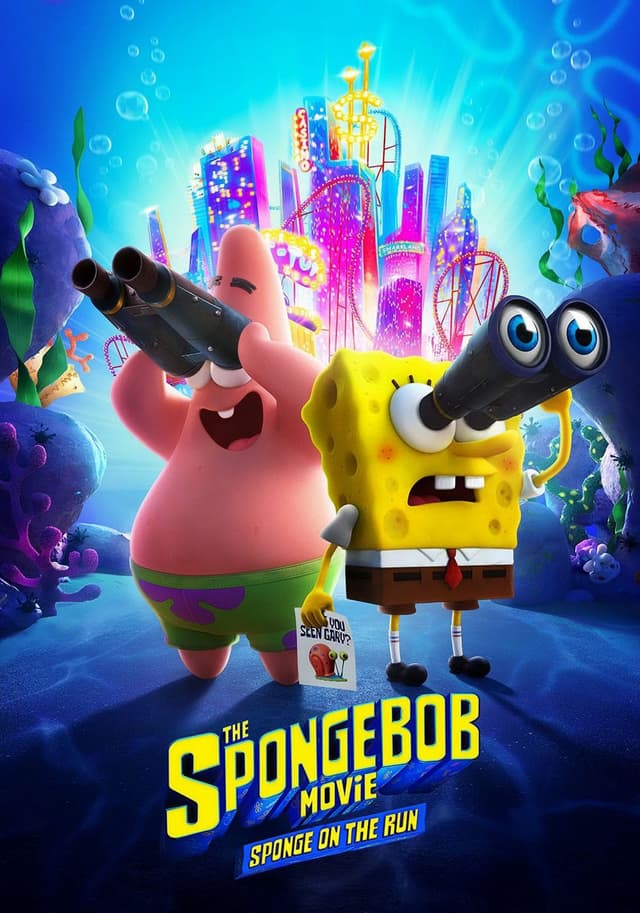
When his best friend Gary is suddenly snatched away, SpongeBob takes Patrick on a madcap mission far beyond Bikini Bottom to save their pink-shelled pal.
What Is the Budget of The SpongeBob Movie: Sponge on the Run?
The SpongeBob Movie: Sponge on the Run was produced on a budget of $60 million, making it the most expensive SpongeBob feature at the time of its production. The film marked a significant technological leap for the franchise as the first entry rendered entirely in CG animation, replacing the hybrid 2D/CG approach used in the previous two theatrical films. Paramount Pictures greenlit the project as a tentpole release, investing heavily in photorealistic underwater environments and detailed character models that brought Bikini Bottom to life in three dimensions for the first time.
The $60 million figure placed Sponge on the Run in the mid-range for animated features, well below the $150 million to $200 million budgets typical of Pixar or Walt Disney Animation releases but competitive with other Nickelodeon and mid-tier studio animated projects. For Paramount, the investment carried strategic weight beyond the box office: the film was repositioned during the pandemic as the flagship launch title for its new streaming service, Paramount+.
Key Budget Allocation Categories
- CG Animation and Rendering accounted for the largest share of the budget. Transitioning the franchise from its signature 2D style to fully computer-generated animation required building every character, environment, and prop from scratch in 3D. The underwater physics simulations, volumetric lighting, and detailed textures for scenes set in the "real world" of Atlantic City demanded extended render times and specialized pipeline development.
- Voice Talent and Live-Action Cast included the returning core cast led by Tom Kenny as SpongeBob and Bill Fagerbakke as Patrick, along with new additions Keanu Reeves (as a tumbleweed sage), Awkwafina, and Snoop Dogg in live-action and voice roles. Securing recognizable names for the live-action sequences added casting costs beyond the typical voice recording budget.
- Story Development and Writing involved extensive collaboration between director Tim Hill and the Nickelodeon creative team. The screenplay went through multiple drafts to balance the road-trip adventure structure with emotional callbacks to SpongeBob creator Stephen Hillenburg, who passed away during pre-production. Development costs also covered the integration of Kamp Koral flashback sequences that would later spin off into a separate series.
- Music and Sound Design featured an original score by Hans Zimmer, who brought his orchestral sensibility to the franchise for the first time. The soundtrack also included contributions from several recording artists, and the sound design team built a new library of underwater acoustics tailored to the CG environments.
- Visual Effects for Live-Action Integration covered the sequences where animated characters interact with real-world actors and sets. These hybrid scenes required motion tracking, compositing, and lighting matching to place cartoon characters convincingly into filmed environments, adding a layer of post-production complexity beyond standard animation.
- Marketing and Distribution Pivot originally targeted a traditional theatrical campaign but required a complete overhaul when Paramount shifted the film to a Paramount+ exclusive in the United States. International territories retained limited theatrical releases, meaning the marketing spend was split between two distinct distribution strategies.
How Does Sponge on the Run's Budget Compare to Similar Films?
- The SpongeBob SquarePants Movie (2004) had a budget of $30 million and grossed $140 million worldwide. The original theatrical film used traditional 2D animation with some live-action segments, keeping costs at half the level of Sponge on the Run while delivering strong returns.
- The SpongeBob Movie: Sponge Out of Water (2015) cost $74 million and earned $325 million globally. That film blended 2D animation, CG sequences, and live-action, and its strong box office performance demonstrated the franchise still had theatrical drawing power, helping greenlight Sponge on the Run.
- Paw Patrol: The Movie (2021) was produced for $26 million and grossed $135 million worldwide. As a fellow Nickelodeon/Paramount animated property that also premiered simultaneously on Paramount+, it offers a direct comparison for the hybrid release strategy at a much lower budget.
- Trolls World Tour (2020) cost $110 million and earned approximately $50 million in theatrical revenue before Universal pivoted it to premium VOD, where it generated over $100 million in digital rentals. Like Sponge on the Run, its release was reshaped by the pandemic, though at nearly double the production cost.
- The Boss Baby: Family Business (2021) had a budget of $82 million and grossed $130 million theatrically while simultaneously streaming on Peacock. Another pandemic-era animated sequel that split its audience between theaters and a streaming platform, resulting in diminished theatrical returns relative to its predecessor.
The SpongeBob Movie: Sponge on the Run Box Office Performance
Sponge on the Run had an unconventional release path that makes traditional box office analysis difficult. The film debuted theatrically in Canada on August 14, 2020, during the height of pandemic restrictions, and rolled out to select international markets over the following months. In the United States, it skipped theaters entirely and premiered on Paramount+ on March 4, 2021, serving as one of the marquee titles for the platform launch.
International theatrical grosses totaled approximately $4.8 million, a fraction of what the franchise had earned with previous installments. The Canadian opening was constrained by limited theater capacity and public hesitancy about indoor venues. Other international markets that received the film theatrically were similarly affected by rolling lockdowns and reduced showtimes.
With no domestic theatrical run, break-even analysis based on box office alone is not meaningful. A typical theatrical animated film needs to gross roughly twice its production budget (here, $120 million) to cover production plus prints and advertising costs. The $4.8 million theatrical total fell far short of that threshold, but Paramount valued the film primarily as a subscriber acquisition tool for Paramount+. The studio reported that Sponge on the Run was among the most-watched titles on the platform during its first quarter, though specific viewership numbers were not publicly disclosed.
By comparison, Sponge Out of Water earned $325 million worldwide in 2015, and the original SpongeBob Movie earned $140 million in 2004. The dramatic decline in theatrical revenue reflects the strategic pivot to streaming rather than a collapse in audience interest, as the franchise continued to generate strong engagement through Paramount+ and the Kamp Koral spinoff series.
- Production Budget: $60,000,000
- Estimated P&A: approximately $36,000,000
- Total Investment: approximately $96,000,000
- Worldwide Gross: $4,810,790
- Net Return: approximately $91,200,000 (loss)
- ROI (on production budget): approximately -92%
The SpongeBob Movie: Sponge on the Run Production History
Development on a third SpongeBob feature began in 2015, shortly after Sponge Out of Water proved the franchise still commanded a large theatrical audience. Paramount and Nickelodeon tapped Tim Hill, a veteran of both live-action family comedies and animated projects, to write and direct. Hill had previously written the original SpongeBob Movie and directed Alvin and the Chipmunks, giving him deep familiarity with both the property and hybrid animation formats.
The most consequential event during production was the death of SpongeBob creator Stephen Hillenburg on November 26, 2018, following a battle with ALS. Hillenburg had been involved in the early stages of the film and served as an executive producer. His passing infused the project with a sense of tribute, and the creative team sought to honor his vision for the character while pushing the franchise in new visual directions. The film carries a dedication to Hillenburg in its closing credits.
The decision to render the film entirely in CG was both a creative and commercial calculation. Nickelodeon wanted the film to serve as a visual bridge to Kamp Koral: SpongeBob's Under Years, a CG-animated spinoff series that was already in development for Paramount+. By establishing the SpongeBob cast in fully rendered 3D, Sponge on the Run would prime audiences for the look and feel of the streaming content to follow.
Production was largely completed by early 2020, with a planned theatrical release date of May 22, 2020. When the COVID-19 pandemic shuttered theaters worldwide, Paramount initially postponed the release. As the closures extended and the studio accelerated its plans for a streaming platform to compete with Disney+ and HBO Max, executives made the decision to redirect Sponge on the Run to Paramount+ as a launch-day title. The Canadian theatrical release in August 2020 served as a test run, while the U.S. premiere was held until the platform went live in March 2021.
Awards and Recognition
Sponge on the Run received modest recognition on the awards circuit, operating in a competitive year for animation dominated by Pixar's Soul. The film was nominated for a Kids' Choice Award for Favorite Animated Movie, consistent with the franchise's strong performance at Nickelodeon's own ceremony. It also received consideration from the Annie Awards in technical categories, where the CG animation work drew attention from industry professionals familiar with the challenges of translating a beloved 2D property into three dimensions.
The voice performances, particularly Tom Kenny's continued embodiment of SpongeBob, were praised by critics and fans, though the film did not receive major voice acting nominations from mainstream awards bodies. Keanu Reeves' cameo as the mystical tumbleweed Sage generated significant social media attention and contributed to the film's cultural visibility even without a traditional theatrical marketing campaign.
The film's most enduring legacy in the industry may be its role as a case study in pandemic-era distribution strategy. It became one of the earliest high-profile animated features to bypass U.S. theaters entirely in favor of a streaming premiere, a decision that influenced how studios evaluated release windows for family films throughout 2021 and beyond.
Critical Reception
The SpongeBob Movie: Sponge on the Run holds a 68% approval rating on Rotten Tomatoes, based on reviews from over 100 critics, with an audience score in a similar range. The consensus acknowledged the film as a colorful and energetic entry that delivered for younger viewers but lacked the satirical sharpness and inventiveness of the original 2004 theatrical film.
Critics who responded positively highlighted the visual upgrade, noting that the CG animation brought a tactile quality to Bikini Bottom that enhanced the slapstick comedy. The voice cast was widely praised as reliable, with Tom Kenny and Bill Fagerbakke delivering performances that felt true to decades of character history. Keanu Reeves' role as Sage was singled out as an unexpected highlight, bringing a deadpan energy that complemented the show's absurdist humor.
Negative reviews tended to focus on the plot, which several critics described as formulaic and overly reliant on nostalgia. The road-trip structure drew comparisons to the original film's similar premise without matching its emotional stakes or comedic timing. Some reviewers also felt the Kamp Koral flashback sequences, clearly designed to set up the spinoff series, disrupted the film's pacing and felt more like a marketing exercise than organic storytelling.
The film's unusual release path also shaped critical reception. Many reviewers assessed it as a streaming title rather than a theatrical event, adjusting expectations accordingly. At 86 minutes, it was seen as appropriately scaled for home viewing but perhaps too slight for the theatrical experience it was originally designed to deliver.
Frequently Asked Questions
How much did Sponge on the Run cost to make?
The production budget was approximately $60,000,000, the largest in the SpongeBob theatrical franchise. Paramount Animation and Nickelodeon Movies co-produced the film, with Mikros Image handling the CGI animation work.
How much did Sponge on the Run earn at the box office?
The film grossed approximately $4,700,000 theatrically across international markets that opened during the COVID-19 pandemic. In the United States, Paramount bypassed theatrical entirely and premiered the film on premium video on demand on March 4, 2021, then on Paramount+ on the same date.
Why did Sponge on the Run not get a wide theatrical release?
Paramount initially scheduled the film for a May 2020 theatrical release but pulled it from the calendar following COVID-19 shutdowns. Rather than wait for theatrical recovery, Paramount used the film as anchor content for the launch of the Paramount+ streaming service, which rebranded from CBS All Access on March 4, 2021.
Who directed Sponge on the Run?
Tim Hill directed the film. Hill had previously directed Garfield: A Tail of Two Kitties (2006), Alvin and the Chipmunks (2007), Hop (2011), and the SpongeBob spin-off Patrick Star Show, and was a story writer on the original SpongeBob SquarePants series.
Who voices the characters in Sponge on the Run?
The principal voice cast returns from the television series, including Tom Kenny as SpongeBob, Bill Fagerbakke as Patrick Star, Rodger Bumpass as Squidward, Clancy Brown as Mr. Krabs, and Carolyn Lawrence as Sandy. Keanu Reeves appears in live-action and voice as Sage, with Awkwafina, Snoop Dogg, and Danny Trejo in cameos.
Is Sponge on the Run animated differently from the TV series?
Yes. Sponge on the Run uses CGI animation, a significant departure from the traditional 2D animation of the television series and previous theatrical features. Mikros Image handled the rendering, modeling the characters' three-dimensional volume on their classic 2D silhouettes.
What did critics think of Sponge on the Run?
Reviews were mixed, with a 70% approval rating on Rotten Tomatoes and a 50 out of 100 score on Metacritic. Critics praised the visual energy and Keanu Reeves cameos but objected to a thin narrative compared with the layered comedy of The SpongeBob SquarePants Movie (2004).
Where can I stream Sponge on the Run?
The film streams exclusively on Paramount+, the Nickelodeon and Paramount-owned subscription streaming service. It is also available for digital purchase on Amazon Prime Video, Apple TV, and Google Play.
How does Sponge on the Run compare to the previous SpongeBob films?
The SpongeBob SquarePants Movie (2004) grossed $140,200,000 worldwide on a $30,000,000 budget. The SpongeBob Movie: Sponge Out of Water (2015) grossed $325,200,000 worldwide on a $74,000,000 budget. Sponge on the Run's theatrical performance was disrupted by the pandemic, with the bulk of viewership shifting to Paramount+.
Did Sponge on the Run lead to spin-off series?
Yes. Sponge on the Run included a sequence introducing Kamp Koral, which became a CGI prequel series on Paramount+ tracking SpongeBob's childhood. The Patrick Star Show, also on Paramount+, followed in 2021, expanding the franchise across the streaming service.
Official Trailer
Build budgets like this one in Saturation
Start from an industry-standard feature film template, import the schedule and rates you already have, and let the cost report keep itself current as you spend. Real-time collaboration, no spreadsheets.