The Spine of Night Budget
Updated
Synopsis
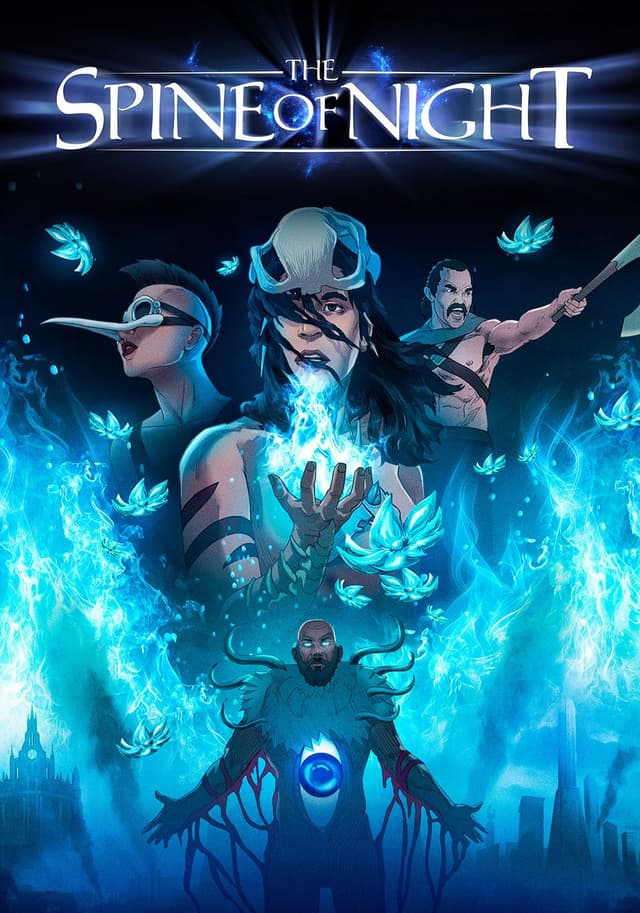
Across centuries a magical blue flower grants terrible power to anyone who drinks its essence, drawing despots, sorcerers, and wandering warriors into a cyclical struggle over the bloom. As the empires it raises and topples scrape away the world's spine, only a cursed swamp witch and a guardian of the original source stand between the plant and total annihilation.
What Is the Budget of The Spine of Night (2021)?
The Spine of Night (2021), written and directed by Philip Gelatt and Morgan Galen King, was made on an undisclosed microbudget that industry observers and the filmmakers' interviews place under $1,000,000, with the production effectively spread across seven years of part-time work by a tiny rotoscope animation team. Distributed in the United States by RLJE Films and corporate sibling Shudder, with international rights handled by Yellow Veil Pictures, the film operated entirely outside the studio animation pipeline.
The economics reflected an unconventional production model. Morgan Galen King and Philip Gelatt produced through their respective companies Gorgonaut and Reno Productions, with the rotoscope animation completed by a team of four artists at any given time. The seven-year production timeline traded calendar duration for the kind of dense hand-drawn animation that an equivalent studio production would have cost tens of millions of dollars to deliver. The model approached animation as a craft project rather than a studio production.
Key Budget Allocation Categories
The under-$1,000,000 microbudget was distributed across these core areas across the seven-year production timeline:
- Voice Talent: Richard E. Grant (The Guardian), Lucy Lawless (Tzod), Patton Oswalt (Lord Pyrantin), Betty Gabriel (Phae-Agura), Joe Manganiello (Mongrel), Larry Fessenden, Patrick Breen, Tom Lipinski, Jordan Douglas Smith, and Abigail Savage anchored the voice cast. Voice talent worked at SAG-AFTRA microbudget rates, with several performers attaching as creative collaborators. Voice recording was conducted in tight sessions across the long production timeline.
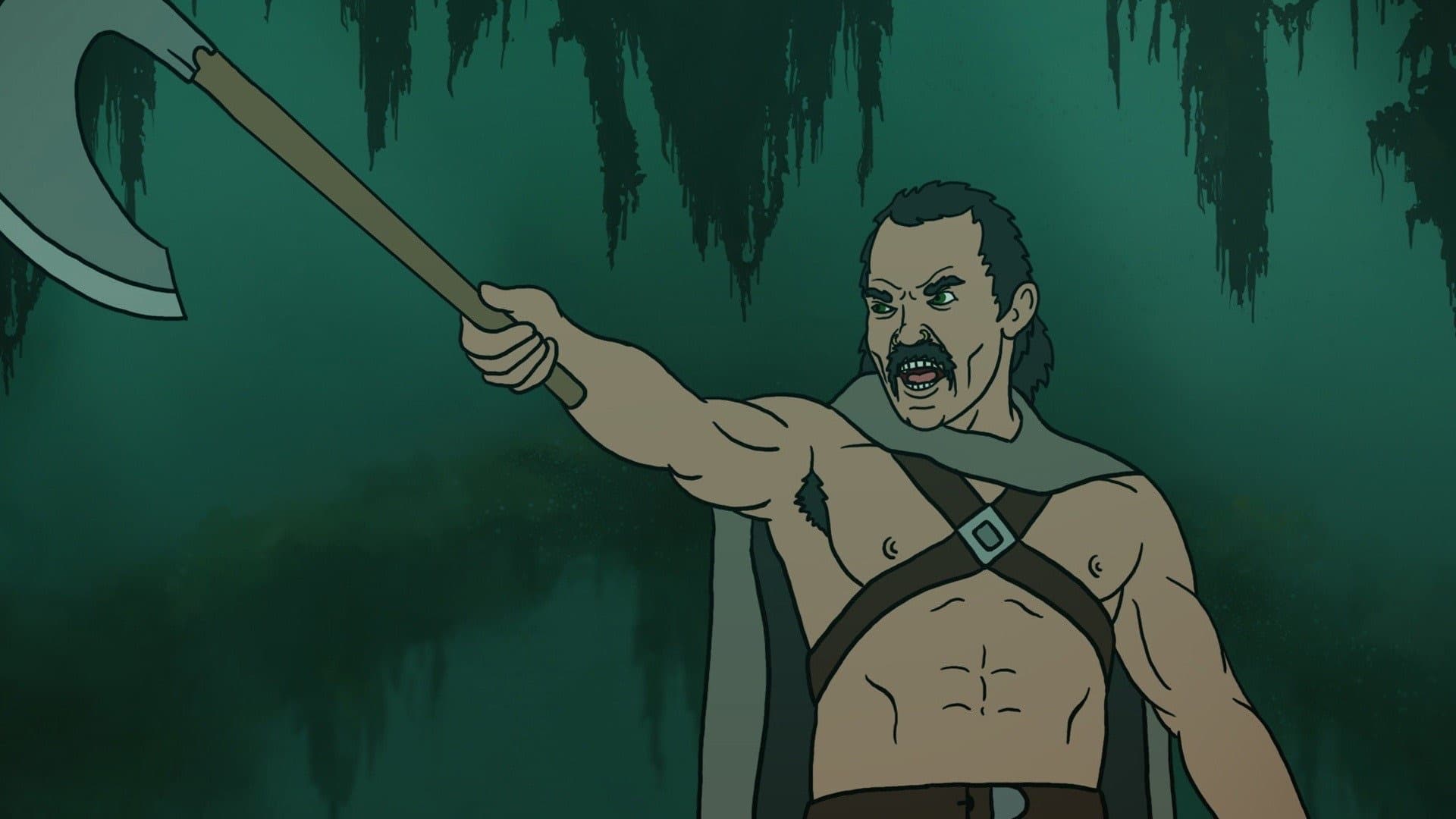
- Rotoscope Animation: The hand-rotoscope animation, completed by a team of approximately four artists at any given time, was the dominant production element. Live-action reference footage was shot first, then traced and reanimated frame by frame at 12 frames per second to deliver the film's distinctive aesthetic. The seven-year duration reflected the per-frame labor cost spread across a small team rather than concentrated studio production.
- Live-Action Reference Photography: Before animation could begin, the filmmakers shot live-action reference footage with stand-ins and stunt performers performing the choreography that would later be traced. Reference photography costs covered location, costume, and basic set dressing for the prehistoric and fantasy environments depicted across the film's six interlocking story chapters.
- Music and Score: Composer Peter Scartabello scored the film, with the music budget covering original composition spanning the centuries the narrative depicts. The score was central to the film's tonal identity and was developed in close coordination with the animation as it was completed.
- Sound Design: The graphic violence, magical effects, and creature work in the rotoscope animation required intricate sound design to deliver the impact a fully animated film would otherwise generate through visual fidelity. Sound design was a significant post-production line item proportionate to the overall microbudget.
- Crowdfunding and Self-Financing: The production was partly funded through Kickstarter campaigns and other backer-driven funding rounds across the seven-year timeline, with the filmmakers' personal investment and Gorgonaut and Reno Productions covering the balance. The financing structure resembled the indie comics and adult-animation crowdfunding model rather than traditional film financing.
How Does The Spine of Night's Budget Compare to Similar Films?
Direct budget comparisons across adult animated fantasy are limited by the rarity of the form. The relevant comparisons span both the rotoscope tradition and the larger adult-animation ecosystem:
- Heavy Metal (1981): Budget $9,300,000 | Worldwide $20,100,000. The closest tonal ancestor in adult animated fantasy operated at a significantly higher budget tier with a major studio backing.
- Wizards (1977): Budget $1,000,000 | Worldwide undisclosed. Ralph Bakshi's Wizards is a closer microbudget rotoscope and traditional animation hybrid in the same adult fantasy lane.
- Waking Life (2001): Budget $2,000,000 | Worldwide $3,200,000. Richard Linklater's rotoscope philosophical drama is a closer technique comparison at a comparable indie scale.
- A Scanner Darkly (2006): Budget $8,700,000 | Worldwide $7,800,000. Richard Linklater's second rotoscope feature operated at roughly ten times The Spine of Night's budget.
- Mad God (2021): Budget undisclosed (estimated $1,000,000) | Limited theatrical and Shudder release. Phil Tippett's 30-year stop-motion project is the closest parallel in the small-team, long-timeline adult animated fantasy lane.
The Spine of Night Box Office Performance
The Spine of Night premiered at SXSW on March 18, 2021, where it generated strong genre-press attention. RLJE Films and Shudder released the film theatrically and on Shudder streaming on October 29, 2021. International rights were handled by Yellow Veil Pictures with regional partners including UK, Australia, and New Zealand distribution through Shudder.
Box Office Breakdown
The Spine of Night

Specific theatrical and streaming revenue figures have not been disclosed by RLJE Films or Shudder. Industry reporting placed the film among Shudder's strongest performers of October 2021 in the genre subscription tier, with sustained engagement across the platform's genre fan base. The film's home video and physical media releases through Vinegar Syndrome and other specialty distributors generated additional revenue tails through 2022 and 2023.
For the filmmakers the commercial outcome was framed as a successful proof-of-concept for the small-team adult-animation production model. The seven-year production timeline meant that even modest revenue across a multi-year tail could deliver positive returns relative to the spread-out personal investment. Subsequent specialty releases by Gorgonaut and Reno Productions continued the production approach the film pioneered.
The Spine of Night Production History
Development began in approximately 2013 when Philip Gelatt (Europa Report, They Remain) and Morgan Galen King (Exordium short film, 2014) connected over a shared interest in adult-oriented rotoscope animation and the visual tradition of Ralph Bakshi and Heavy Metal. King had developed the rotoscope short Exordium (2014) as a proof of concept for the approach. Gelatt brought additional script and structure to the collaboration, and the two filmmakers began designing what would become The Spine of Night as a six-chapter anthology fantasy spanning centuries.
Live-action reference photography began in approximately 2014, with stand-ins and stunt performers shot against minimal sets and green screen environments. The animation team grew to approximately four artists at any given time, with the production model trading calendar duration for the kind of dense per-frame hand-drawn work that would have cost tens of millions of dollars on a conventional production. The film was rotoscoped at 12 frames per second, the same animation rate as classical hand-drawn cinema.
Voice recording with the principal cast (Richard E. Grant, Lucy Lawless, Patton Oswalt, Betty Gabriel, Joe Manganiello, and others) occurred in concentrated sessions across the production timeline. The film nearly faced total loss before its SXSW premiere when King's animation workstation auto-updated unexpectedly, threatening the master files. The crisis was resolved and the film completed in time for the festival.
The Spine of Night premiered at SXSW on March 18, 2021 to strong genre-press response. RLJE Films and Shudder, which had built out a long-running partnership for genre acquisitions, acquired North American rights at the festival. The film received a limited theatrical and Shudder streaming release on October 29, 2021.
Awards and Recognition
The Spine of Night received specific genre-festival recognition. The film won the Best Animated Feature award at the 2021 Sitges Film Festival, the major international genre film festival, and received nominations and citations across multiple genre and animation festival circuits in 2021 and 2022. The Sitges recognition was a meaningful validation for the small-team adult animation production model.
Additional recognition came from the genre press and animation specialty awards. The film was named on multiple best-of-year animated film lists by Cartoon Brew, Animation World Network, and similar specialty outlets. Mainstream awards bodies including the Annie Awards and the Academy Award for Best Animated Feature did not nominate the film, in line with the consistent exclusion of adult-oriented and independent animation from the major animation awards conversations.
The film's longest awards tail has come through midnight movie and cult cinema retrospectives, where it has continued to circulate as a representative work of the early-2020s adult animation revival. Vinegar Syndrome's subsequent Blu-ray release positioned the film alongside the studio's broader catalog of cult and genre cinema, extending its visibility within the specialty collector market.
Critical Reception
The Spine of Night received strong reviews. The film holds an 82% approval rating on Rotten Tomatoes from 65 critics and a 60 out of 100 score on Metacritic indicating mixed-to-positive reviews. Critics broadly praised the film's ambition, the hand-rotoscope aesthetic, and the political dimension of its long-arc fantasy narrative, while engaging with the unevenness inherent in a multi-chapter anthology structure.
Variety's Joe Leydon wrote that the film "achieves a visceral, sometimes startling intensity that recalls the underground animation tradition of Ralph Bakshi and Frank Frazetta," and IndieWire's David Ehrlich called it "the most fully realized adult animated feature of recent years." Genre press carried sustained critical coverage, with Bloody Disgusting and Fangoria placing the film among their highest-rated 2021 releases.
Negative reviews focused on the anthology structure's unevenness, with several critics flagging that certain chapters work substantially better than others, and on the graphic violence which limited the film's mainstream crossover potential. The Hollywood Reporter's Frank Scheck wrote that the film is "an impressive technical achievement that occasionally outpaces its narrative ambitions." The combined reception established the film as a defining work of the early-2020s adult animation revival and a critical proof-of-concept for the small-team rotoscope production model.
Frequently Asked Questions
How much did it cost to make The Spine of Night (2021)?
The exact budget has not been publicly disclosed. Industry observers and the filmmakers' interviews place the production cost under $1,000,000, spread across seven years of part-time work by a tiny rotoscope animation team. The model traded calendar duration for the per-frame hand-drawn work that an equivalent studio production would have cost tens of millions of dollars to deliver.
How long did it take to make The Spine of Night?
The film took approximately seven years to complete. Director and lead animator Morgan Galen King worked with a small team of approximately four artists at any given time, with the rotoscope animation completed at 12 frames per second. The long timeline reflected the per-frame hand-drawn labor cost spread across a small team rather than concentrated studio production.
Who directed The Spine of Night?
Philip Gelatt and Morgan Galen King co-wrote and co-directed the film. Gelatt previously wrote Europa Report (2013) and directed They Remain (2018). King developed the short film Exordium (2014) as the proof of concept for the rotoscope animation approach that became The Spine of Night.
What is rotoscope animation?
Rotoscope animation is a technique in which live-action reference footage is shot first and then traced and reanimated frame by frame to deliver a hand-drawn aesthetic with photographic motion fidelity. The Spine of Night uses traditional rotoscope animation at 12 frames per second, the same rate as classical hand-drawn cinema, and follows in the tradition of Ralph Bakshi's adult-oriented animation and Richard Linklater's Waking Life and A Scanner Darkly.
Where can I watch The Spine of Night?
The Spine of Night premiered at SXSW on March 18, 2021 and received a limited theatrical and Shudder streaming release on October 29, 2021. RLJE Films and Shudder hold North American distribution, with international rights through Yellow Veil Pictures. The film is available on Shudder and through specialty home video releases including Vinegar Syndrome's Blu-ray.
Who voices the characters in The Spine of Night?
Richard E. Grant voices The Guardian, Lucy Lawless voices Tzod, Patton Oswalt voices Lord Pyrantin, Betty Gabriel voices Phae-Agura, and Joe Manganiello voices Mongrel. The supporting voice cast includes Larry Fessenden, Patrick Breen, Tom Lipinski, Jordan Douglas Smith, and Abigail Savage.
Is The Spine of Night appropriate for children?
No. The film features graphic violence, sexual content, and intense fantasy horror sequences appropriate only for adult audiences. The film follows in the tradition of adult-oriented animated fantasy films like Heavy Metal (1981) and Wizards (1977), and is rated R for its content.
What is the music in The Spine of Night?
Composer Peter Scartabello scored the film with an original orchestral score spanning the centuries the narrative depicts. The score was developed in close coordination with the animation as it was completed and was central to the film's tonal identity. Critics broadly praised the score as one of the film's strongest elements.
Did The Spine of Night win any awards?
The film won the Best Animated Feature award at the 2021 Sitges Film Festival, the major international genre film festival. It received additional nominations and citations across multiple genre and animation festival circuits and was named on multiple best-of-year animated film lists by Cartoon Brew, Animation World Network, and other specialty outlets.
What did critics think of The Spine of Night?
The film received strong reviews with an 82% Rotten Tomatoes approval rating from 65 critics and a 60 out of 100 Metacritic score. Variety wrote that the film "achieves a visceral, sometimes startling intensity that recalls the underground animation tradition of Ralph Bakshi and Frank Frazetta." IndieWire called it "the most fully realized adult animated feature of recent years."
Filmmakers
The Spine of Night

Official Trailer
Build budgets like this one in Saturation
Start from an industry-standard feature film template, import the schedule and rates you already have, and let the cost report keep itself current as you spend. Real-time collaboration, no spreadsheets.