The Smurfs Budget
 Adventure
Updated
Synopsis
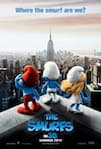
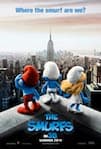
When the evil wizard Gargamel chases the tiny blue Smurfs out of their village, they tumble from their magical world and into ours, falling smack dab in the middle of New York's Central Park. They must find a way home before Gargamel tracks them down.
What Is the Budget of The Smurfs (2011)?
The Smurfs (2011), directed by Raja Gosnell and distributed by Columbia Pictures with Sony Pictures Animation, was produced on a reported budget of $110,000,000. The film paired live-action photography with fully CGI Smurf characters in a fish-out-of-water comedy that transported Peyo's Belgian comic-strip creations from their mushroom village into modern-day New York City. Sony positioned the production as a four-quadrant family tentpole and a launch title for what the studio hoped would become a long-running theatrical franchise.
The investment reflected Sony's aggressive bet on revitalizing dormant family-friendly IP. The studio had licensed the Smurfs rights from Peyo's estate (Lafig Belgium) and committed to a multi-film slate from the outset. Producer Jordan Kerner, who had previously shepherded the Charlotte's Web and Inspector Gadget adaptations, ran the project. The budget covered an extensive CG character-animation pipeline, a full-cast Manhattan location shoot, and high-profile voice talent including Katy Perry, Jonathan Winters, Anton Yelchin, George Lopez, and Jeff Foxworthy.
Key Budget Allocation Categories
The Smurfs' reported $110,000,000 budget was distributed across several core production areas:
- CG Character Animation: The fully digital Smurfs required a substantial animation pipeline. Sony Pictures Imageworks served as primary VFX vendor, building bespoke character rigs, fur and clothing simulation, and integrated lighting passes to blend the small blue characters against photographed New York exteriors. Animation alone consumed an estimated 35 to 45 percent of the production budget.
- Voice Cast: The voice ensemble included Jonathan Winters (Papa Smurf), Katy Perry (Smurfette), Anton Yelchin (Clumsy Smurf), Alan Cumming (Gutsy Smurf), Fred Armisen (Brainy Smurf), George Lopez (Grouchy Smurf), Jeff Foxworthy (Handy Smurf), Paul Reubens (Jokey Smurf), B.J. Novak (Baker Smurf), Wolfgang Puck (Chef Smurf), and Tom Kane (Narrator Smurf). The high-profile cast, particularly Perry at the height of her Teenage Dream tour, required premium compensation.
- Live-Action Talent: Hank Azaria played the comic antagonist Gargamel in heavy prosthetic makeup, with Neil Patrick Harris and Jayma Mays as the live-action human leads. Sofia Vergara appeared in a supporting role as a cosmetics executive. The cast required physical comedy ability and the willingness to perform against tennis balls and stand-ins for the CG characters.
- New York Location Shoot: Principal photography took place extensively on location in New York City, including Central Park, Bethesda Terrace, FAO Schwarz, Times Square, and various Manhattan neighborhoods. Permits, on-location infrastructure, and a NYC crew base added meaningful cost compared with a stage-bound production.
- Practical Sets and Prosthetics: The Smurf village in the Belgian forest opening was built as a practical set, and Gargamel's extensive prosthetic and contact lens makeup required hours of daily application. The medieval-Belgium prologue alone consumed significant production design and costume resources.
- Score and Soundtrack: Composer Heitor Pereira scored the film, which featured a soundtrack including Britney Spears' "Hold It Against Me" and an original song "Smurfs Anthem" by Katy Perry. Music licensing and original composition costs were significant.
How Does The Smurfs' Budget Compare to Similar Films?
At a reported $110,000,000, The Smurfs sits in the mid-range of live-action/CG hybrid family films. The comparison set illustrates the genre context:
- The Smurfs 2 (2013): Budget $105,000,000 | Worldwide $347,545,113. The direct sequel cost slightly less but earned roughly 60 percent of the original's worldwide haul, prompting Sony to reboot the property as a fully animated film with Smurfs: The Lost Village (2017).
- Garfield: The Movie (2004): Budget $50,000,000 | Worldwide $200,800,425. Fox's earlier live-action/CG comic-strip adaptation cost less than half of The Smurfs and earned roughly a third of its worldwide gross on a per-dollar basis.
- Yogi Bear (2010): Budget $80,000,000 | Worldwide $201,584,141. Warner Bros' contemporaneous Hanna-Barbera adaptation cost less and earned far less, illustrating how the Smurfs property significantly outperformed competing live-action cartoon revivals.
- Alvin and the Chipmunks (2007): Budget $60,000,000 | Worldwide $361,355,754. Fox's earlier live-action/CG hybrid cost about half as much and earned roughly two thirds of The Smurfs' worldwide gross, validating Sony's genre bet at scale.
- Stuart Little 2 (2002): Budget $120,000,000 | Worldwide $169,956,806. Columbia's prior live-action/CG family sequel cost more and earned less, demonstrating how unusual The Smurfs' commercial performance was for the format.
The Smurfs Box Office Performance
The Smurfs opened on July 29, 2011 to $35,613,529 domestically, finishing second behind Cowboys & Aliens in its first weekend and then climbing to first place by the second weekend on legs that exceeded studio expectations. International markets propelled the film to the kind of result Sony had hoped for, with particularly strong showings in Mexico, France, Italy, Russia, and Brazil. The film ultimately played for 21 weeks in domestic theaters.
Against a reported production budget of $110,000,000, the film needed approximately $250,000,000 in worldwide gross to reach profitability when accounting for marketing and distribution costs. Here is the financial breakdown:
Box Office Breakdown
The Smurfs (2011)

The Smurfs returned approximately $2.65 in theatrical revenue for every $1 invested in production and marketing, a strong figure that comfortably cleared the profitability threshold for a four-quadrant family release. The domestic share of the gross was $142,614,158 against an international share of $421,135,165, a 25/75 split heavily weighted overseas and consistent with the property's strong recognition in European and Latin American markets where the original Belgian comic strip and the 1980s Hanna-Barbera animated series had built generational familiarity.
The commercial result justified the franchise rollout. Sony greenlit The Smurfs 2 (2013), which underperformed at $347,545,113 worldwide, and then pivoted to a fully animated approach with Smurfs: The Lost Village (2017) and the upcoming Smurfs Movie (2025). The Smurfs (2011) remains the highest-grossing entry in the theatrical Smurfs franchise to date.
The Smurfs Production History
Development on The Smurfs began at Paramount Pictures in 2002, with the studio acquiring the rights from Lafig Belgium, the company controlling Peyo's estate. Paramount eventually let the option lapse, and Sony Pictures Entertainment picked up the rights in 2008, attaching producer Jordan Kerner and bringing Raja Gosnell aboard to direct. Gosnell, the editor on the original Home Alone trilogy and director of Beverly Hills Chihuahua, was selected for his track record with family-friendly live-action and CG hybrid filmmaking.
Screenwriters J. David Stem and David N. Weiss (Shrek 2, The Rugrats Movie) developed the screenplay, with later passes from Jay Scherick and David Ronn that retooled the second-act New York comedy. The decision to set most of the film in modern-day Manhattan came late in development, driven partly by the financial calculus of shooting in New York under the state's film production credit and partly by the comedic potential of the fish-out-of-water premise. Sony Pictures Animation handled the CG character work, with Sony Pictures Imageworks serving as primary VFX vendor across more than 1,000 finished shots.
Principal photography ran from March 28 to June 24, 2010 in New York City, with additional location work in Belgium for the village prologue. Hank Azaria's casting as Gargamel was announced in June 2010, and his prosthetic makeup required a four-hour daily application process. Katy Perry recorded her voice work as Smurfette in late 2010, balancing the project against the international leg of her California Dreams Tour. Post-production extended through summer 2011, with final character animation and VFX integration delivering just weeks before the July 29 release.
Awards and Recognition
The Smurfs received predominantly negative awards recognition. The film was nominated for two Razzies at the 32nd Golden Raspberry Awards ceremony: Worst Director (Raja Gosnell) and Worst Screen Ensemble. It did not win in either category. The film was also nominated for a Kids' Choice Award for Favorite Animated Movie at the 2012 ceremony, losing to Puss in Boots.
The film did receive some genre recognition: it won the Saturn Award for Best Music for Heitor Pereira's score at the 38th Saturn Awards ceremony, where it was also nominated for Best Family Film. The Smurfs additionally received nominations at the Visual Effects Society Awards for Outstanding Animated Character in a Live Action Production, recognizing the Sony Pictures Imageworks character animation work on the fully digital Smurfs.
Critical Reception
The Smurfs received mixed-to-negative reviews. The film holds a 22% approval rating on Rotten Tomatoes based on 158 critic reviews, with a critical consensus calling it "a noisy, unimaginative kid-flick" that nevertheless might please very young viewers. On Metacritic, the film scored 30 out of 100, indicating generally unfavorable reviews. Audiences surveyed by CinemaScore gave the film an A-, a strong grade indicating significant disconnect between critical opinion and ticket-buying family audiences.
Critics broadly objected to the film's reliance on lowbrow gags, the unimaginative deployment of the Smurfs in the Manhattan setting, and the brand-integration product placement that several reviewers found particularly aggressive. The New York Times' Stephen Holden called it "a manic, eyesore special-effects spectacle," while the Los Angeles Times' Betsy Sharkey wrote that "the Smurfs are charming, but they have been dropped into a movie that doesn't deserve them." Roger Ebert was more generous, giving it 2.5 stars and noting that "very young children may find it entertaining, but adults will find their patience tested."
Audience reaction was substantially warmer, particularly among families and the under-12 demographic, which propelled the film's long theatrical legs. Family-press outlets including Common Sense Media and Plugged In rated the film as acceptable family entertainment. The disconnect between critical and audience reception became a frequently cited example of how four-quadrant family fare can succeed commercially despite poor critical reception, as long as the property has strong pre-existing brand recognition.
Frequently Asked Questions
How much did it cost to make The Smurfs (2011)?
The reported production budget was $110,000,000. The figure covered an extensive CG character-animation pipeline handled by Sony Pictures Imageworks, a full New York City location shoot, prosthetic makeup work for Hank Azaria as Gargamel, and a high-profile voice cast including Katy Perry, Jonathan Winters, and Anton Yelchin.
How much did The Smurfs (2011) earn at the box office?
The film grossed $142,614,158 domestically and $421,135,165 internationally, for a worldwide total of $563,749,323. It opened to $35,613,529 in the United States on July 29, 2011, finishing second behind Cowboys & Aliens in its first weekend before climbing to first place on its second weekend.
Was The Smurfs (2011) profitable?
Yes. Against a $110,000,000 production budget and approximately $90,000,000 to $110,000,000 in marketing spend, the film returned approximately $2.65 in worldwide gross for every $1 invested. Sony reportedly earned approximately $80,000,000 to $100,000,000 in net profit after theatrical splits, a result strong enough to greenlight an immediate sequel.
Who directed The Smurfs (2011)?
Raja Gosnell directed the film. Gosnell, the editor on the original Home Alone trilogy and director of Scooby-Doo (2002), Beverly Hills Chihuahua, and Scooby-Doo 2: Monsters Unleashed, was selected for his track record with family-friendly live-action and CG hybrid filmmaking. He returned to direct The Smurfs 2 in 2013.
Where was The Smurfs (2011) filmed?
Principal photography ran from March 28 to June 24, 2010, primarily on location in New York City. Locations included Central Park, Bethesda Terrace, FAO Schwarz, Times Square, and various Manhattan neighborhoods. The production took advantage of the New York State Film Production Tax Credit. Additional location work for the Belgian forest prologue was shot in Belgium.
Who voiced the Smurfs in the 2011 film?
The voice cast included Jonathan Winters (Papa Smurf), Katy Perry (Smurfette), Anton Yelchin (Clumsy Smurf), Alan Cumming (Gutsy Smurf), Fred Armisen (Brainy Smurf), George Lopez (Grouchy Smurf), Jeff Foxworthy (Handy Smurf), Paul Reubens (Jokey Smurf), B.J. Novak (Baker Smurf), Wolfgang Puck (Chef Smurf), and Tom Kane (Narrator Smurf). Jonathan Winters had previously voiced Grandpa Smurf on the 1980s Hanna-Barbera animated series.
How does The Smurfs (2011) compare to its sequels?
The Smurfs (2011) is the highest-grossing entry in the theatrical Smurfs franchise. The Smurfs 2 (2013) cost $105,000,000 and earned $347,545,113 worldwide, prompting Sony to reboot the property as a fully animated film with Smurfs: The Lost Village (2017), which earned $197,182,718 worldwide on a $60,000,000 budget. The franchise has continued with The Smurfs Movie (2025).
Who played Gargamel in The Smurfs (2011)?
Hank Azaria played Gargamel, the comic antagonist, in heavy prosthetic makeup that required a four-hour daily application process. Azaria, best known for his voice work on The Simpsons, returned to play Gargamel in The Smurfs 2 (2013) but was not retained when Sony rebooted the franchise as a fully animated film with Smurfs: The Lost Village (2017), in which Rainn Wilson voiced Gargamel.
What did critics think of The Smurfs (2011)?
The film received mixed-to-negative reviews, with a 22% approval rating on Rotten Tomatoes (based on 158 critics) and a 30 out of 100 score on Metacritic. Audiences gave it an A- CinemaScore, indicating significant disconnect between critical opinion and family audiences. Critics objected to the lowbrow gags and aggressive product placement, but family viewers responded positively, particularly the under-12 demographic.
Did The Smurfs (2011) win any awards?
The film won the Saturn Award for Best Music for Heitor Pereira's score at the 38th Saturn Awards. It was also nominated for two Razzies at the 32nd Golden Raspberry Awards (Worst Director and Worst Screen Ensemble) and received a Visual Effects Society Awards nomination for Outstanding Animated Character in a Live Action Production for the Sony Pictures Imageworks character animation work.
Filmmakers
The Smurfs (2011)

Build budgets like this one in Saturation
Start from an industry-standard feature film template, import the schedule and rates you already have, and let the cost report keep itself current as you spend. Real-time collaboration, no spreadsheets.