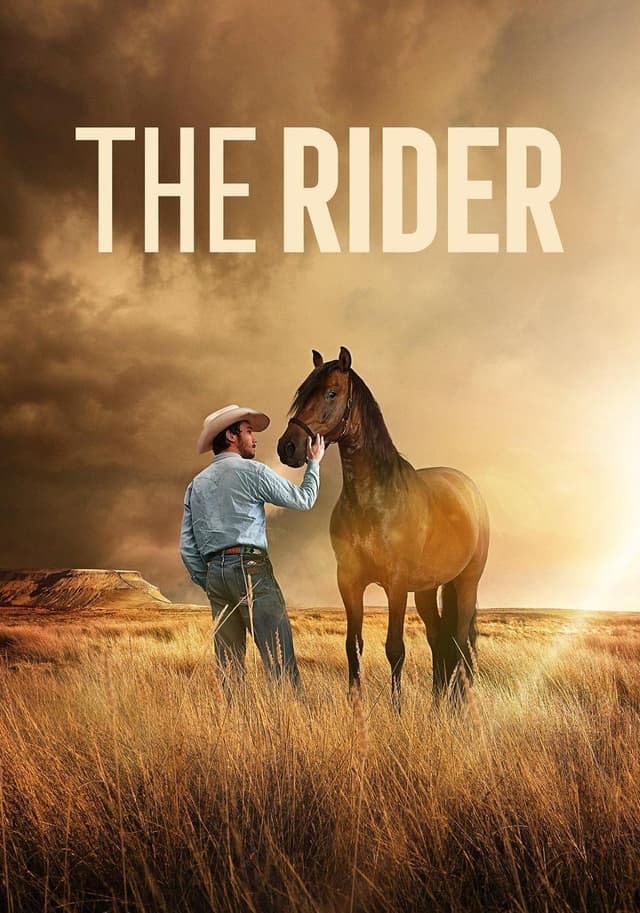
The Rider Budget
 DramaWestern1h 43m
Updated
Synopsis
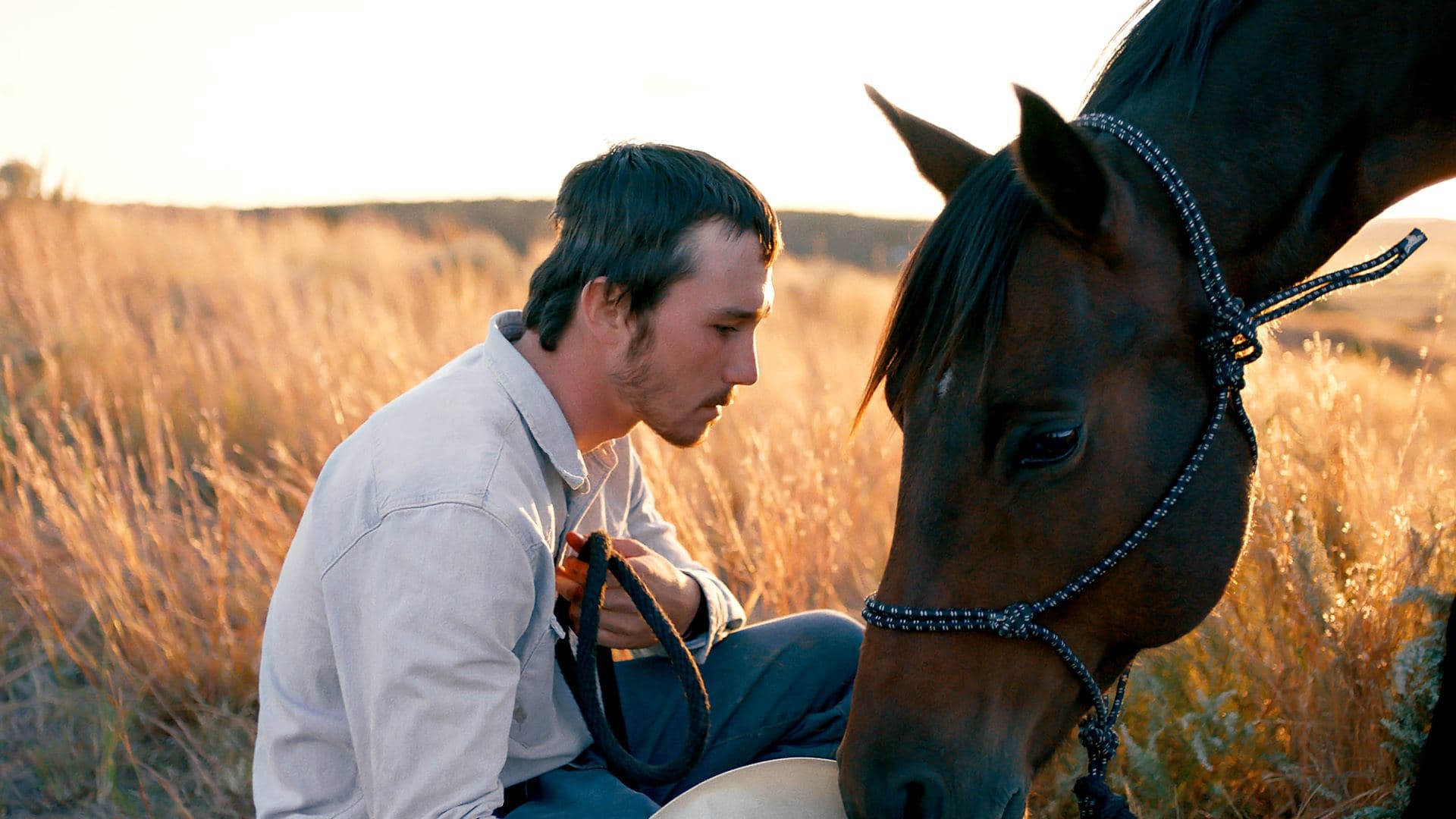
Brady, a young Lakota Sioux cowboy and rising rodeo star on the Pine Ridge Indian Reservation, suffers a near-fatal head injury during a bronc-riding competition. As he recovers, Brady struggles to reckon with whether he can continue the only life he has known. A docu-realist Western shot on the reservation with the real Jandreau family playing fictionalized versions of themselves.
What Is the Budget of The Rider (2018)?
The Rider (2017), written and directed by Chloé Zhao, was produced on an undisclosed budget that production scale, the film's independent-financing structure, and Zhao's subsequent reporting on her early-career methods place in the range of $100,000 to $500,000. The film was financed independently through Highwayman Films (Zhao's producing partnership with cinematographer Joshua James Richards and producer Mollye Asher) with additional support from Bert Hamelinck and Sacha Ben Harroche of Caviar. Sony Pictures Classics acquired North American distribution rights at the Cannes Directors' Fortnight 2017 premiere.
The investment reflected the deeply independent ultra-low-budget tier of contemporary American art cinema. Chloé Zhao shot the film documentary-style with the real Lakota Sioux residents of the Pine Ridge Indian Reservation in South Dakota playing fictionalized versions of themselves, casting bronc-rider Brady Jandreau as the lead after his real-life rodeo head injury became the basis for the screenplay. The minimal crew, available-light shooting, and reservation-based production model kept costs at a small fraction of conventional independent feature budgets.
Key Budget Allocation Categories
The Rider's estimated $100,000 to $500,000 budget was distributed across several core production areas:
- Above-the-Line and Talent: Chloé Zhao took deferred or scale-equivalent writer-director fees as part of the Highwayman Films producing partnership. Lead Brady Jandreau, a working Pine Ridge horse trainer and bronc rider with no prior acting experience, played a fictional version of himself; his fellow non-professional cast (Lilly Jandreau, Tim Jandreau, Cat Clifford, Lane Scott) were paid at non-union day rates appropriate to a microbudget independent production.
- Pine Ridge Reservation Shoot: Principal photography ran across multiple weeks in summer and fall 2016 on the Pine Ridge Indian Reservation and surrounding South Dakota Badlands, with Zhao, cinematographer Joshua James Richards, and a small crew embedded with the Jandreau family across the production. The reservation-based shoot required logistical support but kept location and lodging costs well below those of a conventional South Dakota production.
- Cinematography: Joshua James Richards shot the film on Arri Amira with anamorphic-influenced framing and an emphasis on available natural light, particularly at golden hour across the Badlands landscape. The handheld documentary-style camera work and minimal lighting setup are central to the film's aesthetic and economic model.
- Editorial: Chloé Zhao edited the film herself over the back end of production, an approach she would carry through to Nomadland and Eternals. Self-editing kept post-production cost minimal and maintained creative consistency between the documentary shoot and the final cut.
- Score and Sound: Composer Nathan Halpern provided a minimal acoustic score that interweaves with diegetic country music and Lakota songs heard on the reservation. Sound recording in open-air South Dakota conditions required extensive on-set foley and post-production ADR.
- Festival Submission and Cannes Travel: Cannes Directors' Fortnight 2017 submission and travel costs for the Highwayman team to attend the May 2017 premiere were carried by the production. The Cannes premiere directly led to Sony Pictures Classics' acquisition and the film's subsequent theatrical positioning.
How Does The Rider's Budget Compare to Similar Films?
At an estimated $100,000 to $500,000, The Rider sits at the deeply independent ultra-low-budget tier. The comparison set illustrates the budget context:
- Songs My Brothers Taught Me (2015): Budget undisclosed (estimated $100,000 to $500,000) | Worldwide approximately $50,000. Chloé Zhao's debut feature, also shot on the Pine Ridge Indian Reservation, operated at the same ultra-low-budget tier and established the production methodology and reservation-based collaborator network that The Rider built on.
- Nomadland (2020): Budget approximately $5,000,000 | Worldwide $39,400,000. Chloé Zhao's subsequent Best Picture Oscar winner came in at roughly ten to fifty times The Rider's budget and offers the closest direct comparison for her docu-realist approach scaled up with Frances McDormand and Searchlight Pictures backing.
- Lady Bird (2017): Budget $10,000,000 | Worldwide $79,000,000. Greta Gerwig's contemporaneous A24 indie hit operated at roughly twenty to a hundred times The Rider's budget, illustrating the conventional first-feature indie tier that The Rider undercut by a wide margin.
- Wendy (2020): Budget undisclosed (estimated $4,000,000 to $6,000,000) | Worldwide $145,000. Benh Zeitlin's Beasts of the Southern Wild follow-up operates at the small-but-not-microbudget tier and shares The Rider's approach of casting non-professional regional collaborators.
- Minari (2020): Budget approximately $2,000,000 | Worldwide $15,500,000. Lee Isaac Chung's Sundance breakout family drama operates at the small-indie tier just above The Rider's ultra-low budget.
The Rider Box Office Performance
The Rider premiered at the Cannes Directors' Fortnight on May 20, 2017, where it won the Art Cinema Award. Sony Pictures Classics acquired North American distribution rights at the festival and opened the film theatrically on April 13, 2018, where it grossed $2,409,295 across a limited platform release that peaked at 134 theaters in May. International theatrical added approximately $1,000,000, for a worldwide theatrical total of roughly $3,400,000.
Against an estimated production budget in the $100,000 to $500,000 range, the film cleared profitability easily on theatrical alone, before factoring in subsequent home-video, streaming, and broadcast revenue. Here is the financial breakdown:
Box Office Breakdown
The Rider

The Rider's commercial profile was strong relative to its tiny production budget but typical of the prestige-independent theatrical tier in absolute terms. The film's value to its principals sat in Chloé Zhao's career trajectory: the Cannes win directly led to her hiring by Marvel for Eternals, which became Marvel's first Best Picture-prepared director-led film, and to Searchlight Pictures backing Nomadland.
Brady Jandreau, the non-professional Lakota lead, returned to working as a horse trainer and bronc rider in Pine Ridge after the film's release but received subsequent acting offers including a supporting role in Sicario: Day of the Soldado (2018) and a recurring role on Yellowstone (2018-19).
The Rider Production History
Chloé Zhao met Brady Jandreau during the production of her debut feature Songs My Brothers Taught Me (2015) on the Pine Ridge Indian Reservation in South Dakota. Jandreau, a young Lakota Sioux horse trainer and bronc rider, became a close collaborator on the broader Pine Ridge documentary-cinema project Zhao was developing across multiple films. In April 2016, Jandreau suffered a near-fatal head injury during a bronc-riding competition that left him with a steel plate in his skull and questions about whether he could continue rodeo.
Zhao began developing The Rider with Jandreau and his family in the months following the injury, structuring the screenplay around a fictionalized version of his real-life recovery and the working-cowboy world of the reservation. The script was completed in summer 2016, and Zhao, cinematographer Joshua James Richards, and producer Mollye Asher mounted a small Highwayman Films production with the Jandreau family playing fictional versions of themselves alongside several of Brady's fellow Pine Ridge rodeo collaborators.
Principal photography ran across summer and fall 2016 on the Pine Ridge Indian Reservation and the surrounding South Dakota Badlands. The production was minimal: Zhao, Richards, Asher, and a small crew embedded with the Jandreau family across the shoot. The film does not appear to have utilized South Dakota state incentives, with the reservation-based production model and the low cost base making conventional incentive structures less material to the financing.
Post-production began in late 2016 with Chloé Zhao editing herself, score by Nathan Halpern added in early 2017, and final sound and color work completed in time for the May 2017 Cannes Directors' Fortnight submission. The Cannes premiere on May 20, 2017 drew immediate critical acclaim and Sony Pictures Classics' acquisition of North American rights at the festival. Theatrical release followed in April 2018 with a platform expansion that built through summer.
Awards and Recognition
The Rider received significant international awards recognition. The film won the Art Cinema Award at the 2017 Cannes Directors' Fortnight, the Bonnie Award at the 2018 San Francisco Film Critics Circle, and numerous regional critics circle awards across the United States. Chloé Zhao won Best Director at the National Society of Film Critics Awards and Best Director nominations from the Independent Spirit Awards (where the film received four nominations total) and the Gotham Awards.
The Independent Spirit Awards nominated the film for Best Feature, Best Director (Chloé Zhao), Best Editing, and Best Cinematography. The Gotham Awards nominated it for Best Feature and the Bingham Ray Breakthrough Director Award. The film did not engage with the major precursor awards (Oscars, Golden Globes, BAFTAs) in any category, an outcome consistent with the limited recognition American art cinema receives in mainstream awards bodies and one that would change dramatically with Zhao's subsequent Nomadland Best Picture sweep.
Critical Reception
The Rider received widespread critical acclaim. The film holds a 97% approval rating on Rotten Tomatoes based on 206 critic reviews with an average score of 8.5 out of 10, with the critical consensus calling it "a quietly revelatory drama that finds beauty and pain in equal measure across the American West." On Metacritic, the film scored 92 out of 100, indicating universal acclaim. Audience response on arthouse platforms was similarly strong.
Critics broadly praised the lead performance by non-professional Brady Jandreau, the cinematography by Joshua James Richards, and Chloé Zhao's docu-realist directing style. The New York Times's A. O. Scott called the film "a small miracle of an American Western" and named it one of the year's ten best, and The Guardian's Peter Bradshaw described Jandreau as "extraordinary, with the natural presence of a young Sam Shepard." Variety's Owen Gleiberman wrote that "Zhao has made one of the most luminous American films of the year."
A small number of critics flagged structural objections. IndieWire noted that the film's second act, focused on the relationship between Brady and his injured friend Lane Scott in a long-term-care facility, occasionally tipped into emotional manipulation, and Slant Magazine's Christopher Gray argued that the documentary-fiction hybrid blurred consent in ways the film never fully addressed. These objections were a minority view in an otherwise broadly enthusiastic critical reception that positioned Chloé Zhao for the subsequent Nomadland Oscar campaign.
Frequently Asked Questions
How much did it cost to make The Rider (2018)?
The production budget was not publicly disclosed, but production scale, the independent-financing structure, and Chloé Zhao's subsequent reporting on her early-career methods place the figure in the range of $100,000 to $500,000. Highwayman Films and Caviar co-financed the production, with Sony Pictures Classics acquiring North American distribution rights at Cannes.
Who directed The Rider?
Chloé Zhao wrote, directed, and edited the film, her second feature after Songs My Brothers Taught Me (2015). The Rider built on the production methodology, the reservation-based collaborator network, and the docu-realist directing style she developed on the debut. She subsequently directed Nomadland (2020) and Eternals (2021).
Is The Rider a true story?
The film is a fictionalized account based on real events. Lead Brady Jandreau, a Lakota Sioux horse trainer and bronc rider from the Pine Ridge Indian Reservation, suffered a near-fatal head injury during a real April 2016 bronc-riding competition. Chloé Zhao developed the screenplay with Jandreau and his family, who play fictionalized versions of themselves. Lane Scott, who plays Brady's injured friend, is also a real-life Pine Ridge bronc rider who was paralyzed in a 2015 car accident.
Where was The Rider filmed?
Principal photography ran across summer and fall 2016 on the Pine Ridge Indian Reservation and the surrounding South Dakota Badlands. The production was minimal, with Chloé Zhao, cinematographer Joshua James Richards, producer Mollye Asher, and a small crew embedded with the Jandreau family across the shoot.
Are Brady Jandreau and the cast real cowboys?
Yes. Brady Jandreau and his fellow cast members are real Lakota Sioux residents of the Pine Ridge Indian Reservation. Brady is a working horse trainer and former bronc rider; Tim Jandreau is his real father, Lilly Jandreau is his real sister, and Lane Scott is a real-life paralyzed bronc rider who was Brady's friend before the film. None of the principal cast had professional acting experience prior to The Rider.
Did The Rider win at Cannes?
Yes, in the Directors' Fortnight sidebar. The Rider won the Art Cinema Award at the 2017 Cannes Directors' Fortnight on May 20, 2017. The win directly led to Sony Pictures Classics' acquisition of North American distribution rights at the festival.
How did The Rider perform at the box office?
Sony Pictures Classics opened the film theatrically on April 13, 2018, where it grossed $2,409,295 across a limited platform release that peaked at 134 theaters in May. International theatrical added approximately $1,000,000, for a worldwide theatrical total of roughly $3,400,000.
What did critics think of The Rider?
The film received widespread critical acclaim, with a 97% Rotten Tomatoes approval based on 206 reviews (8.5 average) and a 92 out of 100 score on Metacritic, indicating universal acclaim. Critics broadly praised the lead performance by Brady Jandreau, the cinematography by Joshua James Richards, and Chloé Zhao's docu-realist directing style.
How does The Rider compare to Nomadland?
The Rider (2018) preceded Nomadland (2020) and used the same docu-realist methodology of casting non-professional regional collaborators in fictionalized roles. Nomadland scaled up the approach with Frances McDormand as the central professional anchor and Searchlight Pictures backing, on a budget roughly ten to fifty times larger. Nomadland won Best Picture, Best Director, and Best Actress at the 93rd Academy Awards.
Did The Rider win any awards?
The Rider won the Art Cinema Award at the 2017 Cannes Directors' Fortnight and Best Director from the National Society of Film Critics, the San Francisco Film Critics Circle Bonnie Award, and numerous regional critics circle awards. The Independent Spirit Awards gave the film four nominations including Best Feature and Best Director. The film did not engage with the major precursor awards (Oscars, Golden Globes, BAFTAs).
Filmmakers
The Rider

Official Trailer
Build budgets like this one in Saturation
Start from an industry-standard feature film template, import the schedule and rates you already have, and let the cost report keep itself current as you spend. Real-time collaboration, no spreadsheets.