The Rhythm Section Budget
 ActionThriller1h 49m
Updated
Synopsis
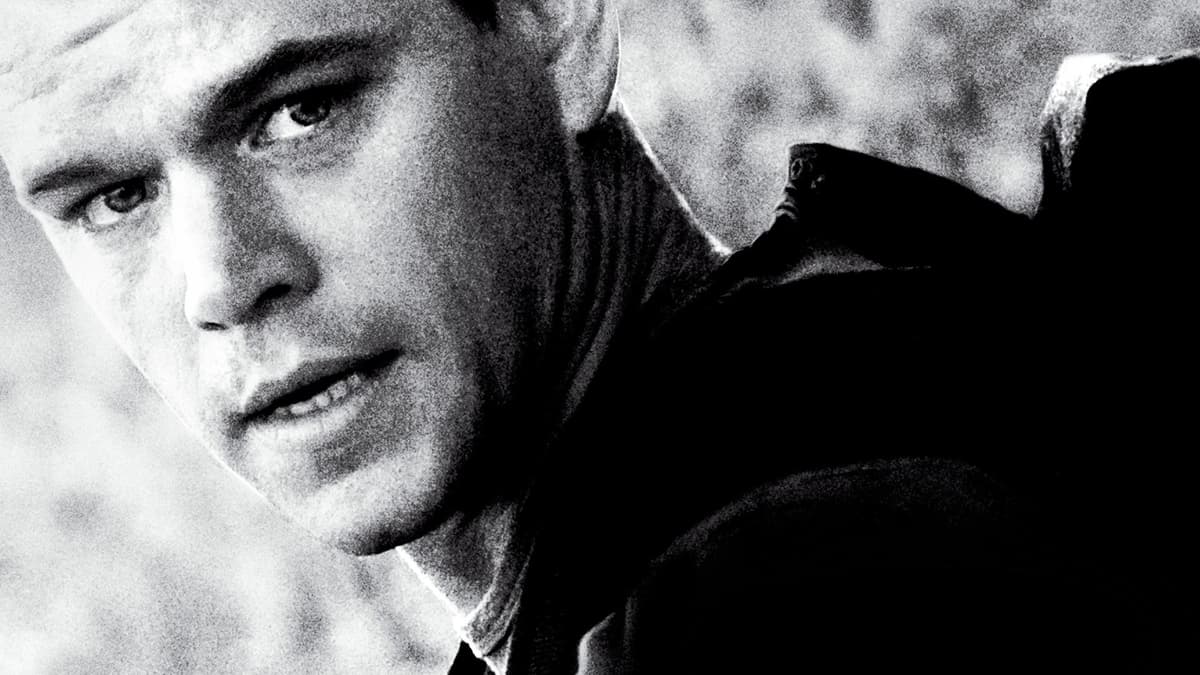
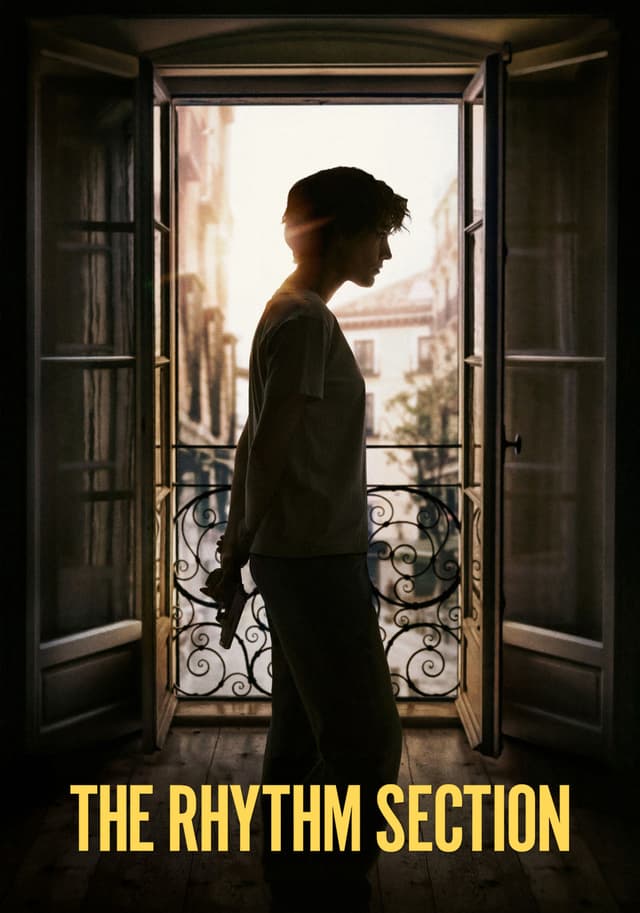
When she discovers the plane crash that claimed the lives of her family was no accident, Stephanie Patrick enters the dark, complex world of international espionage seeking vengeance. With nothing left to lose, Stephanie transforms from victim to assassin and discovers that neither revenge nor the truth are what they appear.
What Is the Budget of The Rhythm Section?
The Rhythm Section was produced with an estimated budget of $50 million. For a mid-range action thriller starring Blake Lively, that figure placed it squarely in the territory of studio-backed genre films that rely on a recognizable lead rather than franchise IP. The film was a co-production between Paramount Pictures and Eon Productions, the company best known for the James Bond franchise, with Barbara Broccoli and Michael G. Wilson serving as producers.
The $50 million production budget reflected the demands of a globe-spanning shoot that required action set pieces, location work across multiple European countries, and practical stunt sequences. Lively committed to performing many of her own stunts, which added authenticity to the action but also introduced production risks. She broke her hand during filming, an injury that contributed to scheduling delays.
Key Budget Allocation Categories
- Above-the-Line Talent accounted for a significant share given the star-driven nature of the project. Blake Lively carried the film as the sole lead, with Jude Law and Sterling K. Brown in key supporting roles. Director Reed Morano, coming off her Emmy-winning work on The Handmaid's Tale, commanded attention as a rising feature filmmaker.
- Location and Travel costs were substantial. Principal photography took place across Ireland, Spain, and other parts of Europe, with each location requiring local crew, permits, and logistics coordination. The varied settings were central to the story's globe-trotting narrative.
- Stunt Coordination and Action Sequences represented a core expense. Lively trained extensively for the role and performed many of her own stunts, requiring dedicated stunt coordinators, safety rigging, and additional insurance coverage. The practical approach to action drove costs higher than a VFX-heavy alternative would have.
- Production Design and Period Detail covered the transformation of locations into the gritty, lived-in environments the story demanded. Sets ranged from a bombed-out apartment in Tangier to London safe houses and remote Irish coastal landscapes.
- Post-Production and Score included editing, sound design, color grading, and Steve Mazzaro's original score. The film's tonal shifts between thriller and character study required careful post-production calibration.
- Marketing and Distribution costs, handled primarily by Paramount, are estimated to have added another $30 to $40 million on top of the production budget, bringing total investment well above the $50 million production figure.
How Does The Rhythm Section's Budget Compare to Similar Films?
- Atomic Blonde (2017) had an estimated budget of $30 million and earned $100 million worldwide. That film benefited from a tighter scope and Charlize Theron's action credibility, delivering strong returns on a leaner investment.
- Red Sparrow (2018) cost approximately $69 million and grossed $151 million globally. Jennifer Lawrence's star power and a more developed marketing push gave it a significantly stronger commercial outcome despite mixed reviews.
- Anna (2019) was produced for roughly $30 million and earned $31 million worldwide. Luc Besson's spy thriller underperformed similarly to The Rhythm Section but at a lower financial exposure.
- Colombiana (2011) cost an estimated $40 million and grossed $60 million worldwide. Zoe Saldana's revenge thriller managed modest profitability, though its returns were far from spectacular.
- Ava (2020) was made for approximately $25 million and earned just $7 million globally. Jessica Chastain's female-led action thriller suffered a similar commercial fate, released during the same pandemic-disrupted year.
The Rhythm Section Box Office Performance
The Rhythm Section earned $5,747,695 domestically and $6,090,290 worldwide against its $50 million production budget. By any measure, these numbers represent a catastrophic commercial failure. The film opened to just $2.8 million in its debut weekend across 3,049 theaters in the United States, averaging roughly $918 per screen.
Factoring in the standard break-even calculation (roughly 2x production budget to account for marketing and distribution costs), The Rhythm Section needed approximately $100 million worldwide to reach profitability. Its $6 million total left an estimated shortfall of $94 million, making it one of the biggest box office bombs of early 2020.
The ROI calculation tells the story plainly: ($6,090,290 minus $50,000,000) / $50,000,000 x 100 = negative 87.8%. Paramount reportedly took a significant write-down on the film. The January 31, 2020 release date, traditionally a dumping ground for troubled releases, signaled low studio confidence. Within weeks, the global pandemic shut down theaters entirely, eliminating any chance of a late-run recovery.
Box Office Breakdown
The Rhythm Section

The Rhythm Section Production History
Development of The Rhythm Section began when Eon Productions acquired the rights to Mark Burnell's 1999 novel of the same name. Barbara Broccoli and Michael G. Wilson, the duo behind the James Bond franchise since GoldenEye, saw potential in the story of a woman who discovers her family's deaths in a plane crash were the result of a conspiracy and transforms herself into an assassin seeking revenge.
Reed Morano signed on to direct in 2017, riding momentum from her Emmy-winning direction of The Handmaid's Tale's first season. Mark Burnell adapted his own novel for the screenplay. Blake Lively was cast in the lead role of Stephanie Patrick, with Jude Law joining as a former MI6 agent who trains her and Sterling K. Brown as an intelligence operative she encounters along the way.
Principal photography began in late 2017 and took place across Ireland, Spain, and several other European locations. Lively committed to a physically demanding performance, training in combat and driving techniques. During a fight sequence, she broke her hand, forcing a production shutdown that lasted several months. Filming eventually resumed and wrapped in early 2018.
The film was originally scheduled for a February 2019 release but was pushed back to November 2019, then moved again to its final January 31, 2020 date. The repeated delays, combined with the late-January release slot, suggested Paramount had concerns about the film's commercial prospects. By the time it reached theaters, the marketing campaign had been relatively muted compared to similar star-driven thrillers.
Awards and Recognition
The Rhythm Section did not receive any major award nominations. The film was largely overlooked during the 2020 awards season, with neither critical bodies nor industry guilds singling it out for recognition.
Reed Morano's direction attracted some attention simply because of her pedigree. Her work on The Handmaid's Tale had earned her both the Primetime Emmy Award for Outstanding Directing for a Drama Series and a Directors Guild nomination, making her one of the most watched emerging filmmakers at the time. The Rhythm Section represented her first major studio feature, and while the film's commercial failure dimmed its profile, Morano continued to work steadily in both film and television afterward.
Blake Lively's physical commitment to the role drew notice from action film enthusiasts and stunt communities, though this did not translate into formal recognition from organizations like the Screen Actors Guild or stunt-focused award bodies.
Critical Reception
The Rhythm Section holds a 29% approval rating on Rotten Tomatoes, with the critical consensus noting that the film's gritty ambitions were undermined by an unfocused narrative. On Metacritic, it scored 40 out of 100, indicating "mixed or average reviews" that leaned decidedly negative.
Critics were divided on Blake Lively's performance. Some praised her willingness to deglamorize and her physical commitment, noting that her portrayal of a grieving, drug-addicted woman who slowly reconstructs herself into an operative had genuine emotional texture. Others found the character's transformation unconvincing, arguing that the script rushed past the psychological complexity that could have distinguished the film from standard revenge thrillers.
Reed Morano's direction received credit for visual atmosphere and a grounded approach to action sequences that avoided the glossy sheen of many studio thrillers. The handheld camerawork and muted color palette created a sense of weight and consequence. However, reviewers noted that the pacing faltered in the second half, with the globe-trotting plot losing momentum as it moved from one location to the next without building sufficient tension.
The supporting cast, particularly Jude Law, was generally regarded as underutilized. Several critics pointed out that the film struggled to balance its character study aspirations with the genre demands of a spy thriller, landing in an uncomfortable middle ground that satisfied neither impulse fully.
Frequently Asked Questions
How much did it cost to make The Rhythm Section (2020)?
The production budget was $50,000,000, covering principal photography, visual effects, cast and crew salaries, locations, sets, post-production, and music. Marketing and distribution (P&A) costs are estimated at an additional $25,000,000 - $40,000,000, bringing the total studio investment to approximately $75,000,000 - $90,000,000.
How much did The Rhythm Section (2020) earn at the box office?
The Rhythm Section grossed $5,437,971 domestic, $551,612 international, totaling $5,989,583 worldwide.
Was The Rhythm Section (2020) profitable?
The film did not break even theatrically, earning $5,989,583 against an estimated $125,000,000 needed. Ancillary revenue may have improved the picture.
What were the biggest costs in producing The Rhythm Section?
The primary cost drivers were above-the-line talent (Blake Lively, Jude Law, Sterling K. Brown); visual effects, practical stunts, and A-list talent compensation; international production across Spain, United Kingdom, United States of America.
How does The Rhythm Section's budget compare to similar action films?
At $50,000,000, The Rhythm Section is classified as a mid-budget production. The median budget for wide-release action films in the 2020s ranges from $30 - 80M for mid-budget to $150M+ for tentpoles. Comparable budgets: Angela's Ashes (1999, $50,000,000); Dredd (2012, $50,000,000); Lord of War (2005, $50,000,000).
Did The Rhythm Section (2020) go over budget?
There are no widely reported accounts of significant budget overruns for this production. However, studios rarely disclose precise budget overrun figures publicly. The reported production budget reflects the final estimated cost.
What was the return on investment (ROI) for The Rhythm Section?
The theatrical ROI was -88.0%, calculated as ($5,989,583 − $50,000,000) ÷ $50,000,000 × 100. This measures gross revenue against production budget only - it does not account for P&A or exhibitor shares.
What awards did The Rhythm Section (2020) win?
2 wins & 3 nominations total.
Who directed The Rhythm Section and who were the key crew members?
Directed by Reed Morano, written by Mark Burnell, shot by Sean Bobbitt, with music by Steve Mazzaro, edited by Joan Sobel.
Where was The Rhythm Section filmed?
The Rhythm Section was filmed in Spain, United Kingdom, United States of America.
Filmmakers
The Rhythm Section

Official Trailer
Build budgets like this one in Saturation
Start from an industry-standard feature film template, import the schedule and rates you already have, and let the cost report keep itself current as you spend. Real-time collaboration, no spreadsheets.