The Pursuit of Happyness Budget
 Drama1h 57m
Updated
Synopsis
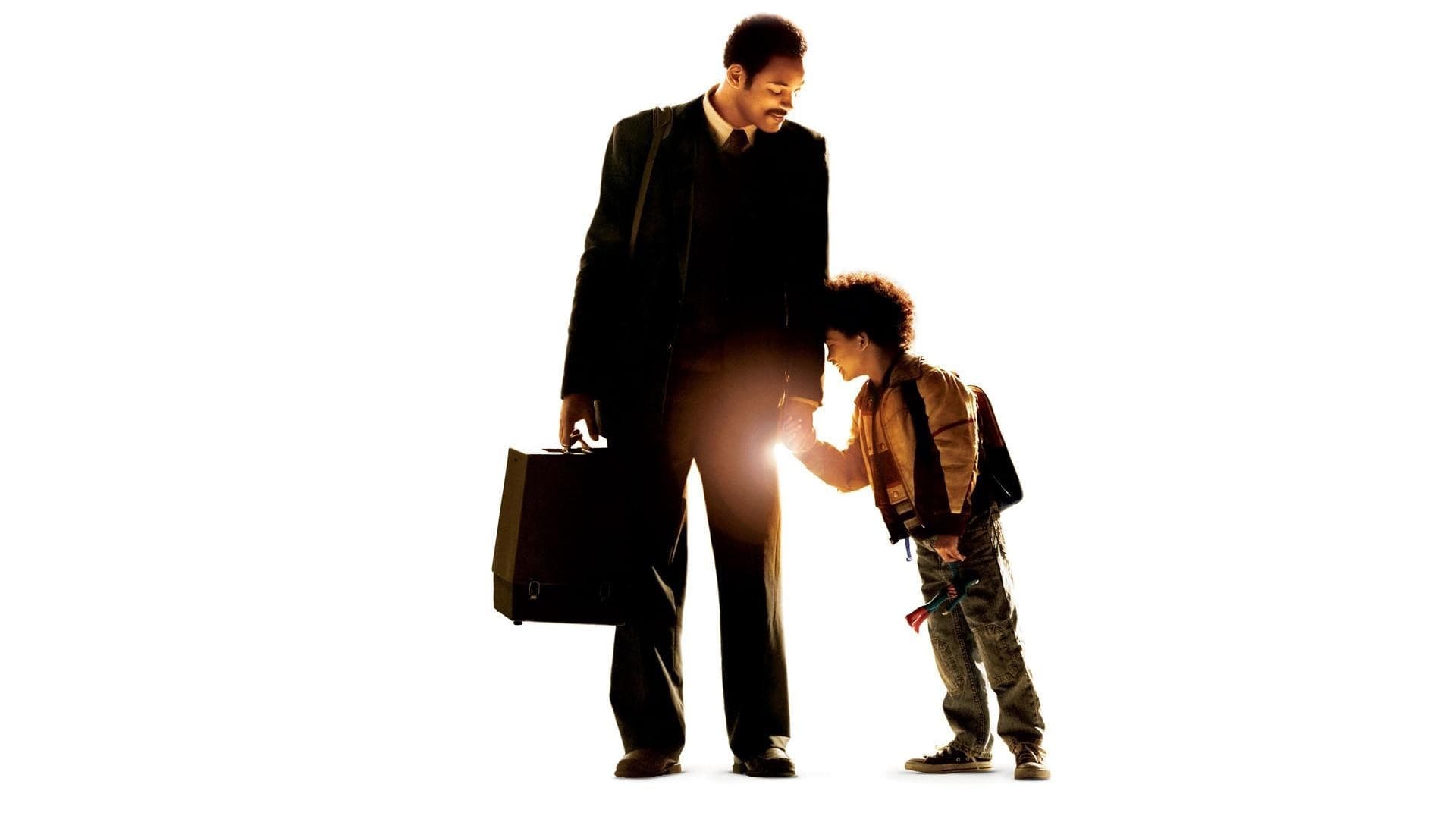
A struggling salesman takes custody of his son as he's poised to begin a life-changing professional career.
What Is the Budget of The Pursuit of Happyness?
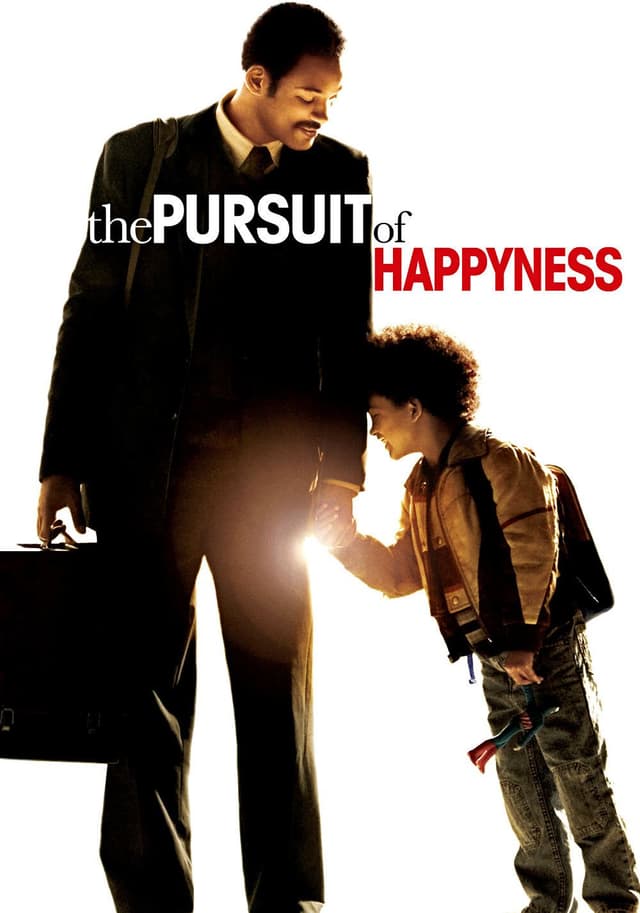
The Pursuit of Happyness (2006) was produced with a budget of $55 million. Columbia Pictures financed the project, banking on the commercial appeal of Will Smith in a prestige drama based on the true story of Chris Gardner, a San Francisco salesman who endured homelessness while training for an unpaid stockbroker internship at Dean Witter Reynolds. The intentional misspelling of "Happyness" in the title references a piece of graffiti Gardner saw on the wall of a Chinatown daycare where he placed his son during the internship period.
For a character-driven drama without action sequences or heavy visual effects, $55 million represented a significant investment. The budget was justified largely by Smith's salary and the production's commitment to authentic San Francisco locations, period-accurate set dressing for the early 1980s setting, and a supporting cast that included Thandiwe Newton and a then seven-year-old Jaden Smith in his feature film debut.
Key Budget Allocation Categories
- Above-the-Line Talent: Will Smith commanded the largest single line item as both star and producer. His son Jaden Smith's casting reduced traditional child-actor search costs while adding an authentic father-son dynamic that became a key marketing asset.
- Location Filming: Principal photography took place across San Francisco, Oakland, and Montreal. San Francisco locations included the Financial District, BART stations, Chinatown, and the Glide Memorial Church shelter. Montreal doubled for additional city exteriors to manage costs.
- Period Production Design: Set decoration and wardrobe departments recreated early 1980s San Francisco, requiring vintage vehicles, era-appropriate signage, and authentic costumes for the brokerage office and street scenes.
- Music and Score: Italian composer Andrea Guerra provided the original score, his first collaboration with director Gabriele Muccino after working together on several Italian-language films. The soundtrack also licensed period-appropriate songs from the early 1980s.
- Post-Production: Editing, color grading, and sound design focused on a naturalistic visual style. The film relied on practical photography rather than digital effects, keeping post-production costs moderate relative to the overall budget.
How Does The Pursuit of Happyness's Budget Compare to Similar Films?
- Erin Brockovich (2000): Budget $52M | Worldwide $256M. Another true-story underdog drama anchored by a major star (Julia Roberts), produced at a nearly identical budget level with similarly strong returns.
- The Blind Side (2009): Budget $29M | Worldwide $309M. Sandra Bullock's inspirational true story achieved even higher worldwide returns on roughly half the budget, demonstrating the genre's ceiling when casting and story align.
- A Beautiful Mind (2001): Budget $58M | Worldwide $313M. Ron Howard's biographical drama about mathematician John Nash carried a comparable budget and earned a similar worldwide total, though it won Best Picture at the Oscars.
- The Pursuit of Happyness (2006): Budget $55M | Worldwide $307M. Matched its closest comparisons in both investment and return, proving the commercial viability of inspirational biographical dramas with A-list leads.
- Seven Pounds (2008): Budget $55M | Worldwide $168M. Smith and Muccino reunited at the same budget, but diminished critical reception and a darker premise halved the worldwide gross, underscoring how important tone is in this genre.
The Pursuit of Happyness Box Office Performance
The Pursuit of Happyness opened on December 15, 2006, earning $26.5 million in its opening weekend and finishing first at the domestic box office. It held strongly through the holiday corridor, ultimately grossing $163,566,459 domestically and $143,560,770 internationally for a combined worldwide total of $307,127,229.
With a production budget of $55 million, the film needed approximately $110 million at the worldwide box office to break even after accounting for marketing and distribution costs (using the standard 2x production budget rule of thumb). The Pursuit of Happyness cleared that threshold nearly three times over. Its return on investment calculates to approximately 458% using the formula (Worldwide Gross minus Budget) divided by Budget times 100: ($307.1M minus $55M) / $55M x 100 = 458%.
The film's domestic performance was particularly impressive, with a 6.2x multiplier from opening weekend to final gross. Strong word of mouth carried it through January 2007, and it remained in the top ten for five consecutive weeks. International markets contributed 47% of the worldwide total, with notable performances in Italy (where Muccino was already a household name), the UK, Germany, and Japan.
Box Office Breakdown
The Pursuit of Happyness

The Pursuit of Happyness Production History
Chris Gardner's 2006 memoir provided the source material, though the film project was in development before the book's publication. Gardner's story had attracted media attention after a 20/20 segment aired in 2002, and producers Mark Clayman and Steve Conrad began pursuing the rights. Columbia Pictures secured the project with Will Smith attached as both star and producer through his Overbrook Entertainment banner.
The studio made an unconventional choice in hiring Gabriele Muccino to direct. Muccino was well established in Italian cinema with films like L'ultimo bacio (The Last Kiss, 2001), but The Pursuit of Happyness marked his first English-language production. Smith personally championed Muccino after seeing his Italian work, believing his emotional storytelling approach suited the material better than a typical Hollywood prestige director.
Casting Jaden Smith opposite his father was a decision that evolved during pre-production. The filmmakers initially considered other child actors but recognized the genuine bond between Will and Jaden would bring an authenticity no audition could replicate. Jaden was seven years old during filming, and the production accommodated standard child labor regulations, including limited daily shooting hours and on-set tutoring.
Principal photography ran from late 2005 into early 2006 across San Francisco, Oakland, and Montreal. The Glide Memorial Church, a real homeless shelter in the Tenderloin district, served as a key filming location. Scenes at the Dean Witter Reynolds offices were shot in San Francisco's Financial District, while Montreal provided cost-effective alternatives for certain street-level sequences. The production prioritized natural light and handheld camera work to maintain an intimate, documentary-adjacent visual tone.
Awards and Recognition
Will Smith received a Best Actor nomination at the 79th Academy Awards for his portrayal of Chris Gardner, marking his second Oscar nomination following Ali (2001). He lost to Forest Whitaker for The Last King of Scotland. Smith also earned a Golden Globe nomination for Best Actor in a Motion Picture Drama and won the NAACP Image Award for Outstanding Actor in a Motion Picture.
Jaden Smith received a MTV Movie Award nomination and won the Breakthrough Performance award at several critics' ceremonies, drawing attention for the naturalism of his debut performance. The film was nominated for a Screen Actors Guild Award for Outstanding Performance by a Male Actor in a Leading Role (Will Smith) and received multiple nominations from the Broadcast Film Critics Association and the Black Reel Awards.
Critical Reception
The Pursuit of Happyness holds a 67% approval rating on Rotten Tomatoes based on 185 reviews, with a critical consensus praising Smith's performance while noting the film's conventional approach to its inspirational subject matter. The audience score, however, sits at 86%, reflecting a significant gap between critical and popular reception.
Roger Ebert awarded the film three and a half stars out of four, calling Smith's performance "one of the most emotionally powerful I have seen" and praising Muccino's restraint in avoiding melodrama. A.O. Scott of The New York Times was less enthusiastic, describing the film as "a fairy tale" that simplified Gardner's struggles into a conventional Hollywood arc. Several critics noted that the film's emotional impact derived almost entirely from the chemistry between the real-life father and son rather than from the screenplay's structure.
Despite the mixed critical response, the film's cultural impact proved substantial. It became a touchstone for discussions about homelessness, economic mobility, and the American Dream. The Rubik's Cube scene, in which Gardner impresses a future employer by solving the puzzle during a taxi ride, became one of the most referenced moments in 2000s cinema. The film's commercial success demonstrated that audiences responded to authentic, emotionally grounded stories even when critics found the execution formulaic.
Frequently Asked Questions
How much did it cost to make The Pursuit of Happyness (2006)?
The production budget was $55,000,000, covering principal photography, cast and crew salaries, locations, sets, post-production, and music. Marketing and distribution (P&A) costs are estimated at an additional $27,500,000 - $44,000,000, bringing the total studio investment to approximately $82,500,000 - $99,000,000.
How much did The Pursuit of Happyness (2006) earn at the box office?
The Pursuit of Happyness grossed $163,566,459 domestic, $143,510,836 international, totaling $307,077,295 worldwide.
Was The Pursuit of Happyness (2006) profitable?
Yes. Against a production budget of $55,000,000 and estimated total costs of ~$137,500,000, the film earned $307,077,295 theatrically - a 458% ROI on production costs alone.
What were the biggest costs in producing The Pursuit of Happyness?
The primary cost drivers were above-the-line talent (Will Smith, Jaden Smith, Thandiwe Newton); talent compensation, authentic period production design, and meticulous post-production.
How does The Pursuit of Happyness's budget compare to similar drama films?
At $55,000,000, The Pursuit of Happyness is classified as a mid-budget production. The median budget for wide-release drama films in the 2000s ranges from $30 - 80M for mid-budget to $150M+ for tentpoles. Comparable budgets: 16 Blocks (2006, $55,000,000); Any Given Sunday (1999, $55,000,000); Forrest Gump (1994, $55,000,000).
Did The Pursuit of Happyness (2006) go over budget?
There are no widely reported accounts of significant budget overruns for this production. However, studios rarely disclose precise budget overrun figures publicly. The reported production budget reflects the final estimated cost.
What was the return on investment (ROI) for The Pursuit of Happyness?
The theatrical ROI was 458.3%, calculated as ($307,077,295 − $55,000,000) ÷ $55,000,000 × 100. This measures gross revenue against production budget only - it does not account for P&A or exhibitor shares.
What awards did The Pursuit of Happyness (2006) win?
Nominated for 1 Oscar. 12 wins & 26 nominations total.
Who directed The Pursuit of Happyness and who were the key crew members?
Directed by Gabriele Muccino, written by Steven Conrad, shot by Phedon Papamichael, with music by Andrea Guerra, edited by Hughes Winborne.
Where was The Pursuit of Happyness filmed?
The Pursuit of Happyness was filmed in United States of America.
Filmmakers
The Pursuit of Happyness

Official Trailer
Build budgets like this one in Saturation
Start from an industry-standard feature film template, import the schedule and rates you already have, and let the cost report keep itself current as you spend. Real-time collaboration, no spreadsheets.