The Prom Budget
Updated
Synopsis
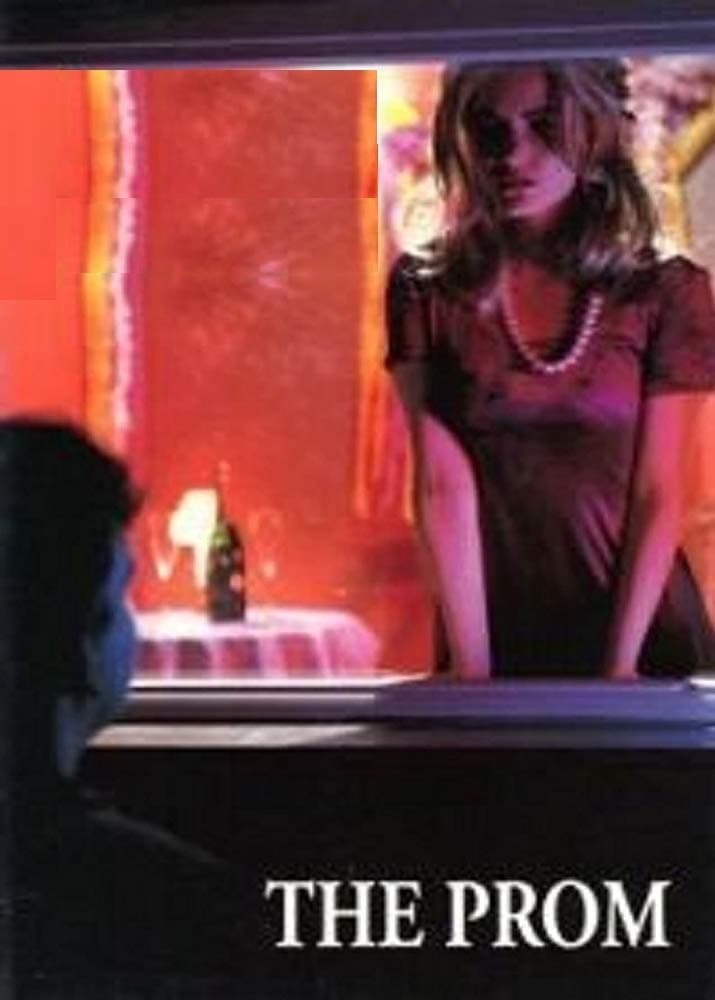
Marty, a young man self-conscious about a port-wine birthmark covering his torso, stumbles into a Las Vegas adult-entertainment arcade called The Dunes, where he becomes fixated on a peep-show booth named "The Prom" and the young performer who works there. Steven Shainberg's AFI thesis short, written with Denis Johnson, played the festival circuit in 1992 and introduced both Cole Hauser and an early-career Jennifer Jason Leigh ensemble appearance.
What Is the Budget of The Prom (1992)?
The Prom (1992), directed by Steven Shainberg and produced through the American Film Institute (AFI) Conservatory as his thesis short, was a 49-minute student production financed at the program's standard graduate-thesis budget tier. AFI Conservatory thesis shorts of the early 1990s were funded through a combination of institutional production grants, individual student tuition contributions, AFI Center for Advanced Film and Television Studies equipment-loan support, and student crew working at no cost as part of program coursework. The total cash budget for thesis short films at AFI in the 1990-1992 cycle averaged $50,000 to $200,000 depending on scope, with The Prom estimated in the $75,000 to $150,000 range given its location requirements, modest cast, and 16mm photography on a Las Vegas adult-entertainment-arcade location set.
No publicly disclosed itemized budget exists. The film is documented in AFI Conservatory archive records as Shainberg's thesis short and in the published filmographies of its principal cast, but as a graduate-program student work, it was never subject to the financial reporting that accompanies independent or studio features. The financing model relied on AFI institutional support, student deferred-compensation arrangements with key crew, and Shainberg's personal investment in completion finishing costs. The film served its primary purpose as Shainberg's calling-card project, helping him secure subsequent feature financing on Hit Me (1996) and ultimately his breakout independent feature Secretary (2002).
Key Budget Allocation Categories
The estimated $75,000 to $150,000 production budget for The Prom was distributed across:
- Cast: Jennifer Jason Leigh appeared in a supporting role, brought in by Shainberg through industry connections at AFI. Cole Hauser played one of the male leads in what was his first credited screen role at age 17, two years before his breakout in School Ties (1992). J.T. Walsh appeared in a supporting role. Andras Jones, Natalija Nogulich, Tuesday Knight, JD Cullum, and Joel Murray completed the cast. All performers worked at deferred-compensation scale appropriate to an AFI thesis short, with cash compensation minimal or nominal.
- Location Shoot: Production took place at Las Vegas-area locations doubling for the fictional adult-entertainment arcade "The Dunes," with additional location work in Los Angeles for connecting sequences. The Las Vegas portion of the shoot required travel, accommodation for cast and crew, and location permits that absorbed a meaningful share of the cash budget. The actual adult-arcade location was practical, dressed for production with custom signage and minimal additional set decoration.
- Director and Writer: Steven Shainberg co-wrote the screenplay with novelist Denis Johnson (Jesus' Son, Tree of Smoke). The Shainberg-Johnson collaboration was an unusual coup for an AFI thesis, with Johnson at the time emerging as one of the most respected fiction writers of his generation. Shainberg directed without compensation as part of his AFI thesis requirement.
- Cinematography: Cinematographer Carlos Montaner shot the film in 16mm color, the standard AFI thesis-short format that allowed for festival projection while keeping film stock and processing costs at student-budget levels. Lighting and camera packages were drawn from the AFI equipment library at no rental cost, with practical and existing-light photography minimizing the need for full lighting trucks.
- Music: Composer Kevin Haskins (Bauhaus, Tones on Tail, Love and Rockets drummer turned film composer) provided the score, an unusual high-profile musical credit for an AFI thesis short. Music budget covered original composition and the licensing of any source tracks, with the score recorded in a single small studio session.
- Post-Production and Festival Submissions: Editorial was completed at AFI post facilities. Festival submission fees, print costs for 16mm festival prints, and limited festival travel for Shainberg constituted the post-completion spend that allowed the film to play the 1992 short-film festival circuit including the Aspen Shortsfest, the Hamptons International Film Festival, and other graduate-thesis showcase venues.
How Does The Prom's Budget Compare to Similar Films?
At an estimated $75,000 to $150,000, The Prom sat within the typical AFI Conservatory thesis-short budget envelope of the early 1990s. The comparison set illustrates the project's tier and the broader film-school-short economics:
- Reservoir Dogs (1992): Budget $1,200,000 | Worldwide $2,909,762. Quentin Tarantino's contemporary independent feature, released the same year as The Prom, illustrates the gap between an AFI thesis short and a low-budget theatrical independent feature emerging from the festival circuit.
- Hit Me (1996): Estimated budget approximately $2,000,000. Steven Shainberg's actual first feature, made four years after The Prom and starring Elias Koteas, William H. Macy, and Bruce Ramsay, represented his first paid director-for-hire production and provides the most direct director-trajectory comparison.
- Secretary (2002): Budget $4,000,000 | Worldwide $12,754,790. Shainberg's breakout independent feature, made a decade after The Prom and starring Maggie Gyllenhaal and James Spader, illustrates how an AFI thesis-short director progresses through the independent film system over a 10-year career arc.
- Bottle Rocket (1996, short): Estimated budget approximately $5,000. Wes Anderson and Owen Wilson's 13-minute short, produced the year after The Prom's festival circuit and that secured Anderson's feature financing, represents the low end of the calling-card short-film budget range.
- George Lucas in Love (1999, short): Estimated budget approximately $20,000. Joe Nussbaum's parody short, made later in the decade, provides another reference point for the calling-card short-film budget range and demonstrates how cost-efficient festival-circuit production became as digital photography emerged.
The Prom (1992) Box Office Performance
The Prom had no commercial theatrical release. As an AFI Conservatory graduate thesis short, the film was screened at AFI Fest 1992 in the student showcase section, at the Aspen Shortsfest, at the Hamptons International Film Festival, and at other graduate-program showcase venues throughout 1992 and 1993. The film's commercial value was concentrated entirely in its function as a calling-card production for Steven Shainberg, providing him with festival placement and industry-screening opportunities that helped him secure development financing on his first paid feature project. Here is the financial breakdown:
Box Office Breakdown
The Prom

The Prom remains relatively obscure within Shainberg's filmography. The 16mm thesis-short format has limited subsequent distribution options, and the film has not been released on commercial home video or any major streaming platform. Occasional repertory screenings at AFI alumni events and dedicated short-film festivals have kept the title in modest circulation, but the film operates primarily as an item of academic interest for film-history researchers studying Shainberg's development as a director and the early career of cast members including Cole Hauser and Jennifer Jason Leigh.
The Prom is documented in the AFI Conservatory archive and listed in IMDb with limited supporting metadata. The publicly available 49-minute runtime classifies it as a medium-length film rather than a feature, sitting in the gap between standard short-film and feature-length categories that has long been an awkward distribution segment for independent producers and filmmakers.
The Prom (1992) Production History
Steven Shainberg developed The Prom during his AFI Conservatory directing fellowship, which he completed between 1989 and 1992. The collaboration with novelist Denis Johnson on the screenplay was an unusual coup for an AFI thesis. Johnson had published his breakthrough story collection Jesus' Son in 1992, the same year of The Prom's completion, and was working as a freelance writer with intermittent involvement in film projects. Shainberg and Johnson developed the script around the Las Vegas adult-entertainment-arcade setting and the central character's skin-disease premise.
Casting Jennifer Jason Leigh as a supporting player was the project's most significant industry coup. Leigh, at the peak of her early-career indie visibility following Last Exit to Brooklyn (1989), Miami Blues (1990), and Backdraft (1991), was developing relationships with emerging independent directors and agreed to a small role in the AFI thesis as a favor to Shainberg through their mutual industry contacts. Cole Hauser, then 17 years old, was cast in one of the male leads two years before his breakout in School Ties (1992). J.T. Walsh, a character actor with steady work in studio dramas, took a supporting role.
Principal photography ran in late 1991 across Las Vegas-area locations and Los Angeles. The compressed shooting schedule was typical of AFI thesis productions, with the unit working a 12-to-15 day schedule across the two locations. Post-production at AFI editing facilities was completed in spring 1992 in time for the AFI Conservatory graduation showcase and the AFI Fest 1992 student-section programming in October.
Shainberg subsequently spent four years developing his first paid feature Hit Me (1996), which The Prom's festival circulation had helped him secure financing for, before achieving his independent-feature breakthrough with Secretary (2002). The Prom remains the foundation thesis-short on which his subsequent directorial career was built.
Awards and Recognition
The Prom received recognition at the AFI Conservatory graduate showcase ceremonies in 1992 and screened in the student-section programming at AFI Fest 1992. The film was selected for the Aspen Shortsfest, the Hamptons International Film Festival short-film section, and various other graduate-program showcase venues throughout 1992 and 1993. Specific competitive-festival awards records are limited given the film's primary status as an AFI thesis production rather than an independent festival submission.
Long-term recognition has been concentrated within film-school and AFI-alumni discussions rather than mainstream film criticism. Steven Shainberg's subsequent independent-feature career, particularly Secretary (2002), has generated occasional retrospective interest in his AFI thesis work. Cole Hauser's emergence as a successful character actor (Dazed and Confused, 2 Fast 2 Furious, Yellowstone) and Jennifer Jason Leigh's continued prominent independent-feature career have also kept The Prom in modest circulation as an early-career credit reference.
Critical Reception
The Prom has not received substantial mainstream critical coverage, given its status as an AFI Conservatory graduate thesis short with no commercial release. The film holds a 6.7 out of 10 weighted user rating on IMDb across a small sample of approximately 70 user reviews, reflecting limited audience exposure rather than critical consensus. No Rotten Tomatoes or Metacritic aggregated review entries exist for the film.
Contemporary 1992-and-1993 short-film festival coverage was sparse, with mentions in graduate-program trade publications and AFI alumni newsletters but no major-press review presence. The film's status as a 49-minute medium-length production placed it outside the standard short-film festival programming pool and the feature-film festival programming pool simultaneously, limiting the contemporary critical conversation around the project.
Retrospective coverage has been limited to academic film-history writing and occasional Steven Shainberg career-retrospective articles in publications including Filmmaker Magazine and The Reverse Shot. Such coverage has typically positioned The Prom as a formative thesis project that demonstrated Shainberg's tonal interests in body-discomfort and adult-content subject matter that would later inform Secretary (2002) and his subsequent feature work.
Frequently Asked Questions
How much did The Prom (1992) cost to make?
No publicly disclosed itemized budget exists. As an AFI Conservatory graduate thesis short, the film was financed at the program's standard student-budget tier. AFI Conservatory thesis shorts of the early 1990s averaged $50,000 to $200,000 in total cash budget, with The Prom estimated in the $75,000 to $150,000 range given its location requirements, cast, and 16mm photography.
What is The Prom (1992)?
The Prom (1992) is a 49-minute medium-length film directed by Steven Shainberg as his AFI Conservatory graduate thesis. Co-written with novelist Denis Johnson, the film featured Jennifer Jason Leigh, Cole Hauser, and J.T. Walsh, and follows a young man with a skin condition who fixates on a Las Vegas adult-entertainment-arcade performer.
Is The Prom (1992) related to the 2020 Ryan Murphy film?
No. The Prom (1992) is a Steven Shainberg AFI Conservatory thesis short and has no connection to Ryan Murphy's 2020 Netflix musical The Prom starring Meryl Streep, James Corden, Nicole Kidman, and Andrew Rannells.
Who directed The Prom (1992)?
Steven Shainberg directed. The Prom was his AFI Conservatory graduate thesis. Shainberg went on to direct Hit Me (1996), Secretary (2002), Fur: An Imaginary Portrait of Diane Arbus (2006), and Rupture (2016). He co-wrote The Prom with novelist Denis Johnson (Jesus' Son).
Was Cole Hauser in The Prom (1992)?
Yes. Cole Hauser, at age 17, appeared in one of the male leads. The Prom was his first credited screen role, two years before his breakout in School Ties (1992). He went on to a successful character-actor career including Dazed and Confused (1993), 2 Fast 2 Furious (2003), and his current Yellowstone series role.
Is Jennifer Jason Leigh in The Prom (1992)?
Yes. Jennifer Jason Leigh appeared in a supporting role. Leigh, at the peak of her early-career indie visibility following Last Exit to Brooklyn (1989) and Miami Blues (1990), agreed to a small role in the AFI thesis as a favor to Shainberg through their mutual industry contacts.
Where can I watch The Prom (1992)?
The Prom has not been released on commercial home video or any major streaming platform. The 16mm thesis-short format has limited subsequent distribution options. Occasional repertory screenings at AFI alumni events and dedicated short-film festivals have kept the title in modest circulation, but it remains relatively obscure within Steven Shainberg's filmography.
Did The Prom (1992) win any awards?
The Prom received recognition at the AFI Conservatory graduate showcase ceremonies in 1992 and screened in the student-section programming at AFI Fest 1992. The film was selected for the Aspen Shortsfest, the Hamptons International Film Festival short-film section, and other graduate-program showcase venues throughout 1992 and 1993.
Who wrote the screenplay for The Prom (1992)?
Steven Shainberg co-wrote with novelist Denis Johnson, author of Jesus' Son (1992), Tree of Smoke (2007), and Train Dreams (2011). Johnson was working as a freelance writer with intermittent involvement in film projects at the time of The Prom's production.
Is The Prom (1992) a feature film or a short film?
At 49 minutes, The Prom is classified as a medium-length film rather than a feature (which conventionally begins at 70 to 80 minutes). The medium-length format places it outside the standard short-film festival programming pool and the feature-film festival programming pool simultaneously, which has limited its subsequent distribution and critical conversation.
Filmmakers
The Prom

Official Trailer
Build budgets like this one in Saturation
Start from an industry-standard feature film template, import the schedule and rates you already have, and let the cost report keep itself current as you spend. Real-time collaboration, no spreadsheets.