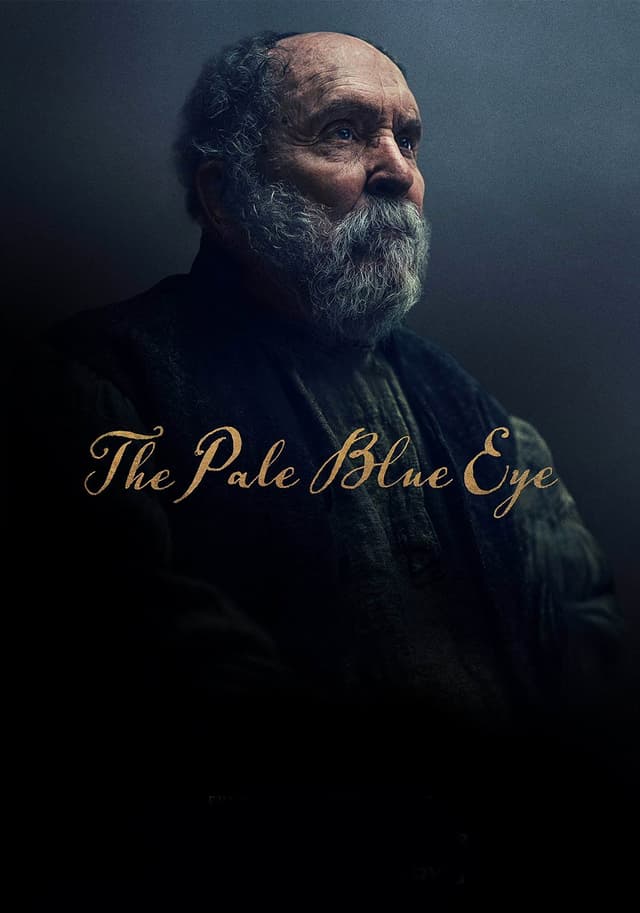
The Pale Blue Eye Budget
 ThrillerCrimeHorrorMystery2h 8m
Updated
Synopsis
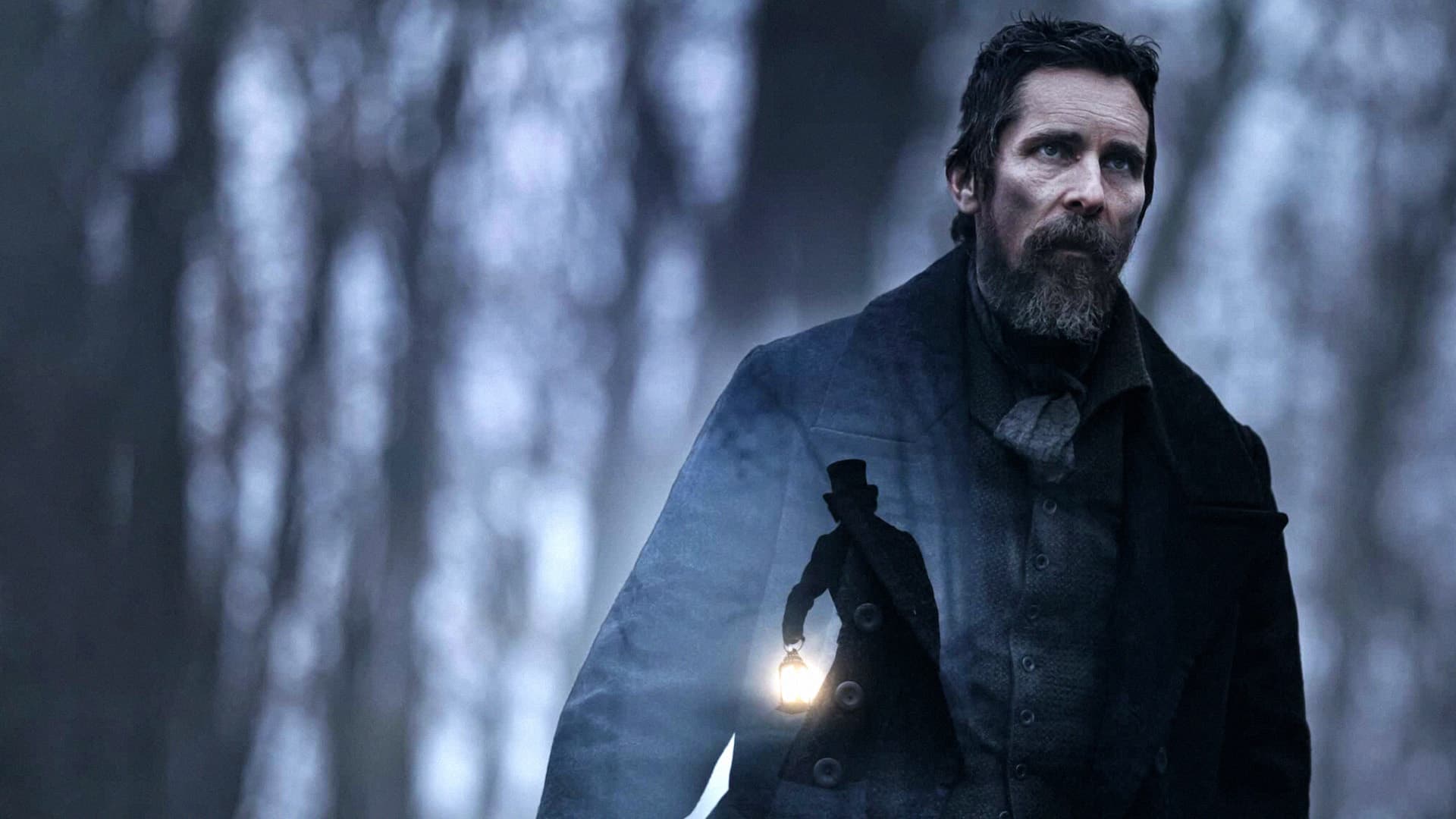
West Point, New York, 1830. When a cadet at the burgeoning military academy is found hanged with his heart cut out, the top brass summons former New York City constable Augustus Landor to investigate. While attempting to solve this grisly mystery, the reluctant detective engages the help of one of the cadets: a strange but brilliant young fellow by the name of Edgar Allan Poe.
What Is the Budget of The Pale Blue Eye?
The Pale Blue Eye carried an estimated production budget of approximately $72 million, placing it among the higher-budget literary adaptations released on Netflix during 2022 and 2023. Writer-director Scott Cooper, who previously helmed Crazy Heart, Black Mass, and Hostiles, secured the financing through a partnership between Cross Creek Pictures and Filmula Entertainment. The project was initially developed for a traditional theatrical release before Netflix acquired worldwide distribution rights, a shift that influenced how the budget was allocated across production, post-production, and marketing.
For a period mystery set in the 1830s, the $72 million figure reflects the substantial demands of historical production design, a star-driven cast led by Christian Bale, and extensive location work in western Pennsylvania standing in for 19th-century New York. The budget also covered an original score by Howard Shore, whose work on The Lord of the Rings trilogy established him as one of the premier composers for atmospheric, large-scale storytelling.
Key Budget Allocation Categories
- Above-the-Line Talent Christian Bale commanded a significant portion of the budget as lead and producer, with additional cast fees for Robert Duvall, Gillian Anderson, Charlotte Gainsbourg, Lucy Boynton, and Toby Jones contributing to one of the more expensive ensemble casts in a Netflix original film
- Period Production Design Recreating West Point and the surrounding Hudson Valley in the early 1830s required detailed set construction, historically accurate military uniforms, period-correct interiors, and atmospheric winter landscapes, all of which drove costs well beyond a contemporary setting
- Location and Cinematography Director of photography Masanobu Takayanagi (Silver Linings Playbook, The Imitation Game) shot extensively on location in western Pennsylvania, where the rural terrain and seasonal conditions provided authentic period backdrops but also added logistical complexity and weather-related scheduling costs
- Music and Score Howard Shore composed an original orchestral score that leaned into the gothic atmosphere of the source material, requiring full orchestral recording sessions that represented a meaningful line item in the overall budget
- Visual Effects and Post-Production While not a VFX-heavy film, the production required digital set extensions, period-accurate environmental work, and seamless compositing to remove modern elements from outdoor locations, along with a deliberate color grading process to achieve the desaturated, wintry look
- Costumes and Makeup The film spans multiple social strata of 1830s America, from West Point cadets in full dress uniform to rural civilians, requiring extensive wardrobe departments and period-accurate hair and makeup design for the entire cast
How Does The Pale Blue Eye's Budget Compare to Similar Films?
- The Northman (2022) Budget $90M | Worldwide $69M. Robert Eggers' Viking epic carried a larger budget with similarly demanding period production design, though it underperformed theatrically, illustrating the financial risk of ambitious historical films
- Amsterdam (2022) Budget $80M | Worldwide $31M. David O. Russell's period mystery with an all-star cast spent even more than The Pale Blue Eye and became one of the year's biggest box office disappointments, underscoring why Netflix acquisition was a safer financial path for Cooper's film
- See How They Run (2022) Budget $40M | Worldwide $55M. A lighter period mystery set in 1950s London that cost roughly half as much, reflecting the difference between a star-driven prestige drama and a mid-budget genre exercise
- The Woman in the Window (2021) Budget $40M | Worldwide $49M. Another literary adaptation that went through production troubles before landing on Netflix, spending less than The Pale Blue Eye but facing similar distribution-model questions about recouping its investment
- Knives Out (2019) Budget $40M | Worldwide $312M. Rian Johnson's contemporary whodunit proved that mystery films can deliver massive returns at a fraction of the cost, though its modern setting avoided the expensive period-production overhead that defined The Pale Blue Eye
The Pale Blue Eye Box Office Performance
The Pale Blue Eye opened in a limited theatrical run on December 23, 2022 before expanding to Netflix on January 6, 2023. During its brief theatrical window, the film earned approximately $4.4 million domestically from a handful of screens, a figure that was never intended to represent its primary revenue stream. The limited release served as a qualifying run for awards consideration rather than a commercial distribution strategy.
On Netflix, the film performed significantly better, debuting at number one on the platform's global Top 10 and accumulating over 54 million viewing hours in its first week alone. It remained in the Top 10 for several consecutive weeks, ultimately ranking among the most-watched Netflix original films of early 2023. Using a standard break-even estimate of roughly 2x the production budget (approximately $144 million when factoring in marketing and distribution costs), the theatrical gross alone fell far short. However, Netflix's acquisition price and the platform performance suggest the producers and investors likely recouped their costs through the licensing deal rather than traditional box office returns.
The ROI calculation for a Netflix-acquired film differs from a purely theatrical release. If we consider the reported acquisition price alongside the modest theatrical earnings, the financial outcome depended almost entirely on the terms Netflix negotiated, making the streaming viewership numbers the more meaningful performance metric than the $4.4 million box office figure.
The Pale Blue Eye Production History
Scott Cooper first became attached to adapt Louis Bayard's 2003 novel in the mid-2010s, drawn to its blend of Gothic mystery, historical fiction, and the young Edgar Allan Poe as a central character. Cooper wrote the screenplay himself, restructuring Bayard's narrative to center the relationship between Augustus Landor, a retired detective, and Poe, then a cadet at West Point. The development period stretched across several years as Cooper balanced the project alongside other films, including Hostiles (2017) and Antlers (2021).
Christian Bale signed on to play Landor, reuniting with Cooper after their collaboration on Out of the Furnace (2013) and Hostiles. Bale's involvement helped secure financing from Cross Creek Pictures and Filmula Entertainment, with the production assembling a deep supporting cast that included Harry Melling as the young Poe, Gillian Anderson, Lucy Boynton, Charlotte Gainsbourg, Toby Jones, Timothy Spall, Simon McBurney, and Robert Duvall in what would become one of his final screen appearances.
Principal photography took place in western Pennsylvania during the fall and winter months, with locations in and around Pittsburgh providing the forested, hilly terrain needed to evoke the Hudson Valley and West Point of the 1830s. Takayanagi's cinematography emphasized natural light and muted tones to create a perpetually overcast, almost suffocating atmosphere. The production faced the usual challenges of exterior winter shoots, including weather delays, limited daylight hours, and maintaining continuity across scenes shot weeks apart in changing conditions.
Netflix acquired worldwide distribution rights during post-production, a deal that shifted the film's release strategy from a wide theatrical run to a platform-first model with a brief qualifying theatrical window. The acquisition reflected a broader industry trend in 2022, where streaming platforms absorbed mid-to-high budget films that traditional distributors considered financially risky for theatrical-only release.
Awards and Recognition
The Pale Blue Eye received limited awards attention despite its pedigree. The film was not nominated for any major academy or guild awards, though it did compete on the festival circuit and earned recognition in below-the-line categories at smaller ceremonies. Howard Shore's score drew praise from critics who noted its effective contribution to the film's atmosphere, even as the overall reception remained mixed.
Harry Melling's performance as the young Edgar Allan Poe earned particular attention from critics, with several reviewers noting his transformation into the role as the film's standout element. Christian Bale's subdued, internalized turn as Landor also received favorable mentions, though some critics felt the character's deliberate restraint worked against the film's pacing. The production design and costume departments were acknowledged for their detailed recreation of 1830s America, even by reviewers who were less enthusiastic about the narrative.
Critical Reception
The Pale Blue Eye holds a 47% approval rating on Rotten Tomatoes, with the critical consensus describing it as a handsomely mounted mystery that struggles to generate the suspense its premise promises. Audiences were somewhat kinder, with user ratings settling in the 60% range on both Rotten Tomatoes and Metacritic, suggesting the film found a more receptive home among viewers drawn to its genre and cast.
Positive reviews highlighted the atmospheric cinematography, the committed performances from Bale and Melling, and the film's willingness to take its time establishing mood and setting. Several critics praised the production's attention to historical detail and the way Cooper used the bleak Pennsylvania landscapes to mirror the psychological darkness of the story. The relationship between Landor and Poe was frequently cited as the film's strongest narrative thread.
Negative reviews centered on pacing issues, with critics arguing that the film's two-hour-and-eight-minute runtime tested patience without delivering a payoff proportional to the buildup. The mystery's resolution divided audiences, with some finding the twist effective and others calling it predictable or undercooked. Cooper's deliberate, slow-burn approach, which had worked effectively in films like Hostiles, was seen by detractors as a mismatch for a murder mystery that needed more momentum. Despite the mixed critical reception, the film's strong Netflix viewership numbers confirmed that audiences were willing to invest in the atmospheric period piece, even if professional critics remained divided.
Frequently Asked Questions
How much did it cost to make The Pale Blue Eye (2022)?
The production budget was $72,000,000, covering principal photography, cast and crew salaries, locations, sets, post-production, and music. Marketing and distribution (P&A) costs are estimated at an additional $36,000,000 - $57,600,000, bringing the total studio investment to approximately $108,000,000 - $129,600,000.
How much did The Pale Blue Eye (2022) earn at the box office?
Box office figures are not publicly available.
Was The Pale Blue Eye (2022) profitable?
Insufficient data for a profitability assessment.
What were the biggest costs in producing The Pale Blue Eye?
The primary cost drivers were above-the-line talent (Christian Bale, Harry Melling, Lucy Boynton); talent compensation, location cinematography, and tension-driven editorial.
How does The Pale Blue Eye's budget compare to similar thriller films?
At $72,000,000, The Pale Blue Eye is classified as a mid-budget production. The median budget for wide-release thriller films in the 2020s ranges from $30 - 80M for mid-budget to $150M+ for tentpoles. Comparable budgets: Signs (2002, $72,000,000); Migration (2023, $72,000,000); Scott Pilgrim vs. the World (2010, $73,000,000).
Did The Pale Blue Eye (2022) go over budget?
There are no widely reported accounts of significant budget overruns for this production. However, studios rarely disclose precise budget overrun figures publicly. The reported production budget reflects the final estimated cost.
What awards did The Pale Blue Eye (2022) win?
1 win & 2 nominations total.
Who directed The Pale Blue Eye and who were the key crew members?
Directed by Scott Cooper, written by Scott Cooper, shot by Masanobu Takayanagi, with music by Howard Shore, edited by Dylan Tichenor.
Where was The Pale Blue Eye filmed?
The Pale Blue Eye was filmed in United States of America.
Filmmakers
The Pale Blue Eye

Official Trailer
Build budgets like this one in Saturation
Start from an industry-standard feature film template, import the schedule and rates you already have, and let the cost report keep itself current as you spend. Real-time collaboration, no spreadsheets.