The Night Comes for Us Budget
 ActionCrimeThriller2h 1m
Updated
Synopsis
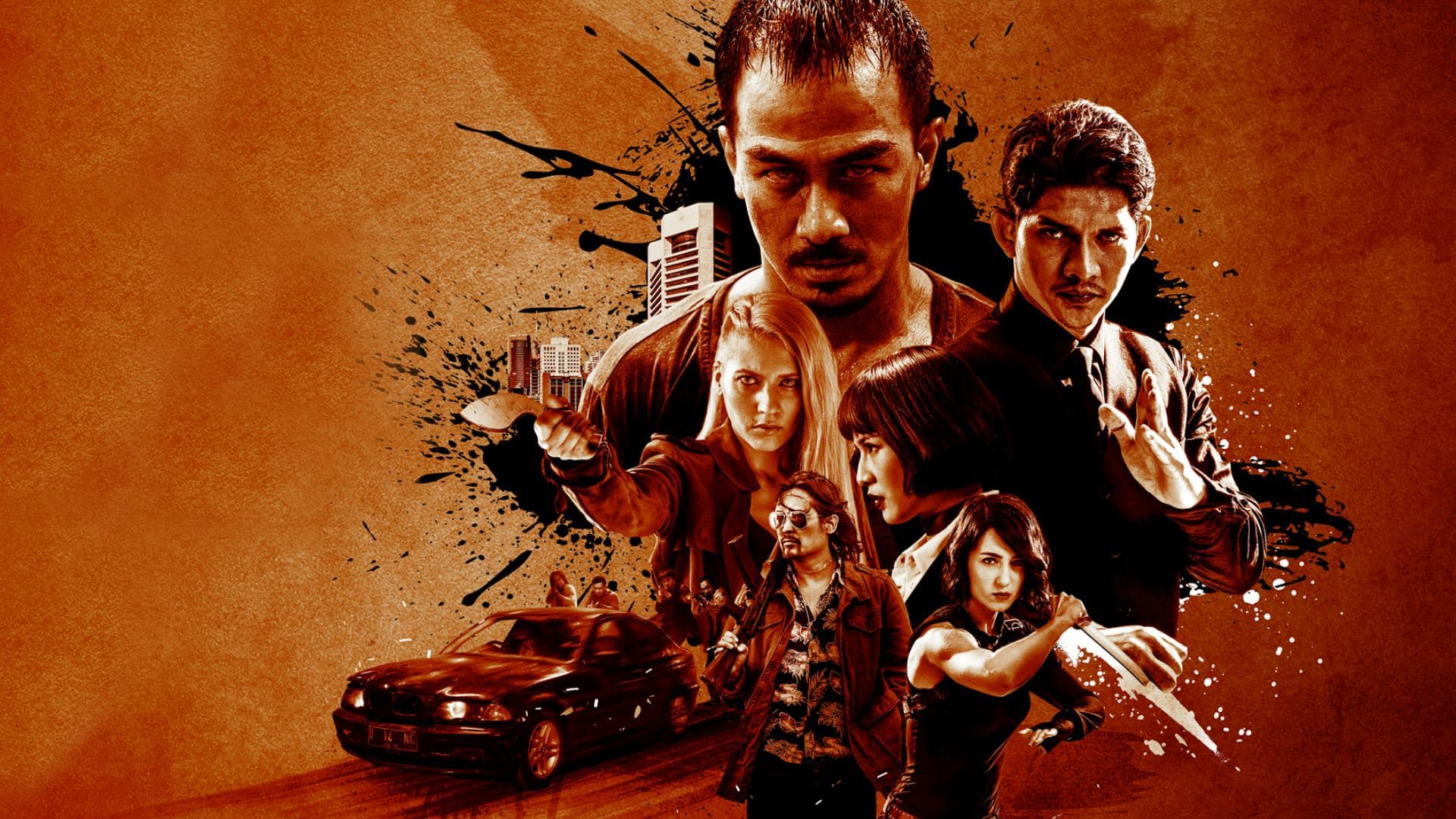
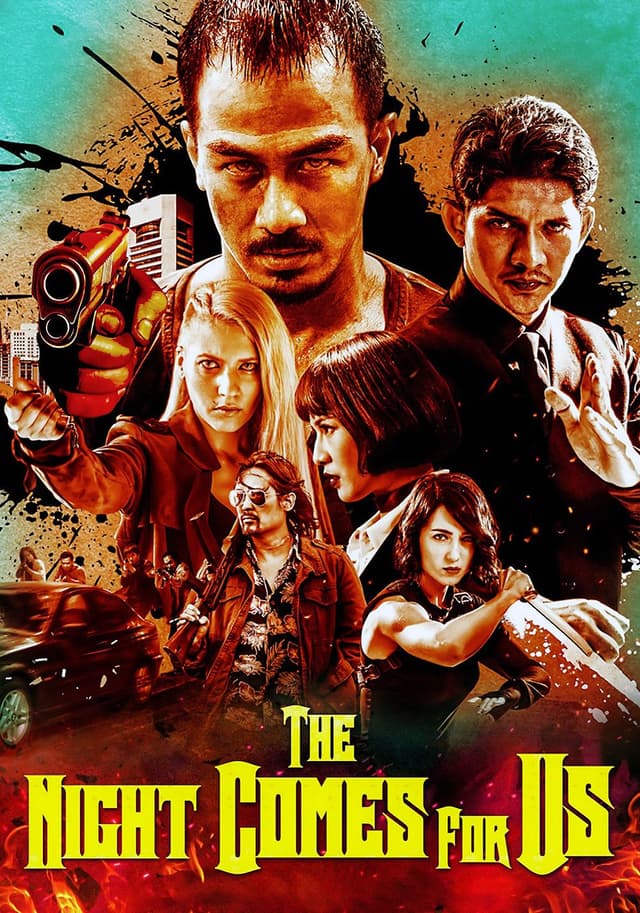
After sparing a girl's life during a massacre, an elite Triad assassin is targeted by an onslaught of murderous gangsters.
What Is the Budget of The Night Comes for Us?
The Night Comes for Us was produced on an estimated budget of $2 to $3 million, placing it firmly within the range typical of high-end Indonesian genre filmmaking. Writer-director Timo Tjahjanto secured financing through Indonesian production company Screenplay Films, with additional backing that allowed for an ambitious scale of practical action choreography. The modest budget belies the film's production value, as nearly every dollar went toward staging the elaborate, physically demanding fight sequences that define the finished product.
Netflix acquired worldwide distribution rights after the film premiered at Fantastic Fest in September 2018, giving it a global platform that Indonesian action films rarely receive. The streaming deal represented a significant return on investment for the producers, as the acquisition price reportedly exceeded the production budget. This model of festival premiere followed by streaming acquisition has since become a viable financing path for Southeast Asian genre cinema.
Key Budget Allocation Categories
- Stunt Coordination and Fight Choreography accounted for the largest share of the budget. Iko Uwais and Yayan Ruhian, both veterans of The Raid franchise, served as fight choreographers and performers, designing dozens of intricate combat sequences that required weeks of rehearsal and multiple shooting days per scene.
- Practical Effects and Props consumed a significant portion of spending, as Tjahjanto insisted on practical blood effects, breakaway furniture, and real glass rather than relying on CGI. The film's signature kitchen fight alone required hundreds of prop weapons and replaceable set pieces.
- Cast Salaries were modest by international standards but represented a top-tier Indonesian ensemble. Joe Taslim, Iko Uwais, and Julie Estelle each brought martial arts credibility and star power within the Asian action market, while supporting roles drew from Indonesia's deep pool of trained fighters and stunt performers.
- Location and Set Construction covered filming across Jakarta and surrounding areas. Several key sequences, including the apartment building siege and the butcher shop confrontation, required purpose-built or heavily modified interior sets designed to accommodate complex fight choreography and camera movement.
- Post-Production and Sound Design included editing the film's extended action sequences into coherent, rhythmic set pieces. Sound design played an outsized role in selling the impact of every strike and collision, with layered foley work that heightened the visceral quality of the violence.
- Medical and Safety Personnel were an unusually large line item for a production of this scale. The extreme physicality of the fight scenes, many of which involved real contact and minimal padding, necessitated on-set medical staff and insurance coverage beyond what a typical Indonesian production would carry.
How Does The Night Comes for Us's Budget Compare to Similar Films?
Comparing The Night Comes for Us to other action films at similar budget levels reveals how efficiently the production converted limited resources into screen spectacle.
- The Raid (2011) had an estimated budget of $1.1 million and became a global phenomenon, proving that Indonesian martial arts filmmaking could compete with productions costing ten times as much. The Night Comes for Us roughly doubled that budget and expanded the scope with more locations, a larger cast, and longer, more elaborate fight sequences.
- The Raid 2 (2014) escalated to approximately $4.5 million, adding car chases, prison riots, and a sprawling crime saga narrative. The Night Comes for Us achieved comparable production value at a lower cost by focusing its resources almost entirely on hand-to-hand combat rather than vehicular action.
- Headshot (2016) was Tjahjanto's previous collaboration with Uwais, produced on a budget in the $1.5 to $2 million range. The Night Comes for Us built on that foundation with higher production values and a more ambitious body count, benefiting from lessons learned on the earlier film.
- John Wick (2014) cost approximately $20 million, nearly ten times the budget of The Night Comes for Us. While John Wick invested heavily in gun choreography and set design, the Indonesian film matched its intensity through sheer physical commitment and creative practical effects at a fraction of the price.
- Ong-Bak (2003) was produced for roughly $1.1 million in Thailand and similarly relied on real martial arts talent rather than wire work or CGI. Both films demonstrate that Southeast Asian action cinema consistently delivers exceptional value relative to budget, outperforming Hollywood action films that cost twenty to fifty times more.
The Night Comes for Us Box Office Performance
The Night Comes for Us did not follow a traditional theatrical release model. After its world premiere at Fantastic Fest in Austin, Texas on September 21, 2018, the film screened at a limited number of genre festivals before Netflix released it globally on October 19, 2018. This distribution strategy meant there was no conventional box office run to measure.
Netflix does not publicly disclose viewership numbers for most of its acquisitions, so precise audience figures are unavailable. However, the film quickly became one of the most discussed action titles on the platform, trending in multiple countries during its first week of availability. Social media buzz and word-of-mouth recommendations drove substantial viewership, particularly among action film enthusiasts who shared clips of the film's most intense sequences.
From a return-on-investment perspective, the Netflix acquisition alone likely made the film profitable for its producers before it reached a single viewer. The streaming deal covered the production budget and provided a global audience that a limited Indonesian theatrical release could never have matched. For a film budgeted at $2 to $3 million, the combination of acquisition fees and global exposure represented an exceptional outcome, validating the festival-to-streaming pipeline for Southeast Asian genre filmmaking.
The Night Comes for Us Production History
Timo Tjahjanto wrote the screenplay for The Night Comes for Us as an original story rooted in the Indonesian criminal underworld, centering on a triad enforcer named Ito who defects from the Six Seas, a powerful Southeast Asian crime syndicate, to protect a young girl who is the sole survivor of a village massacre. Tjahjanto conceived the project as a departure from the confined settings of The Raid, envisioning a crime thriller that would move across Jakarta with a larger ensemble of fighters and a more emotionally grounded narrative.
Joe Taslim, who had gained international recognition for his role as Jaka in The Raid and later appeared in Fast & Furious 6 and Star Trek Beyond, signed on to play Ito. Iko Uwais, the star of The Raid films, took the role of Arian, Ito's former best friend sent to hunt him down. Julie Estelle, who had played the assassin Hammer Girl in The Raid 2, joined as The Operator, a mysterious killer with her own agenda. The casting reunited several key figures from the Raid universe while giving them substantially different characters to inhabit.
Fight choreography was designed by Uwais and Yayan Ruhian, who also appeared in the film as a supporting character. The choreography team spent weeks pre-visualizing each fight sequence, with Tjahjanto storyboarding the major set pieces shot by shot. The film features over 40 minutes of fight footage across its 121-minute runtime, with standout sequences including a three-way battle in a cramped apartment, a prolonged fight through a butcher shop, and a climactic one-on-one duel between Taslim and Uwais.
Principal photography took place across Jakarta over approximately eight weeks in 2017. The production schedule was grueling, with the cast and stunt team frequently working twelve-hour days of physical combat. Injuries were common despite safety precautions, with both Taslim and Uwais sustaining minor injuries during filming. Tjahjanto has described the shoot as the most physically demanding production he has ever overseen, noting that the commitment of the performers to realistic contact elevated the material beyond what choreography alone could achieve.
Post-production focused heavily on editing the fight sequences for maximum impact. Tjahjanto worked closely with his editors to find the rhythm of each battle, balancing wide shots that showcased the choreography with tighter angles that sold the impact of individual strikes. The sound design team layered multiple audio tracks per hit to create the film's distinctive, bone-crunching soundscape.
Awards and Recognition
The Night Comes for Us premiered at Fantastic Fest 2018, one of the world's most respected genre film festivals, where it received a rapturous audience response and was widely cited as a highlight of the festival program. The film's reputation grew rapidly through genre festival screenings and critical coverage.
While the film did not compete at major mainstream awards ceremonies, it earned significant recognition within the action and genre film community. It was named one of the best action films of 2018 by numerous genre publications and has been frequently cited as one of the greatest martial arts films of the 2010s. The fight choreography by Iko Uwais and Yayan Ruhian received particular praise, with multiple critics comparing the film's set pieces favorably to those in The Raid franchise.
The film also elevated the international profiles of its principal cast. Joe Taslim's performance as Ito contributed to his casting as Sub-Zero in Mortal Kombat (2021), while the film reinforced Iko Uwais's standing as one of the premier action stars working in global cinema. For Tjahjanto, The Night Comes for Us solidified his reputation as a leading voice in Indonesian genre filmmaking, leading to subsequent projects including the Netflix anthology series Hellbound and the sequel May the Devil Take You Too.
Critical Reception
The Night Comes for Us holds a 90% approval rating on Rotten Tomatoes, reflecting near-universal acclaim from critics who praised its uncompromising approach to action filmmaking. The critical consensus centered on the film's extraordinary fight choreography, relentless pacing, and willingness to push the boundaries of on-screen violence far beyond what mainstream Hollywood action films typically attempt.
Critics consistently highlighted the film's practical stunt work as its defining achievement. The absence of visible CGI enhancement in the fight sequences, combined with the performers' obvious martial arts expertise, gave the action a tactile authenticity that reviewers found both impressive and exhausting. The kitchen fight sequence and the climactic Taslim-versus-Uwais duel were singled out as all-time great action set pieces, with several critics placing them alongside the best work in The Raid films.
Some reviewers noted that the extreme violence occasionally overwhelmed the narrative, with the body count and graphic injury detail pushing the film closer to horror territory than pure action. However, most critics treated this intensity as a feature rather than a flaw, arguing that the film's commitment to visceral impact was precisely what distinguished it from safer, more sanitized action fare. The emotional core of Ito's defection and his relationship with the young girl Reina provided sufficient dramatic stakes to anchor the carnage.
The film's global availability on Netflix amplified its critical reception, as reviewers who might never have covered an Indonesian theatrical release wrote extensively about the film once it appeared on the platform. This broader coverage cemented The Night Comes for Us as a modern action classic, frequently recommended alongside The Raid, Mad Max: Fury Road, and John Wick as essential viewing for action film enthusiasts.
Frequently Asked Questions
How much did it cost to make The Night Comes for Us (2018)?
The production budget was $2,000,000, covering principal photography, visual effects, cast and crew salaries, locations, sets, post-production, and music. Marketing and distribution (P&A) costs are estimated at an additional $1,000,000 - $1,600,000, bringing the total studio investment to approximately $3,000,000 - $3,600,000.
How much did The Night Comes for Us (2018) earn at the box office?
Box office figures are not publicly available.
Was The Night Comes for Us (2018) profitable?
Insufficient data for a profitability assessment.
What were the biggest costs in producing The Night Comes for Us?
The primary cost drivers were above-the-line talent (Joe Taslim, Iko Uwais, Julie Estelle); visual effects, practical stunts, and A-list talent compensation; international production across Indonesia, United States of America.
How does The Night Comes for Us's budget compare to similar action films?
At $2,000,000, The Night Comes for Us is classified as a micro-budget production. The median budget for wide-release action films in the 2010s ranges from $30 - 80M for mid-budget to $150M+ for tentpoles. Comparable budgets: Seven Samurai (1954, $2,000,000); The Great Dictator (1940, $2,000,000); Sing Sing (2024, $2,000,000).
Did The Night Comes for Us (2018) go over budget?
There are no widely reported accounts of significant budget overruns for this production. However, studios rarely disclose precise budget overrun figures publicly. The reported production budget reflects the final estimated cost.
What awards did The Night Comes for Us (2018) win?
2 nominations total.
Who directed The Night Comes for Us and who were the key crew members?
Directed by Timo Tjahjanto, written by Timo Tjahjanto, shot by Gunnar Nimpuno, with music by Aria Prayogi, Fajar Yuskemal, edited by Arifin Cu'unk.
Where was The Night Comes for Us filmed?
The Night Comes for Us was filmed in Indonesia, United States of America.
Filmmakers
The Night Comes for Us

Official Trailer
Build budgets like this one in Saturation
Start from an industry-standard feature film template, import the schedule and rates you already have, and let the cost report keep itself current as you spend. Real-time collaboration, no spreadsheets.