The Mummy Budget
 Adventure
Updated
Synopsis
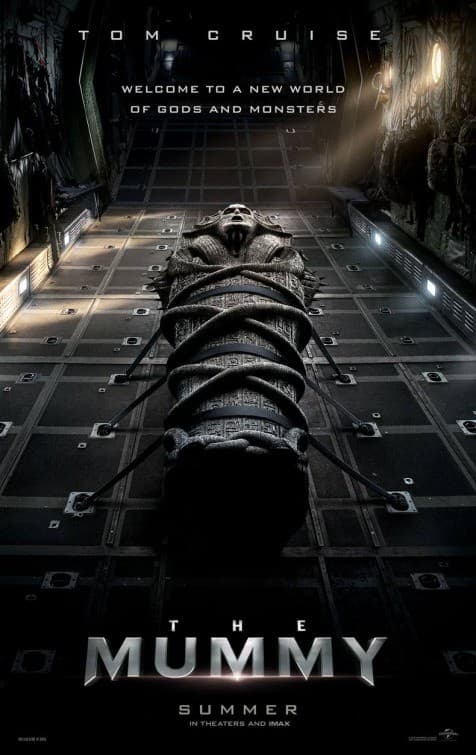
An ancient Egyptian princess, awakened from her crypt beneath the desert, brings with her malevolence grown over millennia and terrors that defy human comprehension. Soldier of fortune Nick Morton must stop her after his actions accidentally free her from beneath the sands.
What Is the Budget of The Mummy (2017)?
The Mummy (2017), directed by Alex Kurtzman and distributed by Universal Pictures, was produced on a reported budget of $195,000,000, with some industry estimates running as high as $345,000,000 once the studio's aggressive global marketing campaign was factored in. The film served as the launch title for Universal's ambitious Dark Universe, a planned shared cinematic universe meant to interconnect the studio's classic monster properties including Bride of Frankenstein, The Invisible Man, Van Helsing, and The Wolf Man. Tom Cruise headlined as soldier of fortune Nick Morton in what was designed to be both a standalone tentpole and the cornerstone of a multi-film franchise.
The investment reflected the highest stakes Universal had placed on a non-Fast and Furious property in years. Cruise's involvement carried a reported $20,000,000 upfront salary plus first-dollar gross participation, and the film's globetrotting set pieces in London, Namibia, and Surrey required extensive practical effects, water tank work, and stunt sequences. Universal greenlit the production with the explicit goal of clearing $500,000,000 worldwide to validate the Dark Universe rollout, a target the film ultimately missed.
Key Budget Allocation Categories
The Mummy's reported $195,000,000 budget was distributed across several core production areas:
- Above-the-Line Talent: Tom Cruise commanded a reported $20,000,000 salary plus first-dollar gross participation, by far the largest single line item. Director Alex Kurtzman, primarily known for writing the Star Trek and Transformers reboots, took on his first studio tentpole directing job. Russell Crowe co-starred as Dr. Henry Jekyll, with Sofia Boutella as the title antagonist Princess Ahmanet, Annabelle Wallis as archaeologist Jenny Halsey, and Jake Johnson as Cruise's sidekick Chris Vail.
- International Location Shoot: Principal photography spanned Namibia for desert exteriors, Oxfordshire and Surrey for the English countryside sequences, and central London for the crashed-plane and tomb chase set pieces. The Namibia block required transporting cast, crew, and equipment into remote dunes, with extensive support infrastructure built specifically for the production.
- Plane Crash Sequence: The zero-gravity airplane crash sequence, shot in real weightlessness aboard a Zero-G Corporation Boeing 727 with Cruise and Wallis performing the stunt themselves, required 64 parabolic flights and represented one of the most logistically complex single sequences in the film. Insurance, specialized rigging, and the controlled environment added significant cost.
- Visual Effects: Industrial Light & Magic, Double Negative, and MPC handled the bulk of the digital work, including Ahmanet's sandstorm, the rat swarm in the Crusader tombs, the crashed plane wreckage, and Ahmanet's decomposed-yet-beautiful character effects. Hundreds of VFX shots required multiple iterations across the post-production calendar.
- Stunts and Practical Effects: Stunt coordinator Wade Eastwood, a longtime Cruise collaborator, designed practical action including underwater sequences shot in a 200,000-gallon tank at Longcross Studios. Cruise insisted on performing the bulk of his own stunts, including the plane crash, the underwater work, and the London chase, which extended the shooting schedule and required additional safety overhead.
- Score and Sound Design: Composer Brian Tyler scored the film with a heavy brass-and-percussion approach designed to evoke both the 1932 original and the franchise potential of a new monster cinematic universe. The soundtrack covered original composition, orchestra recording, and integration with the Dark Universe musical motifs developed for the planned shared universe.
- Reshoots and Restructuring: The film underwent significant reshoots in late 2016 and early 2017, partly to clarify Cruise's arc and partly to recalibrate the tone after early test screenings. Cruise reportedly took an unusually hands-on role in the editing room, a creative dynamic later cited by some crew as a source of friction during post-production.
How Does The Mummy's Budget Compare to Similar Films?
At a reported $195,000,000, The Mummy sits in the upper tier of monster and action-adventure tentpoles. The comparison set illustrates how its outcome diverged from peers:
- The Mummy (1999): Budget $80,000,000 | Worldwide $415,933,406. Stephen Sommers' original cost less than half of the 2017 reboot and earned essentially the same worldwide gross, demonstrating how the franchise once delivered a far healthier return.
- Van Helsing (2004): Budget $160,000,000 | Worldwide $300,257,475. Universal's previous attempt at a monster-universe launch starring Hugh Jackman cost less and earned less, foreshadowing the structural challenges of the genre.
- Warcraft (2016): Budget $160,000,000 | Worldwide $439,048,914. Universal's contemporaneous franchise gamble cost less and out-grossed The Mummy worldwide, though it too failed to spawn the planned sequels.
- Pirates of the Caribbean: Dead Men Tell No Tales (2017): Budget $230,000,000 | Worldwide $794,861,794. Disney's same-summer fantasy tentpole spent more and earned nearly twice as much, illustrating the gap between an entrenched franchise and a property attempting a relaunch.
- Wonder Woman (2017): Budget $149,000,000 | Worldwide $821,847,012. Released two weeks before The Mummy, it cost less and earned twice as much, soaking up the early summer audience that Universal had hoped to capture.
The Mummy Box Office Performance
The Mummy opened on June 9, 2017 to $31,688,028 domestically, finishing second to Wonder Woman in its second weekend. The opening was well below the $40,000,000 to $50,000,000 range tracking services had projected and represented one of the softest debuts of any major Tom Cruise theatrical release. International markets, however, propped the film up: it opened internationally to $141,800,000, with particularly strong showings in China, South Korea, and Mexico, where the Cruise brand and monster genre played stronger than in North America.
Against a reported production budget of $195,000,000, the film needed approximately $400,000,000 to $450,000,000 in worldwide gross to reach profitability when accounting for marketing and distribution costs. Here is the financial breakdown:
Box Office Breakdown
The Mummy (2017)

The Mummy returned approximately $1.19 in theatrical revenue for every $1 invested in production and marketing, a gross-revenue figure that masks the underlying loss: studios typically retain only 50 to 55 percent of worldwide ticket sales after exhibitor splits and international distribution fees. The domestic share of the gross was just $80,101,125 against an international share of $329,927,251, a stark 20/80 split heavily weighted overseas and a clear signal that the property did not connect with North American audiences.
The collapse killed the Dark Universe. Universal officially shelved the connected-universe approach within months of release. The planned Bride of Frankenstein with Bill Condon directing and Javier Bardem attached was cancelled, and the slate of interconnected monster films featuring Russell Crowe's Dr. Jekyll as the connective tissue was abandoned. Universal subsequently pivoted to standalone monster films, beginning with Leigh Whannell's 2020 reboot of The Invisible Man, a critical and commercial success that vindicated the new direction.
The Mummy Production History
Development on The Mummy reboot began in 2012 at Universal with producers Sean Daniel and Bob Orci, who had shepherded the Stephen Sommers films a decade earlier. A succession of writers cycled through, with Jon Spaihts (Prometheus), Christopher McQuarrie (a Cruise collaborator), and Dylan Kussman ultimately receiving credit on the final screenplay alongside director Alex Kurtzman. Tom Cruise signed on in early 2015 after the original lead Channing Tatum exited the project, and his attachment reshaped the film around a male protagonist rather than the female-led adventure originally pitched.
Principal photography began on April 3, 2016, primarily at Longcross Studios in Surrey, with extensive use of the United Kingdom's film tax credits to anchor the production. The unit then relocated to Namibia in May 2016 for the desert exteriors, building a temporary base camp in the Walvis Bay region. Additional photography took place in central London, with the crashed-plane sequence shot in Oxfordshire near the Royal Air Force base at Brize Norton. Production wrapped in August 2016 and entered an extended post-production phase that included multiple reshoots.
The Dark Universe was officially branded in May 2017, just weeks before The Mummy's release, with a now-infamous group photograph featuring Cruise, Russell Crowe, Johnny Depp (attached as the Invisible Man), and Javier Bardem (attached as Frankenstein's monster). The premature unveiling of the franchise brand, before The Mummy had proven its commercial viability, became a frequently cited case study in marketing overreach. By November 2017, both Dark Universe heads Alex Kurtzman and Chris Morgan had exited the initiative.
Awards and Recognition
The Mummy received predominantly negative awards recognition, dominated by Razzie nominations. The film was nominated for five Golden Raspberry Awards at the 38th ceremony in March 2018, including Worst Picture, Worst Actor (Tom Cruise), Worst Supporting Actress (Sofia Boutella), Worst Director (Alex Kurtzman), and Worst Screen Combo (Cruise and "his stunt-double ego"). It won Worst Screen Combo, with Cruise sharing the dishonor with his own ego, a category named to satirize the actor's reported control over the production.
The film received no major industry recognition. It was shut out of the Saturn Awards for genre filmmaking, the Visual Effects Society Awards, and the Motion Picture Sound Editors Golden Reels, despite the technical ambition of the zero-gravity sequence and the practical underwater work. The contrast with the 1999 original, which received a Saturn Award nomination for Best Horror Film, underscored how thoroughly the reboot failed to land with genre voters.
Critical Reception
The Mummy received overwhelmingly negative reviews. The film holds a 16% approval rating on Rotten Tomatoes based on 333 critic reviews, with a critical consensus that called it "lacking the campy fun of the franchise's earlier entries and overstuffed with set-up for the Dark Universe." On Metacritic, the film scored 34 out of 100, indicating generally unfavorable reviews. Audiences surveyed by CinemaScore gave the film a B-, a soft grade for a tentpole action film where A- or higher is the typical baseline for blockbuster releases.
Critics broadly objected to the film's tonal confusion, the heavy expository burden of setting up a shared universe, and Cruise's star performance, which several reviewers argued was at odds with the horror tone the project occasionally reached for. Sofia Boutella's Princess Ahmanet drew comparatively favorable notices for menace and physicality, but the consensus held that the character was underwritten. The New York Times' Manohla Dargis called the film "a sad attempt to launch a franchise that never gets off the ground," while Variety's Owen Gleiberman wrote that "Tom Cruise still looks great kicking ass, but he's become a brand that can no longer carry a movie like this on his shoulders alone."
Genre-press reaction was equally harsh. Bloody Disgusting noted that the film "betrays every horror instinct in favor of franchise mathematics," while IGN gave it a 5.0 out of 10 and faulted the script's inability to commit to either action-adventure or supernatural horror. The negative reception, combined with the international-heavy box office collapse, cemented The Mummy's reputation as one of the costliest creative misfires of the 2010s and accelerated Universal's pivot toward filmmaker-driven standalone genre fare.
Frequently Asked Questions
How much did it cost to make The Mummy (2017)?
The reported production budget was $195,000,000, with some industry estimates running as high as $345,000,000 once Universal's aggressive global marketing campaign is included. Tom Cruise commanded a reported $20,000,000 upfront salary plus first-dollar gross participation, by far the largest single line item.
How much did The Mummy (2017) earn at the box office?
The film grossed $80,101,125 domestically and $329,927,251 internationally, for a worldwide total of $410,028,376. It opened to $31,688,028 in the United States on June 9, 2017, a soft start that came in well below pre-release tracking projections of $40,000,000 to $50,000,000.
Was The Mummy (2017) a box office bomb?
Yes. Although the worldwide gross of $410,028,376 exceeded the production budget on paper, after exhibitor splits and approximately $135,000,000 to $150,000,000 in marketing spend, Universal reportedly took a write-down of approximately $80,000,000. The financial result killed the planned Dark Universe shared cinematic universe.
Who directed The Mummy (2017)?
Alex Kurtzman directed the film, his first studio tentpole as a director. Kurtzman was previously known as a writer-producer on the Star Trek and Transformers reboots and co-developed the planned Dark Universe with Chris Morgan. After the failure of The Mummy, Kurtzman exited the Dark Universe initiative and shifted his focus to television, where he became the showrunner for Star Trek: Discovery and Star Trek: Picard.
Where was The Mummy (2017) filmed?
Principal photography ran from April to August 2016 primarily at Longcross Studios in Surrey, England, with the production taking advantage of the United Kingdom's film tax credits. Desert exteriors were shot in Namibia in May 2016, with a base camp built in the Walvis Bay region. The crashed-plane sequence was filmed in Oxfordshire near the Royal Air Force base at Brize Norton, and additional photography took place in central London.
What was the Dark Universe and what happened to it?
The Dark Universe was Universal Pictures' planned shared cinematic universe interconnecting the studio's classic monster properties, with The Mummy (2017) as the launch title. Attached projects included Bride of Frankenstein with Bill Condon directing and Javier Bardem starring, The Invisible Man with Johnny Depp, The Wolf Man, and Van Helsing. After The Mummy underperformed, Universal officially shelved the connected-universe approach. Both Dark Universe heads Alex Kurtzman and Chris Morgan exited by November 2017. Universal subsequently pivoted to standalone monster films, beginning with Leigh Whannell's 2020 reboot of The Invisible Man.
How does The Mummy (2017) compare to the 1999 original?
Stephen Sommers' 1999 original cost $80,000,000 and earned $415,933,406 worldwide, essentially matching the 2017 reboot's worldwide gross on less than half the budget. The original spawned two direct sequels (The Mummy Returns in 2001 and The Mummy: Tomb of the Dragon Emperor in 2008) and a spin-off franchise (The Scorpion King), while the 2017 reboot ended Universal's monster franchise plans in a single film.
Did Tom Cruise perform his own stunts in The Mummy (2017)?
Yes. Cruise performed the bulk of his own stunts, including the zero-gravity airplane crash sequence, which was shot in real weightlessness aboard a Zero-G Corporation Boeing 727 across 64 parabolic flights. Cruise and co-star Annabelle Wallis performed the stunt themselves rather than relying on wirework. He also performed extensive underwater sequences in a 200,000-gallon tank at Longcross Studios.
What did critics think of The Mummy (2017)?
The film received overwhelmingly negative reviews, with a 16% approval rating on Rotten Tomatoes (based on 333 critics) and a 34 out of 100 score on Metacritic. Audiences gave it a B- CinemaScore. Critics objected to the tonal confusion, the heavy expository burden of setting up the Dark Universe, and Cruise's performance, which several reviewers argued was at odds with the intended horror tone.
Did The Mummy (2017) win any awards?
The film received no major industry recognition and was instead nominated for five Golden Raspberry Awards at the 38th ceremony in March 2018, including Worst Picture, Worst Actor (Cruise), and Worst Director (Kurtzman). It won Worst Screen Combo, with the category satirically pairing Cruise with "his stunt-double ego."
Filmmakers
The Mummy (2017)

Build budgets like this one in Saturation
Start from an industry-standard feature film template, import the schedule and rates you already have, and let the cost report keep itself current as you spend. Real-time collaboration, no spreadsheets.