Star Wars: The Mandalorian and Grogu Budget
 ActionAdventureScience Fiction132 minutes
Updated
Synopsis
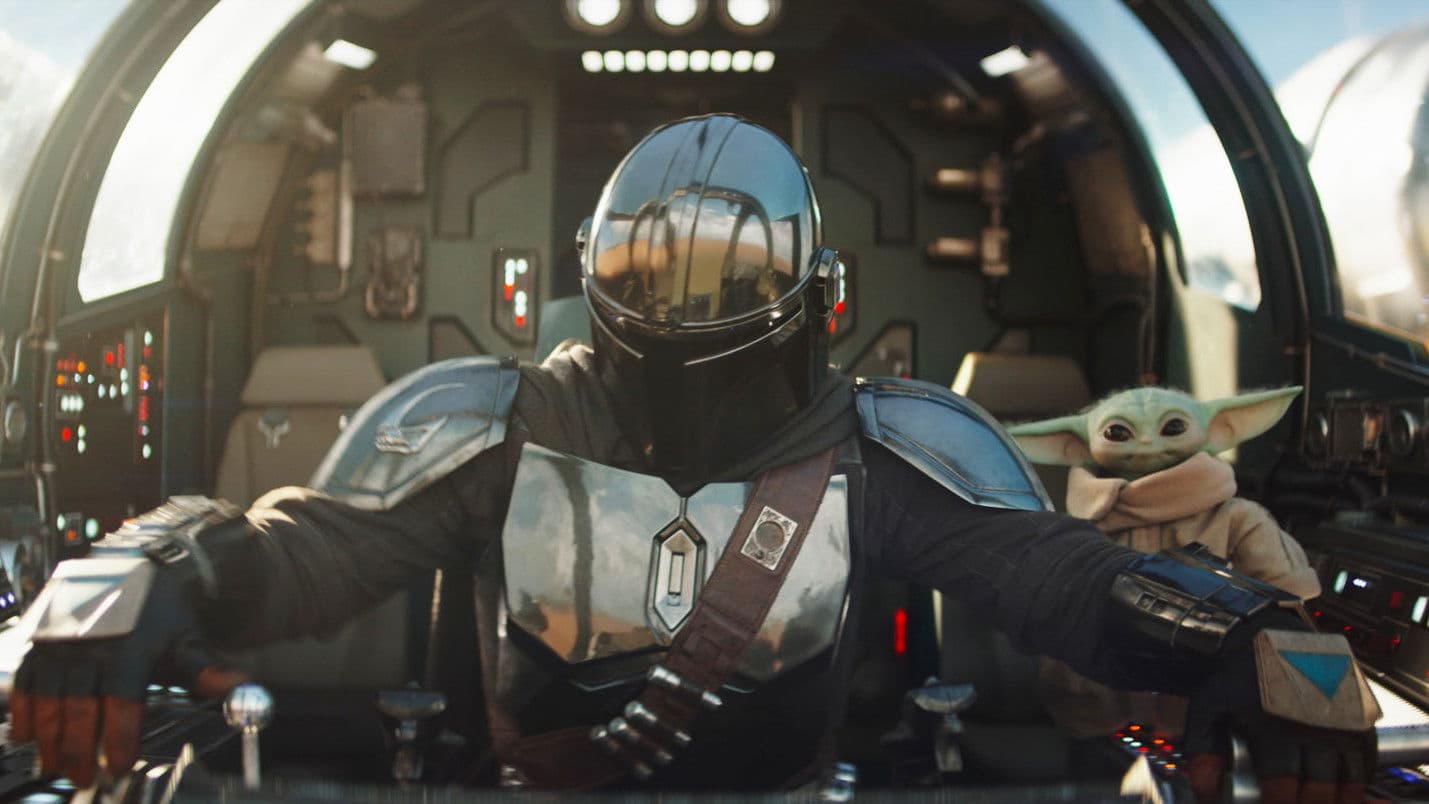
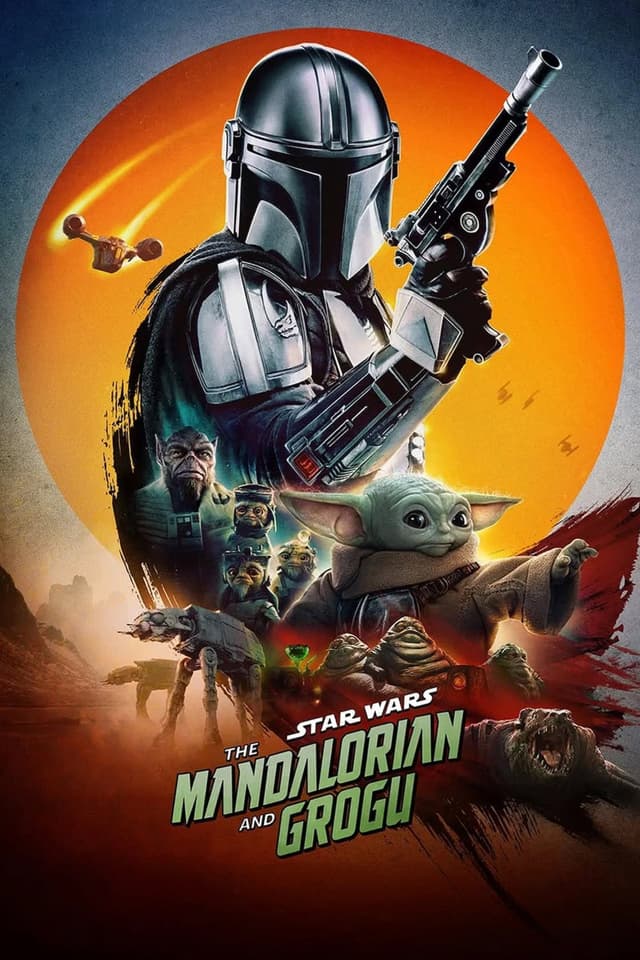
The evil Empire has fallen, and Imperial warlords remain scattered throughout the galaxy. As the fledgling New Republic works to protect everything the Rebellion fought for, they have enlisted the help of legendary Mandalorian bounty hunter Din Djarin and his young apprentice Grogu.
What Is the Budget of The Mandalorian and Grogu?
Star Wars: The Mandalorian and Grogu carries a reported production budget of $165,000,000. That figure makes it one of the more moderately sized entries in the modern Star Wars theatrical canon, sitting well below the $259 million spent on The Force Awakens while still commanding a substantial Lucasfilm-scale investment. For context, the budget reflects a production that shot for 92 days across California under working title "Thunder Alley," incorporated significant IMAX photography across approximately 49 minutes of the final 132-minute runtime, and employed a crew of roughly 500 people alongside some 3,500 extras. The film marks the first theatrical feature built directly out of the Disney Plus series, and its budget signals a considered bet: enough to deliver the spectacle that Star Wars audiences expect without the franchise-launching spend of a full episodic reboot.
Key Budget Allocation Categories
- Above-the-Line Talent: Pedro Pascal returns as Din Djarin at series-lead rates, joined by Jeremy Allen White and Sigourney Weaver in significant supporting roles. Jon Favreau, who directed and co-wrote the screenplay with Dave Filoni and Noah Kloor, commands a combined producer-director fee. Collectively, above-the-line costs for a cast and creative team of this profile typically represent 15 to 20 percent of the total budget.
- Production Design and Practical Sets: The Mandalorian series built a reputation on Volume technology, large-scale LED stages that replace location shooting with real-time rendered environments, and the theatrical film extends that infrastructure. Constructing and running multiple Volume stages for a 92-day shoot, alongside physical set builds for the 3,500-extra sequences, accounts for a substantial portion of the below-the-line spend.
- Visual Effects: A Star Wars feature set in the post-Return of the Jedi galaxy requires creature work, space sequences, vehicle effects, and background environment compositing at every turn. With 49 minutes of IMAX-framed material demanding higher resolution assets, the VFX budget scales accordingly. ILM, the in-house effects house at Lucasfilm, handles the bulk of this work.
- IMAX Production and Camera Costs: Filming roughly 49 minutes in native IMAX requires specialized camera packages, crew certified in that format, and specific set configurations that accommodate the larger camera bodies. It also raises post-production finishing costs, since the IMAX cut requires separate DI grading and deliverables.
- Score and Music: Ludwig Goransson, who composed the original Mandalorian television series music and won an Academy Award for the Black Panther score, returned to write the theatrical film score. A full orchestral score of this scale, recorded with live musicians, carries a meaningful line-item cost.
- Location and Logistics: Principal photography took place in California, requiring the full infrastructure of a major studio production: base camps for a 500-person crew, transportation for thousands of extras, union rates across departments, and the coordination overhead of a 92-shooting-day schedule.
How Does The Mandalorian and Grogu's Budget Compare to Similar Films?
- Star Wars: The Force Awakens (2015) - Budget $259,000,000 | Worldwide $2,068,223,624. J.J. Abrams spent $94 million more than the Mandalorian feature to launch an entirely new trilogy with legacy cast, a global marketing campaign built around secrecy, and the weight of reviving the franchise after a decade away; the Mandalorian film enters a well-established streaming fanbase and requires less world-building spend.
- Star Wars: The Last Jedi (2017) - Budget $200,000,000 | Worldwide $1,332,539,889. Rian Johnson's sequel cost $35 million more than the Mandalorian budget and delivered the second-highest-grossing Star Wars film of the Disney era; the comparison underscores how Lucasfilm has recalibrated its theatrical spend after the mixed returns of Solo and The Rise of Skywalker, targeting a leaner production profile for this IP extension.
- Avengers: Endgame (2019) - Budget $356,000,000 | Worldwide $2,799,439,100. Marvel's culminating event film cost more than twice the Mandalorian budget to bring 21 films' worth of narrative threads together; the contrast illustrates the difference between a franchise culmination requiring every living Avenger and a character-focused continuation built around two heroes and a serialized television audience.
The Mandalorian and Grogu Box Office Performance
Star Wars: The Mandalorian and Grogu opened in US theaters on May 22, 2026, over the Memorial Day holiday weekend. The film earned $81,670,433 domestically over its three-day opening weekend, expanding to approximately $98,000,000 over the four-day holiday frame. Internationally, it debuted across 51 territories for an opening weekend of approximately $69,000,000, bringing the worldwide opening to roughly $167,000,000. Through ten weeks of release the film has accumulated $177,722,846 domestically and $344,847,846 worldwide.
- Production Budget: $165,000,000
- Estimated Prints & Advertising (P&A): approximately $100,000,000 for a global Disney/Star Wars theatrical release
- Total Estimated Investment: approximately $265,000,000
- Worldwide Gross: $344,847,846 ($177,722,846 domestic, $167,288,000 international)
- Net Return: Approximately -$92,522,002. After standard exhibitor splits, the studio share of the $344,847,846 worldwide gross is approximately $172,477,998 against a total estimated investment of $265,000,000.
- ROI: Approximately $0.65 returned per $1 invested after exhibitor splits; $344,847,846 worldwide gross against $265,000,000 total investment represents a gross-to-investment ratio of approximately 130%.
Through ten weeks of release, the film has returned approximately $0.65 for every $1 invested when accounting for exhibitor splits on the $344,847,846 worldwide gross against the estimated $265,000,000 all-in cost. With the theatrical run winding down, downstream revenue from home video, streaming, and merchandise will factor into the film's ultimate financial picture, though the theatrical gross alone makes profitability unlikely without significant ancillary performance.
The $81,670,433 three-day domestic opening represents the weakest Star Wars theatrical debut under Disney ownership, landing below Solo: A Star Wars Story's $84,420,489 opening in 2018 on an unadjusted basis. For comparison, Rogue One: A Star Wars Story opened to $155,081,681 domestically in 2016, and The Force Awakens set an all-time record with $247,966,675 in its opening weekend. The Mandalorian and Grogu's Memorial Day placement and its built-in Disney Plus audience base were expected to provide a floor above Solo's benchmark. That the film landed below it signals the continuing challenge Lucasfilm faces converting streaming viewership into theatrical attendance, and will likely shape the studio's theatrical release strategy for the pipeline of Star Wars films currently in development.
The Mandalorian and Grogu Production History
The decision to make a theatrical film out of The Mandalorian came after Lucasfilm reassessed its Disney Plus strategy in late 2022 and through 2023. The series had been the streaming platform's most consistent critical and commercial performer since its November 2019 debut, but the planned Season 4 was retooled into a feature-length theatrical release as part of a broader push to return Star Wars to cinemas after the trilogy experiment concluded with The Rise of Skywalker in 2019. Jon Favreau, the creator and showrunner of the series, was confirmed as director, taking on a role he had occupied for only two episodes of the television run. Favreau co-wrote the screenplay with Dave Filoni (who also appears on screen in the film) and Noah Kloor.
Production began in June 2024 under the working title "Thunder Alley," a name chosen to prevent location-scouting and logistics details from surfacing on set reports before the studio was ready to announce. Principal photography was conducted almost entirely in California, taking advantage of the state's film tax credit infrastructure and the proximity to Lucasfilm's visual effects operations at ILM in San Francisco. The shoot ran for 92 days and wrapped in late 2024, with a crew of approximately 500 people and sequences requiring roughly 3,500 extras for the larger action and crowd sequences.
A significant technical commitment of the production was the decision to photograph approximately 49 minutes of the 132-minute film in native IMAX. Cinematographer David Klein, who had served as director of photography on The Mandalorian television series, oversaw the IMAX sequences alongside the standard anamorphic material. The combination allows the theatrical release to offer a format distinction from anything possible on Disney Plus, giving exhibitors a genuine premium-format reason to promote the film over the streaming window. IMAX cameras require specific rigging, larger camera footprints, and adjusted lighting setups, all of which added complexity to the production schedule.
Composer Ludwig Goransson, whose Mandalorian theme became one of the most recognized television cues of the streaming era, returned to score the theatrical film. Recording sessions took place with a full orchestra, and Goransson worked closely with Favreau to extend the musical vocabulary of the series into a bigger-canvas cinematic context. The score was completed in early 2026 ahead of the final mix.
The film premiered at the TCL Chinese Theatre in Hollywood on May 14, 2026, one week before its wide theatrical release. The venue, which hosted the original Star Wars premiere in 1977, was a deliberate choice by Lucasfilm to anchor the film in franchise history. The wide US release followed on May 22, 2026.
Awards and Recognition
Star Wars: The Mandalorian and Grogu releases theatrically on May 22, 2026, and formal awards season eligibility has not yet begun. The film's May release date places it outside the traditional autumn awards window, though a theatrical run of sufficient length could position it for technical categories at the 2027 awards cycle.
The premiere at the TCL Chinese Theatre on May 14, 2026 was the film's first formal public presentation and drew significant industry attention given the venue's symbolic resonance with the franchise. The TCL Chinese is one of the few Los Angeles theaters where Star Wars history is embedded in the physical building, its forecourt cement containing handprints and footprints from cast members across multiple generations of the saga.
From a technical recognition standpoint, the IMAX production merits attention. Approximately 49 minutes of the film were photographed in native IMAX, which represents one of the larger proportions of native IMAX footage in any studio release. The American Society of Cinematographers and similar bodies have historically recognized ambitious large-format photography, and David Klein's work on the film is a likely contender for that category of recognition.
Ludwig Goransson's score, building on a television body of work that earned Grammy recognition for the series theme, enters the theatrical cycle with an established critical profile. Composers with pre-existing franchise scores have historically performed well in the music categories at both the Academy Awards and the Golden Globes, and the Mandalorian musical identity is among the most distinctive in the current generation of Disney output.
Critical Reception
Star Wars: The Mandalorian and Grogu opened to a divided critical response. On Rotten Tomatoes the film holds a 62% Tomatometer score from 235 reviews, with an average rating of 5.9 out of 10. The site's critical consensus reads: "Bountiful in action but threadbare in narrative thrust with its episodic structure, this Star Wars is more of a skirmish that coasts on the charm of its central dynamic duo." Metacritic assigns the film a 53 out of 100, placing it in the "mixed or average reviews" category and making it one of the lower-scoring entries in the Disney-era Star Wars theatrical canon alongside Solo: A Star Wars Story (2018).
Critics who responded positively focused on the film's visual craft, particularly the native IMAX sequences and Ludwig Goransson's score, and praised the warmth of the Din Djarin and Grogu dynamic as the reliable emotional core of the story. Those who came away disappointed pointed to a thin, episodic narrative structure that felt more like three connected television episodes than a self-contained cinematic feature. Several reviewers noted that the film does little to raise the stakes for either lead character, relying on fan familiarity built over five seasons of the Disney Plus series rather than constructing dramatic tension for a new theatrical audience.
Audience reception diverged sharply from the critical consensus. Opening-night moviegoers gave the film an A- CinemaScore, indicating strong satisfaction among the dedicated fanbase who turned out first. Rotten Tomatoes' verified Popcornmeter audience score stands at 89% from over 5,000 ratings, with viewers consistently describing it as a crowd-pleasing, low-stakes adventure that delivers on the core promise of the franchise. The gap between the 62% Tomatometer and the 89% audience score reflects a pattern seen across recent Star Wars releases, where critic expectations around narrative ambition diverge from audience appetite for comfort, spectacle, and character familiarity.
With $246,568,604 in worldwide gross through its second weekend, the film's commercial underperformance relative to mainline Star Wars entries has added a critical subtext to many reviews. Several outlets framed the 62% Tomatometer alongside the box office trajectory as evidence that the franchise needs a creative reinvention beyond IP extensions of existing streaming properties. Whether the strong audience scores reflect genuine satisfaction or the lowered expectations of a fanbase that has weathered several years of mixed Star Wars output remains a central question as its theatrical run continues.
Filmmakers
Star Wars: The Mandalorian and Grogu (2026)

Official Trailer
Build budgets like this one in Saturation
Start from an industry-standard feature film template, import the schedule and rates you already have, and let the cost report keep itself current as you spend. Real-time collaboration, no spreadsheets.