The Man Who Killed Hitler and Then the Bigfoot Budget
 DramaAdventureFantasyScience FictionWar1h 36m
Updated
Synopsis
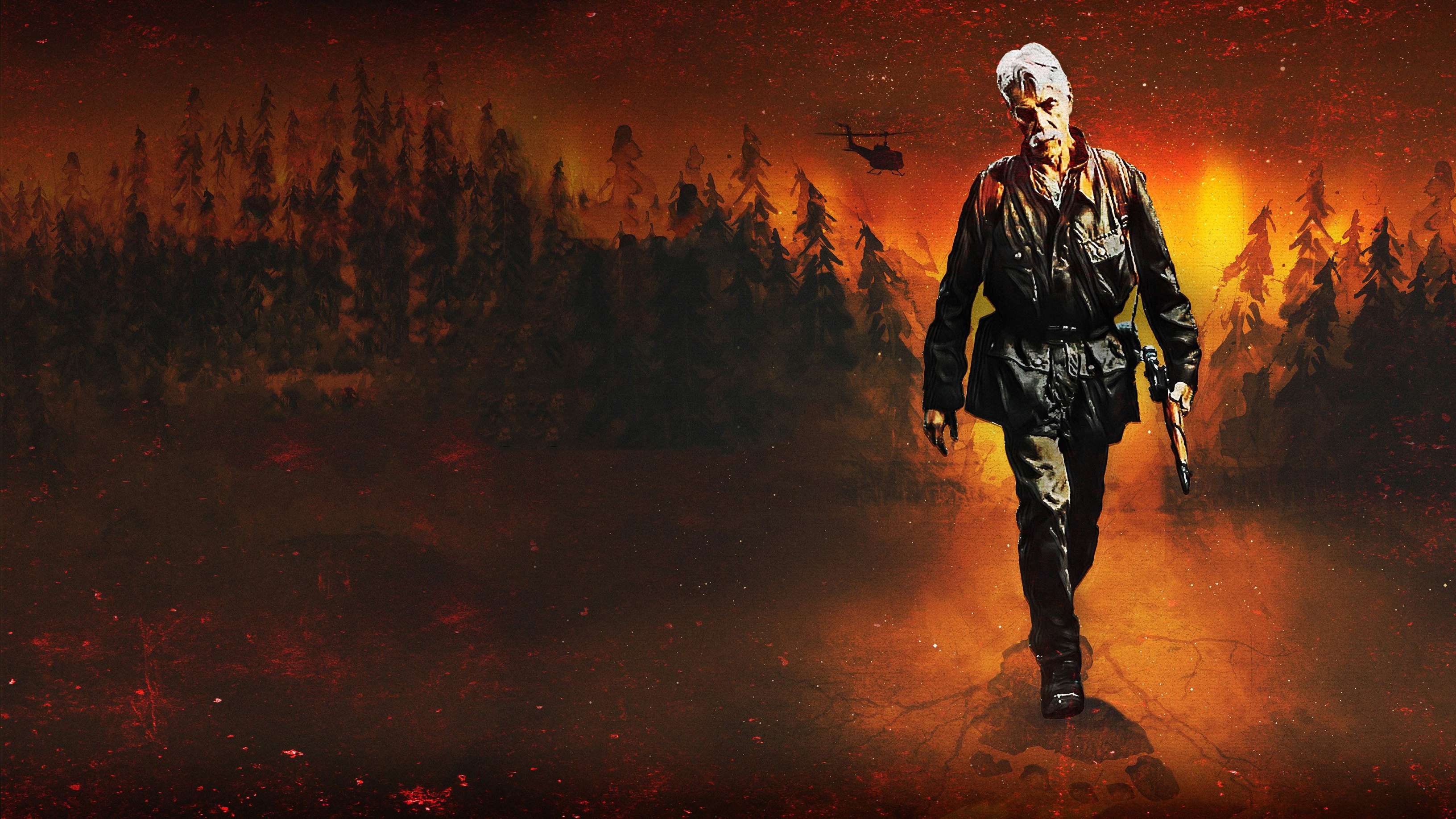
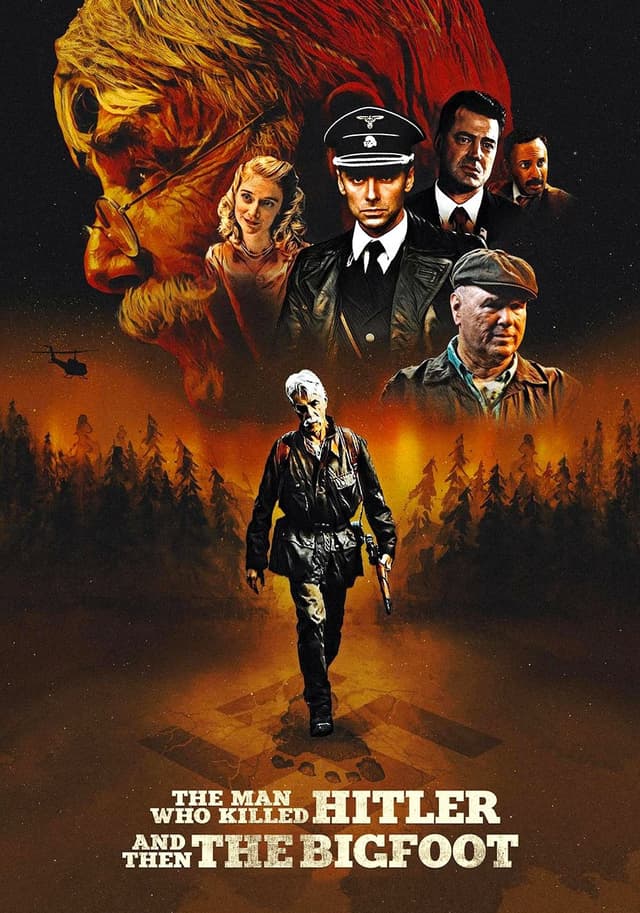
Calvin Barr, an aging former American Special Forces operative who once assassinated Adolf Hitler during World War II in a still-classified operation, lives quietly in 1980s rural America. When the United States and Canadian governments recruit him for one final mission, this time to hunt a bigfoot carrying a deadly plague through the Canadian wilderness, Calvin must reckon with the moral weight of his past and the meaning of a life spent killing for unrecognized causes.
What Is the Budget of The Man Who Killed Hitler and Then the Bigfoot (2019)?
The Man Who Killed Hitler and Then the Bigfoot (2019), written and directed by Robert D. Krzykowski in his feature directorial debut and distributed by RLJE Films and Epic Pictures Group, was produced on an undisclosed budget that industry trade reporting and indie financing-press tracking place in the range of $2,500,000 to $5,000,000. The film stars Sam Elliott in a contemplative genre piece about an aging assassin who is recruited to hunt a bigfoot carrying a deadly plague.
The budget reflected the realities of independent American genre cinema of the late 2010s. Producer John Sayles (the legendary indie director-screenwriter) executive-produced the film alongside Lucky McKee, both of whom brought independent-cinema credibility to Krzykowski's debut. The Boston-based independent production used Massachusetts state production tax incentives and a tight regional shoot to keep costs controlled while delivering the period-spanning premise.
Key Budget Allocation Categories
The Man Who Killed Hitler and Then the Bigfoot's estimated $2,500,000 to $5,000,000 budget was distributed across several core production areas:
- Above-the-Line Talent: Lead Sam Elliott, returning to a major leading role after his Oscar-nominated turn in A Star Is Born (2018), commanded a reduced-rate indie salary appropriate to the project's passion-project positioning. Supporting cast Aidan Turner (as the younger version of Elliott's character), Caitlin FitzGerald, Larry Miller, and Ron Livingston filled out the ensemble. First-time director Robert D. Krzykowski worked at first-feature scale.
- Massachusetts Production: Principal photography ran in Massachusetts in summer 2017, taking advantage of the state's 25% film production tax credit. The shoot covered rural Massachusetts and Vermont locations standing in for the film's 1980s American countryside setting, World War II European exteriors, and a Canadian wilderness sequence for the bigfoot hunt.
- Period Reconstruction: The film moves between three time periods (1944 wartime Europe, the 1980s American present, and a brief modern-day epilogue), each requiring distinct period costume, set dressing, and visual treatment. The World War II Hitler assassination sequence was a particular technical challenge, requiring period uniforms, Eastern European exteriors, and the technical preparation for the title set piece.
- Practical Effects and Creature Design: The bigfoot character was executed primarily through practical effects, including a custom-built creature suit, foam latex prosthetics, and on-location puppeteering rather than CGI. The practical-effects approach was a deliberate aesthetic choice in line with the film's 1980s-genre-cinema homage.
- Cinematography: Director of photography Alex Vendler shot the film on Arri Alexa with a deliberately romantic, golden-hour-emphasizing palette suited to the contemplative tone Krzykowski sought. The cinematography draws explicit references from 1970s and 1980s American studio drama and rural Americana cinema.
- Score and Music: Composer Joe Kraemer (Mission: Impossible - Rogue Nation, The Way of the Gun) scored the film with an orchestral palette unusual for an indie genre film of this budget tier, providing significant production value through the music alone.
How Does The Man Who Killed Hitler and Then the Bigfoot's Budget Compare to Similar Films?
At an estimated $2,500,000 to $5,000,000, The Man Who Killed Hitler and Then the Bigfoot sits squarely within the American indie genre tier. The comparison set illustrates the budget envelope:
- A Ghost Story (2017): Budget $100,000 | Worldwide $2,500,000. David Lowery's A24 indie at a fraction of the cost reached a comparable audience size through festival-driven distribution.
- I Am Not a Witch (2017): Budget approximately $1,000,000 | Worldwide N/A. Rungano Nyoni's indie debut illustrates the lower end of American-distributed festival indie cinema.
- The Witch (2015): Budget $4,000,000 | Worldwide $40,400,000. Robert Eggers' indie horror festival breakout at a near-peer budget demonstrates the upside potential for genre-positioned indie cinema with strong festival traction.
- Resolution (2012): Budget approximately $200,000 | Worldwide N/A. Justin Benson and Aaron Moorhead's genre-indie debut illustrates the microbudget end of the indie genre spectrum.
- The Endless (2017): Budget approximately $1,000,000 | Worldwide $1,200,000. Benson and Moorhead's follow-up illustrates the price-tier alternative directly below Hitler/Bigfoot.
The Man Who Killed Hitler and Then the Bigfoot Box Office Performance
The Man Who Killed Hitler and Then the Bigfoot had its world premiere at the 2018 Fantasia International Film Festival in Montreal on August 1, 2018, followed by selected genre-festival screenings through fall 2018. RLJE Films released the film theatrically in limited US release on February 8, 2019, in 20 theaters, with simultaneous video-on-demand availability.
The film generated limited theatrical box office of approximately $44,143 in domestic US release across its limited theatrical run, with the bulk of audience and revenue reaching the film through video-on-demand and home video. Against the estimated $2,500,000 to $5,000,000 production budget, here is the financial breakdown:
Box Office Breakdown
The Man Who Killed Hitler and Then the Bigfoot

The film's commercial path ran primarily through video-on-demand, the Shudder horror-streaming acquisition, and ongoing genre-catalog licensing. The Sam Elliott draw and the genre-festival pedigree have provided sustained long-tail catalog visibility, particularly within the streaming horror and cult-cinema spheres where the film has achieved a meaningful following.
The Man Who Killed Hitler and Then the Bigfoot Production History
Development on The Man Who Killed Hitler and Then the Bigfoot began with Robert D. Krzykowski, who developed the screenplay across roughly a decade in the early 2010s. Krzykowski had previously worked on short films and as a freelance producer in independent New England cinema. The project came together when Krzykowski connected with producers Lucky McKee and Patrick Ewald, both of whom brought genre-cinema credibility through their previous work.
Sam Elliott attached to star in 2016 after reading the screenplay, in what became one of the most consequential casting decisions of the production. Elliott's commitment locked the financing, attracted the supporting ensemble cast, and provided the marketing hook that allowed RLJE Films to acquire distribution rights.
Principal photography ran in Massachusetts in summer 2017 over approximately 30 days, with additional location work in Vermont and a brief Canadian wilderness shoot. The production used Massachusetts' 25% film production tax credit and various New England location resources to deliver the multi-period, multi-location story within the modest budget envelope.
Post-production took place in Boston and Los Angeles through 2017 and 2018, with the film completed in time for its August 2018 Fantasia world premiere. RLJE Films acquired distribution rights at Fantasia, with the limited theatrical release following in February 2019. Krzykowski has continued developing indie projects following the film's release.
Awards and Recognition
The Man Who Killed Hitler and Then the Bigfoot received limited awards recognition. The film won the Audience Award for Best Genre Film at the 2018 Fantasia International Film Festival in Montreal, the most significant genre-cinema festival in Canada. It also screened at the BFI London Film Festival and selected international genre festivals.
The film did not break through at the major industry ceremonies or year-end critics' awards, reflecting the streaming-driven distribution pattern and the genre positioning that limited awards-circuit visibility. Within the cult and genre cinema community, the film has been recognized as a notable debut by a distinctive new voice and Sam Elliott's performance has been particularly celebrated as one of his strongest late-career roles.
Critical Reception
The Man Who Killed Hitler and Then the Bigfoot received mixed-to-positive reviews. The film holds a 71% approval rating on Rotten Tomatoes based on 76 critic reviews, with the critical consensus calling it a surprisingly contemplative genre piece that prioritizes emotional weight over pulp execution. On Metacritic, the film scored 53 out of 100, indicating mixed or average reviews.
Critics broadly praised Sam Elliott's lead performance, Krzykowski's confident debut direction, the deliberately romantic visual treatment, and the willingness to undercut the pulp-tabloid premise with a melancholy, meditative tone. They objected to the slow pacing for viewers expecting a more conventional genre experience based on the title, and a third act that some critics felt did not fully deliver on the film's premise.
The Hollywood Reporter's John DeFore wrote that the film "delivers Sam Elliott's most affecting performance in years and a debut director with a distinctive voice," while Variety's Joe Leydon called it "a contemplative oddity that earns its strange premise through tender execution." Genre publications including Bloody Disgusting and Birth.Movies.Death were generally enthusiastic, with several outlets praising the film as one of the most distinctive American indie debuts of the year.
Frequently Asked Questions
How much did it cost to make The Man Who Killed Hitler and Then the Bigfoot (2019)?
The exact budget was not publicly disclosed, but industry trade reporting and indie financing-press tracking suggest the film cost approximately $2,500,000 to $5,000,000. Epic Pictures Group and RLJE Films co-financed and distributed the film, with Massachusetts state production tax credits providing significant cost recovery.
Who directed The Man Who Killed Hitler and Then the Bigfoot?
Robert D. Krzykowski directed the film. It was his feature directorial debut. Krzykowski developed the screenplay across roughly a decade and worked with producers Lucky McKee and Patrick Ewald to bring the project together.
Who stars in The Man Who Killed Hitler and Then the Bigfoot?
Sam Elliott stars as Calvin Barr, the aging former American Special Forces operative who once assassinated Hitler and is now recruited to hunt a bigfoot. Aidan Turner plays the younger version of Calvin in the World War II flashback sequences. Supporting cast includes Caitlin FitzGerald, Larry Miller, Ron Livingston, and Ellar Coltrane.
Is The Man Who Killed Hitler and Then the Bigfoot a comedy?
Despite the pulp-tabloid premise suggested by the title, the film is a contemplative, melancholy drama with genre elements rather than a broad comedy. The film deliberately undercuts the pulpy premise with a meditative tone, and the critical consensus has highlighted the way the film prioritizes emotional weight over pulp execution. Sam Elliott's performance is the emotional center of the film.
Where was The Man Who Killed Hitler and Then the Bigfoot filmed?
Principal photography took place in Massachusetts and Vermont in summer 2017 over approximately 30 days, with a brief Canadian wilderness shoot for the bigfoot hunt sequence. The production used the Massachusetts 25% film production tax credit and various New England location resources to deliver the multi-period, multi-location story within the modest budget envelope.
How much did The Man Who Killed Hitler and Then the Bigfoot make at the box office?
The film generated approximately $44,143 in domestic US theatrical box office across its limited 20-theater run starting February 8, 2019. The bulk of audience and revenue reached the film through video-on-demand, the Shudder horror-streaming acquisition, and ongoing genre-catalog licensing.
Where can I watch The Man Who Killed Hitler and Then the Bigfoot?
The film is available on multiple streaming services including Shudder (in territories where Shudder operates) and various digital platforms. The Blu-ray and DVD home video release through RLJE Films followed the February 2019 theatrical release.
What did critics think of The Man Who Killed Hitler and Then the Bigfoot?
The film received mixed-to-positive reviews. It holds a 71% approval rating on Rotten Tomatoes based on 76 critic reviews and a 53 out of 100 score on Metacritic. Critics praised Sam Elliott's lead performance and the deliberately romantic visual treatment while objecting to the slow pacing for viewers expecting a more conventional genre experience based on the title.
Did The Man Who Killed Hitler and Then the Bigfoot win any awards?
The film won the Audience Award for Best Genre Film at the 2018 Fantasia International Film Festival in Montreal, the most significant genre-cinema festival in Canada. It also screened at the BFI London Film Festival and selected international genre festivals. The film did not break through at the major industry ceremonies or year-end critics' awards.
Is the bigfoot in the film practical effects or CGI?
The bigfoot was executed primarily through practical effects, including a custom-built creature suit, foam latex prosthetics, and on-location puppeteering rather than CGI. The practical-effects approach was a deliberate aesthetic choice in line with the film's 1980s-genre-cinema homage and the broader practical-effects revival in independent horror cinema of the 2010s.
Filmmakers
The Man Who Killed Hitler and Then the Bigfoot

Official Trailer
Build budgets like this one in Saturation
Start from an industry-standard feature film template, import the schedule and rates you already have, and let the cost report keep itself current as you spend. Real-time collaboration, no spreadsheets.