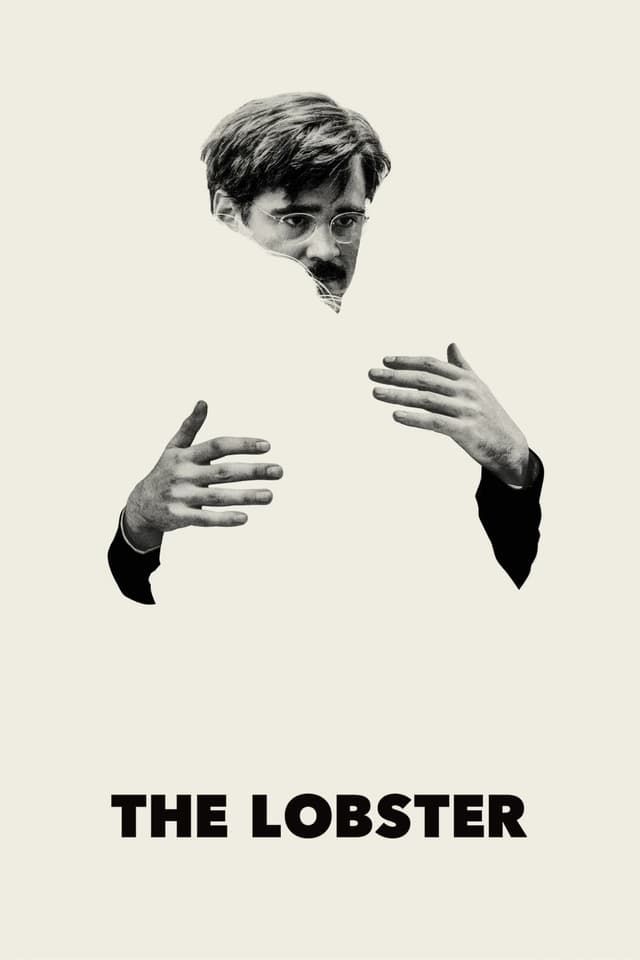
The Lobster Budget
 ComedyDramaRomance1h 59m
Updated
Synopsis
In a near-future society where single people are required to find a romantic partner within forty-five days or be turned into an animal of their choosing, a recently divorced man named David checks into a coastal Irish hotel to begin his hunt. As he navigates the hotel's rigid courtship rules and the outlaw band of Loners who reject coupledom entirely in the surrounding forest, David finds himself unexpectedly drawn to a short-sighted woman whose presence forces him to choose between the system he is being processed by and the equally regimented resistance to it.
What Is the Budget of The Lobster (2015)?
The Lobster (2015), directed by Yorgos Lanthimos and produced by Element Pictures alongside Scarlet Films, Faliro House Productions, Haut et Court, and Lemming Film, was made on a production budget of approximately $4,000,000 (roughly €4 million). Financed as a five-country co-production with backing from Film4, the BFI, the Irish Film Board, the Greek Film Center, Eurimages, and the Netherlands Film Fund, the picture sits at the upper end of the European arthouse scale while still operating at roughly one-tenth the cost of a comparable American studio comedy.
The modest budget reflected Lanthimos's English-language debut strategy: cast major international stars led by Colin Farrell and Rachel Weisz, but contain the spend through a single primary location, deliberately deadpan staging that avoided expensive coverage, and a six-and-a-half-week shoot anchored at the Parknasilla Resort and Spa in County Kerry, Ireland. The result was a film that read as significantly more ambitious than its $4 million sticker price, earning a Cannes Jury Prize, an Academy Award nomination for Best Original Screenplay, and a worldwide gross more than four times its production cost.
Key Budget Allocation Categories
On a $4 million European co-production, the main cost centers for The Lobster were:
- Above-the-Line Cast: Colin Farrell took a deep pay cut to play David, the schlubby protagonist who gains roughly forty pounds for the role, joined by Rachel Weisz, Léa Seydoux, John C. Reilly, Ben Whishaw, Olivia Colman, Jessica Barden, and Ariane Labed. Ensemble fees were structured low against backend participation, a common arthouse arrangement that let Lanthimos assemble a marquee cast without breaking the budget.
- Director, Writer and Producer Fees: Yorgos Lanthimos and co-writer Efthimis Filippou developed the screenplay through 2013 and 2014, with producers Ceci Dempsey, Ed Guiney, Lee Magiday, and Lanthimos himself sharing the producer credit. Above-the-line creative fees were compressed to keep more of the spend in front of the camera.
- Ireland Location and Hotel Shoot: Principal photography took place between March 24 and May 9, 2014, with the Parknasilla Resort and Spa near Sneem, County Kerry doubling as the central Hotel. The Irish shoot covered hotel hire, set dressing across multiple wings, period furniture rentals, and lighting rigs designed to mimic the resort's actual interiors.
- Forest Unit in Dromore Woods: The Loners chapters were filmed in Dromore Woods and surrounding County Clare and Kerry woodland, requiring weather cover, all-terrain transport for the camera package, and forestry permits, plus night-shoot premiums for the woodland chase and ambush sequences.
- Cinematography Package and Set Pieces: Thimios Bakatakis shot on Arri Alexa with wide anamorphic compositions, demanding longer lens packages, a Steadicam unit for the Hotel corridors, and slow-motion plates for the hunt sequences in the forest, in which guests tranquilize Loners to extend their human stay.
- Costume Design and Wardrobe: Sarah Blenkinsop, who later won the European Film Award for Best Costume Designer, built the uniformity of the Hotel guests in matching gray and beige civvies, the Loners in functional outdoor wear, and the Maid and staff in red-trimmed staff uniforms. The Lobster's clipped visual palette depended on a tightly controlled wardrobe across more than forty speaking parts.
- Post-Production and Sound: Editor Yorgos Mavropsaridis assembled the film over several months, working with classical music cues drawn from Schnittke, Shostakovich, Britten, and Stravinsky in place of an original score. Sound design, color grading at a UK post house, and final mix accounted for the bulk of post spend.
- Festival Submission and International Sales: Element Pictures supported Cannes 2015 premiere costs, including print delivery, press coverage at the festival, and the international sales push by Protagonist Pictures that closed deals with A24 in the US and Mongrel Media in Canada.
How Does The Lobster's Budget Compare to Similar Films?
Placing The Lobster alongside other Lanthimos features and absurdist art-house comedies puts the $4 million figure into context:
- The Killing of a Sacred Deer (2017): Budget $7,000,000 | Worldwide $7,840,000. Lanthimos's immediate follow-up reunited him with Colin Farrell and Element Pictures on a budget nearly double The Lobster's, an increase that funded the Cincinnati hospital location and a more elaborate score. The Lobster's commercial outperformance underwrote the step up.
- The Favourite (2018): Budget $15,000,000 | Worldwide $96,000,000. Lanthimos's royal-court comedy expanded the budget nearly fourfold and grossed more than five times what The Lobster did, validating the director's commercial trajectory and earning ten Academy Award nominations including Best Picture.
- Poor Things (2023): Budget $35,000,000 | Worldwide $117,800,000. Eight years after The Lobster, Lanthimos was working at nearly nine times the budget and grossing more than six times the worldwide total. The Lobster was the calling card that made the eventual Poor Things scale possible.
- Sorry to Bother You (2018): Budget $3,200,000 | Worldwide $18,300,000. Boots Riley's absurdist debut hit a near-identical gross on a smaller budget through Annapurna, illustrating that strong-concept dark comedies at the micro-studio scale can repeatedly clear the $15 to $20 million worldwide mark.
- Eternal Sunshine of the Spotless Mind (2004): Budget $20,000,000 | Worldwide $74,400,000. Charlie Kaufman's relationship sci-fi cost five times The Lobster but covers similar emotional terrain, the failure of intimacy under engineered conditions, and demonstrates how Lanthimos compressed comparable thematic ambition into a fraction of the spend.
- Swiss Army Man (2016): Budget $3,000,000 | Worldwide $5,800,000. Daniels' absurdist debut hit Sundance the year after The Lobster's Cannes win and earned a comparable critical reception on a similar budget, although without the international box office reach that A24's US push gave The Lobster.
The Lobster Box Office Performance
The Lobster premiered in competition at the 2015 Cannes Film Festival on May 15, 2015, where it won the Jury Prize. Picturehouse Entertainment opened the film in the UK and Ireland on October 16, 2015, with rolling territorial releases through European partners over the following months. A24 acquired US rights and platformed the film into American theaters on May 13, 2016, expanding gradually from four locations on opening weekend to a peak of 234 screens.
The financial breakdown:
Box Office Breakdown
The Lobster

The Lobster returned approximately $4.40 for every $1 invested in production, an exceptional result for a European arthouse co-production and a clean profit for the financing consortium once distribution fees and recoupment were settled. The US domestic gross of $9,077,245 narrowly outpaced the $8,503,859 international total, an unusual split for a European-language-friendly title that reflected A24's sustained platform release strategy and the film's breakout among American art-house audiences.
Beyond theatrical, the film generated substantial revenue across home entertainment, premium VOD, and Netflix and pay-TV licensing, with returns flowing back to Element Pictures, Film4, and the international consortium. The Cannes Jury Prize and Academy Award nomination for Best Original Screenplay gave the title a long awards-season tail that extended its commercial life well into 2016 and 2017.
The Lobster Production History
The Lobster was developed by Yorgos Lanthimos and longtime collaborator Efthimis Filippou as Lanthimos's English-language debut, building on the international reputation Lanthimos had established with Dogtooth (2009) and Alps (2011). Element Pictures producers Ed Guiney and Andrew Lowe, who had championed Lanthimos's earlier work at Cannes, brought the project to Film4 and the BFI for UK financing, with French partner Haut et Court, Greek partner Faliro House, and Dutch partner Lemming Film completing the five-country co-production.
Casting Colin Farrell as David, a recently divorced man required to find a new partner within forty-five days or be turned into an animal of his choosing, was the breakthrough that unlocked the rest of the ensemble. Farrell, a native of Castleknock in Dublin, gained approximately forty pounds for the role and worked against his leading-man register to play the soft, defeated protagonist. Rachel Weisz, Léa Seydoux, John C. Reilly, Ben Whishaw, Olivia Colman, Jessica Barden, and Ariane Labed assembled around him, each playing variations on the film's deadpan-affect rule that no character would ever raise their voice or emote conventionally.
Principal photography ran from March 24 to May 9, 2014, anchored at Ireland's Parknasilla Resort and Spa near Sneem in County Kerry, with additional shooting in Dromore Woods, around Kenmare, and in Dublin. The Ireland production benefited from the country's Section 481 film and television tax credit and the support of the Irish Film Board (Screen Ireland), which had been a financing partner with Element Pictures on multiple prior features. The shoot was designed around the Hotel as a near-singular location to keep the budget contained.
Cinematographer Thimios Bakatakis shot on Arri Alexa with wide compositions and slow, dolly-led camera moves, while costume designer Sarah Blenkinsop built the rigorously matched uniforms that visually enforced the Hotel's conformity rules. Lanthimos rejected an original score in favor of needle-drop classical cues, an aesthetic decision that gave the film its distinctive austerity. Editor Yorgos Mavropsaridis cut the film through late 2014, with a Cannes 2015 premiere date locking the post schedule.
Awards and Recognition
The Lobster premiered in competition at the 68th Cannes Film Festival in May 2015, where it won the Jury Prize, the festival's third-place feature award presented by the official jury, and received a Queer Palm Special Mention from the parallel jury. The Cannes recognition immediately established Lanthimos as a major international director working in English and gave the film a global awards-season foothold.
At the 89th Academy Awards in February 2017 (following A24's 2016 US release), Lanthimos and Filippou were nominated for Best Original Screenplay, Lanthimos's first Oscar nomination and the recognition that put him firmly on the Hollywood radar. The 69th British Academy Film Awards nominated The Lobster for Outstanding British Film and Outstanding British Debut, with the film losing to Brooklyn in the former category. Colin Farrell received a Golden Globe nomination for Best Actor in a Motion Picture, Musical or Comedy at the 74th Golden Globes.
At the 28th European Film Awards in December 2015, Lanthimos and Filippou won Best European Screenwriter, and Sarah Blenkinsop won Best European Costume Designer, with the film also nominated for Best European Film, Best European Director, and Best European Actor for Farrell. The Irish Film and Television Awards, the British Independent Film Awards, and the European Film Awards collectively recognized the film across more than thirty nominations and ten wins, a sweep that confirmed the picture's prestige standing.
Critical Reception
The Lobster received broadly positive critical reception, holding an 88 percent approval rating on Rotten Tomatoes based on 268 reviews and a Metacritic score of 82 out of 100 from 44 reviews. The Rotten Tomatoes critics' consensus described the film as "weird, wonderful, and bound to leave you talking," a verdict that echoed across the international press. Audience response was sharply more divided, with a 64 percent Rotten Tomatoes audience score reflecting the deadpan tone's polarizing effect on viewers expecting a more conventional romantic comedy.
Peter Bradshaw in The Guardian awarded the film five stars and called it "an outrageously brilliant film," while Justin Chang in Variety praised it as "a brilliant deadpan satire" that "skewers the absurdities of monogamous coupledom with deadly precision." Manohla Dargis in The New York Times described The Lobster as "a wild ride through the woods of human absurdity" and singled out the film's rigorous formal control. A.O. Scott, also at The Times, named it one of the best films of 2016 after the A24 US release.
Detractors including David Edelstein at Vulture found the film's second-act woodland section more conceptually rigid than its Hotel-set first half, and several critics felt the deadpan affect tipped into mannerism by the closing chapter. Even skeptical reviews credited the world-building, the production design, and the discipline of the ensemble performances, and Colin Farrell's transformation drew particular praise as the actor's strongest dramatic work to that point. The film has since taken on a sustained cult standing, regularly cited in best-of-the-decade lists for the 2010s.
Frequently Asked Questions
How much did it cost to make The Lobster (2015)?
The Lobster had a production budget of approximately $4,000,000 (roughly €4 million). The film was financed as a five-country European co-production led by Element Pictures, with backing from Film4, the BFI, the Irish Film Board, the Greek Film Center, Haut et Court, and Lemming Film.
How much did The Lobster earn at the box office?
The Lobster grossed $17,581,104 worldwide, with $9,077,245 in the United States and Canada through A24 and $8,503,859 from international territories. The film returned approximately $4.40 for every $1 invested in production, an exceptional outcome for a European arthouse co-production.
Who directed The Lobster?
Greek filmmaker Yorgos Lanthimos directed The Lobster from a screenplay he co-wrote with longtime collaborator Efthimis Filippou. It was Lanthimos's English-language debut, following his Greek-language features Dogtooth (2009) and Alps (2011).
Where was The Lobster filmed?
The Lobster was filmed in Ireland between March 24 and May 9, 2014. The central Hotel scenes were shot at the Parknasilla Resort and Spa near Sneem in County Kerry, with the forest sequences captured in Dromore Woods and additional photography around Kenmare and Dublin.
Did The Lobster win a Cannes prize?
Yes. The Lobster won the Jury Prize at the 68th Cannes Film Festival in May 2015 and received a Queer Palm Special Mention from the parallel Queer Palm jury. The Cannes recognition established Lanthimos as a major international director working in English.
Was The Lobster nominated for an Academy Award?
Yes. Yorgos Lanthimos and Efthimis Filippou were nominated for Best Original Screenplay at the 89th Academy Awards in February 2017, following A24's 2016 US release. It was Lanthimos's first Oscar nomination.
Who distributed The Lobster in the United States?
A24 distributed The Lobster in the United States, opening the film on May 13, 2016, in a platform release that expanded from four screens at launch to a peak of 234. Picturehouse Entertainment handled UK and Irish distribution, with Mongrel Media releasing in Canada.
How much weight did Colin Farrell gain for The Lobster?
Colin Farrell gained approximately forty pounds to play David, the recently divorced protagonist of The Lobster. The physical transformation was central to the deadpan tone Lanthimos was after, casting Farrell against his usual leading-man register.
What did critics think of The Lobster?
Critics responded positively, with The Lobster holding an 88 percent approval rating on Rotten Tomatoes from 268 reviews and a Metacritic score of 82 from 44 reviews. Peter Bradshaw at The Guardian gave the film five stars, and Justin Chang at Variety praised the screenplay's deadpan satire. Audience response was more divided, with a 64 percent Rotten Tomatoes audience score.
Did The Lobster qualify for Ireland's Section 481 tax credit?
The Lobster shot principally in Ireland with support from the Irish Film Board (now Screen Ireland) and benefited from Ireland's Section 481 film and television tax credit, the standard incentive for qualifying productions filming in the country. The Irish co-production status was central to financing the $4 million budget.
Filmmakers
The Lobster

Official Trailer
Build budgets like this one in Saturation
Start from an industry-standard feature film template, import the schedule and rates you already have, and let the cost report keep itself current as you spend. Real-time collaboration, no spreadsheets.