The Lego Ninjago Movie Budget
 FamilyComedyAdventureAnimationAction1h 41m
Updated
Synopsis
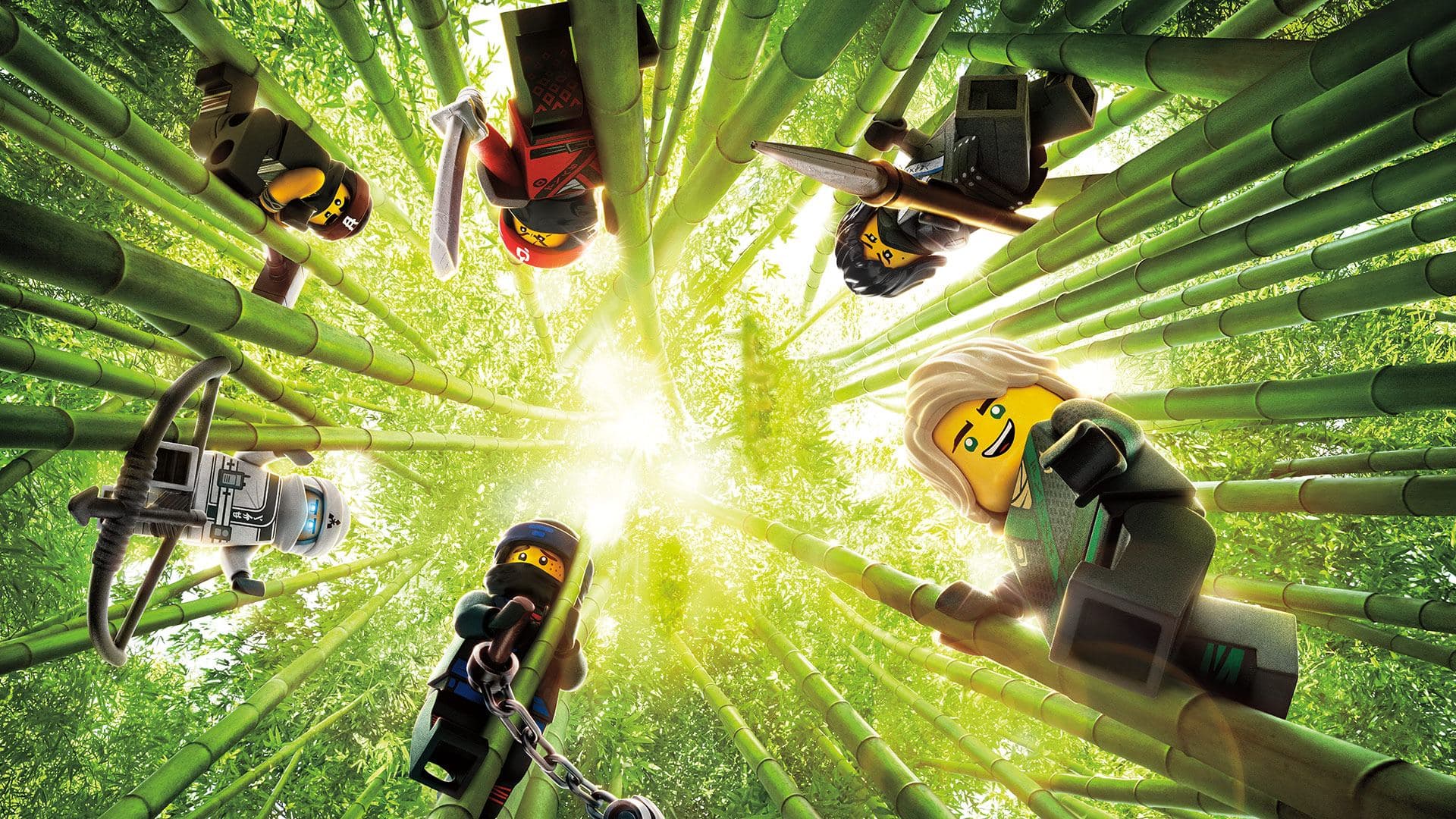
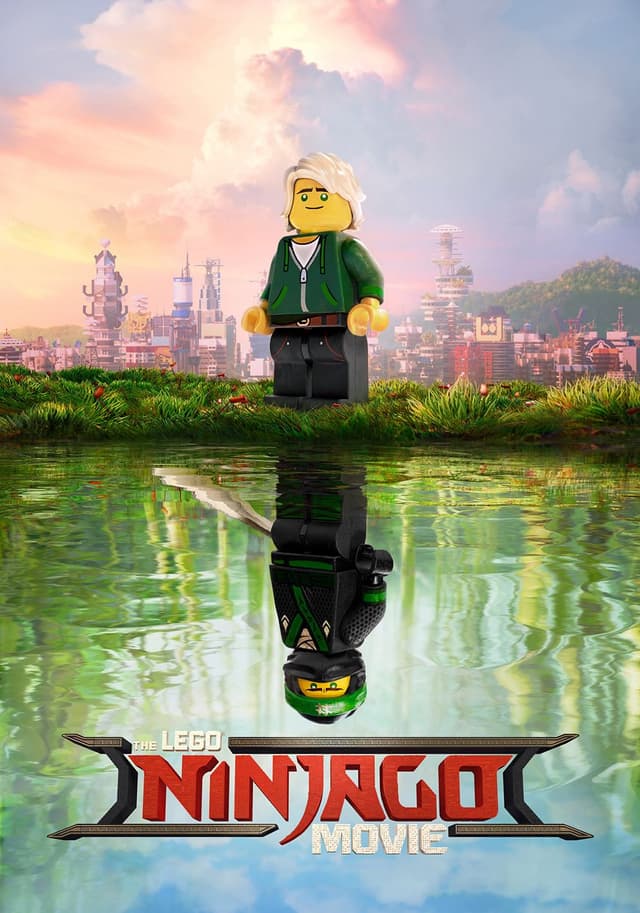
Six young ninjas are tasked with defending their island home of Ninjago. By night, they’re gifted warriors using their skill and awesome fleet of vehicles to fight villains and monsters. By day, they’re ordinary teens struggling against their greatest enemy....high school.
What Is the Budget of The Lego Ninjago Movie?
The Lego Ninjago Movie was produced on an estimated budget of $70 million, making it the least expensive entry in the theatrical Lego franchise. For comparison, The Lego Movie (2014) cost approximately $60 million and The Lego Batman Movie (2017) carried a reported $80 million price tag. Warner Animation Group and LEGO System A/S co-produced the film, leveraging existing animation pipelines and character assets from the Ninjago television series to keep costs contained relative to a fully original property.
Despite the lower budget, the production still required extensive rendering infrastructure. The Lego films are known for their hybrid approach: photorealistic CG animation designed to look like practical stop-motion brickwork, with every surface modeled as if built from real LEGO pieces. That level of detail demands significant compute time per frame, which accounts for a substantial portion of the overall spend.
Key Budget Allocation Categories
- Animation and Rendering accounted for the largest share of the budget. Animal Logic, the Sydney-based studio behind all three theatrical Lego films, handled animation production. Each frame requires millions of individual brick surfaces to be lit and rendered with realistic scratches, fingerprints, and reflections.
- Voice Talent included Dave Franco, Justin Theroux, Fred Armisen, Kumail Nanjiani, Michael Pena, Abbi Jacobson, Zach Woods, and Jackie Chan. Chan also appeared in a live-action framing sequence, which required a separate on-set shoot with physical sets and practical effects.
- Music and Score was composed by Mark Mothersbaugh, the Devo co-founder who previously scored Thor: Ragnarok and The Lego Movie 2. His orchestral and electronic hybrid score was recorded with a full session orchestra.
- Story Development and Writing involved multiple screenplay drafts. Six writers received story or screenplay credits, reflecting a lengthy development process that included rewrites to differentiate the film from the concurrent Ninjago television series while staying faithful to the toyline.
- Live-Action Sequences featuring Jackie Chan as a shopkeeper required practical set construction, wardrobe, and on-location shooting. These sequences bookend the animated story and added a production layer not present in The Lego Batman Movie.
- Marketing and Distribution costs, handled by Warner Bros. Pictures, are estimated at $80 to $100 million globally. The campaign included toy cross-promotions, fast-food tie-ins, and a significant television advertising push timed to the September 2017 release window.
How Does The Lego Ninjago Movie's Budget Compare to Similar Films?
- The Lego Movie (2014) had a budget of $60M and earned $469M worldwide. The original film launched the franchise and demonstrated that LEGO-branded animation could compete with Pixar and DreamWorks at the box office.
- The Lego Batman Movie (2017) carried a budget of $80M and grossed $312M worldwide. Released just seven months before Ninjago, its strong but declining returns hinted at franchise fatigue that would hit the third film even harder.
- Kubo and the Two Strings (2016) cost $60M and earned $77M worldwide. Laika's stop-motion martial arts adventure shares thematic overlap with Ninjago and illustrates how animated action films outside major franchise ecosystems struggle to break even theatrically.
- Captain Underpants: The First Epic Movie (2017) had a budget of $38M and grossed $125M worldwide. DreamWorks' adaptation of a children's IP achieved a stronger return on investment by keeping production costs well below $50 million.
- Sing (2016) carried a budget of $75M and earned $634M worldwide. Illumination's jukebox musical demonstrated that animated films in a similar budget tier could achieve massive returns with broad family appeal and a recognizable music catalog.
The Lego Ninjago Movie Box Office Performance
The Lego Ninjago Movie opened on September 22, 2017 and earned $21.2 million in its domestic opening weekend, finishing second behind Kingsman: The Golden Circle. The film went on to gross $59.3 million domestically and $123.1 million worldwide, making it the lowest-grossing entry in the theatrical Lego franchise by a wide margin.
Box Office Breakdown
The Lego Ninjago Movie

The steep decline from the $469 million global haul of The Lego Movie and the $312 million of The Lego Batman Movie signaled clear franchise fatigue. Warner Bros. had released two Lego films in the same calendar year, and audiences showed limited appetite for a third variation on the formula. The disappointing result led to a significant restructuring of the franchise strategy, with The Lego Movie 2 (2019) also underperforming at $199 million worldwide.
The Lego Ninjago Movie Production History
Development on The Lego Ninjago Movie began in 2013, before The Lego Movie had even reached theaters. Warner Bros. saw the Ninjago television series, which premiered on Cartoon Network in 2011, as a built-in audience for a theatrical spinoff. The studio initially announced the film for a September 2016 release, but shifted it to September 2017 after slotting The Lego Batman Movie into the February 2017 window.
Charlie Bean, a veteran of Cartoon Network's Tron: Uprising, was brought on as director and later joined by co-directors Paul Fisher and Bob Logan. The screenplay went through extensive development with contributions from six credited writers, including Hilary Winston, Bob Logan, Paul Fisher, William Wheeler, Tom Wheeler, and Jared Stern. The story needed to work as a standalone film for general audiences while respecting the mythology of the television series, which had already produced over 70 episodes by the time of the film's release.
Jackie Chan's involvement went beyond voice acting. The martial arts legend provided motion-capture reference for his animated character Master Wu and starred in live-action bookend sequences that required separate production crews and sets. The live-action framing device was designed to ground the animated story in a real-world context, similar to the father-son narrative in The Lego Movie.
Animal Logic returned as the animation studio, maintaining continuity with the visual style established in the first two films. However, the production timeline was compressed compared to The Lego Movie, which had benefited from a longer development runway. The September release date, outside the traditional holiday animation window, was seen as a risk. Warner Bros. positioned the film to avoid direct competition with Pixar's Coco in November, but the off-peak slot also meant less built-in family moviegoing traffic.
Awards and Recognition
The Lego Ninjago Movie received limited awards attention compared to its predecessors. The film was nominated for a Kids' Choice Award for Favorite Animated Movie but lost to Despicable Me 3. It did not receive nominations from the Annie Awards, the primary industry honors for animated features, which represented a notable step down from The Lego Movie's five Annie nominations and The Lego Batman Movie's three.
The film's visual effects work was acknowledged within the animation community, particularly for the continued refinement of the photorealistic brick-built aesthetic. Animal Logic's rendering pipeline for the Lego franchise remained technically impressive, even as the narrative and commercial reception fell short of expectations.
Critical Reception
The Lego Ninjago Movie holds a 55% approval rating on Rotten Tomatoes based on 147 reviews, with a consensus noting that the film "has moments of fun but lacks the non-stop wit that made its predecessors such a treat." On Metacritic, it scored 55 out of 100 based on 33 reviews, indicating mixed reception. Audiences gave it a B CinemaScore on opening night.
Critics praised the animation quality and Jackie Chan's dual performance but found the story formulaic compared to the surprising emotional depth of The Lego Movie. The father-son dynamic between Lloyd (Dave Franco) and the villainous Garmadon (Justin Theroux) drew comparisons to the Will Ferrell subplot in the original, but reviewers felt the execution lacked the same freshness. The humor was described as more reliant on slapstick and less on the clever meta-commentary that defined the franchise's debut.
The film has found a warmer reception in home media, where younger audiences who grew up watching the Ninjago television series appreciate the expanded animation budget and theatrical voice cast. Its legacy within the Lego franchise is primarily as the entry that revealed the limits of rapid brand extension, prompting Warner Bros. to slow its Lego theatrical output and eventually shift future projects toward streaming.
Frequently Asked Questions
How much did it cost to make The Lego Ninjago Movie (2017)?
The production budget was $70,000,000, covering principal photography, cast and crew salaries, locations, sets, post-production, and music. Marketing and distribution (P&A) costs are estimated at an additional $35,000,000 - $56,000,000, bringing the total studio investment to approximately $105,000,000 - $126,000,000.
How much did The Lego Ninjago Movie (2017) earn at the box office?
The Lego Ninjago Movie grossed $123,081,555 worldwide.
Was The Lego Ninjago Movie (2017) profitable?
The film did not break even theatrically, earning $123,081,555 against an estimated $175,000,000 needed. Ancillary revenue may have improved the picture.
What were the biggest costs in producing The Lego Ninjago Movie?
The primary cost drivers were above-the-line talent (Dave Franco, Justin Theroux, Fred Armisen); star comedian salaries, location filming, and aggressive marketing campaigns; international production across Australia, Denmark, United States of America.
How does The Lego Ninjago Movie's budget compare to similar family films?
At $70,000,000, The Lego Ninjago Movie is classified as a mid-budget production. The median budget for wide-release family films in the 2010s ranges from $30 - 80M for mid-budget to $150M+ for tentpoles. Comparable budgets: A Civil Action (1998, $70,000,000); Babylon A.D. (2008, $70,000,000); Beowulf (2007, $70,000,000).
Did The Lego Ninjago Movie (2017) go over budget?
There are no widely reported accounts of significant budget overruns for this production. However, studios rarely disclose precise budget overrun figures publicly. The reported production budget reflects the final estimated cost.
What was the return on investment (ROI) for The Lego Ninjago Movie?
The theatrical ROI was 75.8%, calculated as ($123,081,555 − $70,000,000) ÷ $70,000,000 × 100. This measures gross revenue against production budget only - it does not account for P&A or exhibitor shares.
Who directed The Lego Ninjago Movie and who were the key crew members?
Directed by Charlie Bean, Bob Logan, Paul Fisher, written by Paul Fisher, Tom Wheeler, John Whittington, William Wheeler, shot by David Scott, Simon Duggan, with music by Mark Mothersbaugh.
Where was The Lego Ninjago Movie filmed?
The Lego Ninjago Movie was filmed in Australia, Denmark, United States of America. In order to give the film a more believable father-son atmosphere, Dave Franco and Justin Theroux recorded most of their lines where their characters interact with each other together in a single recording studio. During the process, Franco openly admitted he found himself uncontrollably crying while recording some of his lines.
Filmmakers
The Lego Ninjago Movie

Official Trailer
Build budgets like this one in Saturation
Start from an industry-standard feature film template, import the schedule and rates you already have, and let the cost report keep itself current as you spend. Real-time collaboration, no spreadsheets.