The Kite Runner Budget
 Drama
DramaUpdated
Synopsis
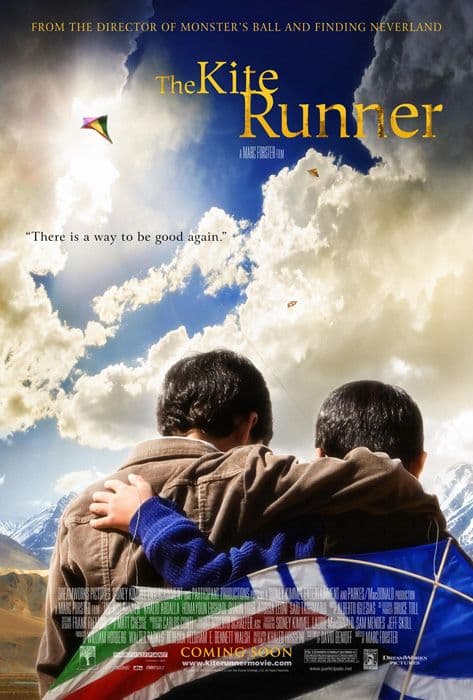
Spanning decades and continents, the film follows Amir, an Afghan-American writer haunted by his childhood betrayal of his closest friend Hassan in pre-Soviet Kabul. When he returns to a Taliban-controlled Afghanistan in 2000 to confront the consequences, he must reckon with the loyalty and cruelty that shaped his life.
What Is the Budget of The Kite Runner (2007)?
The Kite Runner (2007), directed by Marc Forster and distributed by Paramount Vantage and DreamWorks, was produced on a reported budget of approximately $20,000,000. The film adapted Khaled Hosseini's 2003 international bestseller for the screen, with David Benioff (who would later co-create Game of Thrones) delivering the screenplay. Walter F. Parkes and Laurie MacDonald of DreamWorks anchored the producer slate, with Sam Mendes and Rebecca Yeldham co-producing.
The budget reflected a contained late-2000s prestige adult drama scale executed at a deliberately modest scale. The bulk of the spend went to the multi-territory location shoot across China (doubling for Afghanistan), Pakistan, and the United States, the period production design for 1970s Kabul and Taliban-era Afghanistan, the predominantly Dari-language dialogue and translation work, and the casting of Afghan and Afghan-diaspora actors in the lead roles to preserve the authenticity of the source material.
Key Budget Allocation Categories
The Kite Runner's reported $20,000,000 budget was distributed across the following core production areas:
- Above-the-Line Talent: The film deliberately avoided star casting in the lead roles, with Khalid Abdalla (United 93) playing the adult Amir and child actors Zekeria Ebrahimi and Ahmad Khan Mahmidzada playing the young Amir and Hassan. Homayoun Ershadi (The Taste of Cherry) played Amir's father Baba, providing the most recognizable cast member to international audiences. Director Marc Forster, coming off Finding Neverland and Stranger than Fiction, was paid at a feature-director rate appropriate to the prestige drama format.
- China Location Shoot: Principal photography for the Kabul and Pakistan sequences took place in Kashgar, in the Xinjiang Uyghur Autonomous Region of western China, which provided architecture and material culture similar to 1970s and 2000s Afghanistan without the political risk of shooting in Afghanistan or Pakistan directly. The cross-territory shoot required substantial logistics, cast and crew travel, and local-crew arrangements with Chinese production partners.
- San Francisco and California Location Shoot: The American-set sequences of Amir's adult life in Fremont, California were shot in the actual San Francisco Bay Area, with additional pickup work in Los Angeles. The dual-territory production required logistical coordination across multiple time zones and currency exchanges.
- Period Production Design: Production designer Carlos Conti recreated 1970s pre-Soviet Kabul with detailed attention to the bazaar architecture, period vehicles, and the kite-flying material culture central to the film's opening act. The Taliban-era Afghanistan sequences required entirely different production design with austere palette, period-appropriate weaponry, and the militarized urban geography of late-1990s Kabul.
- Dari Language and Cultural Supervision: The film required extensive Dari-language dialogue coaching, cultural advisor consultation, and translation work across the screenplay and dialogue. Dialogue coach Saïd Taghmaoui and various Afghan diaspora consultants worked across pre-production and the shoot to maintain linguistic and cultural authenticity.
- Score and Music: Composer Alberto Iglesias (who would deliver Tinker Tailor Soldier Spy four years later) scored the film with a Central Asian instrumentation palette that incorporated rubab, tabla, and Afghan vocal traditions alongside orchestral cues. The score earned an Academy Award nomination.
How Does The Kite Runner's Budget Compare to Similar Films?
At a reported $20,000,000, The Kite Runner sits in the lower-mid range of late-2000s prestige adult dramas and international literary adaptations. The comparison set illustrates how its commercial outcome compared with budgetary peers:
- A Mighty Heart (2007): Budget $16,000,000 | Worldwide $18,996,317. Michael Winterbottom's Daniel Pearl-based drama with Angelina Jolie cost less than The Kite Runner and earned a quarter of the worldwide gross, illustrating the upper ceiling of contemporary South Asia-set drama in the same release year.
- Babel (2006): Budget $25,000,000 | Worldwide $135,330,668. Alejandro González Iñárritu's globe-spanning drama released a year before The Kite Runner cost a quarter more and earned almost twice the worldwide, illustrating the upper ceiling of cross-cultural prestige drama in the era.
- The Reader (2008): Budget $32,000,000 | Worldwide $108,902,486. Stephen Daldry's post-Holocaust prestige drama cost 60 percent more than The Kite Runner and earned half again the worldwide, illustrating how Hollywood-cast prestige drama outperformed local-cast adaptation in the same era.
- Persepolis (2007): Budget $7,500,000 | Worldwide $22,838,949. Marjane Satrapi's animated Iranian autobiography released the same year as The Kite Runner cost a third as much and earned a third of the worldwide, illustrating the floor for international-set adult drama.
- Slumdog Millionaire (2008): Budget $15,000,000 | Worldwide $378,445,371. Danny Boyle's Mumbai-set drama released a year after The Kite Runner cost less and earned more than five times the worldwide, illustrating the upper-ceiling potential for non-English-language prestige drama that The Kite Runner narrowly missed.
The Kite Runner Box Office Performance
The Kite Runner opened in limited theatrical release on December 14, 2007, beginning at 35 theaters with a per-screen average of $13,803. The film expanded gradually across the holiday season and early 2008, closing its domestic run at $15,803,895 and adding a strong $57,378,683 internationally, for a worldwide total of $73,182,578.
Against a reported production budget of $20,000,000, the film comfortably cleared theatrical break-even. Here is the financial breakdown:
Box Office Breakdown
The Kite Runner (2007)

The Kite Runner returned approximately $1.63 to $2.09 in worldwide theatrical gross for every $1 invested in production and marketing, placing it among the more profitable late-2000s prestige adult dramas. The 78/22 international-to-domestic split was unusually heavy toward international, reflecting both the muted domestic specialty release and the global reach of Khaled Hosseini's source novel, which had been translated into more than 70 languages by the time of the film's release.
The strong international performance, particularly across Europe and Australia, helped Paramount Vantage justify continued investment in international literary adaptation and contributed to the broader 2007-2008 prestige-drama box-office cycle. The film also benefited from a controversy-driven publicity arc in the months ahead of release related to the safety of the Afghan child actors, which prompted Paramount Vantage to delay the theatrical release by six weeks and to arrange the relocation of the principal child actors to the United Arab Emirates.
The Kite Runner Production History
Development began at DreamWorks in 2003 shortly after the publication of Khaled Hosseini's novel. Walter F. Parkes and Laurie MacDonald optioned the book quickly on the strength of its bestseller status and pitched the project at multiple studios before settling at Paramount Vantage following the DreamWorks distribution restructuring. David Benioff, then primarily a novelist (The 25th Hour) with limited screenwriting credits, delivered the adaptation that compressed Hosseini's multi-decade narrative into a forward-moving theatrical structure.
Marc Forster attached to direct in 2005 on the strength of his work on Monster's Ball, Finding Neverland, and Stranger than Fiction. The casting process took the better part of 18 months, with the production team specifically committed to casting Afghan and Afghan-diaspora actors in the lead roles rather than international stars. Khalid Abdalla, who had played a 9/11 hijacker in Paul Greengrass's United 93 (2006), was cast as the adult Amir, with Zekeria Ebrahimi and Ahmad Khan Mahmidzada cast as the young Amir and Hassan after an extensive search across Afghan and Pakistani communities.
Principal photography ran from May to August 2006 across the Xinjiang Uyghur Autonomous Region of western China (with Kashgar doubling for Kabul) and California (for the San Francisco Bay Area sequences). The Chinese portion required complex logistics and local-crew arrangements, and the production deliberately avoided shooting in Afghanistan or Pakistan because of security concerns. The kite-flying sequences central to the film's opening act required dedicated specialist crews and extensive pre-production rehearsal.
Post-production was disrupted in autumn 2007 by safety concerns related to the principal child actors. The film's depiction of an act of sexual violence committed against the young Hassan generated concerns about the safety of the Afghan child actors following the planned theatrical release, and Paramount Vantage worked with international NGO partners to arrange the relocation of the principal child actors and their families to the United Arab Emirates. The film's theatrical release was delayed by six weeks to accommodate these arrangements.
Awards and Recognition
The Kite Runner received broad and substantial awards recognition. The film earned an Academy Award nomination for Best Original Score (Alberto Iglesias), the only Oscar nod the film received but a notable craft recognition. At the Golden Globe Awards, the film earned three nominations: Best Foreign Language Film, Best Original Score, and Best Original Song.
At the BAFTA Awards, the film was nominated for Best Film Not in the English Language. Additional nominations included recognition at the British Independent Film Awards, the Critics' Choice Movie Awards, and various regional critics-association ceremonies. The film won the Best Foreign Language Film prize at the Satellite Awards and various Excellence-in-Filmmaking awards across the international circuit.
Critical Reception
The Kite Runner received generally positive reviews. The film holds a 65 percent approval rating on Rotten Tomatoes based on 173 critic reviews, with a critical consensus that called it "competently directed and well-acted, but ultimately too earnest to convey the source novel's full emotional power." On Metacritic, the film scored 61 out of 100, indicating generally favorable reviews. Audiences surveyed by CinemaScore gave the film an A-, well above the typical specialty-drama floor.
Roger Ebert gave the film three out of four stars and wrote that "the movie is sometimes very moving, although it is too long, and grows confusing." A.O. Scott of The New York Times praised the film as "a faithful and respectful adaptation, particularly powerful in its child-actor performances," while flagging the structural-compression challenges of the multi-decade source novel. Variety's Todd McCarthy wrote that the film "preserves the emotional core of Hosseini's novel while finding its own cinematic shape."
The film has settled into the late-2000s prestige adult drama canon as a representative example of international literary adaptation, frequently cited alongside A Thousand Splendid Suns (Hosseini's subsequent novel) and Persepolis as defining works of post-2001 Central Asian and Afghan diaspora cinema. The controversy around the child actors and the broader cultural-safety questions raised by the production continue to inform academic and policy discussions of cross-cultural film production.
Frequently Asked Questions
How much did it cost to make The Kite Runner (2007)?
The reported production budget was approximately $20,000,000. Paramount Vantage distributed the film and co-produced with DreamWorks, Participant Productions, Sidney Kimmel Entertainment, and Parkes/MacDonald Productions. The China-based location shoot offset substantial line-item costs through favorable currency exchange and local-crew arrangements.
How much did The Kite Runner earn at the box office?
The film grossed $15,803,895 domestically and $57,378,683 internationally, for a worldwide total of $73,182,578. It opened in limited theatrical release on December 14, 2007, beginning at 35 theaters with a per-screen average of $13,803, before expanding gradually across the holiday season and early 2008.
Was The Kite Runner profitable?
Yes. Against a $20,000,000 production budget and an estimated $15,000,000 to $25,000,000 in marketing spend, the film returned approximately $1.63 to $2.09 in worldwide gross for every $1 invested. It is among the more profitable late-2000s prestige adult dramas, with the strong international performance closing well above theatrical break-even.
Who directed The Kite Runner?
Marc Forster directed the film. Forster had previously directed Monster's Ball (2001), Finding Neverland (2004), and Stranger than Fiction (2006). The Kite Runner was his return to international prestige drama after the lighter contemporary comedy Stranger than Fiction. He subsequently directed Quantum of Solace (2008) and World War Z (2013).
Is The Kite Runner based on a book?
Yes. The film is based on Khaled Hosseini's 2003 international bestseller of the same name, which by the time of the film's 2007 release had been translated into more than 70 languages. David Benioff (who would later co-create Game of Thrones) wrote the screenplay, which compressed Hosseini's multi-decade narrative into a forward-moving theatrical structure.
Where was The Kite Runner filmed?
Principal photography ran from May to August 2006 across the Xinjiang Uyghur Autonomous Region of western China (with Kashgar doubling for Kabul and the Pakistan sequences) and California (for the San Francisco Bay Area sequences). The production deliberately avoided shooting in Afghanistan or Pakistan because of security concerns at the time of production.
Who stars in The Kite Runner?
Khalid Abdalla (United 93) stars as the adult Amir. Zekeria Ebrahimi and Ahmad Khan Mahmidzada play the young Amir and Hassan. Homayoun Ershadi (The Taste of Cherry) plays Amir's father Baba, with Said Taghmaoui, Atossa Leoni, and Shaun Toub in supporting roles. The casting deliberately favored Afghan and Afghan-diaspora actors over international stars.
Why was The Kite Runner release delayed?
The film's theatrical release was delayed by six weeks because of safety concerns related to the principal child actors. The film's depiction of an act of sexual violence committed against the young Hassan generated concerns about the safety of the Afghan child actors following the planned theatrical release, and Paramount Vantage worked with international NGO partners to arrange the relocation of the principal child actors and their families to the United Arab Emirates.
What did critics think of The Kite Runner?
The film received generally positive reviews, with a 65 percent approval rating on Rotten Tomatoes (173 critics) and a 61 out of 100 score on Metacritic. Audiences gave it an A- CinemaScore. Roger Ebert gave the film three out of four stars and wrote that "the movie is sometimes very moving, although it is too long, and grows confusing."
Did The Kite Runner win any awards?
The film earned an Academy Award nomination for Best Original Score (Alberto Iglesias), the only Oscar nod. At the Golden Globes, it received three nominations including Best Foreign Language Film. The film was also nominated at the BAFTA Awards for Best Film Not in the English Language and won Best Foreign Language Film at the Satellite Awards.
Filmmakers
The Kite Runner (2007)

Build budgets like this one in Saturation
Start from an industry-standard feature film template, import the schedule and rates you already have, and let the cost report keep itself current as you spend. Real-time collaboration, no spreadsheets.