The Imaginary Budget
 AnimationAdventureDramaFamilyFantasy1h 48m
Updated
Synopsis
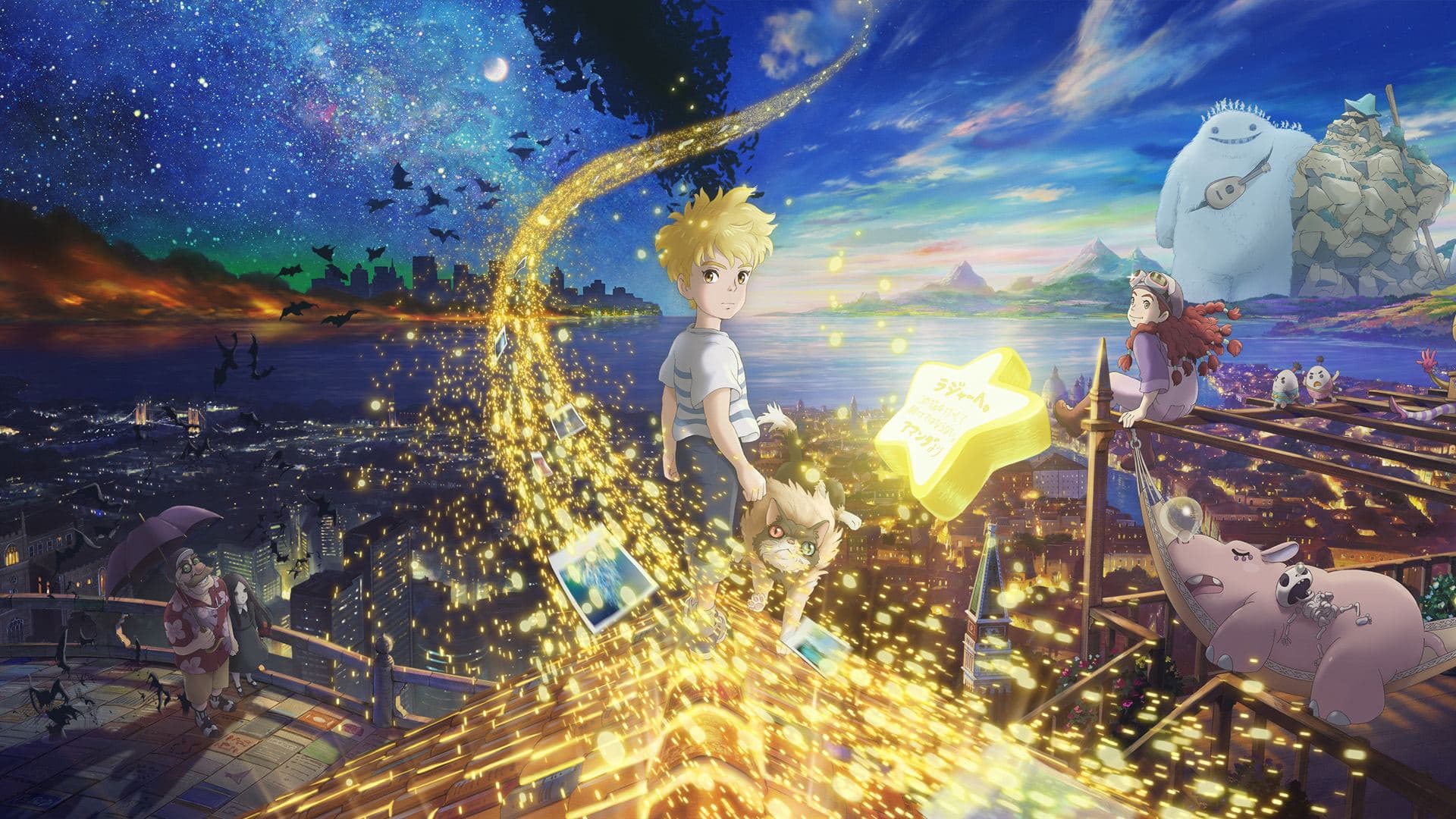
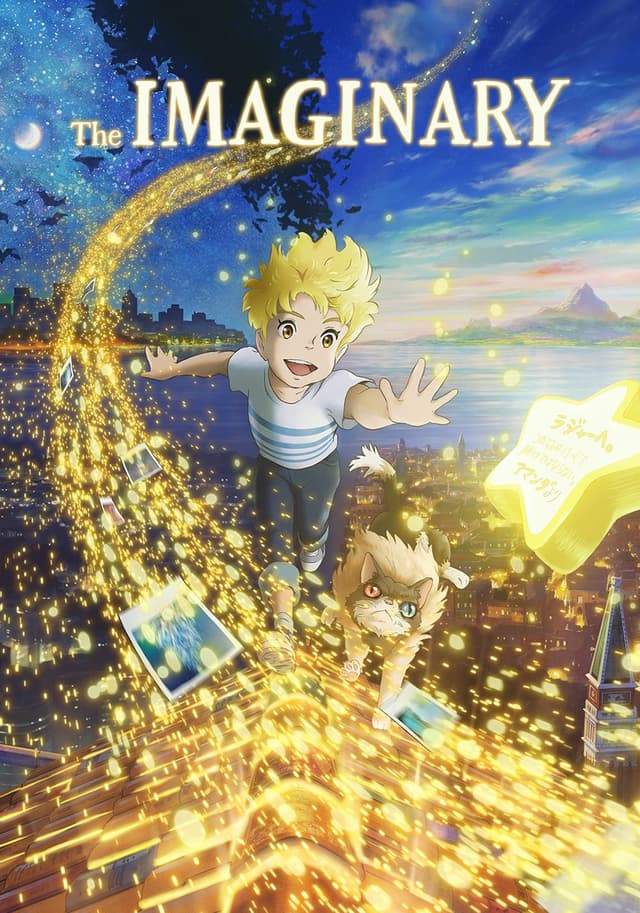
Rudger is an imaginary friend conjured by a girl named Amanda, living a vivid adventure-filled life in her mind. When Amanda is suddenly hospitalized, Rudger struggles to survive in the human world while pursued by a sinister figure who hunts imaginaries to extend his own life.
What Is the Budget of The Imaginary (2023)?
The Imaginary (Yamemiru kikai, 2023), directed by Yoshiyuki Momose and produced by Studio Ponoc, was made on an estimated budget of $25,000,000 to $35,000,000, in line with Studio Ponoc's previous feature Mary and the Witch's Flower (2017) and consistent with the cost structure of major Japanese hand-drawn animation features. Studio Ponoc and Netflix co-financed the production, with Netflix acquiring worldwide streaming rights outside Japan ahead of the December 15, 2023 Japanese theatrical release. No official budget figure has been published.
The film served as Studio Ponoc's second theatrical feature following Mary and the Witch's Flower, with the studio reuniting many of the Studio Ghibli alumni who founded Ponoc in 2015. Director Yoshiyuki Momose, a longtime Ghibli storyboard artist and animation director, made his solo directorial feature debut. The project adapted A.F. Harrold's 2014 novel of the same name, illustrated by Emily Gravett.
Key Budget Allocation Categories
The estimated budget was distributed across these production areas:
- Hand-Drawn Animation Production. Studio Ponoc's in-house animation team, including animators with extensive Studio Ghibli backgrounds, produced the film over approximately five years. The hand-drawn animation labor was the dominant line item, with approximately 130,000 to 150,000 individual frames generated across the production timeline.
- Pre-Production and Design. Yoshiyuki Momose, working with longtime Ghibli production designer Yoichi Nishikawa, developed the visual world of the film across an extended pre-production phase. The mix of mundane suburban settings and elaborate imaginary worlds required two separate design tracks.
- Voice Cast. The Japanese voice cast included Kokoro Terada as Rudger, Rio Suzuki as Amanda, Sakura Ando, Atsuko Takahata, Issey Ogata, and Riisa Naka. The English-language dub assembled for the Netflix release featured Louie Rudge-Buchanan, Evie Kiszel, Hayley Atwell, Jeremy Swift, and Sky Marshall.
- Score and Music. Composer Kenji Tamai created the orchestral score, with the title song "Imaginary" performed by Kazumasa Oda. The score recording took place in Tokyo across multiple sessions, with a chamber-to-large-orchestra ensemble as scenes required.
- Tokyo Studio Operation. Studio Ponoc's Tokyo facility, established in 2015 by former Ghibli production manager Yoshiaki Nishimura, carried fixed overhead across the five-year production timeline. Equipment, building maintenance, animator salaries, and administrative staff accounted for substantial absorbed cost.
- Marketing and Distribution. Toho handled the Japanese theatrical distribution, with promotional spending including trailer placements ahead of summer 2023 Toho releases. Netflix's separate marketing for the international streaming launch in July 2024 added a second tier of campaign spending.
How Does The Imaginary's Budget Compare to Similar Films?
At an estimated $25,000,000 to $35,000,000, The Imaginary sits among major Japanese hand-drawn animation features and contemporary international animated productions:
- Mary and the Witch's Flower (2017): Budget approximately $25,000,000 | Worldwide $46,090,000. Studio Ponoc's debut feature cost the same as The Imaginary and earned a substantial Japanese theatrical return plus solid international distribution, providing the direct production comparison for the second Ponoc feature.
- The Boy and the Heron (2023): Budget approximately $60,000,000 | Worldwide $293,000,000. Hayao Miyazaki's contemporaneous Studio Ghibli release cost roughly twice as much as The Imaginary and earned vastly higher international box office, including the 2024 Best Animated Feature Oscar. The two films competed in the December 2023 Japanese theatrical window.
- Suzume (2022): Budget approximately $20,000,000 | Worldwide $323,000,000. Makoto Shinkai's preceding Japanese animated feature cost less than The Imaginary and earned vastly higher box office, illustrating the Japanese animation tier above Studio Ponoc's commercial reach.
- Wendell & Wild (2022): Budget approximately $30,000,000 | Worldwide N/A (Netflix release). Henry Selick's contemporaneous Netflix-distributed stop-motion animated feature cost essentially the same as The Imaginary and represents the Netflix tier of investment in feature-length animation.
The Imaginary Box Office Performance
The Imaginary opened in Japanese theaters on December 15, 2023 through Toho distribution, into a market overshadowed by the concurrent release of Hayao Miyazaki's The Boy and the Heron. The film grossed approximately 200 million Japanese yen domestically in its opening weekend (equivalent to roughly $1,400,000), with a final Japanese theatrical gross of approximately $1,440,000 across its eight-week run.
Against an estimated $25,000,000 to $35,000,000 production cost, the financial breakdown is structured around the Netflix acquisition rather than theatrical recoupment:
Box Office Breakdown
The Imaginary

The Netflix global launch on July 5, 2024 placed the film on the streamer's top-ten English-language film chart for one week, accumulating approximately 6,000,000 hours viewed across the launch window. The streaming distribution model effectively removed traditional box office as a measure of the film's commercial success.
The financial outcome by traditional measures cannot be calculated. Studio Ponoc was paid a fixed budget plus production fee through the Netflix acquisition deal, and the Japanese theatrical revenue (modest by Japanese animation standards) was retained domestically by Toho and Studio Ponoc. The arrangement made The Imaginary commercially viable for Studio Ponoc by guaranteeing recoupment ahead of release, while delivering an uncertain success metric to outside observers.
The Imaginary Production History
Studio Ponoc began development on The Imaginary in 2018, following the studio's release of the short-film anthology Modest Heroes (2018) and the worldwide success of Mary and the Witch's Flower (2017). Producer Yoshiaki Nishimura, who founded Studio Ponoc after his Ghibli production tenure on titles including When Marnie Was There (2014) and The Tale of the Princess Kaguya (2013), optioned A.F. Harrold's 2014 novel for adaptation.
Production took place at Studio Ponoc's Tokyo facility, Japan, from 2018 through 2023, with the studio's in-house animation team working under director Yoshiyuki Momose. The hand-drawn animation production followed the established Studio Ghibli pipeline, with extensive storyboard, layout, key animation, and inbetween phases supported by Korean and Indian subcontractor studios for select sequences.
Director Yoshiyuki Momose, a longtime Studio Ghibli storyboard artist and animation director (Pom Poko, Princess Mononoke, Spirited Away) made his solo feature directorial debut on the project after decades in supporting creative roles. The COVID-19 pandemic from 2020 through 2021 extended the production timeline by approximately one year, with remote workflow accommodations and reduced studio occupancy during the peak pandemic period.
Netflix's acquisition of worldwide rights outside Japan was finalized in 2022, providing the financial certainty that allowed Studio Ponoc to complete the extended hand-drawn production. The arrangement parallels Netflix's investments in other major Japanese animation features including the Studio Colorido production Drifting Home (2022). Toho retained Japanese theatrical rights and handled the December 2023 Japanese release.
Awards and Recognition
The Imaginary received the Annie Award nomination for Best Animated Feature - Independent at the 2025 ceremony, recognizing the film's status within the international independent animation conversation. It was not nominated for the Academy Award for Best Animated Feature, with the Oscar going to The Boy and the Heron in the same category for the 2024 ceremony.
At the 2024 Japan Academy Prize ceremony, The Imaginary received the Most Popular Animation Film prize, separate from the main Best Animation Award which went to The Boy and the Heron. The film also received the Annecy International Animation Festival's out-of-competition gala screening selection in June 2024, providing significant international art-house visibility ahead of the Netflix launch. Critics polls including the Mainichi Film Award and Kinema Junpo placed the film among the year's top ten Japanese animation releases.
Critical Reception
The Imaginary received positive reviews. The film holds a 86% approval rating on Rotten Tomatoes based on 56 critic reviews, with the critical consensus calling it "a beautifully crafted hand-drawn fable that demonstrates Studio Ponoc's commitment to the Ghibli animation tradition." On Metacritic, the film scored 72 out of 100, indicating generally favorable reviews. The film does not have a CinemaScore because of its specialty release pattern.
Critics responded to the hand-drawn animation craft, the integration of mundane and fantastical settings, and the central friendship between Rudger and Amanda. The New York Times' Glenn Kenny called the film "a melancholy and lovely fantasy that earns its emotional sincerity," and IndieWire's David Ehrlich wrote that "Studio Ponoc continues to demonstrate that hand-drawn Japanese animation has a future beyond Studio Ghibli, even if Ghibli's shadow is impossible to escape."
Detractors objected to the film's second-act pacing and to the somewhat conventional villain dynamics in the third act. The Hollywood Reporter's David Rooney wrote that "the film never quite escapes the gravitational pull of its better-known antecedents, with sequences that feel almost too directly indebted to specific Ghibli moments." The Guardian's Peter Bradshaw called it "a charming but unsurprising fable, with the visual craft outpacing the storytelling." The split between critics who responded to the visual achievement and those who wanted more narrative originality mirrored audience response on Netflix, where engagement metrics outperformed the box office in Japan but did not reach Studio Ghibli or Makoto Shinkai levels.
Frequently Asked Questions
How much did The Imaginary (2023) cost to make?
Studio Ponoc and Netflix did not disclose a budget. Industry estimates place the production in the $25,000,000 to $35,000,000 range based on the five-year hand-drawn animation production timeline, the studio scale, and comparison to the studio's debut Mary and the Witch's Flower (2017).
How much did The Imaginary earn at the box office?
The film grossed approximately $1,440,000 in Japanese theatrical release across its eight-week run beginning December 15, 2023. International theatrical release was limited to selected territories, with Netflix holding worldwide streaming rights outside Japan and launching the film globally on July 5, 2024.
Who directed The Imaginary?
Yoshiyuki Momose, a longtime Studio Ghibli storyboard artist and animation director (Pom Poko, Princess Mononoke, Spirited Away) who made his solo feature directorial debut on The Imaginary after decades in supporting Ghibli creative roles.
What is Studio Ponoc?
Studio Ponoc is a Tokyo-based animation studio founded in 2015 by former Studio Ghibli producer Yoshiaki Nishimura and other Ghibli alumni after Hayao Miyazaki's temporary retirement in 2014. The Imaginary is the studio's second feature after Mary and the Witch's Flower (2017).
Is The Imaginary based on a book?
Yes. The film adapts A.F. Harrold's 2014 children's fantasy novel of the same name, illustrated by Emily Gravett. The novel was published by Bloomsbury in the United Kingdom and the United States.
How did The Imaginary compete with The Boy and the Heron?
The two Japanese hand-drawn animated features released in the same December 2023 Japanese theatrical window, with Hayao Miyazaki's The Boy and the Heron dominating the market. The Imaginary's domestic gross of $1,440,000 was modest by comparison, though the Netflix global release in July 2024 provided a separate distribution path. The Boy and the Heron won the 2024 Best Animated Feature Oscar.
Where was The Imaginary animated?
Production took place at Studio Ponoc's Tokyo facility from 2018 through 2023, with the studio's in-house animation team working under director Yoshiyuki Momose. The hand-drawn animation pipeline followed the established Studio Ghibli production model.
Did The Imaginary get an Oscar nomination?
No. The film did not receive an Academy Award nomination for Best Animated Feature, with the Oscar going to The Boy and the Heron in the same category for the 2024 ceremony. The Imaginary did receive an Annie Award nomination for Best Animated Feature - Independent at the 2025 ceremony.
When did The Imaginary come to Netflix?
July 5, 2024 globally outside Japan, where Toho retained theatrical and home-entertainment rights through December 2023 and the months following. Netflix's acquisition of worldwide streaming rights was finalized in 2022, providing the financial certainty that allowed Studio Ponoc to complete the extended hand-drawn production.
What did critics think of The Imaginary?
The film received positive reviews, holding a 86% approval rating on Rotten Tomatoes (56 critics) and a 72 out of 100 score on Metacritic. Critics praised the hand-drawn animation craft and the central friendship at the story's heart, but some objected to the second-act pacing and the conventional villain dynamics.
Filmmakers
The Imaginary

Official Trailer
Build budgets like this one in Saturation
Start from an industry-standard feature film template, import the schedule and rates you already have, and let the cost report keep itself current as you spend. Real-time collaboration, no spreadsheets.