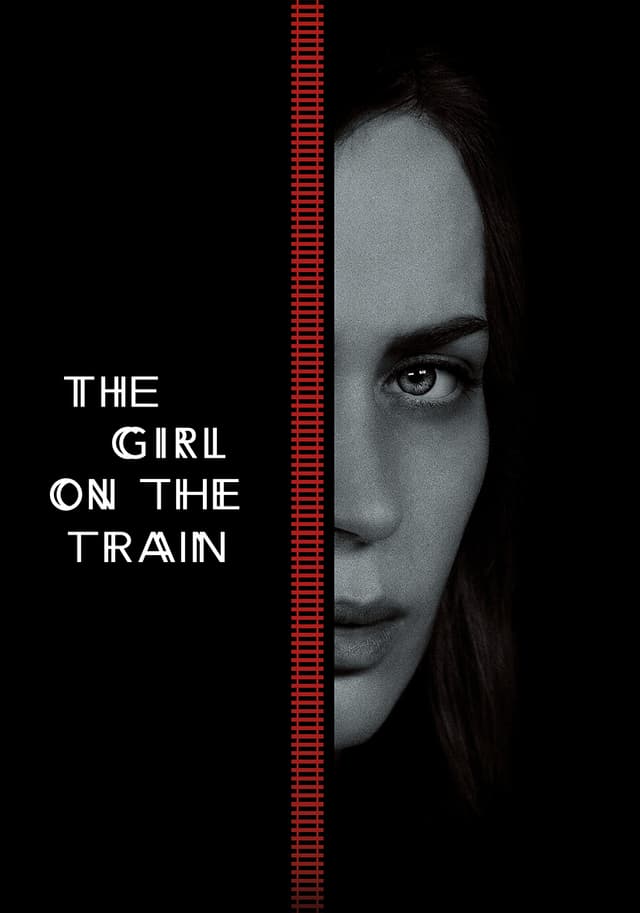
The Girl on the Train Budget
 CrimeMysteryThriller1h 52m
Updated
Synopsis
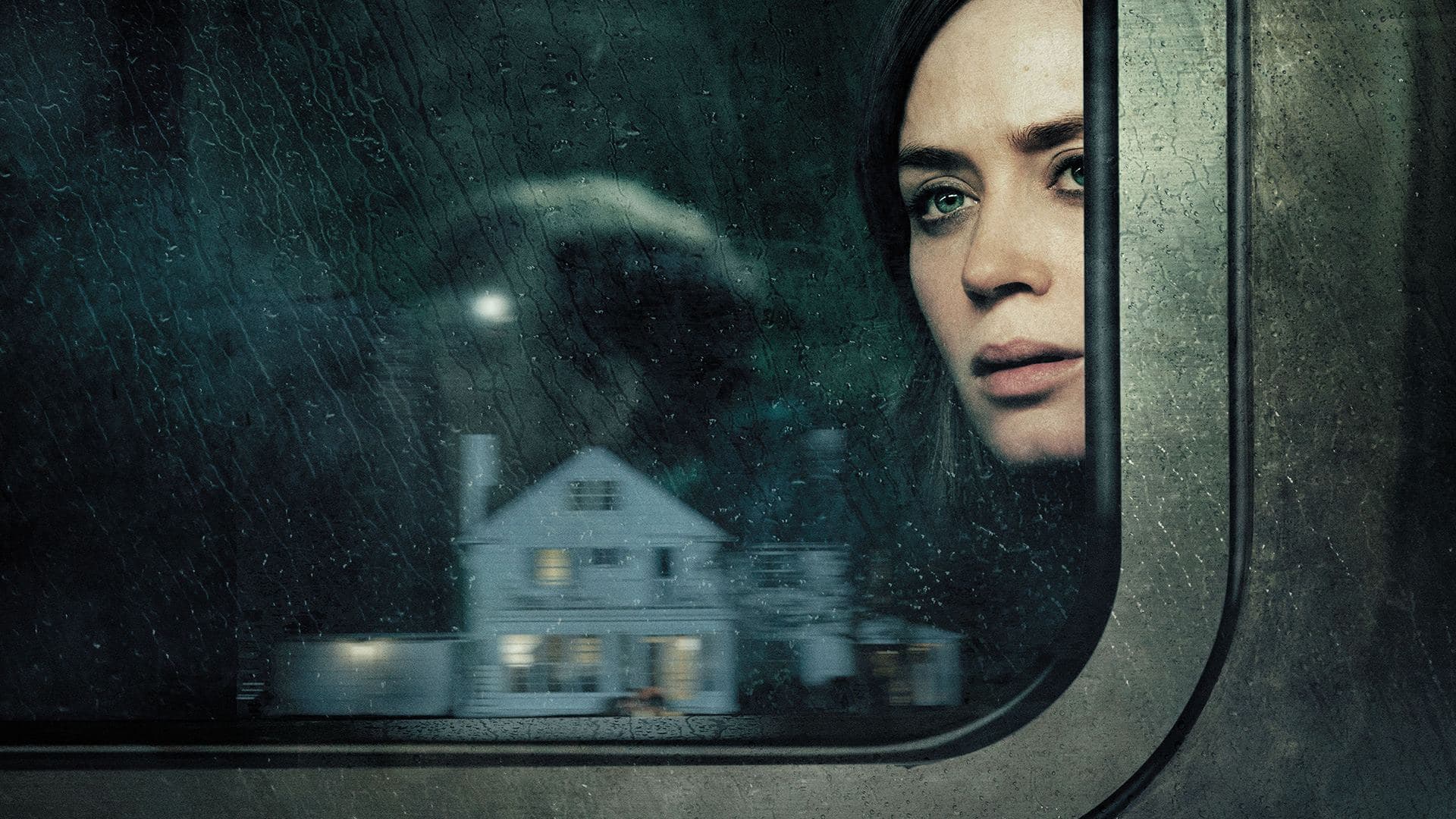
Rachel Watson, devastated by her recent divorce, spends her daily commute fantasizing about the seemingly perfect couple who live in a house that her train passes every day, until one morning she sees something shocking happen there and becomes entangled in the mystery that unfolds.
What Is the Budget of The Girl on the Train?
The Girl on the Train (2016) was produced with a budget of $45 million. DreamWorks Pictures financed the psychological thriller adaptation of Paula Hawkins's 2015 bestselling novel, with Universal Pictures handling worldwide distribution. The budget positioned the film as a mid-range studio drama, leaning on star power and source material recognition rather than visual effects spectacle. Producer Marc Platt secured the screen rights before the novel had even been published, betting on its commercial potential as the next major domestic thriller following Gone Girl's success in 2014.
Key Budget Allocation Categories
- Above-the-Line Talent: Emily Blunt commanded the lead salary as Rachel Watson, with supporting cast members Haley Bennett, Rebecca Ferguson, Justin Theroux, Luke Evans, Edgar Ramirez, Lisa Kudrow, and Allison Janney rounding out a high-profile ensemble. Director Tate Taylor, coming off the commercially successful The Help, also carried above-the-line costs.
- Literary Rights and Adaptation: Screen rights to Hawkins's novel were acquired pre-publication by DreamWorks, with Erin Cressida Wilson hired to write the screenplay. Adapting a bestseller with an established global readership added to development costs but reduced marketing risk.
- Production Design and Locations: The story was relocated from London to the New York suburbs, requiring period-accurate suburban commuter settings along the Hudson Line. Production designer Kevin Thompson built out interiors and key locations across the Lower Hudson Valley, Westchester County, and White Plains.
- Cinematography: Charlotte Bruus Christensen served as director of photography, bringing a moody, desaturated visual palette that relied on careful lighting setups and natural locations rather than large-scale set builds.
- Music and Score: Danny Elfman composed the original score, contributing atmospheric tension throughout the film's fractured timeline. Elfman's involvement represented a significant line item for a drama of this scale.
- Post-Production and Visual Effects: Editor Michael McCusker shaped the non-linear narrative structure, weaving three overlapping timelines. Visual effects were minimal, focused primarily on environmental work and continuity fixes rather than spectacle.
How Does The Girl on the Train's Budget Compare to Similar Films?
Positioned as a prestige thriller built around unreliable narrators and domestic suspense, The Girl on the Train sat within a specific budget tier for adapted bestseller dramas. Comparing it against similar titles reveals where it landed in the market.
- Gone Girl (2014): Budget $61 million | Worldwide $369 million. David Fincher's adaptation set the commercial benchmark for this subgenre, earning six times its production cost and proving that domestic thrillers based on bestsellers could perform as event films.
- Before I Go to Sleep (2014): Budget $22 million | Worldwide $15 million. A cautionary comparison: Nicole Kidman and Colin Firth could not elevate a similar amnesia thriller to profitability, demonstrating that star power alone does not guarantee returns in this space.
- The Girl with the Dragon Tattoo (2011): Budget $90 million | Worldwide $232 million. Fincher's adaptation carried nearly double the budget due to extensive location shooting in Sweden, showing how production ambition can inflate costs without proportionally increasing returns.
- A Simple Favor (2018): Budget $20 million | Worldwide $97 million. Paul Feig's domestic thriller demonstrated that leaner budgets in this genre can yield stronger returns on investment, earning nearly five times its production cost.
- Widows (2018): Budget $42 million | Worldwide $73 million. Steve McQueen's ensemble thriller matched The Girl on the Train's budget tier but underperformed at the box office, illustrating the risk profile of mid-budget dramas without built-in franchise awareness.
The Girl on the Train Box Office Performance
The Girl on the Train opened at number one domestically with $24.5 million on its opening weekend in October 2016, competing against a relatively quiet marketplace. The film held the top spot for one week before being displaced by new releases. Internationally, the film performed strongly in the UK, France, and Germany, markets where the source novel had been a major bestseller.
Box Office Breakdown
The Girl on the Train

Using the standard break-even estimate of roughly two times the production budget to account for prints and advertising, The Girl on the Train needed approximately $90 million worldwide to reach profitability. With $173.2 million in global receipts, the film cleared that threshold comfortably. Domestic gross accounted for $75.4 million, with international markets contributing the remaining $97.8 million. The ROI calculation, (Worldwide Gross minus Budget) divided by Budget times 100, yields approximately 285%, confirming the film as a clear commercial success despite mixed critical reception.
The Girl on the Train Production History
DreamWorks Pictures acquired the film rights to Paula Hawkins's debut novel in early 2014, before the book had been published. Producer Marc Platt recognized the commercial potential of a psychological thriller centered on a female protagonist with unreliable memories, a formula that had proven bankable with Gone Girl the previous year. The novel went on to sell over 20 million copies worldwide, validating the early investment.
Tate Taylor was announced as director in May 2015, a choice that raised some eyebrows given his previous work leaned toward drama rather than suspense. Taylor had directed The Help (2011) and Get On Up (2014), neither of which prepared audiences for a dark thriller. Screenwriter Erin Cressida Wilson, known for Secretary (2002), adapted the novel with a significant geographic change: the story moved from London and its commuter rail suburbs to the Metro-North corridor along the Hudson River in New York. This relocation was partly practical, avoiding the logistical complexity of a UK shoot, and partly strategic, making the setting more accessible to American audiences.
Emily Blunt was cast as Rachel Watson in the summer of 2015, and principal photography began in November 2015 in the Lower Hudson Valley. Filming locations included Irvington, Hastings-on-Hudson, and White Plains, with interiors shot at Grumman Studios on Long Island. The production wrapped in February 2016 after a relatively brisk shoot. Charlotte Bruus Christensen's handheld camerawork gave the film a voyeuristic quality that mirrored Rachel's perspective as she watches other people's lives from the train window.
Universal Pictures, which had a distribution deal with DreamWorks, positioned the film for an early October release to capitalize on the adult thriller audience that typically emerges in the fall season. The marketing campaign leaned heavily on the novel's built-in readership and Emily Blunt's star profile, with the tagline emphasizing the mystery and danger lurking beneath suburban domesticity.
Awards and Recognition
The Girl on the Train received limited awards attention, reflecting its commercially oriented positioning. Emily Blunt earned a nomination for Best Actress in a Thriller at the 2017 Saturn Awards, recognizing her committed physical and emotional transformation as Rachel Watson. The film was also nominated at the People's Choice Awards for Favorite Thriller and received a nomination at the Nickelodeon Kids' Choice Awards, indicating broad audience awareness even if critics were divided.
Charlotte Bruus Christensen's cinematography was noted by several critics' circles for its effective use of muted color palettes and intimate handheld work, though it did not translate into major guild nominations. Danny Elfman's score similarly drew praise for its atmospheric restraint but was overlooked during awards season. The film's primary legacy within industry recognition centers on Blunt's performance, which many reviewers singled out as the strongest element of the production.
Critical Reception
The Girl on the Train holds a 44% approval rating on Rotten Tomatoes from 277 reviews, with a critics' consensus noting that the film "drowns the source material in unfocused melodrama." On Metacritic, it scored 48 out of 100 based on 44 reviews, indicating "mixed or average" reception. Audiences were somewhat more forgiving, with a CinemaScore grade of B and an audience score around 48% on Rotten Tomatoes.
Critics consistently praised Emily Blunt's performance as the film's strongest asset. Her portrayal of Rachel as an alcoholic struggling with blackouts and obsessive behavior drew comparisons to career-best work, with many reviewers arguing she elevated material that otherwise struggled to maintain tension. Haley Bennett and Rebecca Ferguson also received positive notices for their supporting roles, though some critics felt the film did not give them enough screen time to fully develop their characters.
The primary criticism centered on Tate Taylor's direction, which many found too conventional for the story's darker psychological elements. Comparisons to Gone Girl were unavoidable and largely unfavorable, with critics pointing out that David Fincher's precise, controlled approach to similar material produced a far more unsettling result. The non-linear structure, while faithful to the novel's format, was seen by some as confusing rather than compelling on screen. Despite the critical divide, the film's commercial performance confirmed that the source material's popularity could carry a theatrical release regardless of review scores.
Frequently Asked Questions
How much did it cost to make The Girl on the Train (2016)?
The production budget was $45,000,000, covering principal photography, cast and crew salaries, locations, sets, post-production, and music. Marketing and distribution (P&A) costs are estimated at an additional $22,500,000 - $36,000,000, bringing the total studio investment to approximately $67,500,000 - $81,000,000.
How much did The Girl on the Train (2016) earn at the box office?
The Girl on the Train grossed $173,200,000 worldwide.
Was The Girl on the Train (2016) profitable?
Yes. Against a production budget of $45,000,000 and estimated total costs of ~$112,500,000, the film earned $173,200,000 theatrically - a 285% ROI on production costs alone.
What were the biggest costs in producing The Girl on the Train?
The primary cost drivers were above-the-line talent (Emily Blunt, Rebecca Ferguson, Haley Bennett); talent compensation, location cinematography, and tension-driven editorial; international production across India, United States of America.
How does The Girl on the Train's budget compare to similar crime films?
At $45,000,000, The Girl on the Train is classified as a mid-budget production. The median budget for wide-release crime films in the 2010s ranges from $30 - 80M for mid-budget to $150M+ for tentpoles. Comparable budgets: 65 (2023, $45,000,000); Across the Universe (2007, $45,000,000); Aliens in the Attic (2009, $45,000,000).
Did The Girl on the Train (2016) go over budget?
There are no widely reported accounts of significant budget overruns for this production. However, studios rarely disclose precise budget overrun figures publicly. The reported production budget reflects the final estimated cost.
What was the return on investment (ROI) for The Girl on the Train?
The theatrical ROI was 284.9%, calculated as ($173,200,000 − $45,000,000) ÷ $45,000,000 × 100. This measures gross revenue against production budget only - it does not account for P&A or exhibitor shares.
Who directed The Girl on the Train and who were the key crew members?
Directed by Tate Taylor, written by Erin Cressida Wilson, shot by Charlotte Bruus Christensen, with music by Danny Elfman, edited by Michael McCusker, Andrew Buckland.
Where was The Girl on the Train filmed?
The Girl on the Train was filmed in India, United States of America. right|Principal photography on the film began on November 4, 2015, in New York City. In late November 2015, filming also took place in White Plains, as well as in Hastings-on-Hudson and Irvington, New York.
Filmmakers
The Girl on the Train

Official Trailer
Build budgets like this one in Saturation
Start from an industry-standard feature film template, import the schedule and rates you already have, and let the cost report keep itself current as you spend. Real-time collaboration, no spreadsheets.