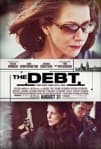
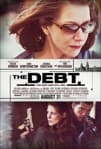
The Debt Budget
 Thriller/Suspense
Updated
Synopsis
In 1965, three young Mossad agents, Rachel, Stephan, and David, are dispatched to East Berlin to capture Dieter Vogel, the notorious Nazi war criminal known as the Surgeon of Birkenau, and smuggle him back to Israel to stand trial. Decades later, a long-buried lie about the mission resurfaces, forcing the now-aging operatives to confront the moral cost of the legend they built. John Madden's remake of the 2007 Israeli film Ha-Hov stars Helen Mirren, Sam Worthington, Jessica Chastain, Tom Wilkinson, and Ciaran Hinds.
What Is the Budget of The Debt (2011)?
The Debt (2011), directed by John Madden and released by Focus Features and Miramax, was produced on a reported budget of $20,000,000 as a remake of the 2007 Israeli film Ha-Hov directed by Assaf Bernstein. Focus Features financed the picture in partnership with Miramax through the period when the Weinstein-era Miramax library was transitioning to new ownership, with Marv Films producing under Matthew Vaughn's banner. Vaughn co-wrote the screenplay with Jane Goldman and Peter Straughan.
The investment reflected a deliberately contained prestige envelope: a strong ensemble led by Helen Mirren (post-The Queen Academy Award win), Sam Worthington (mid-Avatar afterglow), Jessica Chastain (in her early breakthrough year alongside The Tree of Life and The Help), Tom Wilkinson, and Ciaran Hinds. Focus positioned the picture for a late-summer 2011 adult-drama corridor release after a delayed roll-out caused by the Miramax ownership transition that pushed the original December 2010 release to August 2011.
Key Budget Allocation Categories
The Debt's $20,000,000 budget was distributed across several major production areas:
- Above-the-Line Talent Helen Mirren commanded her post-Queen Academy Award lead-actress rate, Sam Worthington worked at his post-Avatar leading-man scale (in his first major non-CG production), Jessica Chastain worked at an emerging-talent rate during her breakthrough year, and Tom Wilkinson and Ciaran Hinds anchored the supporting ensemble at established-veteran rates. John Madden directed at his post-Shakespeare in Love / Proof scale.
- Dual-Period Production Design The picture's split timeline required two distinct production-design tracks: the 1965 East Berlin sequences with period vehicles, costumes, and Cold War interiors, and the 1997 framing scenes with contemporary Tel Aviv and Eastern European hospital sets. Production designer Jim Clay handled both periods on a contained budget.
- Budapest Location Shoot Principal photography took place primarily across Budapest, Hungary, with the city doubling for 1960s East Berlin. The Hungarian Film Incentive provided 20% rebate on qualifying local spend, materially reducing the picture's effective production cost. Additional location work took place in Israel and the United Kingdom.
- Stunt and Action Choreography The picture's set pieces included the East Berlin abduction sequence, the train compartment escape, the apartment-imprisonment scenes, and the climactic 1997 hospital pursuit. Stunt coordinator Tom Struthers (a regular Christopher Nolan collaborator) supervised the practical action with a focus on period-appropriate Cold War-era methods.
- Cinematography Cinematographer Ben Davis (who would later shoot Guardians of the Galaxy and Doctor Strange) delivered a desaturated 1960s palette for the East Berlin sequences and a colder modern palette for the 1997 frames, with careful continuity between the young and older cast performances.
- Score and Music Composer Thomas Newman delivered a restrained orchestral score that underplayed the espionage genre conventions in favor of psychological-thriller atmospherics. The score's recording budget was modest, with Newman's contribution carrying the picture's overall musical identity.
- Post-Production Aging Effects The picture's practical aging makeup, transitioning the young Mirren-Worthington-Chastain ensemble into their Helen Mirren-Tom Wilkinson-Ciaran Hinds counterparts, required prosthetic continuity supervision by makeup designer Norma Hill-Patton.
How Does The Debt's Budget Compare to Similar Films?
At $20,000,000, The Debt sits in the lower-mid-budget range for early-2010s prestige espionage thrillers. The comparison set illustrates how its budget tracked against peer productions:
- Ha-Hov (2007): Budget approximately $1,500,000 | limited Israeli theatrical release. Assaf Bernstein's original Israeli film cost roughly 7% of the 2011 remake budget and earned a contained domestic theatrical release in Israel, providing the source-material template the Focus / Miramax production reworked at substantial scale.
- Munich (2005): Budget $70,000,000 | Worldwide $130,358,911. Steven Spielberg's Mossad-revenge thriller cost more than three times The Debt and earned nearly three times the worldwide gross, providing the prestige-tier financial template the smaller Madden picture worked within.
- The Constant Gardener (2005): Budget $25,000,000 | Worldwide $82,506,116. Fernando Meirelles's John le Carre adaptation cost slightly more than The Debt and earned nearly double the worldwide gross, illustrating the upside potential in adult prestige thrillers from the same period.
- Tinker Tailor Soldier Spy (2011): Budget $21,000,000 | Worldwide $81,540,816. Tomas Alfredson's John le Carre adaptation, released the same year as The Debt on an almost identical budget, earned nearly double the worldwide gross, providing the closest financial-template peer.
- A Most Wanted Man (2014): Budget $15,000,000 | Worldwide $30,099,810. Anton Corbijn's John le Carre adaptation cost less and earned less worldwide, illustrating the range of commercial outcomes in mid-budget prestige espionage thrillers.
The Debt Box Office Performance
The Debt opened on August 31, 2011, in wide release across 1,826 theaters with a five-day Labor Day weekend gross of $12,629,510 (three-day weekend $9,704,883), finishing third at the U.S. box office behind The Help and Colombiana. The opening was solid for an adult-drama prestige thriller and the picture demonstrated reasonable September legs in the adult-audience corridor.
Against a $20,000,000 production budget, the film needed approximately $50,000,000 worldwide to reach profitability after marketing. Here is the financial breakdown:
Box Office Breakdown
The Debt (2011)

The Debt returned approximately $1.04 in theatrical revenue for every $1 invested when measured against total estimated production and marketing spend, putting it in the at-cost corridor before ancillary revenue. The domestic gross of $31,225,890 led the international take of $15,711,743, a 66/34 split that demonstrated the picture played stronger in the United States than internationally, consistent with adult-drama prestige releases of the period.
Focus Features classified the picture as a modest commercial success after home video and television syndication, with the strong critical reception further extending its catalog value. The picture's commercial performance contributed to Jessica Chastain's breakthrough year (in concert with The Help, The Tree of Life, and Take Shelter, all released within months of The Debt) and to John Madden's continued profile as a prestige adult-drama director through the early 2010s.
The Debt Production History
Matthew Vaughn's Marv Films optioned the remake rights to Ha-Hov (2007) shortly after the original Israeli film's domestic release. Vaughn brought in Jane Goldman and Peter Straughan to co-write the English-language adaptation, with Vaughn himself credited as co-writer. John Madden, fresh off Proof (2005) and a long stage and television career, came on as director with the film's prestige-thriller pedigree.
Casting brought Helen Mirren (post-Queen Academy Award win) as the older Rachel, with Jessica Chastain in early development for the younger Rachel before her career had broken out. Sam Worthington came on as the younger David shortly after Avatar (2009) had elevated his profile. Tom Wilkinson and Ciaran Hinds completed the older ensemble, with Marton Csokas as the older Stephan and Jesper Christensen as the Nazi war criminal Dieter Vogel.
Principal photography began in 2009 across Budapest, Hungary, doubling for 1960s East Berlin. The production qualified for the Hungarian Film Incentive's 20% rebate on qualifying local spend, materially reducing the picture's effective production cost. The film also worked under Hungary's tax-incentive framework, with the rebate making Budapest particularly competitive for period-set European productions in the late 2000s.
The picture's release was significantly delayed by the Miramax Films ownership transition. Originally scheduled for a December 2010 release, the picture was pushed multiple times as Miramax was sold from Disney to a Filmyard Holdings consortium in late 2010. Focus Features, which had co-financed the picture, took over the August 31, 2011 release once the Miramax transition stabilized. Composer Thomas Newman delivered the orchestral score in early 2011 for the rescheduled release.
Awards and Recognition
The Debt received scattered industry awards recognition. Jessica Chastain received the Critics' Choice Movie Award for Best Acting Ensemble in a Drama as part of the picture's cast recognition, with the broader ensemble also receiving nominations at the Screen Actors Guild and the Golden Globes regional levels. The picture did not receive Academy Award nominations.
The picture's awards profile was overshadowed within the 2011-2012 ceremony cycle by Jessica Chastain's higher-profile work in The Help (which earned her Academy Award and Golden Globe nominations) and The Tree of Life. The Debt's strong critical reception, however, contributed materially to Chastain's breakthrough year, with industry coverage frequently citing her dual roles in The Help and The Debt as the moment her career profile shifted to top-tier ingenue status.
Critical Reception
The Debt received generally positive reviews. The film holds a 76% approval rating on Rotten Tomatoes based on 184 critic reviews, with a critical consensus calling it 'a smart, suspenseful thriller anchored by strong dual-period performances from a uniformly excellent ensemble.' On Metacritic, the film scored 67 out of 100, indicating generally favorable reviews. Audiences surveyed by CinemaScore gave the film a B+, indicating positive audience response.
The New York Times's A.O. Scott called the picture 'an unusually intelligent thriller whose moral inquiry sustains its split-timeline structure,' and Variety's Justin Chang praised the central performances as 'uniformly excellent across both periods.' Roger Ebert gave the picture three and a half stars, writing that 'The Debt is the kind of intelligent, dialogue-driven thriller that has become rare in American studio filmmaking.' The Hollywood Reporter's Todd McCarthy singled out Jessica Chastain's performance as 'the breakthrough turn of her year.'
Comparative critical analyses with the 2007 Israeli original Ha-Hov generally favored the John Madden remake for its expanded production resources and stronger ensemble performances, though some critics defended the original's leaner approach. The picture's critical reputation has held steady across the decade since release, with retrospective coverage frequently citing it alongside Tinker Tailor Soldier Spy (2011) as an example of intelligent adult espionage thrillers that the prestige theatrical corridor was still capable of supporting in the early 2010s.
Frequently Asked Questions
How much did The Debt (2011) cost to make?
The reported production budget was $20,000,000. Focus Features and Miramax Films financed the picture through Matthew Vaughn's Marv Films, with John Madden directing a remake of the 2007 Israeli film Ha-Hov.
How much did The Debt earn at the box office?
The film grossed $31,225,890 domestically and $15,711,743 internationally, for a worldwide total of $46,937,633. It opened to $12,629,510 over the five-day Labor Day weekend, finishing third at the U.S. box office.
Was The Debt a box office success?
The picture performed modestly. Against a $20,000,000 budget and approximately $22,500,000 in marketing, the worldwide gross of $46,937,633 returned approximately $1.04 for every $1 invested. Focus classified the picture as a modest commercial success after home video and television syndication.
Is The Debt a remake?
Yes. The 2011 film is a remake of the 2007 Israeli film Ha-Hov, directed by Assaf Bernstein. Matthew Vaughn's Marv Films optioned the remake rights, with Vaughn co-writing the English-language screenplay alongside Jane Goldman and Peter Straughan. The remake significantly expanded the production resources and international cast.
Who directed The Debt (2011)?
John Madden directed the picture. Madden came to the project on the back of Proof (2005) and a long stage and television career, with the film's prestige-thriller pedigree fitting his established adult-drama profile.
Where was The Debt filmed?
Principal photography took place primarily in Budapest, Hungary, doubling for 1960s East Berlin. Additional location work took place in Israel and the United Kingdom. The production qualified for the Hungarian Film Incentive's 20% rebate on qualifying local spend.
Who stars in The Debt?
Helen Mirren and Jessica Chastain play the older and younger Rachel; Tom Wilkinson and Marton Csokas play the older and younger Stephan; Ciaran Hinds and Sam Worthington play the older and younger David. Jesper Christensen plays Nazi war criminal Dieter Vogel.
Why was the release delayed?
The picture's original December 2010 release was pushed multiple times as Miramax was sold from Disney to a Filmyard Holdings consortium in late 2010. Focus Features, which had co-financed the picture, took over the August 31, 2011 release once the Miramax ownership transition stabilized.
What did critics think of The Debt?
The Debt received generally positive reviews. It holds a 76% approval rating on Rotten Tomatoes from 184 critics and a 67 out of 100 score on Metacritic. Audiences gave it a B+ CinemaScore. The New York Times's A.O. Scott called it 'an unusually intelligent thriller,' and Roger Ebert gave it three and a half stars.
How does The Debt (2011) compare to Ha-Hov (2007)?
Comparative critical analyses generally favored the John Madden remake for its expanded production resources and stronger ensemble performances, though some critics defended the original Assaf Bernstein film's leaner approach. Both films share the same dual-timeline Mossad mission structure, with the 2011 version significantly expanded for an international audience.
Filmmakers
The Debt (2011)

Build budgets like this one in Saturation
Start from an industry-standard feature film template, import the schedule and rates you already have, and let the cost report keep itself current as you spend. Real-time collaboration, no spreadsheets.