The 8th Night Budget
Updated
Synopsis
To prevent the rebirth of an evil destined to plague humanity, a monk hunts down a mystical entity that has awakened across seven stepping stones in human form. As the supernatural pursuit unfolds across modern Seoul and a remote mountain monastery, a young apprentice and a homicide detective are drawn into a race to seal the demon before the eighth night.
What Is the Budget of The 8th Night (2021)?
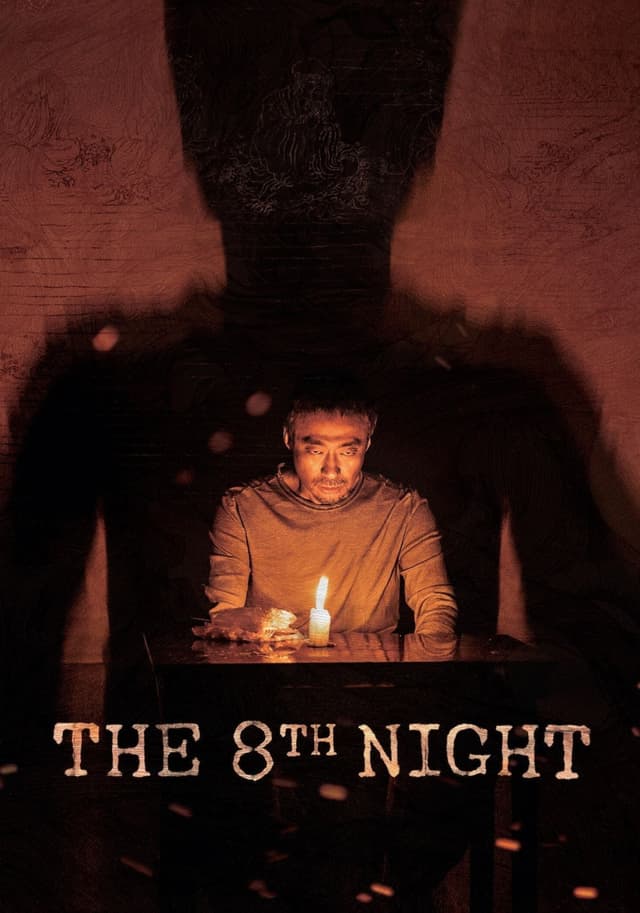
The 8th Night (2021), the Korean supernatural horror feature written and directed by Kim Tae-hyoung in his feature debut, was produced for an undisclosed budget that has not been publicly released by Netflix, the streamer that financed and acquired the worldwide rights. Industry observers familiar with Korean genre-feature tariffs in the post-Kingdom and Sweet Home era place comparable Netflix-funded Korean originals in the range of 5,000,000,000 to 9,000,000,000 won, or roughly $4,500,000 to $8,000,000 in U.S. dollars at the project's contracting period. Netflix's Asia-Pacific scripted slate had expanded aggressively through 2020 and 2021, and The 8th Night was positioned as a mid-tier supernatural horror complement to higher-profile titles such as Train to Busan director Yeon Sang-ho's Hellbound, which arrived later that same year.
Netflix does not disclose individual title budgets and the production company NEW (Next Entertainment World) has not filed public figures, so the precise number remains confidential. What is clear is that the film carries Netflix's standard licensing economics: the streamer typically pays a cost-plus premium to the Korean studio in exchange for global rights in perpetuity, which means the practical financial outcome is decided by retention and engagement metrics rather than ticket sales.
Key Budget Allocation Categories
The 8th Night's reported mid-tier Korean genre tariff was distributed across the following core production areas:
- Above-the-Line Talent: Lead actor Lee Sung-min (The Spy Gone North, Misaeng) anchored the cast as the disgraced monk Park Jin-soo, with Park Hae-joon (The World of the Married) as the homicide detective Kim Ho-tae and Kim Yoo-jung (Backstreet Rookie) as the young woman Ae-ran. Lee Sung-min commanded the highest single-cast fee on the production after a string of well-regarded leading performances on Korean television, and writer-director Kim Tae-hyoung received a feature-director rate appropriate to a Netflix-funded first feature.
- Practical and Digital Effects: The film leans heavily on practical creature makeup, prosthetics, and possession transformations rather than full-CG monsters, a choice that holds budget down while giving the supernatural sequences a tactile horror texture. Specialty makeup, contact lenses, and rigged blood gags accompany targeted digital cleanup and a small number of full-CG shots for the demonic eye sequences.
- Buddhist Temple Locations: Production designer Park Il-hyun built and dressed multiple Buddhist temple and monastic interiors, with location shoots at Korean mountain temples doubling for the 1,500-year-old monastery where Jin-soo trained. The cultural specificity of the rakshasa and yaksha mythology required period-accurate temple dressing, sutra props, and ritual costuming.
- Cinematography and Lighting: Cinematographer Joo Sung-rim shot the film in a high-contrast palette dominated by sodium-lit nighttime exteriors and lantern-lit interior sequences, requiring substantial lighting truck capacity and night-shoot crew premiums for the bulk of the eight-night structural premise.
- Score and Sound Design: The score blends traditional Korean Buddhist instrumentation including chants, wood blocks, and ritual bells with low-end orchestral horror textures. Sound design across the demon-possession sequences was a key production investment given the film's reliance on audio cues to telegraph supernatural threat in darkly lit frames.
- Post-Production VFX: Korean VFX houses including Westworld and Macrograph contributed the demonic eye composites, the climactic seal-breaking sequence, and several environmental enhancements for the monastery exteriors. The VFX shot count is modest by international tentpole standards but supports the film's key supernatural beats.
How Does The 8th Night's Budget Compare to Similar Films?
At an estimated mid-single-digit-millions Korean genre tariff, The 8th Night sits in the company of other Netflix-funded Korean supernatural and horror features released in the same period:
- Hellbound (2021): Budget undisclosed, multi-episode series tariff. Yeon Sang-ho's six-episode Netflix original released two months after The 8th Night carried a clearly larger creature-VFX investment, with the goblin-like enforcer characters requiring full-CG photoreal renders that The 8th Night's practical-driven design deliberately avoided.
- The Call (2020): Budget undisclosed, Korean Netflix original. The Lee Chung-hyun supernatural thriller starring Park Shin-hye and Jeon Jong-seo released six months earlier in November 2020 and operated at a similar mid-tier tariff, anchored on time-travel telephony rather than possession horror.
- Train to Busan (2016): Budget approximately $8,500,000 | Worldwide $98,500,000. Yeon Sang-ho's theatrical zombie hit, released years before the Netflix Korean expansion, demonstrates the ceiling for theatrical Korean horror when the production travels: more than ten times its budget worldwide, a return The 8th Night could not generate via streaming where there is no ticket revenue.
- The Wailing (2016): Budget approximately $9,000,000 | Worldwide $51,400,000. Na Hong-jin's supernatural folk-horror epic offers the closest tonal comparison and is widely considered the high-water mark of modern Korean possession cinema, a benchmark The 8th Night was inevitably measured against.
- Kingdom: Ashin of the North (2021): Budget undisclosed, Netflix Korean original feature. Released six weeks before The 8th Night as a Kingdom universe spin-off, the Jun Ji-hyun-led prequel one-shot occupied the same Netflix-funded Korean genre slot in summer 2021.
The 8th Night Box Office Performance
The 8th Night did not receive a theatrical release. As a Netflix Original acquisition for the streamer's global library, the film premiered on July 2, 2021 directly to Netflix in all territories simultaneously. There is no ticket-sales gross to report and Netflix has not published viewership hours, completion rate, or top-ten chart placement for the title. Tudum and FlixPatrol unofficial trackers placed the film in Netflix's daily top ten in several Asia-Pacific markets including South Korea, Japan, Taiwan, Hong Kong, and Singapore during its first two weeks, with peripheral chart appearances in Latin America and Spain during the same window.
Without theatrical gross figures, the financial outcome must be inferred from the streamer's licensing economics rather than calculated from a P&A-versus-revenue spreadsheet. Here is the available financial frame:
Box Office Breakdown
The 8th Night

The streaming-only release model means The 8th Night does not generate a calculable return-per-dollar in the conventional theatrical sense. Netflix Original feature licensing typically guarantees the production company a cost-plus return at delivery, transferring the engagement-risk to the streamer in exchange for global rights.
Within the broader Korean Netflix slate, The 8th Night was treated as a successful mid-tier genre acquisition that helped maintain the streamer's position in Asia-Pacific horror programming, though it did not approach the breakout cultural footprint of Squid Game later that same year or Hellbound four months later.
The 8th Night Production History
Development on The 8th Night began at NEW (Next Entertainment World), the South Korean production company behind hits including Tazza: The Hidden Card and The Outlaws. Writer-director Kim Tae-hyoung had spent several years working in Korean television and short-film direction before pitching the feature, anchored in a reinterpretation of Buddhist rakshasa and yaksha mythology that he had been developing since film school. NEW partnered with Netflix to finance and globally distribute the film, an arrangement that became increasingly common for Korean genre originals through 2020 and 2021.
Principal photography took place in South Korea across the second half of 2020 during the ongoing COVID-19 pandemic, with extensive on-set protocols that extended the schedule and added carrying costs that were largely absorbed into the Netflix licensing fee. Locations included Buddhist mountain temples used for the monastery exteriors, working-class Seoul apartment buildings doubling for Jin-soo's present-day life as a homeless ex-monk, and dressed soundstage interiors for the climactic seal-breaking sequence.
Casting Lee Sung-min as Jin-soo was the project's anchoring decision. Lee's post-Misaeng visibility on Korean television and his weighted dramatic presence gave the supernatural-monk premise the credibility it needed to land as a Netflix-marketed feature outside Korea. The casting of Kim Yoo-jung, then 21 and best known for the youthful romance Backstreet Rookie, broadened the target demographic toward younger streaming viewers.
Post-production took place at Korean VFX houses Westworld and Macrograph through the first quarter of 2021, with delivery to Netflix completed in spring 2021 in time for the July 2 streaming premiere. The film launched globally without a Korean theatrical window, a release model that has become the dominant pattern for NEW's Netflix-financed projects.
Awards and Recognition
The 8th Night received limited international awards recognition. The film was not nominated at the Baeksang Arts Awards or the Blue Dragon Film Awards, the two principal Korean film prizes, in either the 2021 or 2022 cycles. It also did not register at the major Asian genre festivals such as Bucheon International Fantastic Film Festival, in part because the Netflix-direct release path bypassed the festival circuit entirely.
Lee Sung-min received continued recognition for his broader television and film body of work during the year of release, including for The Spy Gone North and Misaeng, but not specifically for his performance in The 8th Night. The film's commercial and engagement performance on Netflix did not translate into the festival or industry-prize visibility that more theatrical-first Korean horror titles such as The Wailing or Train to Busan had achieved.
Critical Reception
The 8th Night received mixed reviews from critics. On Rotten Tomatoes, the film holds a Tomatometer score in the mid-50% range based on a smaller-than-usual sample of fewer than 20 published English-language reviews, reflecting its Netflix-direct release. The Korean-language critical reception was warmer, with several Korean outlets praising the film's use of Buddhist mythology and Lee Sung-min's lead performance while noting that the second-act monastery flashback sequences slowed the film's momentum.
Praise centered on the practical creature design, the temple production design, and the film's commitment to Korean cultural specificity rather than a deracinated international-horror template. Variety's Joe Leydon called it "an atmospheric mash-up of Buddhist supernatural lore and procedural cop drama," while Decider's John Serba flagged the dual-timeline structure as both the film's strongest asset and its primary pacing problem.
Detractors objected to the protracted third-act exposition, the heavy mythology load that left limited room for character interiority, and the overlap between the buddy-cop subplot and the supernatural-monk premise. The mixed reception did not prevent the film from charting in Netflix's top ten in multiple territories during its launch window, a result consistent with the streamer's ability to convert mid-tier genre programming into measurable engagement regardless of critical consensus.
Frequently Asked Questions
How much did it cost to make The 8th Night (2021)?
The exact production budget has not been publicly disclosed by Netflix or NEW (Next Entertainment World). Industry estimates place comparable Netflix-funded Korean genre originals from 2020 and 2021 in the range of 5,000,000,000 to 9,000,000,000 won, or roughly $4,500,000 to $8,000,000 in U.S. dollars.
Where can I watch The 8th Night?
The 8th Night premiered globally on Netflix on July 2, 2021 and remains available on the streamer in all territories where Netflix operates. The film did not receive a Korean theatrical release.
How much did The 8th Night earn at the box office?
The 8th Night did not receive a theatrical release. As a Netflix Original acquisition for the streamer's global library, the film bypassed cinemas entirely and there is no theatrical gross to report. Netflix has not published viewership hours or completion-rate figures for the title.
Who directed The 8th Night?
Kim Tae-hyoung wrote and directed The 8th Night in his feature debut. He had previously worked in Korean television and short-film direction and developed the rakshasa and yaksha Buddhist mythology premise over several years before pitching the project to NEW (Next Entertainment World).
Who stars in The 8th Night?
Lee Sung-min stars as the disgraced monk Park Jin-soo, with Park Hae-joon as homicide detective Kim Ho-tae, Kim Yoo-jung as Ae-ran, Nam Da-reum as the young monk Cheong-seok, and Lee Eol as the head monk Hajeong. Lee Sung-min came to the film after acclaimed performances in The Spy Gone North and the television series Misaeng.
Where was The 8th Night filmed?
Principal photography took place across South Korea during the second half of 2020, with extensive COVID-19 protocols extending the schedule. Locations included Buddhist mountain temples used for the 1,500-year-old monastery exteriors, working-class Seoul apartment buildings for the present-day scenes, and dressed soundstage interiors for the climactic seal-breaking sequence.
Is The 8th Night based on a true story or a book?
No. The 8th Night is an original screenplay by writer-director Kim Tae-hyoung. The film draws on Korean Buddhist mythology surrounding the rakshasa and yaksha demonic figures rather than a specific historical event or literary source.
What did critics think of The 8th Night?
The film received mixed reviews, with a Rotten Tomatoes score in the mid-50% range based on fewer than 20 published English-language reviews. Korean-language criticism was warmer, praising the Buddhist mythology, the practical creature design, and Lee Sung-min's lead performance while flagging the protracted second-act monastery flashbacks and the heavy mythology load.
How does The 8th Night compare to other Korean horror films?
The 8th Night is most often compared to Na Hong-jin's The Wailing (2016) for its possession-horror premise and Buddhist iconography. It operates at a lower tariff than theatrical Korean genre hits like Train to Busan (2016, approximately $8,500,000 budget) and was released into the same Netflix-funded Korean slate that produced Hellbound and Kingdom: Ashin of the North in the same year.
Did The 8th Night win any awards?
No. The 8th Night was not nominated at the Baeksang Arts Awards or the Blue Dragon Film Awards, the two principal Korean film prizes, in either the 2021 or 2022 cycles. The Netflix-direct release path also kept the film off the major Asian genre-festival circuit including Bucheon International Fantastic Film Festival.
Filmmakers
The 8th Night

Official Trailer
Build budgets like this one in Saturation
Start from an industry-standard feature film template, import the schedule and rates you already have, and let the cost report keep itself current as you spend. Real-time collaboration, no spreadsheets.