
Terminator 2: Judgment Day
 ActionThrillerScience Fiction2h 17m
Synopsis
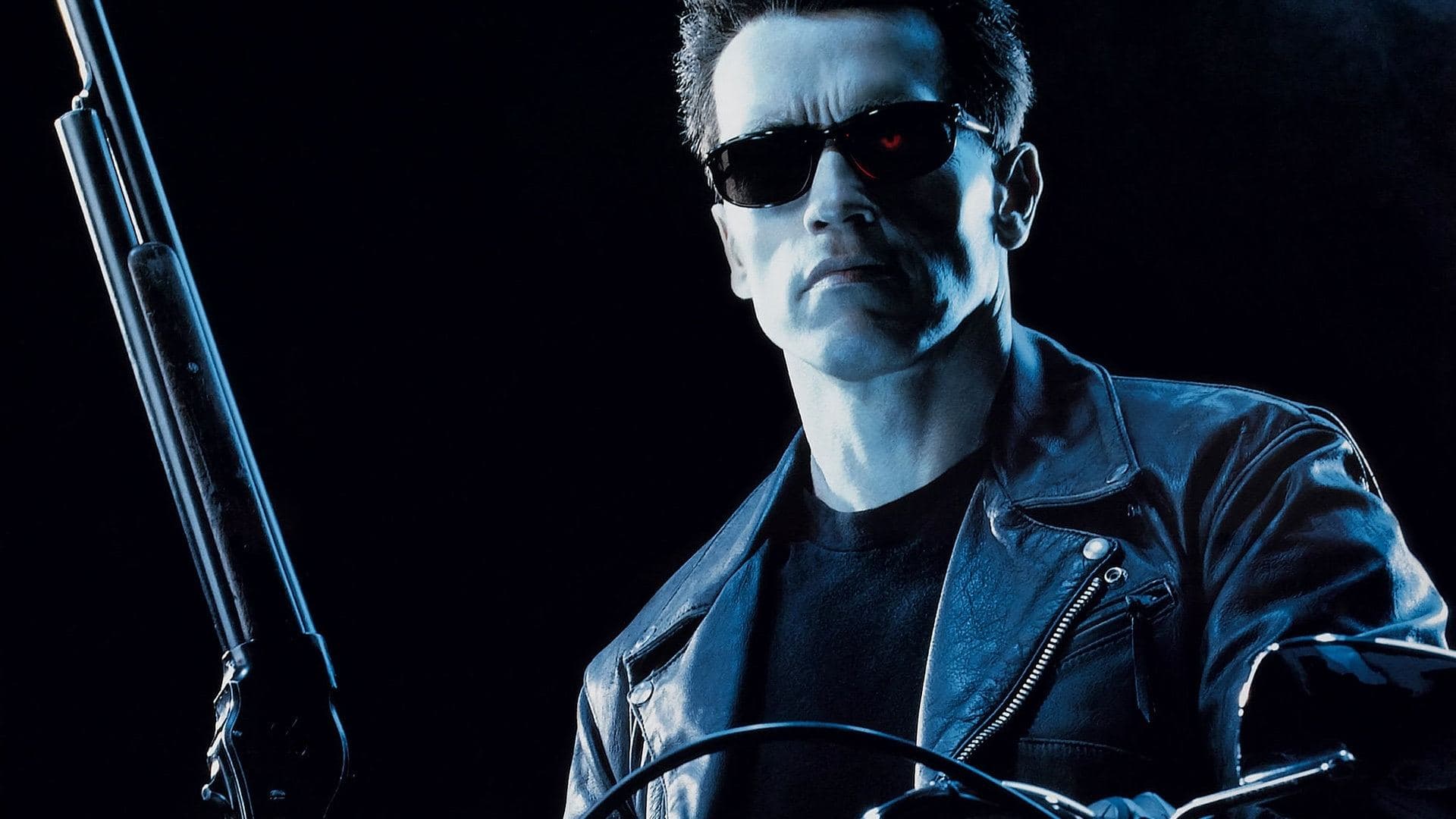
Over 10 years have passed since the first machine called The Terminator tried to kill Sarah Connor and her unborn son, John. The man who will become the future leader of the human resistance against the Machines is now a healthy young boy. However, another Terminator, called the T-1000, is sent back through time by the supercomputer Skynet. This new Terminator is more advanced and more powerful than its predecessor and its mission is to kill John Connor when he's still a child. However, Sarah and John do not have to face the threat of the T-1000 alone. Another Terminator (identical to the same model that tried and failed to kill Sarah Connor in 1984) is also sent back through time to protect them. Now, the battle for tomorrow has begun.
What is the budget of Terminator 2 Judgment Day?
"Terminator 2 Judgment Day," a action released in 1991, was directed by James Cameron and stars Arnold Schwarzenegger, Linda Hamilton. The production budget was $102,000,000, placing it in the high-budget range for action productions of the 1990s.
Key Budget Allocation Categories
While specific budget breakdowns are not publicly available, typical cost drivers for a action production like this include:
- Stunts, Action Sequences & Visual Effects: Action films allocate a substantial portion of their budget to choreographing and executing practical stunts, pyrotechnics, and CGI-heavy sequences.
- Above-the-Line Talent (Cast & Director): A-list talent commands significant upfront fees plus backend participation.
- Production Design, Sets & Locations: Action films frequently require multiple international shooting locations, large-scale set construction, vehicle acquisitions and modifications, and specialized equipment , all of which drive production costs well above those of dialogue-driven genres.
- Writing: With a scheduled release date, Cameron had six to seven weeks to write the sequel.
What were the major cost factors in Terminator 2 Judgment Day?
Several factors contributed to the overall production costs of "Terminator 2 Judgment Day."
- Stunts: Stunts, Action Sequences & Visual Effects is one of the primary cost drivers in action productions of this scale.
- Above-the-Line Talent (Cast: Above-the-Line Talent (Cast & Director) is one of the primary cost drivers in action productions of this scale.
- Production Design: Production Design, Sets & Locations is one of the primary cost drivers in action productions of this scale.
How Does Terminator 2 Judgment Day's Budget Compare to Similar Films?
At $102,000,000, Terminator 2 Judgment Day sits in the high-budget range. Here is how it compares to productions with a similar budget:
- Cloud Atlas (2012): Budget $102,000,000, Worldwide Gross $130,482,868
- Cutthroat Island (1995): Budget $102,000,000, Worldwide Gross $16,000,000
- A Wrinkle in Time (2018): Budget $103,000,000, Worldwide Gross $132,675,864
- Gladiator (2000): Budget $103,000,000, Worldwide Gross $465,516,248
- Rio 2 (2014): Budget $103,000,000, Worldwide Gross $498,781,117
The median budget for wide-release action films in the era ranges from $30 to 80M for mid-budget to $150M+ for tentpoles.
Terminator 2 Judgment Day Box Office Performance
"Terminator 2 Judgment Day" earned $205,881,154 domestically and $517,778,573 worldwide at the box office. Against a production budget of $102,000,000, the film performed strongly at the box office.
A film typically needs to earn approximately twice its production budget to cover marketing and distribution costs. For "Terminator 2 Judgment Day," that break-even threshold was roughly $204,000,000. With worldwide earnings of $517,778,573, the film cleared that threshold comfortably.
- Production Budget: $102,000,000
- Worldwide Gross: $517,778,573
- Net Return: $415,778,573
- ROI: approximately 407.6%
At 407.6%, "Terminator 2 Judgment Day" earned roughly $5.08 for every $1 invested in production.
Terminator 2 Judgment Day Production History
With a scheduled release date, Cameron had six to seven weeks to write the sequel. He approached his frequent collaborator and The Terminator co-writer William Wisher in March 1990. They spent two weeks developing a film treatment based on Cameron's vision to form a relationship between John Connor and the T-800, a concept Wisher believed was a joke.
Schwarzenegger became interested in reprising his role after finding the character more complex and sympathetic than in the previous film. To accurately portray a fearless and emotionless machine, he trained extensively with stunt coordinator Joel Kramer to remain unaffected by fire and explosions around him. Schwarzenegger earned $12 to 15million for his involvement.
The planned three months of pre-production was reduced to meet the release schedule, leaving Cameron without the time he wanted to prepare all aspects before filming began. Over a week, he spent several hours each day choreographing vehicle scenes with toy cars and trucks, filming the results, and printing the footage for storyboard artists. There was no time to properly test practical effects before filming, so if effects did not work, the filmmakers had to work around them.
Awards and Recognition
Won 4 Oscars. 39 wins & 33 nominations total
- Academy Award for Best Sound Editing: Gary Rydstrom (64th Academy Awards)
- Academy Award for Best Sound Editing: Gloria Borders (64th Academy Awards)
- Hugo Award for Best Dramatic Presentation
- Academy Award for Best Sound: Gary Rydstrom (64th Academy Awards)
- Academy Award for Best Sound: Gary Summers (64th Academy Awards)
- Academy Award for Best Sound: Lee Orloff (64th Academy Awards)
- Academy Award for Best Sound: Tom Johnson (64th Academy Awards)
- Saturn Award for Best Science Fiction Film (18th Saturn Awards)
Official Trailer

































Budget Templates
Build your own production budget
Create professional budgets with industry-standard feature film templates. Real-time collaboration, no spreadsheets.
Start Budgeting Free