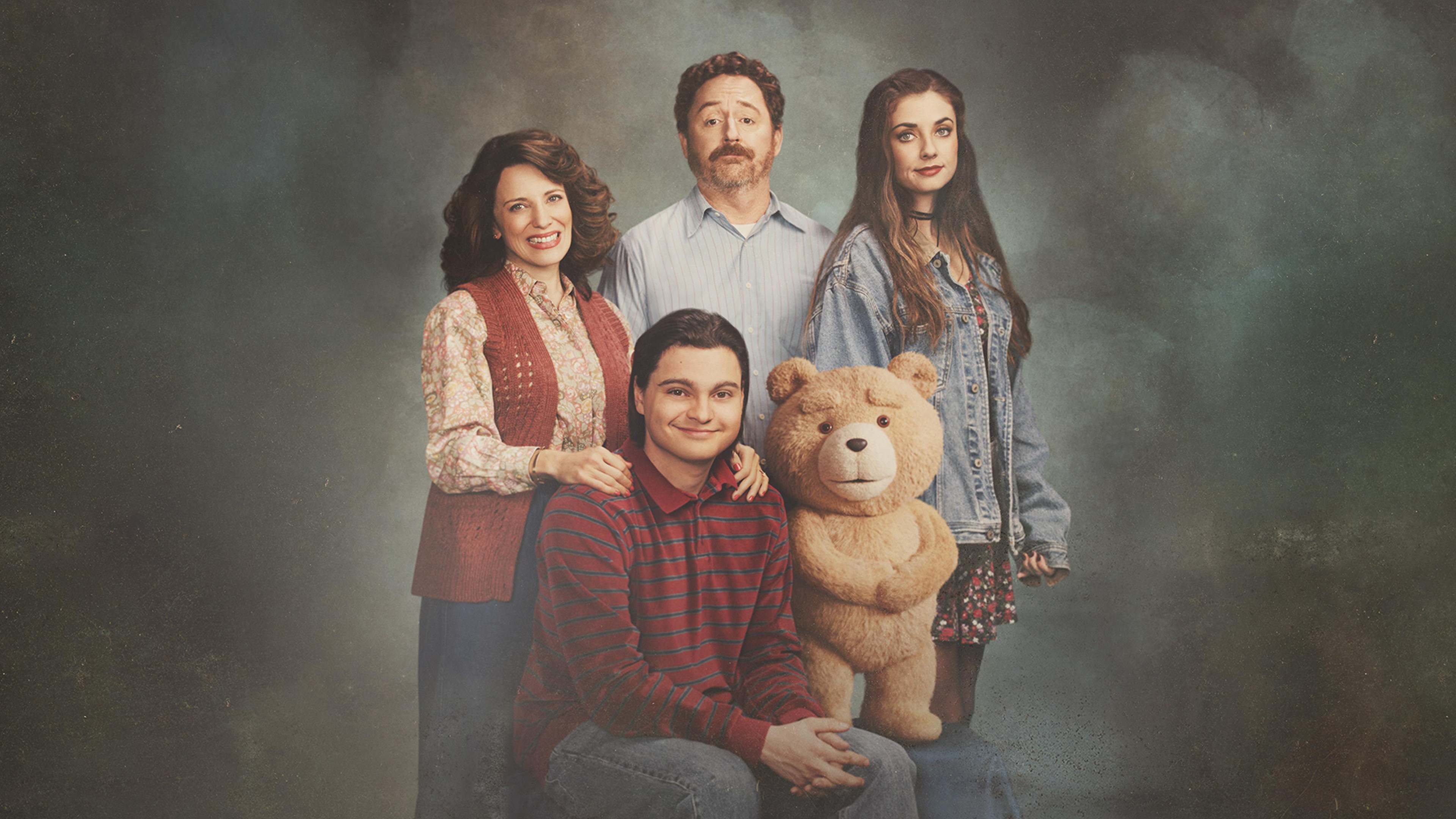

Ted Budget
Updated
Synopsis
Thirteen billion years ago, the gas and dust particles that eventually became our Milky Way were whizzing around in every direction. Despite the wild motion of its parts, the galaxy as a whole was rotating about an axis. So why did the Milky Way, like most galaxies, become flat, and not spherical like stars and planets?
What Is the Budget of Ted (2024)?
Ted, the Peacock original series created and directed by Seth MacFarlane, carries an estimated production budget of approximately $8 million per episode, a figure that has been widely reported following MacFarlane's public statements about the show's cost structure. The high per-episode cost is driven primarily by the extensive visual effects work required to integrate the CGI teddy bear character into every scene of every episode, a technical challenge comparable to the demands of the original feature films. Season 1 premiered on January 11, 2024, with seven episodes, representing a total first-season production investment of approximately $56 million. Season 2, with eight episodes, was nearly cancelled before Peacock committed to a reduced order, with the total cost of both seasons approaching or exceeding $120 million.
Key Budget Allocation Categories
The Ted budget is dominated by a single technical category that has no equivalent in conventional live-action television production: the real-time CGI integration system required to make the teddy bear character work on screen.
- CGI Character and Visual Effects: Every episode requires extensive VFX work to integrate Ted, the fully computer-generated title character, into each scene. The production developed ViewScreen, a proprietary system that allowed VFX artists to preview the composite image in real time during filming, reducing reshoots and alignment errors. This technology investment and the ongoing VFX rendering costs represent the largest single budget line.
- Seth MacFarlane Fees: MacFarlane serves as creator, executive producer, director of all episodes, and voice of the title character, commanding corresponding fees across all three roles simultaneously.
- Cast Salaries: The series stars Max Burkholder as John Bennett, Alanna Ubach, Scott Grimes, and Giorgia Whigham as principal cast, all requiring competitive streaming-era salaries for a flagship Peacock original.
- Period Production Design: The series is set in 1993 Massachusetts, requiring period-accurate wardrobe, vehicles, set dressing, and art direction across every episode.
- Writing Staff: MacFarlane's production model involves a full writers room for a single-season cable comedy, a staffing approach that adds to overhead costs but was central to the show's production quality.
How Does Ted's Budget Compare to Similar Productions?
Ted occupies the high end of the streaming comedy budget range, driven upward by its effects requirements into a cost territory more commonly associated with dramatic series.
- Ted (2012 film): Budget $50,000,000 | Worldwide $549,400,000. The original feature film cost $50 million total and returned nearly $550 million worldwide, a performance that justified the franchise investment but also established expectations the series was unlikely to match on a per-episode basis.
- Picard Season 1 (2020, Paramount+): Budget approximately $8 to $9 million per episode | Star Trek streaming series. A comparable streaming sci-fi production with heavy VFX demands, offering a benchmark for what premium streaming episodic content with effects requirements costs.
- Family Guy (animated series, Fox): Budget approximately $3 million per episode | MacFarlane's animated flagship costs significantly less per episode than Ted despite comparable or larger audiences, illustrating the cost premium imposed by live-action CGI integration versus traditional animation.
- Abbott Elementary (2021, ABC): Budget approximately $2 to $3 million per episode | ABC comedy. The mockumentary workplace comedy represents the cost floor for high-quality network television comedy, demonstrating the magnitude of the premium Ted's technical requirements impose.
Ted Season Performance
Ted became the most-watched original title on Peacock within three days of its Season 1 premiere on January 11, 2024, a milestone the platform publicized prominently. The show was renewed for a second season in May 2024, though MacFarlane subsequently confirmed that the high per-episode cost made Season 3 economically unviable. Season 2 premiered on March 5, 2026, with eight episodes, and accumulated over 1.2 billion watch hours on Peacock, making it the top-watched scripted comedy across streaming services during its release window.
- Per-Episode Production Budget: approximately $8,000,000
- Season 1 Total Investment: approximately $56,000,000 (7 episodes)
- Season 2 Total Investment: approximately $64,000,000 (8 episodes)
- Season 1 Performance: Most-watched original title on Peacock at launch
- Season 2 Performance: Over 1.2 billion watch hours; top scripted streaming comedy
- Season 3 Status: No plans as of 2026; MacFarlane cited cost as the determining factor
At approximately $8 million per episode, Ted costs roughly the same per hour of content as a mid-tier dramatic series but must generate comedy audience engagement rather than drama audience engagement, a much more difficult commercial proposition at that price point. Peacock's decision not to proceed with Season 3 reflects the calculus that the show's audience, however enthusiastic, did not generate sufficient subscription revenue to justify the ongoing production investment.
Ted Production History
Ted originated with Seth MacFarlane's 2012 feature film, which he wrote, directed, and voiced the title character for, generating $549 million worldwide on a $50 million production budget. A sequel, Ted 2, followed in 2015, performing more modestly with $216 million worldwide. MacFarlane developed the Peacock series as a prequel set in 1993, when the young John Bennett character first receives the animated teddy bear as a Christmas gift, a narrative period that allowed the show to explore the origins of the relationship before the boys are adults.
The development of ViewScreen, the real-time composite preview technology built at MacFarlane's Fuzzy Door Productions, was a key production innovation. Traditional CGI character integration requires extensive post-production work because camera operators and directors cannot see the final composite image during filming, leading to inconsistencies in eyeline, interaction, and blocking. ViewScreen allowed the production to see an approximation of the composite in real time, enabling directors and actors to interact with the CGI character as if it were physically present. This system reduced the reshoots and post-production corrections that would otherwise have added significantly to the per-episode cost.
MacFarlane directed every episode of both seasons personally, an unusual commitment for a showrunner and creator who was simultaneously voicing the title character, executive producing the series, and maintaining his involvement with other ongoing projects. This concentration of creative control in a single individual is characteristic of MacFarlane's production model across all his projects and was cited as a contributing factor to the show's distinctive comic voice.
Awards and Recognition
Ted received nominations from several comedy-focused awards bodies following its debut season, though it did not convert those nominations into wins at the major television awards ceremonies.
- Critics' Choice Television Award Nomination: Best Comedy Series, Season 1, 2024.
- Visual Effects Society Nomination: Outstanding Visual Effects in a Photoreal Episode, for the CGI character integration work.
- People's Choice Award Nomination: The Comedy TV Show of 2024.
- Peacock Streaming Milestone: Most-watched Peacock original at launch, a platform record at the time of Season 1 premiere.
Critical Reception
Ted received mixed to moderately positive critical reviews for its first season, earning a 73% approval rating on Rotten Tomatoes with an average score of 6.8 out of 10. Metacritic assigned it 51 out of 100, in the "mixed or average reviews" range. Critics who responded positively cited the 1993 period setting as an effective comic device and praised MacFarlane's command of the R-rated comedy format he established in the original films. Critics who were less enthusiastic felt the prequel premise limited the show's narrative range and that the comedy relied too heavily on the novelty of the talking bear concept without developing the surrounding characters sufficiently.
Season 2 received significantly stronger notices, achieving a 100% approval rating on Rotten Tomatoes and a Metacritic score of 68, indicating general critical approval. The improvement was attributed to stronger character development in the supporting cast and a more confident deployment of the period setting for comic effect. MacFarlane's decision to direct every episode personally was cited by multiple critics as giving the series a visual and tonal consistency unusual in streaming comedy production.
Frequently Asked Questions
How much did it cost to make ted (2024)?
The production budget has not been publicly disclosed.
How much did ted (2024) earn at the box office?
Box office figures are not publicly available.
Was ted (2024) profitable?
Insufficient data for a profitability assessment.
What were the biggest costs in producing ted?
Specific cost breakdowns are not publicly available.
How does ted's budget compare to similar comedy films?
Without a confirmed budget, comparison is not possible.
Did ted (2024) go over budget?
There are no widely reported accounts of significant budget overruns for this production. However, studios rarely disclose precise budget overrun figures publicly. The reported production budget reflects the final estimated cost.
Who directed ted and who were the key crew members?
Directed by Unknown.
Where was ted filmed?
ted was filmed in United States of America.
Filmmakers
Ted

Official Trailer
Build budgets like this one in Saturation
Start from an industry-standard feature film template, import the schedule and rates you already have, and let the cost report keep itself current as you spend. Real-time collaboration, no spreadsheets.