
Super Me Budget
Updated
Synopsis
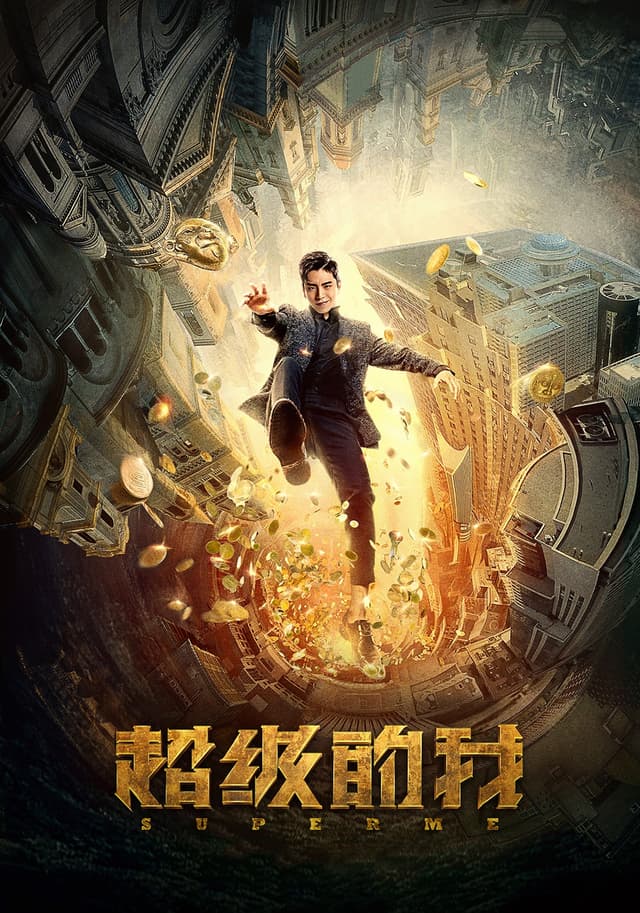
In Super Me, struggling screenwriter Sang Yu suffers from recurring nightmares that prevent him from sleeping. When he discovers he can physically pull antiques from his dreams, he quickly becomes wealthy but draws the attention of dangerous criminals and demons from the dream world. His fortune triggers a deadly chain of consequences that he must unravel to save the woman he loves.
What Is the Budget of Super Me (2021)?
Super Me (Qi Men Dun Jia) (2021), directed by Zhang Chong and released internationally by Netflix after a delayed Chinese theatrical run in late 2019, was produced on a budget that has not been formally disclosed by its production companies Huace Film and TV or Beijing Joy Pictures. Industry trade coverage from China Film Insider and Variety Asia places the production in the mid-range of contemporary Chinese fantasy thrillers, with estimates between $10,000,000 and $15,000,000 covering visual effects, location shoots across Beijing and rural Hebei province, and the time-shifting dream sequences that form the film's structural backbone.
Compared with bigger Chinese fantasy spectacles such as Detective Chinatown 3 ($85,000,000) and The Wandering Earth ($50,000,000), Super Me operates at a fraction of the scale, leaning instead on inventive set design, an intimate ensemble, and Zhang Chong's independent-film background. The film was acquired by Netflix in 2020 as part of the streamer's expansion of Chinese-language original acquisitions and released globally on April 15, 2021.
Key Budget Allocation Categories
Super Me's estimated budget was distributed across several core production areas:
- Above-the-Line Talent: Director Zhang Chong, working from his own screenplay, and lead Talu Wang, a rising Chinese television actor known for The Untamed, anchored the cast alongside Song Jia and Wu Xinhe. Independent-cinema-rooted compensation kept above-the-line costs measured.
- Visual Effects and Dream Sequences: The dream-to-reality antique pulls, the recurring nightmares, and the film's climactic time-loop architecture required substantial CG and compositing work from Beijing-based VFX vendors. Visual effects represented the largest single line item.
- Beijing and Hebei Location Shoot: Principal photography covered contemporary Beijing apartment interiors, Liulichang antiques market sequences, and rural Hebei province exteriors that doubled for the protagonist's memory and dream landscapes.
- Production Design: The film's antique props, including jade carvings, classical scroll paintings, and bronze vessels, required custom fabrication and access to museum-grade reference materials. Production designer Liang Liu sourced both authentic-style replicas and period furniture.
- Cinematography: Cinematographer Han Jianan shot on Arri Alexa Mini cameras with anamorphic lenses to differentiate dream sequences (warm, soft) from waking reality (cool, sharp). The dual-look palette extended post-production color grading time.
- Score and Sound Design: Composer Diao Yi-Nan delivered a hybrid orchestral and electronic score, with traditional Chinese instrumentation layered into the dream sequence cues. The mix emphasized low-frequency shifts to signal transitions between dreams and waking life.
- Marketing and Distribution: Netflix handled global localization and marketing, with the Chinese theatrical release through Huaxia Film Distribution and Joy Pictures running a limited campaign in late 2019. The film's online streaming push in 2021 absorbed digital marketing costs.
How Does Super Me's Budget Compare to Similar Films?
At an estimated $10,000,000 to $15,000,000, Super Me sits in the lower-mid range of contemporary Chinese fantasy thrillers and Netflix Asian acquisitions. The comparison set illustrates how its commercial outcome diverged from its budgetary peers:
- The Old Guard (2020): Budget $70,000,000 | Worldwide N/A (Netflix exclusive). Netflix's Charlize Theron action film cost roughly five times Super Me and reached 78 million households in its first 28 days, illustrating the platform's English-language scale.
- Bird Box (2018): Budget $19,800,000 | Worldwide N/A (Netflix exclusive). The Sandra Bullock thriller cost slightly more than Super Me and became Netflix's most-watched original of its release window, a benchmark Super Me did not approach in non-Chinese markets.
- Extraction (2020): Budget $65,000,000 | Worldwide N/A (Netflix). The Chris Hemsworth Netflix action film cost more than four times Super Me and demonstrated the platform's willingness to invest at scale in genre originals when the lead carried global recognition.
- Triple Frontier (2019): Budget $115,000,000 | Worldwide N/A (Netflix). The Ben Affleck heist film cost roughly ten times Super Me, a stark contrast in Netflix's English-language versus Chinese-language commissioning calculus.
Super Me Box Office Performance
Super Me had a limited Chinese theatrical release in December 2019 that grossed approximately $1,300,000 through Huaxia Film Distribution before its global Netflix launch on April 15, 2021. Netflix does not disclose absolute revenue figures for original films, so the financial analysis below is structured around estimated production investment.
Box Office Breakdown
Super Me

Super Me did not crack Netflix's top weekly global charts in any major market and performed primarily as a catalog addition that bolstered the platform's Chinese-language slate. The film generated modest streaming engagement in Asia and limited discussion in English-speaking markets, where the dream-pulled-antiques premise found a niche genre audience.
The Chinese theatrical run in 2019 was hampered by extended censorship review and a release date that placed the film against larger domestic releases. The eventual Netflix global push gave the film a second life on streaming, where it served as one of the platform's early prestige Chinese-language acquisitions.
Super Me Production History
Development on Super Me began in 2017 when Zhang Chong, an independent-film veteran of Chinese genre cinema, began drafting a screenplay built around the central conceit of a struggling screenwriter who discovers he can physically pull objects from his recurring nightmares. The project was developed at Huace Film and TV with Beijing Joy Pictures attached as co-financier, drawing on Zhang's background in low-budget genre work for both feature and television markets.
Principal photography ran from September through December 2018 across Beijing and Hebei province. The Beijing unit covered the protagonist's contemporary apartment, the Liulichang antiques market sequences, and the underground gambling den interiors that drive the film's thriller plot. Rural Hebei exteriors doubled for the dream landscapes and the protagonist's childhood memories, with production design leaning on practical sets and minimal CG environment work.
Post-production extended through most of 2019, with visual effects vendors in Beijing handling the dream-sequence integration and the climactic time-loop architecture. The film cleared Chinese censorship review in late 2019 and received a limited theatrical release in December 2019 before Netflix acquired global rights as part of its Chinese-language slate expansion.
The Netflix global launch on April 15, 2021 included localization into more than 30 languages and dubs for the platform's major markets. Director Zhang Chong has cited Christopher Nolan's Inception, Hayao Miyazaki's Spirited Away, and Kim Jee-woon's I Saw the Devil as the principal tonal references that shaped the film's dream architecture and thriller mechanics.
Awards and Recognition
Super Me received limited festival recognition. The film played the genre-focused circuit in 2019 and 2020, including the Beijing International Film Festival's domestic showcase, where it received favorable industry reception but no major awards. The Netflix release in 2021 did not lead to subsequent festival accolades.
Director Zhang Chong was nominated for Best Director in the genre category at the 2020 Pingyao International Film Festival, an honor given by the festival founded by director Jia Zhangke. Lead actor Talu Wang received a Most Promising Actor mention at the same ceremony. The film did not register at the Golden Rooster Awards or the Hundred Flowers Awards, China's top industry honors.
Critical Reception
Super Me received mixed reviews from critics, with strong praise for its visual concept and editing weighed against criticism of pacing and thematic clarity. The film holds a 60% approval rating on Rotten Tomatoes based on 15 critic reviews and a 6.3 user rating on IMDb. Chinese review aggregator Douban scored the film 6.9 out of 10, indicating moderately positive audience reception in its home market.
Critics praised the production design, the dream-sequence cinematography by Han Jianan, and Talu Wang's lead performance. Variety's Maggie Lee called it "a stylistic showcase that gestures at bigger ideas than it ultimately delivers," and South China Morning Post's James Marsh wrote that the film "offers a refreshingly inventive take on a familiar premise while struggling to land its emotional payoff."
Audience reactions split between viewers drawn to the inventive dream-pull conceit and those who found the third act's time-loop resolution overdrawn. The Netflix global release generated niche enthusiasm among fans of Asian genre cinema, with social media discussion focused on the film's production design and the differentiated visual treatment of dream versus waking sequences.
Frequently Asked Questions
How much did it cost to make Super Me (2021)?
The exact budget for Super Me has not been publicly disclosed by Huace Film and TV or Beijing Joy Pictures. Industry estimates place the production between $10,000,000 and $15,000,000, with the bulk of the spend allocated to visual effects, the dream-sequence cinematography, and the Beijing and Hebei location shoot.
When was Super Me released?
Super Me had a limited Chinese theatrical release through Huaxia Film Distribution and Joy Pictures in December 2019, then launched globally on Netflix on April 15, 2021. The two-year gap reflected extended Chinese censorship review and the Netflix acquisition that followed the limited theatrical run.
How much did Super Me earn at the box office?
The Chinese theatrical release grossed approximately $1,300,000 in December 2019. Netflix does not disclose absolute revenue figures for original films, so streaming performance metrics for the global launch are not publicly available. The film performed primarily as a catalog addition to the Netflix Chinese-language slate.
Who directed Super Me?
Zhang Chong directed the film from his own screenplay. Zhang is an independent-cinema veteran of Chinese genre filmmaking, with prior work in low-budget thrillers and television. Super Me is his most internationally distributed feature to date.
Where was Super Me filmed?
Principal photography took place from September through December 2018 across Beijing and Hebei province in China. The Beijing unit covered apartment interiors, the Liulichang antiques market, and underground gambling den sequences. Hebei province exteriors doubled for the dream landscapes and childhood memory sequences.
Who stars in Super Me?
Talu Wang plays struggling screenwriter Sang Yu, the film's protagonist. Wang is known to Chinese audiences for his work on The Untamed (2019). Supporting cast includes Song Jia, Wu Xinhe, Cao Bingkun, and Liu Yijun.
What is Super Me about?
Super Me follows a struggling screenwriter who discovers he can physically pull antiques out of his recurring nightmares. As his fortune grows, the antiques attract the attention of criminals and demons from the dream world, triggering a chain of consequences he must resolve through a time-loop structure that anchors the film's third act.
Is Super Me on Netflix?
Yes. Super Me launched globally on Netflix on April 15, 2021, with localization and dubbing into more than 30 languages. The film is available in all Netflix territories and was acquired as part of the platform's expansion of Chinese-language original acquisitions.
What did critics think of Super Me?
Super Me received mixed reviews. The film holds a 60% approval rating on Rotten Tomatoes based on 15 critic reviews and a 6.9 out of 10 score on the Chinese review aggregator Douban. Critics praised the production design and dream-sequence cinematography while objecting to pacing and the third-act resolution.
Did Super Me win any awards?
Director Zhang Chong was nominated for Best Director in the genre category at the 2020 Pingyao International Film Festival, and lead actor Talu Wang received a Most Promising Actor mention. The film did not register at the Golden Rooster Awards or the Hundred Flowers Awards, China's top industry honors.
Filmmakers
Super Me

Official Trailer
Build budgets like this one in Saturation
Start from an industry-standard feature film template, import the schedule and rates you already have, and let the cost report keep itself current as you spend. Real-time collaboration, no spreadsheets.