Stone Budget
 Drama
DramaUpdated
Synopsis
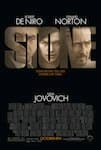
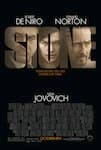
A convicted arsonist (Edward Norton), looking to manipulate his parole officer (Robert De Niro) into a favorable recommendation, asks his seductive wife (Milla Jovovich) to distract him. As the boundary between professional duty and personal temptation collapses, all three are pulled into a moral reckoning that none of them anticipated.
What Is the Budget of Stone (2010)?
Stone (2010), directed by John Curran and distributed by Overture Films and Relativity Media, was produced on a reported budget of $22,000,000. The film paired Robert De Niro and Edward Norton in a chamber-piece drama about a parole officer and a convict whose interview sessions curdle into psychological warfare, with Milla Jovovich playing the convict's wife as the catalyst between them. Millennium Films and Mimran Schur Pictures handled the bulk of the financing, with Holly Wiersma and David Mimran producing alongside Jordan Schur.
The budget reflected a mid-2000s prestige adult drama scale. The bulk of the cost went to the cast, with De Niro and Norton commanding combined fees that absorbed a substantial share of the above-the-line spend, and the rest covered a Michigan location shoot, a small but high-credit supporting ensemble, and a contained slate of correctional facility and suburban interiors. The film was acquired by Overture for North American distribution as part of the studio's short-lived push into adult specialty product.
Key Budget Allocation Categories
Stone's reported $22,000,000 budget was distributed across the following core production areas:
- Above-the-Line Talent: Robert De Niro and Edward Norton each commanded star compensation reflective of their two-time Academy Award nominee and Oscar-nominated statuses, with Milla Jovovich and Frances Conroy filling out the principal cast at supporting rates. Director John Curran was paid at a mid-tier feature director rate consistent with his previous work on The Painted Veil and We Don't Live Here Anymore.
- Michigan Location Shoot: Principal photography took place in and around Detroit and the surrounding suburbs in mid-2009, taking advantage of Michigan's 42 percent refundable production tax credit, then the most generous incentive in the United States. The credit materially offset crew, location, and post costs.
- Correctional Facility Production Design: The State Prison of Southern Michigan in Jackson stood in for the fictional facility where Norton's character is incarcerated. Production design built out interview rooms, common areas, and exterior gate sequences with detailed period and procedural accuracy, and the working facility required tight scheduling around inmate operations.
- Editorial and Post: Editor Alexandre de Franceschi cut the film for an October 2010 release, with a sound mix that emphasized the radio static, prison ambience, and unsettling cicada drone that recurs through the soundtrack. The post schedule ran across late 2009 and the first half of 2010.
- Score and Music: Australian composer Jon Brion provided the original score, layering electronic textures with sparse piano figures to underline the film's ambiguous moral framing. Music licensing covered diegetic radio and religious broadcasts that recur through the film's structural device.
- Marketing and Distribution: Overture Films acquired the film for a moderate domestic marketing push, including a New York Film Festival premiere slot and limited screenings ahead of a wide expansion. Relativity Media oversaw international rollout through territory-by-territory sales.
How Does Stone's Budget Compare to Similar Films?
At a reported $22,000,000, Stone sits at the upper bound of mid-2000s adult prestige dramas. The comparison set illustrates how its commercial outcome diverged from films of similar scope and cast:
- We Own the Night (2007): Budget $21,000,000 | Worldwide $54,840,442. James Gray's crime drama with Joaquin Phoenix and Mark Wahlberg cost effectively the same as Stone but earned more than six times its worldwide gross, illustrating the genre ceiling Stone could not breach.
- The Painted Veil (2006): Budget $19,400,000 | Worldwide $26,883,193. Curran's previous film with Edward Norton ran cheaper and out-grossed Stone domestically and worldwide, suggesting that the morally ambiguous interior drama format did not benefit from a higher cast price tag.
- Reservation Road (2007): Budget $12,000,000 | Worldwide $2,612,094. Terry George's adult drama with Mark Ruffalo and Joaquin Phoenix illustrates how high-prestige cast packages routinely failed to convert in the late 2000s adult drama market.
- Buffalo Soldiers (2001): Budget $15,000,000 | Worldwide $353,743. The prior Curran-adjacent Miramax acquisition shows how studio enthusiasm for these adult ensemble dramas was rarely matched by audience demand.
- Edge of Darkness (2010): Budget $80,000,000 | Worldwide $81,144,418. The Mel Gibson thriller released the same year as Stone illustrates how the broader adult action-drama category struggled, and even a star vehicle at four times the budget barely broke even worldwide.
Stone Box Office Performance
Stone opened in limited release on October 8, 2010, expanding wider over the following weeks. The film never approached blockbuster scale, finishing with $1,802,915 domestically and $6,621,381 internationally, for a worldwide total of $8,424,296. Overture Films, mid-collapse as a distribution entity, lacked the marketing muscle to push the film into wider cultural conversation, and reviews split sharply on whether the De Niro and Norton pairing landed.
Against a reported production budget of $22,000,000, the film needed roughly $50,000,000 in worldwide gross to clear total production and marketing investment. Here is the financial breakdown:
Box Office Breakdown
Stone (2010)

Stone returned roughly $0.23 in theatrical revenue for every $1 invested when measured against total estimated production and marketing spend, placing it among the clearer commercial misses of the 2010 fall prestige slate. Home video and television sales added incremental recoupment but never closed the theatrical gap.
The film's collapse coincided with Overture Films' wind-down. Relativity Media absorbed Overture's slate later that year, and Stone became one of the final titles released under the Overture banner. The 81/19 international-to-domestic split is unusual for an adult drama and reflects the muted domestic release rather than international demand for the property.
Stone Production History
Stone originated with playwright Angus MacLachlan, who adapted his own one-act play "The Reception" into a feature screenplay in the mid-2000s. MacLachlan had previously written Junebug (2005), which had earned Amy Adams an Oscar nomination, and his interest in morally compromised small-town characters carried directly into the Stone script. Director John Curran, who had built a career on adult literary adaptations with We Don't Live Here Anymore (2004) and The Painted Veil (2006), attached to the project in 2008.
Edward Norton signed on first, returning to the morally divided convict territory he had explored in films like Primal Fear and American History X. Robert De Niro followed, in part because his Tribeca Film Festival had championed Curran's earlier work, and Milla Jovovich rounded out the trio after a casting search that briefly considered other actresses for the seductress role.
Principal photography ran from late spring through summer 2009 in Michigan, with the State Prison of Southern Michigan in Jackson serving as the primary facility location. Michigan's 42 percent refundable production tax credit, the most generous in the country at the time, anchored the financing model and offset a substantial share of the line-item costs. The Detroit metro area provided suburban exteriors for the parole officer's home and the secondary settings.
The film premiered at the New York Film Festival on October 1, 2010, before opening in limited theatrical release one week later. Curran and his cast did limited press, and the film's ambiguous ending, in which the moral resolution is left deliberately unresolved, polarized both critics and audiences.
Awards and Recognition
Stone received modest awards attention. Edward Norton's performance earned a nomination at the Detroit Film Critics Society Awards, where the film was also recognized in its production design category for the prison interiors. Jon Brion's score earned a nomination at the World Soundtrack Awards.
The film did not register at the major industry ceremonies, with no nominations at the Academy Awards, the Golden Globes, the BAFTAs, or the Screen Actors Guild Awards. It also did not appear on most year-end critics' top-ten lists, reflecting the muted critical reception and the limited theatrical footprint.
Critical Reception
Stone received mixed reviews. The film holds a 47 percent approval rating on Rotten Tomatoes based on 154 critic reviews, with a critical consensus that called it well-acted but tonally uneven. On Metacritic, the film scored 53 out of 100, indicating mixed or average reviews. CinemaScore did not poll opening weekend audiences because of the limited release pattern.
Critics broadly praised the performances, with particular attention to Milla Jovovich, whose work was widely viewed as the strongest of her career. Roger Ebert gave the film three out of four stars and wrote that "this is one of those rare films where the people seem real to me." Manohla Dargis of The New York Times praised the "uncomfortable intimacy" of the Norton-De Niro scenes but flagged the structural ambiguity as a weakness. Variety's Justin Chang noted that the film "lurches between psychological thriller and metaphysical reverie without ever fully committing to either register."
The film's reputation has settled in the years since release. It is now regarded as a minor but interesting late-career De Niro performance and a notable Jovovich showcase, although it remains a footnote in the Norton filmography. Stone's commercial failure helped accelerate Overture Films' absorption into Relativity and contributed to the broader 2010-2011 retrenchment of adult-skewing theatrical drama.
Frequently Asked Questions
How much did it cost to make Stone (2010)?
The reported production budget was $22,000,000. Financing came primarily from Millennium Films and Mimran Schur Pictures, with Overture Films acquiring the film for North American theatrical distribution.
How much did Stone earn at the box office?
The film grossed $1,802,915 domestically and $6,621,381 internationally, for a worldwide total of $8,424,296. The film opened in limited release on October 8, 2010, and never expanded into significant wide release.
Was Stone profitable?
No. Against a $22,000,000 production budget and an estimated $10,000,000 to $15,000,000 in marketing spend, the film returned roughly $0.23 in worldwide gross for every $1 invested. The theatrical run produced an estimated $23,575,704 to $28,575,704 loss before home video and television sales.
Who directed Stone (2010)?
John Curran directed the film, working from a screenplay by Angus MacLachlan adapted from MacLachlan's one-act play "The Reception." Curran had previously directed The Painted Veil (2006), also starring Edward Norton.
Where was Stone filmed?
Principal photography took place in Michigan during the late spring and summer of 2009, with the State Prison of Southern Michigan in Jackson serving as the primary correctional facility location. The Detroit metro area provided suburban exteriors. The production used Michigan's 42 percent refundable production tax credit, then the most generous incentive in the United States.
Who stars in Stone (2010)?
Robert De Niro stars as parole officer Jack Mabry, Edward Norton plays convicted arsonist Gerald "Stone" Creeson, and Milla Jovovich plays Stone's wife Lucetta. Frances Conroy plays Mabry's long-suffering wife Madylyn, with Enver Gjokaj and Pepper Binkley rounding out the supporting cast.
How does Stone compare to other Edward Norton films?
Stone was Norton's second collaboration with director John Curran following The Painted Veil (2006), which cost $19,400,000 and earned $26,883,193 worldwide. Stone's $22,000,000 budget and $8,424,296 worldwide gross made it the lower commercial performer of the two collaborations and one of Norton's weaker theatrical box office showings.
What is the meaning of Stone's ending?
The film closes with a deliberately ambiguous resolution in which the moral status of Jack Mabry, Stone Creeson, and Lucetta is left unresolved. Curran and screenwriter Angus MacLachlan have said in interviews that the religious radio broadcasts threaded through the film are meant to function as both ironic counterpoint and genuine spiritual framework, depending on the viewer's interpretation.
What did critics think of Stone (2010)?
The film received mixed reviews, with a 47 percent approval rating on Rotten Tomatoes (based on 154 critics) and a 53 out of 100 score on Metacritic. Roger Ebert gave the film three stars and called it "one of those rare films where the people seem real to me." Critics broadly praised Milla Jovovich's performance, with several calling it the strongest of her career.
Did Stone win any awards?
No. Stone received no major awards recognition. Edward Norton earned a nomination at the Detroit Film Critics Society Awards, and Jon Brion's score was nominated at the World Soundtrack Awards, but the film did not register at the Academy Awards, the Golden Globes, the BAFTAs, or the Screen Actors Guild Awards.
Filmmakers
Stone (2010)

Build budgets like this one in Saturation
Start from an industry-standard feature film template, import the schedule and rates you already have, and let the cost report keep itself current as you spend. Real-time collaboration, no spreadsheets.