Stick It Budget
 Comedy
Updated
Synopsis
After ditching her elite gymnastics career and finding herself in trouble with the law, a rebellious teenager is given an ultimatum: serve out a sentence at a strict gymnastics training academy or face juvenile detention. As she navigates a hard-nosed coach and the politics of competitive judging, she begins to find a voice of her own within the sport she once abandoned.
What Is the Budget of Stick It (2006)?
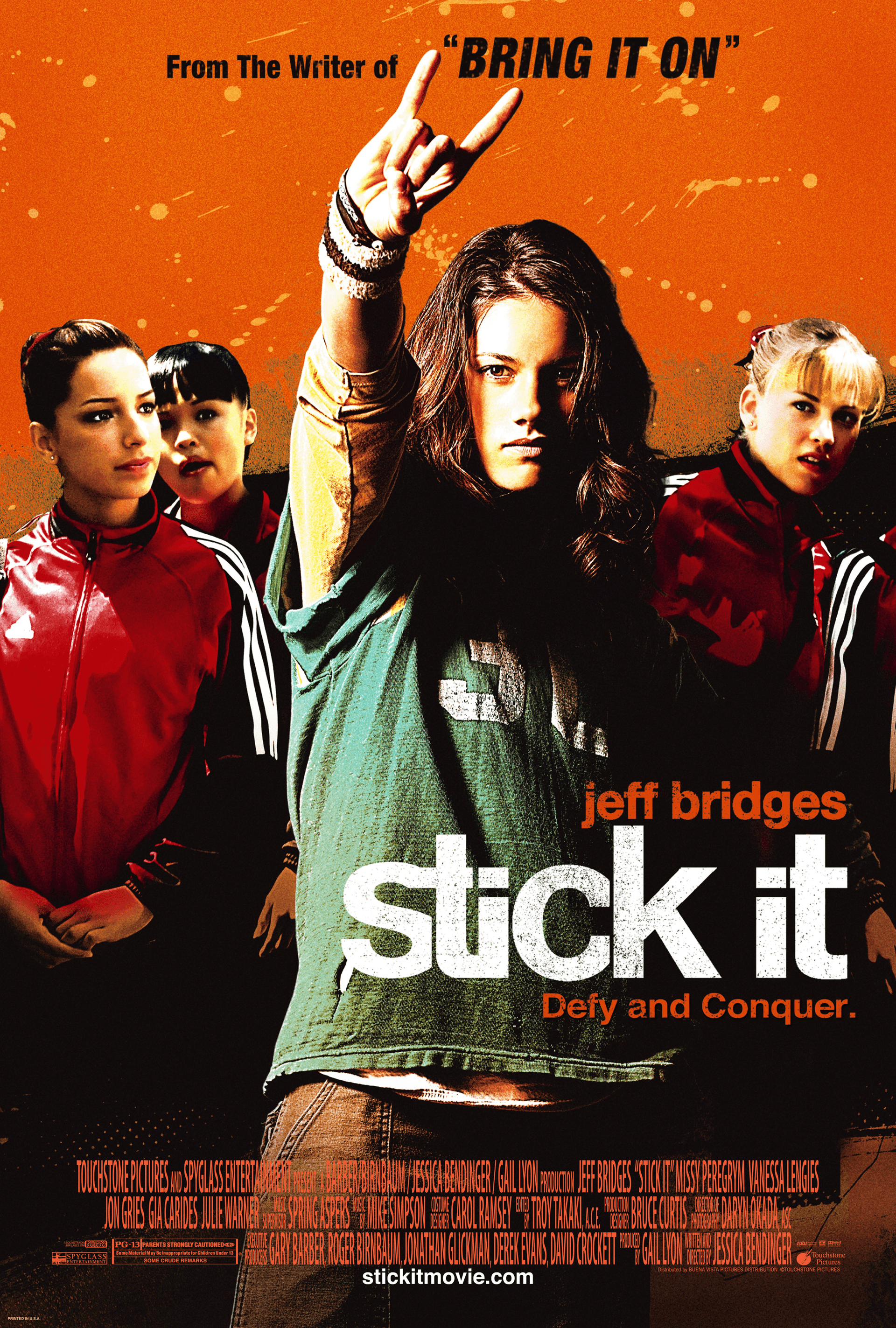
Stick It (2006), directed by Jessica Bendinger in her feature directorial debut and distributed by Touchstone Pictures, was produced on a reported budget of approximately $25,000,000. The film served as Bendinger's follow-up to her successful Bring It On screenplay (2000), transposing the sports-comedy format from competitive cheerleading to elite gymnastics. Spyglass Entertainment co-produced with Touchstone, with Gary Barber, Roger Birnbaum, and Jon Glickman serving as the principal producers.
The budget reflected a contained mid-2000s teen sports drama scale. The bulk of the spend went to the cast (newcomer Missy Peregrym in the lead, Jeff Bridges as the coach, plus an ensemble of real-life gymnasts and trained athletes for the competition sequences), the elaborate gymnastics-action choreography and stunt coordination, the practical gymnasium and competition-venue production design, and the wide-release marketing campaign that Touchstone executed in advance of the April 2006 theatrical release.
Key Budget Allocation Categories
Stick It's reported $25,000,000 budget was distributed across the following core production areas:
- Above-the-Line Talent: Jeff Bridges commanded a star fee in the mid-seven-figure range as coach Burt Vickerman, providing the recognizable A-list anchor for a film built around emerging-actor casting in the gymnastics roles. Missy Peregrym, in her first major leading film role, received emerging-actor scale, with supporting cast Vanessa Lengies, Maddy Curley, and Nikki SooHoo filling out the principal team at established teen-actor rates. Director Jessica Bendinger was paid at a first-time-feature director rate.
- Gymnastics Choreography and Stunt Coordination: The film required extensive gymnastics-action choreography across vault, beam, uneven bars, and floor exercise routines, with real-life gymnasts and trained athletes performing many of the on-screen routines. Gymnastics coordinator Doriana Sanchez and a dedicated stunt team worked across more than three months of pre-production training and routine rehearsal, with USA Gymnastics consultation on competition-rule accuracy.
- California Location Shoot: Principal photography took place across Los Angeles and surrounding California regions, with a mix of practical gymnasium locations and soundstage builds for the competition-venue sequences. The California production benefited from local-crew availability and the broader infrastructure for sports-action production established by previous teen-sports projects.
- Production Design and Practical Effects: Production designer Mark Hofeling built the VGA (Vickerman Gymnastics Academy) training facility and various competition-venue interiors with detailed attention to the elite-gymnastics material culture, including period-appropriate equipment, scoring systems, and the corporate-sponsored competition signage central to the film's satire of the sport.
- Score and Music: Composer Mike Simpson delivered an electronic-rock score that emphasized the film's skateboarding-adjacent rebellious teen aesthetic. The music licensing budget covered an extensive needle-drop list including punk, pop-punk, and alt-rock tracks that establish the film's teen-attitude tonal palette, with songs from Fall Out Boy, Yellowcard, and various Hot Topic-era acts.
- Marketing and Distribution: Touchstone Pictures executed a wide-release marketing campaign targeting the teen-girl sports audience with substantial television, print, and outdoor advertising. The campaign cost in the $20,000,000 to $30,000,000 range, with significant tie-in promotions through teen-magazine and gymnastics-equipment partners.
How Does Stick It's Budget Compare to Similar Films?
At a reported $25,000,000, Stick It sits in the mid-range of mid-2000s teen sports dramas and comedies. The comparison set illustrates how its commercial outcome compared with budgetary peers:
- Bring It On (2000): Budget $11,000,000 | Worldwide $90,449,929. Jessica Bendinger's previous teen-sports screenplay (which she did not direct) cost less than half of Stick It and earned nearly three times the worldwide gross, illustrating how the cheerleading-vs-gymnastics format pivot lost broader audience appeal.
- Bend It Like Beckham (2002): Budget $6,000,000 | Worldwide $76,583,333. Gurinder Chadha's teen-soccer drama cost less than a quarter of Stick It and earned more than twice the worldwide, illustrating the broader 2000s ceiling for female-athlete teen drama.
- Cinderella Man (2005): Budget $88,000,000 | Worldwide $108,539,911. Ron Howard's Depression-era boxing drama cost more than three times Stick It and earned a comparable worldwide multiple, illustrating how serious-sports drama operated at a different scale than the teen-targeted format.
- Step Up (2006): Budget $12,000,000 | Worldwide $114,194,847. Anne Fletcher's urban-dance teen drama released four months after Stick It cost less than half and earned more than three times the worldwide, illustrating how the dance-focused teen-arts format outperformed the gymnastics-focused teen-sports format in the same calendar year.
- She's the Man (2006): Budget $20,000,000 | Worldwide $57,194,667. The Amanda Bynes soccer comedy released two months before Stick It cost less and earned 79 percent more worldwide, illustrating the lower end of mid-2000s teen-sports financial outcomes.
Stick It Box Office Performance
Stick It opened on April 28, 2006, finishing second at the U.S. box office with $10,907,683 over its three-day opening weekend. The film closed its domestic run at $26,910,736 and added $5,160,725 internationally, for a worldwide total of $32,071,461. The performance landed in the lower-end range of Touchstone's pre-release expectations and well below the worldwide gross of Bring It On six years earlier.
Against a reported production budget of $25,000,000, the film cleared theatrical break-even modestly. Here is the financial breakdown:
Box Office Breakdown
Stick It (2006)

Stick It returned approximately $0.58 to $0.71 in worldwide theatrical gross for every $1 invested in production and marketing, placing it in the soft-underperformer tier for mid-2000s teen sports drama. Home video sales, television syndication, and the film's steady cable rotation on family-targeted networks closed the remainder of the recoupment window comfortably across the subsequent five-year window.
The 84/16 domestic-to-international split was typical for a teen-girl-targeted American sports drama, with the gymnastics premise translating modestly across English-language territories but failing to drive significant non-English-language demand. The commercial underperformance contributed to Jessica Bendinger not directing another wide-release feature, although she continued to work as a screenwriter on subsequent teen and adult projects.
Stick It Production History
Development began at Spyglass Entertainment in 2003, with Jessica Bendinger working from a personal interest in the contrast between elite gymnastics and the sport's harsh judging culture. Bendinger, then primarily known as a screenwriter (Bring It On, Aquamarine), pitched the project as her directorial debut, with the producers Gary Barber and Roger Birnbaum backing her on the dual screenplay-director role.
Casting Missy Peregrym as Haley Graham took place in 2005 after an extensive search across young actors and gymnasts. Peregrym, then primarily known from Canadian television (Smallville, Tru Calling), came to the role with athletic background but limited feature-acting experience. Jeff Bridges attached as the coach Burt Vickerman in late 2005, providing the recognizable A-list anchor that the project required to support its wide-release positioning.
Principal photography ran from late 2005 to early 2006 across Los Angeles and surrounding California regions, with a mix of practical gymnasium locations and soundstage builds for the competition-venue sequences. Gymnastics coordinator Doriana Sanchez and a dedicated stunt team worked with the principal cast and supporting ensemble across more than three months of pre-production training and routine rehearsal, with USA Gymnastics consultation on competition-rule accuracy.
Post-production ran through the spring of 2006 ahead of the April 28 theatrical release. Editor Troy Takaki cut the film for a 105-minute runtime, with the gymnastics-routine sequences carefully edited to balance real-athlete coverage with cinematic staging. The film premiered with a wide release on April 28, 2006, in approximately 2,375 theaters.
Awards and Recognition
Stick It received minor awards recognition. The film earned a nomination at the Teen Choice Awards for Choice Movie: Drama and a nomination at the Young Artist Awards for Missy Peregrym in the Leading Young Actress category. Jeff Bridges received a nomination at the Annual Sport Cinema Awards for his coach performance.
The film did not register at the major industry ceremonies, including the Academy Awards, the Golden Globes, the BAFTAs, the SAG Awards, or the Critics' Choice Movie Awards. Its legacy within awards conversation has been essentially absent, reflecting the broader mid-2000s treatment of teen-targeted sports dramas as outside the awards category.
Critical Reception
Stick It received mixed-to-negative reviews. The film holds a 44 percent approval rating on Rotten Tomatoes based on 117 critic reviews, with a critical consensus that called it "an aspiring underdog sports tale that lacks the energy and clarity to fully connect." On Metacritic, the film scored 50 out of 100, indicating mixed or average reviews. Audiences surveyed by CinemaScore gave the film a B+, indicating the film played stronger with its target teen-girl audience than with critics.
Roger Ebert gave the film two and a half out of four stars and wrote that "Stick It has some funny moments and Jeff Bridges is, as always, a pleasure to watch." A.O. Scott of The New York Times called it "a noisy and not entirely successful effort to remake Bring It On in a new athletic key." Variety's Robert Koehler wrote that the film "delivers its gymnastics set pieces with skill but never finds the spark of personality that made Bring It On work."
The film has settled into the mid-2000s teen-sports drama catalog as a representative example of the post-Bring It On follow-up format, frequently grouped with Sugar & Spice (2001), She's the Man (2006), and Step Up (2006) in retrospectives of the era. Its commercial underperformance has been widely interpreted as a sign of the diminishing returns on the cheerleading-and-girl-sports comedy form by the middle of the decade. The film retains a loyal fan base among former competitive gymnasts and viewers who connect with its critique of the sport's judging culture.
Frequently Asked Questions
How much did it cost to make Stick It (2006)?
The reported production budget was approximately $25,000,000. Touchstone Pictures distributed the film and co-produced with Spyglass Entertainment and Birnbaum/Barber Productions. The California-based location shoot benefited from local-crew availability and the broader infrastructure for sports-action production.
How much did Stick It earn at the box office?
The film grossed $26,910,736 domestically and $5,160,725 internationally, for a worldwide total of $32,071,461. It opened to $10,907,683 in the United States, finishing second on its April 28, 2006 opening weekend behind United 93.
Was Stick It profitable?
No, not theatrically. Against a $25,000,000 production budget and an estimated $20,000,000 to $30,000,000 in marketing spend, the film returned approximately $0.58 to $0.71 in worldwide gross for every $1 invested. Home video sales, television syndication, and steady cable rotation closed the remainder of the recoupment window over time.
Who directed Stick It (2006)?
Jessica Bendinger directed the film, her feature directorial debut. Bendinger had previously written the screenplays for Bring It On (2000) and Aquamarine (2006). Stick It served as her follow-up to Bring It On, transposing the sports-comedy format from competitive cheerleading to elite gymnastics. She has not directed another wide-release feature.
Who stars in Stick It?
Missy Peregrym stars as Haley Graham, the rebellious teenager sent to elite gymnastics training. Jeff Bridges plays the hard-nosed coach Burt Vickerman, providing the A-list anchor for the cast. Vanessa Lengies, Maddy Curley, and Nikki SooHoo play the other gymnasts at the academy, with Kellan Lutz and John Patrick Amedori in supporting roles.
Where was Stick It filmed?
Principal photography ran from late 2005 to early 2006 across Los Angeles and surrounding California regions, with a mix of practical gymnasium locations and soundstage builds for the competition-venue sequences. Gymnastics coordinator Doriana Sanchez and a dedicated stunt team worked with the principal cast across more than three months of pre-production training.
How does Stick It compare to Bring It On?
Stick It cost $25,000,000 and earned $32,071,461 worldwide, while Bring It On (2000), which Jessica Bendinger also wrote, cost $11,000,000 and earned $90,449,929 worldwide. Bring It On cost less than half as much and earned nearly three times the worldwide gross, illustrating how the cheerleading-to-gymnastics format pivot lost broader audience appeal across the six-year gap.
Are real gymnasts in Stick It?
Yes. The film relied heavily on real-life gymnasts and trained athletes for the on-screen routines across vault, beam, uneven bars, and floor exercise. Gymnastics coordinator Doriana Sanchez and a dedicated stunt team worked across more than three months of pre-production routine rehearsal, with USA Gymnastics consultation on competition-rule accuracy and detailed technical authenticity.
What did critics think of Stick It?
The film received mixed-to-negative reviews, with a 44 percent approval rating on Rotten Tomatoes (117 critics) and a 50 out of 100 score on Metacritic. Audiences gave it a B+ CinemaScore. Roger Ebert gave the film two and a half stars and praised Jeff Bridges's performance. A.O. Scott of The New York Times called it "a noisy and not entirely successful effort to remake Bring It On in a new athletic key."
Did Stick It win any awards?
No. The film received only minor awards recognition, with a nomination at the Teen Choice Awards for Choice Movie: Drama and a Young Artist Award nomination for Missy Peregrym in the Leading Young Actress category. It did not register at the major industry ceremonies.
Filmmakers
Stick It (2006)

Build budgets like this one in Saturation
Start from an industry-standard feature film template, import the schedule and rates you already have, and let the cost report keep itself current as you spend. Real-time collaboration, no spreadsheets.