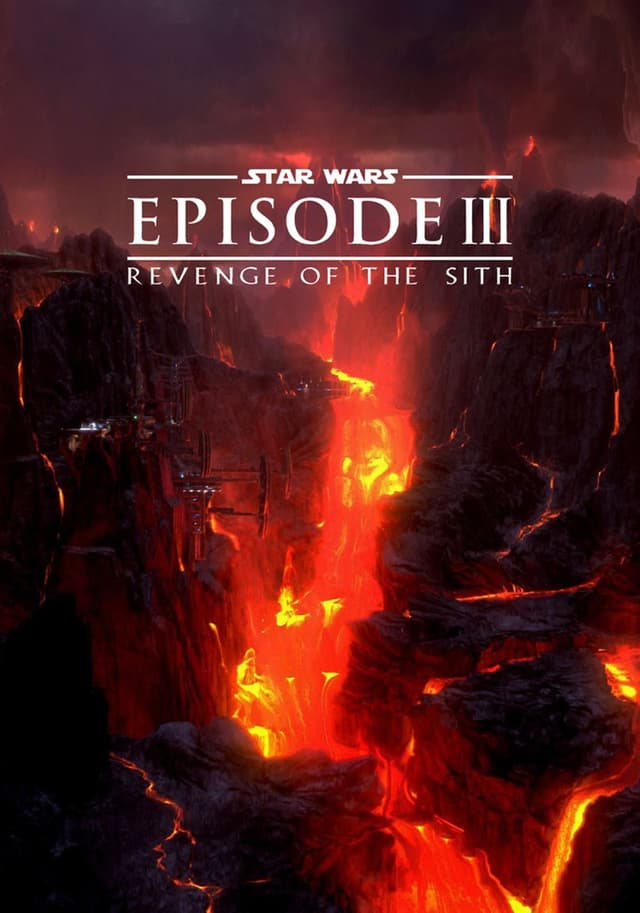
Star Wars Episode III – Revenge of the Sith Budget
 AdventureActionScience Fiction2h 20m
Updated
Synopsis
When the sinister Sith unveil a thousand-year-old plot to rule the galaxy, the Republic crumbles and from its ashes rises the evil Galactic Empire. Jedi hero Anakin Skywalker must choose a side.
What is the budget of Star Wars Episode III – Revenge of the Sith?
"Star Wars Episode III – Revenge of the Sith," an adventure released in 2005, was directed by George Lucas and stars Hayden Christensen, Ewan McGregor. The production budget was $113,000,000, placing it in the high-budget range for adventure productions of its era.
Key Budget Allocation Categories
While specific budget breakdowns are not publicly available, typical cost drivers for an adventure production like this include:
- Stunts, Action Sequences & Visual Effects: Action films allocate a substantial portion of their budget to choreographing and executing practical stunts, pyrotechnics, and CGI-heavy sequences.
- Above-the-Line Talent (Cast & Director): A-list talent commands significant upfront fees plus backend participation.
- Production Design, Sets & Locations: Action films frequently require multiple international shooting locations, large-scale set construction, vehicle acquisitions and modifications, and specialized equipment , all of which drive production costs well above those of dialogue-driven genres.
What were the major cost factors in Star Wars Episode III – Revenge of the Sith?
Several factors contributed to the overall production costs of "Star Wars Episode III – Revenge of the Sith."
- Stunts: Stunts, Action Sequences & Visual Effects is one of the primary cost drivers in adventure productions of this scale.
- Above-the-Line Talent (Cast: Above-the-Line Talent (Cast & Director) is one of the primary cost drivers in adventure productions of this scale.
- Production Design: Production Design, Sets & Locations is one of the primary cost drivers in adventure productions of this scale.
How Does Star Wars Episode III – Revenge of the Sith's Budget Compare to Similar Films?
At $113,000,000, Star Wars Episode III – Revenge of the Sith sits in the high-budget range. Here is how it compares to productions with a similar budget:
- Elysium (2013): Budget $115,000,000, Worldwide Gross $286,140,700
- Ferdinand (2017): Budget $111,000,000, Worldwide Gross $295,038,508
- Monsters, Inc. (2001): Budget $115,000,000, Worldwide Gross $579,700,000
- Lara Croft: Tomb Raider (2001): Budget $115,000,000 , Gross $274,703,340
- 300: Rise of an Empire (2014): Budget $110,000,000 , Gross $337,580,051
The median budget for wide-release adventure films in the 2000s ranges from $30 to 80M for mid-budget to $150M+ for tentpoles.
Star Wars Episode III – Revenge of the Sith Box Office Performance
"Star Wars Episode III – Revenge of the Sith" earned $850,000,000 worldwide at the box office. Against a production budget of $113,000,000, the film performed strongly at the box office.
A film typically needs to earn approximately twice its production budget to cover marketing and distribution costs. For "Star Wars Episode III – Revenge of the Sith," that break-even threshold was roughly $226,000,000. With worldwide earnings of $850,000,000, the film cleared that threshold comfortably.
Box Office Breakdown
Star Wars Episode III – Revenge of the Sith

At 652.2%, "Star Wars Episode III – Revenge of the Sith" earned roughly $7.52 for every $1 invested in production.
Awards and Recognition
- MTV Movie Award for Best Villain: Hayden Christensen
- Saturn Award for Best Science Fiction Film (32nd Saturn Awards)
Official Trailer
Build budgets like this one in Saturation
Start from an industry-standard feature film template, import the schedule and rates you already have, and let the cost report keep itself current as you spend. Real-time collaboration, no spreadsheets.