Star Wars: The Force Awakens Budget
 AdventureActionScience Fiction2h 16m
Updated
Synopsis
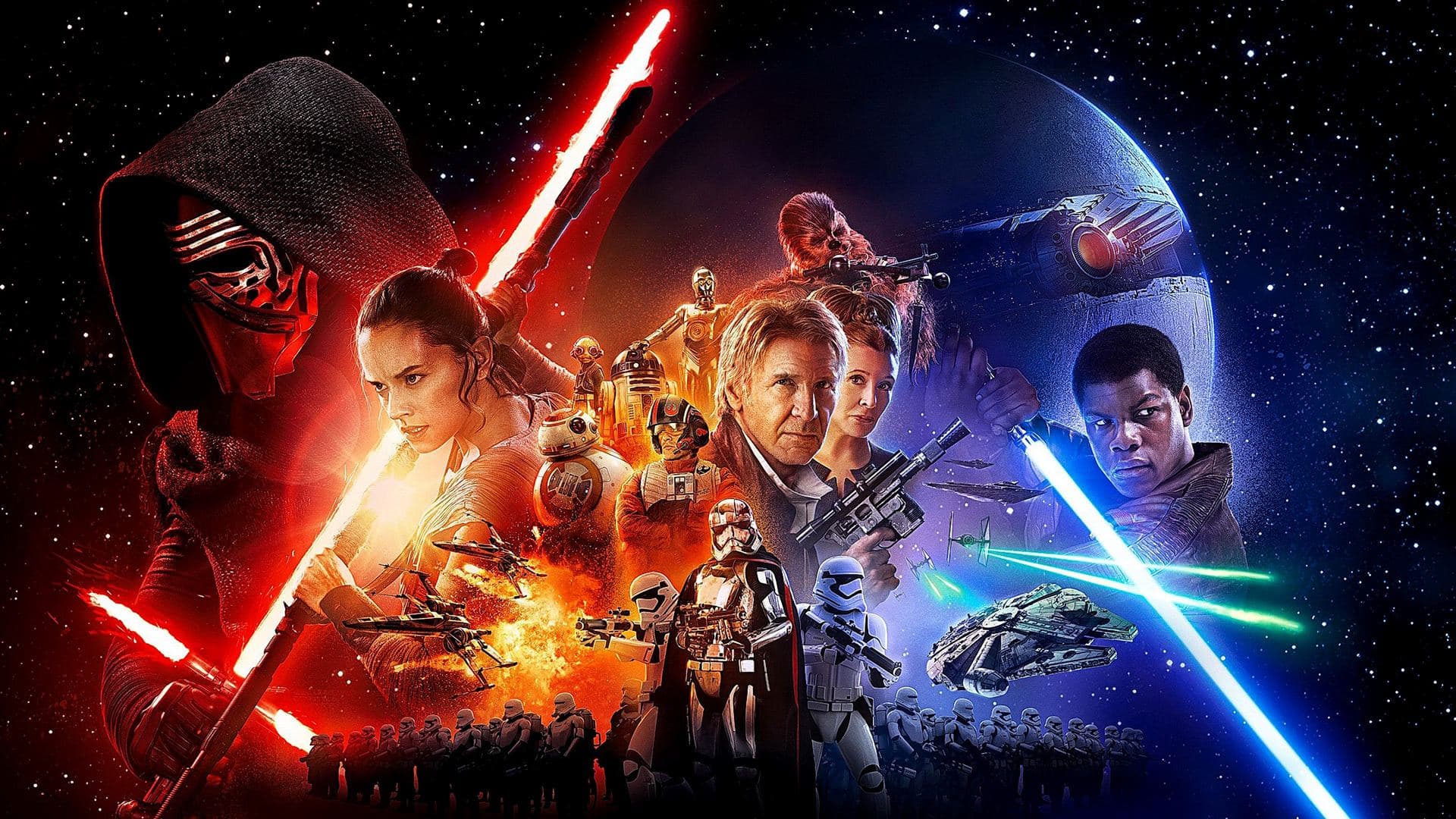
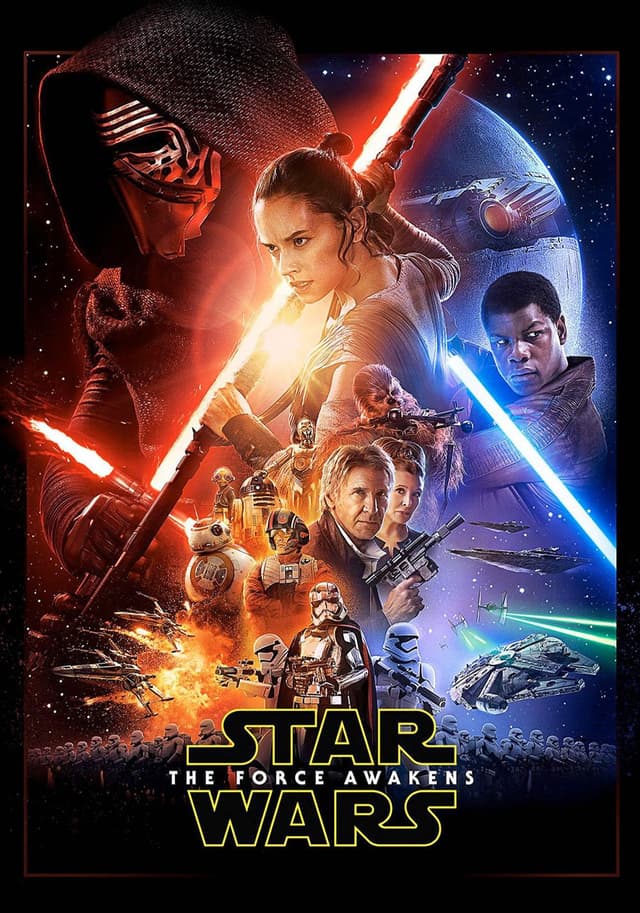
Thirty years after defeating the Galactic Empire, Han Solo and his allies face a new threat from the evil Kylo Ren and his army of Stormtroopers.
What Is the Budget of Star Wars: The Force Awakens?
Star Wars: The Force Awakens (2015), directed by J.J. Abrams and distributed by Walt Disney Studios Motion Pictures, had a reported production budget of $245,000,000. The gross production cost, including tax incentives and studio overhead, reached approximately $638.9 million, with a net cost of $535.5 million after tax breaks from the UK government, which contributed approximately $47.4 million in public funding through filming at Pinewood Studios. The film was produced by Lucasfilm and Bad Robot Productions, with Kathleen Kennedy, J.J. Abrams, and Bryan Burk serving as producers.
At $245 million in direct production costs, The Force Awakens represented one of the largest single-film investments in cinema history at the time. However, this figure must be understood in the context of Disney's $4.05 billion acquisition of Lucasfilm in October 2012, which made the film not just a standalone production but the anchor of an entire franchise strategy designed to recoup that acquisition cost across multiple films, theme park expansions, and merchandise lines.
Key Budget Allocation Categories
The Force Awakens' $245 million budget was driven by the scale required to relaunch a generational franchise while honoring the aesthetic of the original trilogy:
- Above-the-Line Talent: Harrison Ford's return as Han Solo commanded the film's largest individual salary, reportedly in the range of $10 to $20 million plus backend participation. The casting of newcomers Daisy Ridley, John Boyega, and Oscar Isaac in lead roles kept the remaining cast costs relatively controlled, while Adam Driver, Lupita Nyong'o, and Andy Serkis added depth without blockbuster-level fees. J.J. Abrams' directing fee and Lawrence Kasdan's screenwriting involvement added significant above-the-line costs.
- Practical Effects and Set Construction: Abrams made a deliberate creative and budgetary decision to prioritize practical effects, real sets, and on-location shooting over the CGI-heavy approach of the prequel trilogy. This meant constructing full-scale sets at Pinewood Studios, building physical creatures and droids (BB-8 was a functional prop, not a digital creation), and filming on location in Abu Dhabi, Iceland, and Ireland. Practical production at this scale is more expensive per shot than digital but was essential to the film's marketing promise of returning to the feel of the originals.
- Visual Effects: Despite the practical effects emphasis, Industrial Light & Magic still delivered approximately 2,100 VFX shots. The balance between practical and digital required a hybrid pipeline that was more complex and costly than either approach alone, particularly for sequences like the Starkiller Base battle and the lightsaber duel in the forest.
- International Location Production: Principal photography spanned Abu Dhabi's Rub' al Khali desert (Jakku), Skellig Michael in Ireland (Luke's island), and Iceland (Starkiller Base exteriors), in addition to extensive work at Pinewood Studios in England. Each location required separate crew deployments, travel, accommodations, permits, and weather-dependent scheduling.
- Score and Sound Design: John Williams returned to compose the score, continuing his association with the franchise since 1977. The recording sessions with a full symphony orchestra and the extensive sound design work by Skywalker Sound represented a significant post-production investment, though one that was non-negotiable for maintaining the franchise's sonic identity.
How Does The Force Awakens' Budget Compare to Similar Films?
At $245,000,000, The Force Awakens sits at the upper end of the blockbuster spectrum. Its budget reflects the premium of relaunching a dormant franchise with massive cultural expectations:
- Jurassic World (2015): Budget $150,000,000 | Worldwide $1,671,700,000. Released the same year, Jurassic World revived another dormant franchise at significantly lower cost and achieved comparable commercial results, suggesting that franchise nostalgia can drive returns regardless of production scale.
- The Avengers (2012): Budget $220,000,000 | Worldwide $1,518,800,000. Marvel's first crossover event had a similar budget but the added complexity of integrating multiple franchise threads.
- Avatar (2009): Budget $237,000,000 | Worldwide $2,923,700,000. James Cameron's technology-driven production achieved an even higher return with a comparable budget, though the VFX pipeline development costs were amortized across the sequel.
- The Dark Knight Rises (2012): Budget $250,000,000 | Worldwide $1,081,100,000. Christopher Nolan's Batman conclusion had nearly identical production costs but generated roughly half the worldwide gross.
- Star Wars: The Last Jedi (2017): Budget $200,000,000 | Worldwide $1,332,500,000. The direct sequel operated at a lower budget with established characters and sets, yet earned significantly less, illustrating the premium audiences placed on the franchise's return.
Star Wars: The Force Awakens Box Office Performance
The Force Awakens shattered multiple box office records upon its release on December 18, 2015. The film earned $247 million in its domestic opening weekend, setting a new all-time record that stood until Avengers: Endgame (2019). It reached $1 billion worldwide in just 12 days, the fastest film to do so at the time. The domestic total of $936,662,225 remains the highest-grossing domestic release in North American history.
- Production Budget: $245,000,000
- Estimated Prints & Advertising (P&A): approximately $350,000,000
- Total Estimated Investment: approximately $595,000,000
- Worldwide Gross: $2,068,223,624
- Net Return: approximately +$1,823,223,624
- ROI: approximately +744%
At approximately +744%, Star Wars: The Force Awakens (2015) returned roughly $8.44 for every $1 of production budget invested during its theatrical run.
The Force Awakens generated an estimated net profit of $780 million for Disney after accounting for all costs and exhibitor splits, making it one of the most profitable single films ever released. Beyond theatrical revenue, the film drove an estimated $5 billion in global merchandise sales in its first year, validating Disney's $4.05 billion Lucasfilm acquisition within a single release cycle when factoring in all revenue streams.
Star Wars: The Force Awakens Production History
The Force Awakens originated from Disney's October 2012 acquisition of Lucasfilm from George Lucas for $4.05 billion, with a new Star Wars trilogy immediately announced. Michael Arndt (Toy Story 3, Little Miss Sunshine) was hired to write the screenplay, but by October 2013 J.J. Abrams and Lawrence Kasdan, who co-wrote The Empire Strikes Back and Return of the Jedi, took over screenwriting duties. Kasdan's involvement signaled the production's commitment to recapturing the narrative voice of the original trilogy.
Casting involved open auditions beginning in November 2013 under strict nondisclosure agreements. Daisy Ridley and John Boyega were cast as the leads after extensive searches, while Oscar Isaac and Adam Driver joined from the independent film world. Harrison Ford, Carrie Fisher, Mark Hamill, Peter Mayhew, and Anthony Daniels all returned from the original trilogy, with Ford's participation reportedly the most complex negotiation.
Principal photography began on May 16, 2014, in Abu Dhabi's Rub' al Khali desert for the Jakku sequences, using the working title "AVCO." Production then moved to Pinewood Studios in England, where massive sets were constructed for the Millennium Falcon, Maz Kanata's castle, and Starkiller Base interiors. Additional location shooting took place in Iceland and on Skellig Michael, a UNESCO World Heritage Site off the coast of Ireland, for the film's final scene.
Production faced a significant setback on June 12, 2014, when Harrison Ford fractured his left leg after a hydraulic door on the Millennium Falcon set fell on him. J.J. Abrams also fractured a vertebra while helping lift the door but kept his injury private for over a month. Ford's injury required a two-week production hiatus and script adjustments to accommodate his recovery. BB-8, the film's breakout droid character, was a functional practical prop developed by Disney Research and operated live on set rather than digitally, contributing to the film's emphasis on tangible effects that audiences could feel.
Awards and Recognition
Star Wars: The Force Awakens received five Academy Award nominations at the 88th Academy Awards: Best Film Editing, Best Original Score (John Williams), Best Sound Editing, Best Sound Mixing, and Best Visual Effects. The film did not win in any category, losing Visual Effects to Ex Machina in one of the ceremony's more debated outcomes.
Beyond the Oscars, the film earned numerous industry recognitions including BAFTA nominations, Saturn Awards, and multiple People's Choice and Teen Choice Awards. The film's cultural impact was recognized through the National Board of Review's Top Ten Films of 2015 list. John Williams' score received particular praise, with the "Rey's Theme" and "March of the Resistance" joining the franchise's iconic musical catalog.
Critical Reception
The Force Awakens received broadly positive reviews, earning a 93% approval rating on Rotten Tomatoes from 443 critics with an average score of 8.0 out of 10. The consensus described it as a film that "recalls the series' former glory while injecting it with renewed energy." On Metacritic, the film scored 80 out of 100 from 55 critics, indicating "generally favorable reviews." Audiences gave it an A grade via CinemaScore.
Critics praised the film's return to practical effects, the chemistry between the new cast, and the emotional weight of the legacy characters' appearances. Daisy Ridley's performance as Rey and Adam Driver's as Kylo Ren were singled out as the film's most significant casting achievements. The most common criticism was that the plot structure too closely mirrored the original 1977 Star Wars (A New Hope), with Starkiller Base serving as a larger Death Star and the narrative beats following a similar trajectory.
George Lucas offered measured praise, stating "I think the fans are going to love it" while acknowledging the film took a different direction from his own vision for the sequel trilogy. The critical consensus that The Force Awakens prioritized emotional satisfaction and franchise revival over narrative originality has proven durable, with the film's reputation remaining strong as a crowd-pleasing relaunch even as the sequel trilogy's overall arc drew more divisive reactions.
Frequently Asked Questions
How much did it cost to make Star Wars The Force Awakens?
Star Wars: The Force Awakens had an estimated production budget of $245,000,000. At the time, this made it one of the most expensive films ever produced. The budget covered principal photography, an extensive cast, visual effects by Industrial Light and Magic, large-scale practical set construction, and post-production. Marketing and distribution costs from Walt Disney Studios and Lucasfilm are estimated to have added another $175,000,000 to $200,000,000.
How much did Star Wars The Force Awakens earn at the box office?
Star Wars: The Force Awakens earned $936,662,225 domestically and $2,071,310,218 worldwide. The film set a record with a $247,966,675 North American opening weekend and held the domestic all-time box office record until Avengers: Endgame surpassed it in 2019. International markets contributed $1,134,647,993 to the worldwide total.
Was Star Wars The Force Awakens profitable?
Yes, Star Wars: The Force Awakens was extraordinarily profitable. Against a production budget of $245,000,000 and estimated total investment of roughly $445,000,000 including marketing, the film earned $2,071,310,218 worldwide. Disney recouped the entire $4,050,000,000 Lucasfilm acquisition cost through a combination of The Force Awakens box office, merchandise revenue, and theme park value. The film alone generated an estimated net profit exceeding $780,000,000 from theatrical distribution.
What were the biggest costs in producing Star Wars The Force Awakens?
The primary cost drivers for Star Wars: The Force Awakens included above-the-line talent fees for director J.J. Abrams and stars Harrison Ford, Mark Hamill, Carrie Fisher, Daisy Ridley, John Boyega, Oscar Isaac, and Adam Driver. Harrison Ford reportedly earned $10,000,000 to $20,000,000 for his return as Han Solo. Visual effects by Industrial Light and Magic involved over 2,100 VFX shots. Production design and set construction at Pinewood Studios in England was extensive, with the production building full-scale practical sets including the Millennium Falcon interior and Maz Kanata castle. Location filming in Abu Dhabi (Jakku desert), Skellig Michael in Ireland (Ahch-To), and Puzzlewood in the Forest of Dean added further costs.
How does Star Wars The Force Awakens's budget compare to similar films?
At $245,000,000, The Force Awakens was expensive but not the most costly Star Wars film. Its sequel Star Wars: The Last Jedi (2017) had a budget of $300,000,000, and Star Wars: The Rise of Skywalker (2019) cost approximately $275,000,000. Jurassic World (2015), released the same year, had a budget of $150,000,000, while Avengers: Age of Ultron (2015) cost approximately $365,000,000. The Force Awakens represented a major investment from Disney in relaunching the franchise after acquiring Lucasfilm in 2012.
Did Star Wars The Force Awakens go over budget?
There are no confirmed reports that The Force Awakens significantly exceeded its planned budget. J.J. Abrams and Lucasfilm maintained a structured production schedule. However, Harrison Ford suffered a broken leg during filming at Pinewood Studios in June 2014 when a hydraulic door on the Millennium Falcon set fell on him, which caused a brief production delay. The Health and Safety Executive later fined the production company over the incident, though the impact on the overall budget was not publicly disclosed.
What was the ROI of Star Wars The Force Awakens?
Based on a production budget of $245,000,000 and a worldwide gross of $2,071,310,218, Star Wars: The Force Awakens achieved an ROI of approximately 745%. The ROI formula is (Worldwide Gross minus Budget) divided by Budget times 100, which gives ($2,071,310,218 minus $245,000,000) divided by $245,000,000 times 100 = 745%. This is one of the highest ROIs for any film with a budget exceeding $200,000,000 and reflects theatrical revenue only, excluding home media, merchandise, and theme park revenue.
What awards did Star Wars The Force Awakens win?
Star Wars: The Force Awakens received five Academy Award nominations at the 88th Oscars: Best Film Editing, Best Original Score (John Williams), Best Visual Effects, Best Sound Editing, and Best Sound Mixing. It did not win in any category. The film won the BAFTA Award for Best Special Visual Effects, the Saturn Award for Best Science Fiction Film, and multiple Critics Choice Awards. It also earned a Hugo Award nomination for Best Dramatic Presentation.
Who directed Star Wars The Force Awakens?
Star Wars: The Force Awakens was directed by J.J. Abrams, who also co-wrote the screenplay with Lawrence Kasdan and Michael Arndt. Abrams was selected by Lucasfilm president Kathleen Kennedy after initial discussions with other filmmakers. He brought his experience from the Star Trek reboot films (2009, 2013) to the project, emphasizing practical effects and on-location shooting alongside digital VFX. Abrams later returned to direct Star Wars: The Rise of Skywalker (2019) after Colin Trevorrow departed that project.
Where was Star Wars The Force Awakens filmed?
Star Wars: The Force Awakens was primarily filmed at Pinewood Studios in Buckinghamshire, England, where the production constructed large-scale sets including the Millennium Falcon interior, Starkiller Base, and Maz Kanata castle. Location filming took place in Abu Dhabi, United Arab Emirates, for the Jakku desert sequences. Skellig Michael, an island off the southwest coast of Ireland, was used for the final scene where Rey finds Luke Skywalker. Additional location work was done in Puzzlewood in the Forest of Dean (Takodana forest) and at RAF Greenham Common for the Resistance base exterior.
Filmmakers
Star Wars: The Force Awakens (2015)

Official Trailer
Build your own production budget
Create professional budgets with industry-standard feature film templates. Real-time collaboration, no spreadsheets.