Sorry We Missed You Budget
Updated
Synopsis
Ricky and Abby live in Newcastle with their two children, fighting an uphill struggle against debt since the 2008 financial crash. When Ricky takes a job as a self-employed parcel-delivery driver promising a route to financial recovery, the precarious gig-economy conditions threaten to destroy the family entirely. Ken Loach's social-realist portrait of contemporary British working-class precarity.
What Is the Budget of Sorry We Missed You (2019)?
Sorry We Missed You (2019), directed by Ken Loach, was produced on an undisclosed budget that BBC Films UK production scale, the Loach-Laverty social-realist working model, and the film's contained Newcastle production place in the range of £2,500,000 to £4,000,000 (approximately $3,000,000 to $5,000,000 USD). The film was financed by Sixteen Films (Loach and Rebecca O'Brien's production company), BBC Films, the British Film Institute, Why Not Productions, and Wild Bunch, with theatrical release through Entertainment One in the UK and IFC Films in North America.
The investment reflected the British social-realist tier of the late 2010s, the period when Ken Loach was working at the productive late-career intersection of his collaboration with screenwriter Paul Laverty, BBC Films and BFI institutional backing, and the broader European prestige theatrical and broadcast market. The budget allocation centered on the small core cast led by Kris Hitchen and Debbie Honeywood (both first-time feature leads), an extensive Newcastle and Tyneside location shoot, and the spare documentary-influenced production design that defines the late-period Loach aesthetic.
Key Budget Allocation Categories
Sorry We Missed You's estimated £2,500,000 to £4,000,000 budget was distributed across several core production areas:
- Above-the-Line Talent: Director Ken Loach and screenwriter Paul Laverty, the long-running collaboration responsible for I, Daniel Blake (2016), The Wind That Shakes the Barley (2006), and many others, received feature scale through their Sixteen Films producing partnership with Rebecca O'Brien. Lead Kris Hitchen, a British stage and television actor who had not previously carried a feature, and co-lead Debbie Honeywood, similarly making her feature lead debut, were paid at British Equity scale appropriate to non-star casting. Supporting cast Rhys Stone, Katie Proctor, and Ross Brewster received similar working-actor rates.
- Newcastle and Tyneside Location Shoot: Principal photography took place across Newcastle upon Tyne and the surrounding Tyneside region in summer 2018. Locations included real working-class housing estates, delivery-driver routes across Newcastle, and a small but recognizable working delivery depot. Ken Loach's practice of shooting in real locations with non-professional supporting performers and minimal lighting adjustments kept location costs lean.
- Cinematography: Robbie Ryan, the cinematographer responsible for Ken Loach's late-period work since The Wind That Shakes the Barley (and also a frequent Andrea Arnold collaborator on Fish Tank and American Honey), shot the film with a handheld documentary-influenced style on Arri Alexa. The natural-light approach and contained interior coverage kept lighting and equipment costs minimal.
- Sound and Production Design: The film's working-class kitchen-table aesthetic depended on detailed real-location dressing rather than constructed sets. Production designer Fergus Clegg dressed real Newcastle interiors and exteriors to support the family's economic precarity, with delivery-van interiors and depot-warehouse scenes adding incremental location and props cost.
- Score and Editing: Composer George Fenton, a long-running Loach collaborator since Land and Freedom (1995) and most recently I, Daniel Blake (2016), delivered the spare score. Editor Jonathan Morris, Loach's editor on virtually every feature since the early 1990s, cut the film with the director's signature long-take and patient observational rhythm.
- Festival and Theatrical Positioning: Cannes 2019 main competition submission, where the film premiered on May 16, 2019, and subsequent festival positioning across the UK and North America were carried by the production. Loach had previously won the Palme d'Or twice (The Wind That Shakes the Barley 2006, I, Daniel Blake 2016) at Cannes, and the 2019 Cannes positioning continued the late-career main-competition pattern.
How Does Sorry We Missed You's Budget Compare to Similar Films?
At an estimated £2,500,000 to £4,000,000 (approximately $3,000,000 to $5,000,000 USD), Sorry We Missed You sits within the British social-realist tier of the late 2010s. The comparison set illustrates the budget context:
- I, Daniel Blake (2016): Budget approximately £2,000,000 ($2,500,000 USD) | Worldwide $15,500,000. Ken Loach's previous Palme d'Or winner operates at a comparable budget tier and offers the closest direct creative and financial comparison.
- American Honey (2016): Budget approximately $4,000,000 | Worldwide $1,700,000. Andrea Arnold's Cannes Jury Prize-winning American social-realist film operates at a comparable budget tier with cinematographer Robbie Ryan also providing a creative bridge between the two productions.
- Shoplifters (2018): Budget approximately $2,000,000 | Worldwide $74,800,000. Hirokazu Kore-eda's contemporaneous Palme d'Or winner operates at a comparable budget tier with a substantially larger worldwide gross, demonstrating the international theatrical ceiling that social-realist filmmaking can reach.
- Tangerines (2013): Budget undisclosed (estimated $750,000) | Worldwide $1,400,000. The Estonian-Georgian Oscar-nominated war drama operates at a lower budget tier and demonstrates the lower bound of European prestige independent cinema.
- Lady Bird (2017): Budget $10,000,000 | Worldwide $79,000,000. Greta Gerwig's contemporaneous American indie hit operates at roughly double Sorry We Missed You's budget and demonstrates the higher-budget American indie tier.
Sorry We Missed You Box Office Performance
Sorry We Missed You premiered in main competition at the 72nd Cannes Film Festival on May 16, 2019, where it screened to enthusiastic critical reception though it did not win a major prize. The film opened in the UK on November 1, 2019 through Entertainment One and grossed approximately £1,100,000 (roughly $1,400,000 USD). IFC Films opened the film in North America on March 4, 2020, where it grossed $97,388 across a limited platform release before the COVID-19 pandemic shuttered theaters globally on March 17. Total worldwide theatrical was approximately $3,500,000.
Against an estimated production budget of £2,500,000 to £4,000,000, the film's commercial framework was the prestige festival circuit and European arthouse theatrical market rather than mass theatrical recoupment. Here is the financial breakdown:
Box Office Breakdown
Sorry We Missed You

Ken Loach's late-career economic model depends on BBC Films and BFI institutional backing, continental European broadcaster pre-sales, and the prestige value of Cannes positioning rather than mass theatrical recoupment. Sorry We Missed You's commercial profile was typical of the tier and consistent with I, Daniel Blake's prior performance, with the COVID-19 pandemic's mid-release North American disruption limiting the upside that an uninterrupted theatrical run might have delivered.
The film was widely discussed in the UK during its November 2019 theatrical run as a contribution to the policy conversation around gig-economy delivery work and the broader precarity of post-2008 British working-class economic conditions. Ken Loach used the press cycle to advocate for stronger UK labor regulation of gig-economy contractor arrangements.
Sorry We Missed You Production History
Ken Loach and Paul Laverty began developing Sorry We Missed You in 2017 as a follow-up companion piece to their 2016 Palme d'Or winner I, Daniel Blake. Where I, Daniel Blake had focused on the UK benefits-and-welfare system, Sorry We Missed You moved laterally to the gig-economy delivery-driver labor market, a precarity that had expanded across British working-class urban economies through the late 2010s. Laverty conducted extensive interviews with real Newcastle and Tyneside delivery drivers and care-sector workers to ground the screenplay.
Sixteen Films (Loach, Rebecca O'Brien, and Paul Laverty's long-running production company), BBC Films, the British Film Institute, France's Why Not Productions, and Wild Bunch assembled the financing package. Casting prioritized non-professional and lesser-known actors consistent with Loach's late-career approach. Kris Hitchen, a British stage and television actor whose credits included Coronation Street and Brassic, was cast as Ricky in his first feature lead. Debbie Honeywood, who had also worked primarily in British television and was previously known to Loach's casting director Kahleen Crawford, was cast as Abby in her first feature lead. Rhys Stone (Seb) and Katie Proctor (Lisa Jane) played the family's two children.
Principal photography ran in summer 2018 in the United Kingdom, specifically across Newcastle upon Tyne and the surrounding Tyneside region. Locations included real working-class housing estates, delivery-driver routes across the city, and a small but recognizable working delivery depot. The production utilized the UK Creative Sector Tax Reliefs and BBC Films institutional support. Ken Loach's practice of shooting chronologically when possible and revealing script details to actors gradually shaped the production schedule, with the family ensemble building authentic chemistry across the shoot.
Post-production proceeded through late 2018 and early 2019 with editor Jonathan Morris, with score by George Fenton added in the spring of 2019. Cannes accepted the film into the 72nd festival's main competition, with the premiere taking place on May 16, 2019. UK theatrical release followed on November 1, 2019 through Entertainment One, with IFC Films acquiring North American rights and opening the film on March 4, 2020 in the immediate days before the COVID-19 pandemic shuttered cinemas globally.
Awards and Recognition
Sorry We Missed You received significant European awards recognition. The film did not win a major prize at Cannes 2019 but drew widespread critical acclaim from the festival press corps. It went on to win the British Independent Film Award for Best British Independent Film in 2019 (along with Best Joint Lead Performance for Kris Hitchen and Debbie Honeywood), and the European Film Award for European Screenwriter (Paul Laverty) at the 2019 European Film Awards.
Additional recognition came from regional UK critics circles, including Best British Film and Best Director nominations from the London Film Critics' Circle. Kris Hitchen and Debbie Honeywood drew lead-performance recognition from the British Independent Film Awards in their first feature leads. The film did not engage with the major American precursor awards (Oscars, Golden Globes), consistent with Ken Loach's late-career awards profile, which has tended toward European recognition and Cannes positioning rather than American industry voting bodies.
Critical Reception
Sorry We Missed You received widespread critical acclaim. The film holds a 90% approval rating on Rotten Tomatoes based on 159 critic reviews with an average score of 7.6 out of 10, with the critical consensus calling it "a heartrending portrait of working-class precarity that confirms Ken Loach's late-period mastery." On Metacritic, the film scored 78 out of 100, indicating generally favorable reviews. Audience response among British and European arthouse viewers was similarly strong.
Critics broadly praised the lead performances by Kris Hitchen and Debbie Honeywood, the script by Paul Laverty, and Ken Loach's sustained late-career engagement with British working-class life. The Guardian's Peter Bradshaw wrote that "Loach and Laverty have made another devastating broadside against the cruelties of the contemporary gig economy," and The New York Times's A. O. Scott called it "a small, ferocious film that should be required viewing for anyone interested in the dignity of work." Variety's Owen Gleiberman wrote that Loach "remains the unrivaled cinematic chronicler of British working-class precarity."
A minority of critics raised consistency objections about the late-period Loach formula. The New Yorker's Anthony Lane argued that the film's broadside on gig-economy delivery work was effective but increasingly familiar across the Loach-Laverty late-period collaboration, and Sight & Sound's Hannah McGill noted that "Loach's critics have legitimate questions about whether the model of unrelenting social-realist tragedy still serves the political ends he intends." These objections were a minority view in an otherwise broadly enthusiastic reception that confirmed the film's standing among Loach's strongest late-period work.
Frequently Asked Questions
How much did it cost to make Sorry We Missed You (2019)?
The production budget was not publicly disclosed, but BBC Films UK production scale, the Loach-Laverty social-realist working model, and the contained Newcastle production place the figure in the range of £2,500,000 to £4,000,000 (approximately $3,000,000 to $5,000,000 USD). Sixteen Films, BBC Films, the BFI, Why Not Productions, and Wild Bunch co-financed the production.
Who directed Sorry We Missed You?
Ken Loach directed the film, his late-career social-realist follow-up to the 2016 Palme d'Or winner I, Daniel Blake. He worked from a screenplay by Paul Laverty, his long-running collaborator. The pairing has produced more than a dozen features since their first collaboration on Carla's Song (1996).
Where was Sorry We Missed You filmed?
Principal photography ran in summer 2018 in the United Kingdom, specifically across Newcastle upon Tyne and the surrounding Tyneside region. Locations included real working-class housing estates, delivery-driver routes across the city, and a small but recognizable working delivery depot. The production utilized the UK Creative Sector Tax Reliefs and BBC Films institutional support.
Did Sorry We Missed You win at Cannes?
No, but it premiered in main competition. The film screened to enthusiastic critical reception at the 72nd Cannes Film Festival on May 16, 2019 but did not win a major prize. It subsequently won the British Independent Film Award for Best British Independent Film in 2019 and the European Film Award for European Screenwriter (Paul Laverty).
Who stars in Sorry We Missed You?
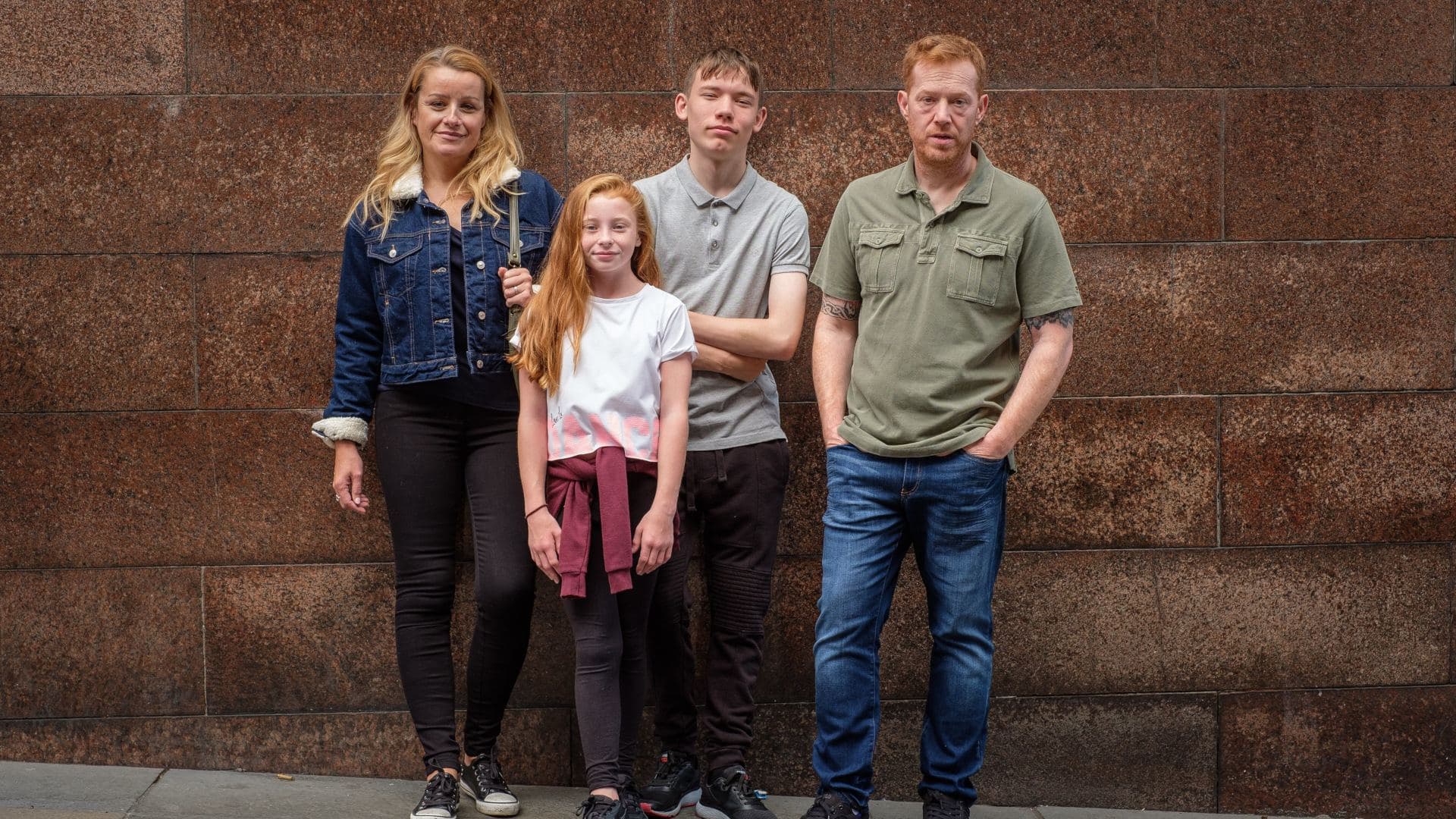
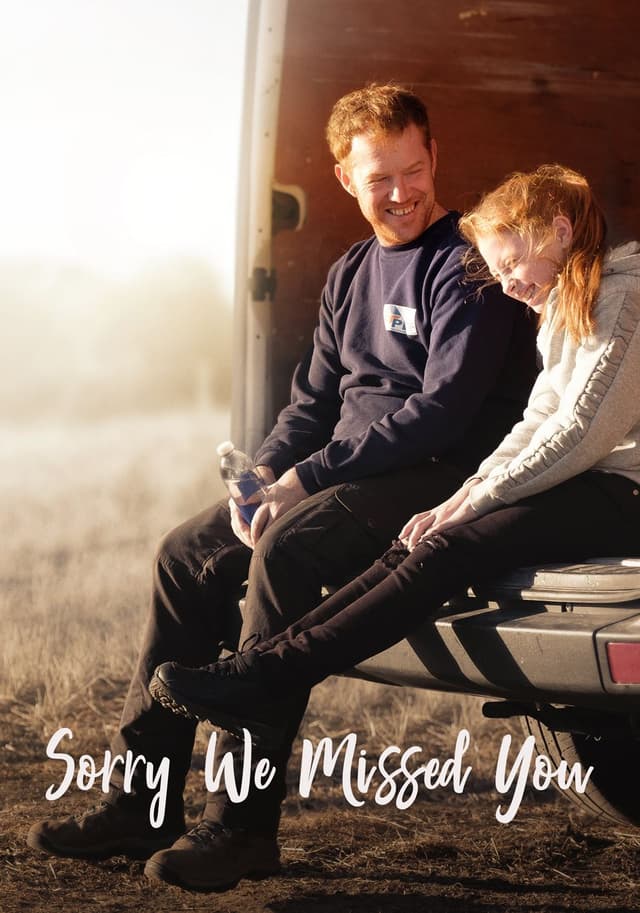
Kris Hitchen stars as Ricky, with Debbie Honeywood as Abby, Rhys Stone as their son Seb, Katie Proctor as their daughter Lisa Jane, and Ross Brewster as the delivery-depot manager Maloney. It was the first feature lead for both Kris Hitchen and Debbie Honeywood, who had previously worked primarily in British television.
What is Sorry We Missed You about?
The film follows Ricky and Abby, a working-class Newcastle family struggling with debt since the 2008 financial crash. When Ricky takes a job as a self-employed parcel-delivery driver promising a route to financial recovery, the precarious gig-economy conditions threaten to destroy the family entirely. The screenplay is rooted in extensive Paul Laverty interviews with real Newcastle and Tyneside delivery drivers and care-sector workers.
How does Sorry We Missed You compare to I, Daniel Blake?
I, Daniel Blake (2016) focused on the UK benefits-and-welfare system and won the Palme d'Or at Cannes 2016. Sorry We Missed You (2019) moves laterally to the gig-economy delivery-driver labor market, with the same writer-director collaboration of Paul Laverty and Ken Loach and a similar budget tier. Both films are part of the Loach-Laverty late-period engagement with contemporary British working-class precarity.
How did Sorry We Missed You perform at the box office?
The film opened in the UK on November 1, 2019 through Entertainment One and grossed approximately £1,100,000 (roughly $1,400,000 USD). IFC Films opened the film in North America on March 4, 2020, just before the COVID-19 pandemic shuttered theaters globally, grossing $97,388 across a limited platform release. Total worldwide theatrical was approximately $3,500,000.
What did critics think of Sorry We Missed You?
The film received widespread critical acclaim, with a 90% Rotten Tomatoes approval based on 159 reviews (7.6 average) and a 78 out of 100 score on Metacritic. Critics broadly praised the lead performances by Kris Hitchen and Debbie Honeywood, the script by Paul Laverty, and Ken Loach's sustained late-career engagement with British working-class life.
Did Sorry We Missed You win any awards?
The film won the British Independent Film Award for Best British Independent Film in 2019, along with Best Joint Lead Performance for Kris Hitchen and Debbie Honeywood. Paul Laverty won the European Film Award for European Screenwriter at the 2019 European Film Awards. The film also drew Best British Film and Best Director nominations from the London Film Critics' Circle.
Filmmakers
Sorry We Missed You

Official Trailer
Build budgets like this one in Saturation
Start from an industry-standard feature film template, import the schedule and rates you already have, and let the cost report keep itself current as you spend. Real-time collaboration, no spreadsheets.