Shadow Conspiracy Budget
 Thriller1h 43m
Updated
Synopsis
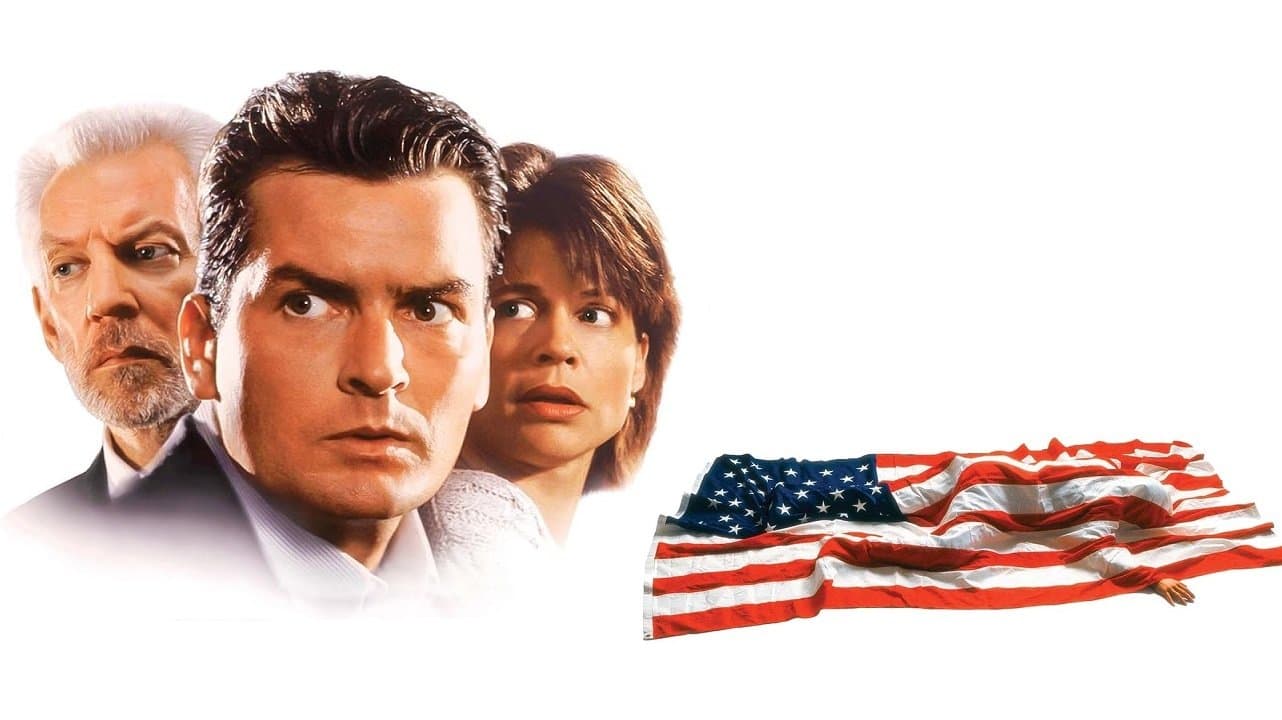
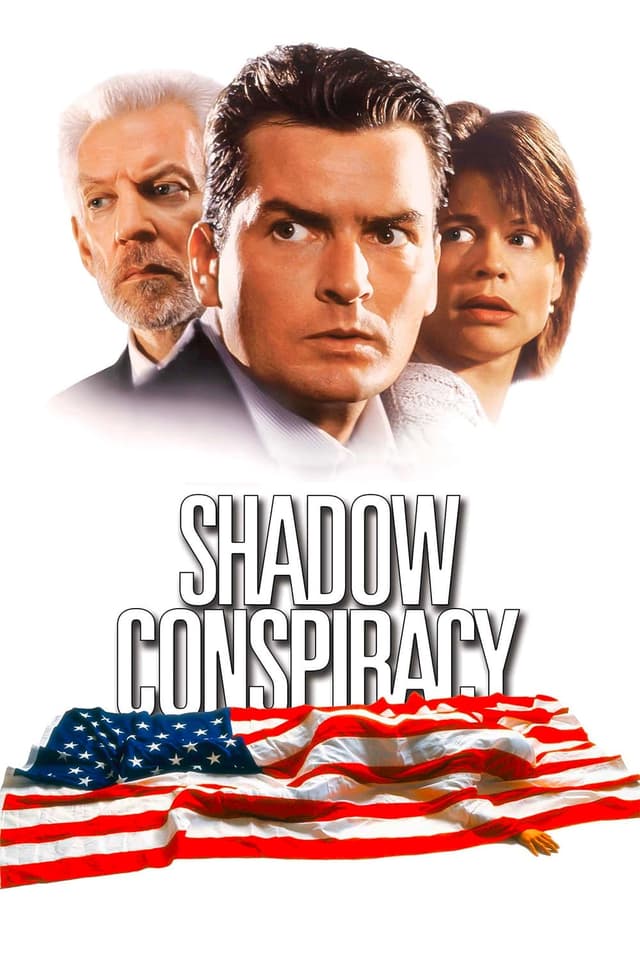
Shadow Conspiracy follows Bobby Bishop, a young White House aide who stumbles onto evidence of a high-level conspiracy targeting the President of the United States. Pursued by a ruthless assassin and unable to trust anyone in Washington, Bishop teams with an investigative journalist to uncover and expose the plot before it succeeds.
What Is the Budget of Shadow Conspiracy?
Shadow Conspiracy carried a reported production budget of approximately $45 million, financed through a co-production between Cinergi Pictures Entertainment and Disney's Hollywood Pictures label. Against that investment, the film earned just $2,312,463 at the domestic box office, with no meaningful international theatrical release recorded. The worldwide gross matched the domestic total at $2,312,463, making the shortfall between spend and return one of the more lopsided mismatches in mid-1990s Hollywood.
Released on January 31, 1997, the film debuted at number sixteen for the weekend, opening against a re-release of Star Wars on just 837 screens. The $1,370,831 opening weekend was followed by a 72 percent drop in week two, and Disney pulled the film from wide distribution within weeks. For Cinergi Pictures, it was the final production the company would finance: following the film's failure, Cinergi sold its library to Disney and shut down all future production activity.
Key Budget Allocation Categories
- Above-the-Line Talent: Charlie Sheen received a significant salary as the lead, while Donald Sutherland, Linda Hamilton (fresh from Terminator 2 and still commanding strong fees), Sam Waterston, and Ben Gazzara formed a high-profile supporting cast. Writer-intellectual Gore Vidal also appears in a small role as Congressman Page.
- Location Shooting: The production spent 19 shooting days in Washington, D.C., filming in Georgetown, along the C&O Canal under the Whitehurst Freeway, and at other recognizable D.C. landmarks. Additional location work took place in Richmond and Baltimore, Virginia.
- Production Design: Interior White House sets, including a full Oval Office replica, were constructed on sound stages at Figgie International in Richmond, Virginia. The Virginia governor's mansion doubled for the White House private quarters. Production designer Joe Alves oversaw the build.
- Action Sequences and Stunts: The film relies heavily on foot chases, car chases, and pursuit sequences through government corridors. Stunt work included hanging sequences off the side of the Omni Hotel in downtown Richmond, 15 stories up.
- Score: Composer Bruce Broughton delivered a full orchestral political thriller score, a significant above-the-line music cost for a studio genre picture of this scale.
- Marketing and Distribution: Disney's Buena Vista Pictures handled distribution. The limited release of 837 screens, well below the typical wide-release threshold of 2,000-plus, suggests Disney had already curtailed the marketing spend before opening weekend.
How Does Shadow Conspiracy Compare to Similar Films?
Shadow Conspiracy entered a competitive mid-1990s market for political thrillers and action pictures, where audience expectations had been set by far more successful entries in the genre.
- Eraser (1996) — Budget $100,000,000 | Worldwide $242,000,000 — Arnold Schwarzenegger's witness protection thriller, released the summer prior on a much larger budget, demonstrated how the genre could perform with a bigger star and broader action appeal.
- Mercury Rising (1998) — Budget $60,000,000 | Worldwide $93,000,000 — Bruce Willis's conspiracy thriller about a government target performed modestly the following year, but still outgrossed Shadow Conspiracy more than forty times over on a larger budget.
- The Pelican Brief (1993) — Budget $45,000,000 | Worldwide $195,000,000 — Julia Roberts and Denzel Washington in a John Grisham political thriller, released at the same budget level, showed what the genre could earn when built around the right stars and source material.
- Absolute Power (1997) — Budget $50,000,000 | Worldwide $50,000,000 — Clint Eastwood's White House conspiracy thriller, released the same year, also underperformed relative to its budget but still earned more than twenty times what Shadow Conspiracy managed.
- Murder at 1600 (1997) — Budget $30,000,000 | Worldwide $16,000,000 — Wesley Snipes and Diane Lane in another 1997 White House thriller that also struggled commercially, illustrating how saturated and worn the political thriller subgenre had become by mid-decade.
Shadow Conspiracy Box Office Performance
Shadow Conspiracy opened on January 31, 1997, one of the least coveted release windows in the Hollywood calendar. The film debuted at number sixteen on its opening weekend, earning $1,370,831 on just 837 screens while competing directly with a theatrical re-release of the original Star Wars. That opening weekend figure placed the film well below the threshold for a wide studio release. By its second weekend, grosses dropped 72 percent to $384,106 before Disney accelerated its exit from theaters.
Box Office Breakdown
Shadow Conspiracy

The theatrical return amounted to roughly $0.04 for every dollar invested, a near-total write-off on the studio spend. Home video sales through Buena Vista Home Entertainment and eventual cable television licensing partially offset the loss, but no official figures for those revenue streams have been made public.
The January release date was effectively a signal from Disney that the film had already been written off internally. Studios typically reserve the first weeks of January for pictures they have little confidence in, releasing them before the prestige awards season competition clears. Shadow Conspiracy arrived with minimal promotional support, limited screens, and no breakout star power capable of overcoming poor word of mouth. The near-complete absence of international distribution compounded the shortfall, leaving the film entirely dependent on domestic audiences who largely stayed away.
Shadow Conspiracy Production History
The project originated at Cinergi Pictures Entertainment, the production company founded by Hungarian-American producer Andrew G. Vajna. Cinergi had built its identity through large-scale action pictures throughout the early 1990s, with George P. Cosmatos as a trusted collaborator. Cosmatos had directed Rambo: First Blood Part II and Cobra for Stallone before shepherding the 1993 Western Tombstone to unexpected commercial success. That film's performance gave Cosmatos renewed credibility in Hollywood and made him an appealing choice to direct Shadow Conspiracy.
Principal photography commenced in June 1995 with a 12-week schedule, split between Richmond and Baltimore, Virginia, and location days in Washington, D.C. The production crew numbered approximately 120 members and spent 19 shooting days in the capital. A veteran Washington political consultant named Karyn Cody served as technical advisor, working with production designer Joe Alves to ensure authentic details on White House interiors, congressional procedures, and presidential protocol. Sound stages at Figgie International in Richmond housed the major interior sets, including a full Oval Office replica. The Virginia governor's mansion stood in for White House private quarters.
Charlie Sheen was cast as Bobby Bishop, a young presidential aide who uncovers a plot against the President. The role called for a more serious, physically active performance than the comic work Sheen was known for from Major League and the Hot Shots franchise. Donald Sutherland played antagonist Jacob Conrad, leaning into the calculating villain role that had become a reliable register for him by the mid-1990s. Linda Hamilton, whose profile had risen sharply after Terminator 2: Judgment Day in 1991, joined the cast as journalist Amanda Givens. Sam Waterston appeared as the President, Ben Gazzara as the Vice President, and novelist Gore Vidal took a small role as Congressman Page, one of several intellectuals who appeared in minor film roles during this era.
Filming was completed by late 1995, with an initial target release date in 1996. Disney delayed the picture, which carried its own quiet message about the studio's declining confidence in the final cut. The January 31, 1997 release date confirmed those fears. Both Sheen and Hamilton later spoke publicly about their feelings toward the film: Hamilton described it as mediocre, while Sheen stated outright that he disliked the picture.
Shadow Conspiracy proved to be both the final film directed by George P. Cosmatos, who died in April 2005, and the last production financed by Cinergi Pictures. Following the box office failure, Andrew Vajna sold the Cinergi film library to Disney and dissolved the production company, ending one of the more ambitious independent-adjacent production ventures of the early 1990s.
Awards and Recognition
Shadow Conspiracy received no award nominations of any kind. The 7 percent Rotten Tomatoes score and overwhelmingly negative critical reception placed it well outside award consideration in any category. Disney reportedly did not hold advance press screenings for critics before the January 31, 1997 opening, a common industry practice for releases the distributor expects to be poorly reviewed.
The film is more frequently cited in discussions of notable Hollywood financial failures than in any awards context. Its legacy is primarily as the production that ended both Cinergi Pictures and the directorial career of George P. Cosmatos, and as an example of how even a recognizable cast and competent genre director cannot rescue a script that critics found derivative and repetitive.
Critical Reception
Shadow Conspiracy holds a 7 percent rating on Rotten Tomatoes based on 29 reviews, with an audience score of 20 percent from over 2,500 ratings. The critics consensus reads: 'Rather than exciting audiences with a thrilling race against time, Shadow Conspiracy suggests there may be a secret cabal duping talented actors into selecting woefully deficient scripts.'
Roger Ebert called it 'a simple-minded thriller that seems destined for mercy killing in the video stores after a short run before appalled audiences.' Daniel M. Kimmel of Variety wrote that the climactic assassination sequence 'is so ridiculous there's only one real danger: that the president will laugh to death.' Lisa Alspector of the Chicago Reader observed that 'bland, interminable chase scenes take up so much of the story that the sheer repetitiveness begins to amaze you.' Maitland McDonagh in TV Guide noted that 'Bishop eventually gets to the bottom of things, a full hour after the least attentive viewer will have figured out who's behind it all.'
Critics largely agreed that the film's central weakness was not its cast or technical execution but its script, which recycled political thriller conventions without adding anything distinctive. The cat-and-mouse chase structure that makes up the bulk of the running time was singled out repeatedly as generic and exhausting. Cosmatos's direction was described as competent but impersonal, reflecting a genre exercise rather than a filmmaker with a strong point of view. Several reviewers noted that the film's January release date and limited screen count amounted to a quiet acknowledgment by Disney that the picture was unsalvageable.
Frequently Asked Questions
What was the production budget for Shadow Conspiracy?
Shadow Conspiracy had a reported production budget of approximately $45 million, co-financed by Cinergi Pictures Entertainment and Disney's Hollywood Pictures label. The budget covered a significant cast package including Charlie Sheen, Donald Sutherland, and Linda Hamilton, as well as 12 weeks of principal photography split between Richmond, Virginia, Washington D.C., and Baltimore.
How much did Shadow Conspiracy make at the box office?
Shadow Conspiracy earned $2,312,463 in domestic theatrical gross with no significant international theatrical release recorded, making the worldwide total identical to the domestic figure. The film opened at number sixteen on its debut weekend of January 31, 1997, earning $1,370,831 on 837 screens before dropping 72 percent in its second weekend. Against an estimated $45 million production budget, the theatrical loss was severe.
Why did Shadow Conspiracy fail at the box office?
Several factors contributed to the film's failure. Disney released it on January 31, 1997, one of the weakest dates on the Hollywood calendar, on only 837 screens rather than a full wide release. The film opened against a re-release of Star Wars and received almost no advance promotional support. Critical reviews were overwhelmingly negative, with a 7 percent score on Rotten Tomatoes, and word of mouth was poor. Both stars Charlie Sheen and Linda Hamilton later publicly distanced themselves from the film.
What is Shadow Conspiracy about?
Shadow Conspiracy is a 1997 political thriller in which Bobby Bishop, a young White House aide played by Charlie Sheen, discovers evidence of a high-level conspiracy targeting the President of the United States. Pursued by a skilled assassin and forced to trust almost no one in Washington, Bishop joins with a journalist played by Linda Hamilton to expose the plot before it can be carried out. Donald Sutherland plays the principal antagonist.
Who directed Shadow Conspiracy?
Shadow Conspiracy was directed by George P. Cosmatos, a Greek-Italian filmmaker known for directing Rambo: First Blood Part II in 1985, Cobra in 1986, and Tombstone in 1993. Shadow Conspiracy was the final film of his career. Cosmatos died in April 2005.
Did Shadow Conspiracy get a home video release?
Yes. Shadow Conspiracy was released on DVD in November 2003 by Buena Vista Home Entertainment, Disney's home video distribution arm. The film had previously been available on VHS. Despite its theatrical failure, it found a modest secondary audience through cable television broadcasts and home video rentals during the late 1990s and early 2000s.
Filmmakers
Shadow Conspiracy

Official Trailer
Build budgets like this one in Saturation
Start from an industry-standard feature film template, import the schedule and rates you already have, and let the cost report keep itself current as you spend. Real-time collaboration, no spreadsheets.