Secrets & Lies Budget
 Drama2h 22m
Updated
Synopsis
Following the death of her adoptive parents, a successful young black optometrist establishes contact with her biological mother -- a lonely white factory worker living in poverty in East London.
What Is the Budget of Secrets & Lies?
Secrets & Lies was made on a budget of approximately $4.5 million (around £3 million), financed through a partnership between Channel Four Films, Thin Man Films, and the French co-production company CiBy 2000. For a Palme d’Or-winning film that went on to earn over $21 million worldwide, this represents one of the most efficient returns in British cinema history.
Mike Leigh and producer Simon Channing Williams kept costs tightly controlled by shooting entirely on location in North London, using a small ensemble cast of largely stage-trained actors, and relying on Leigh’s improvisation-based development process rather than extensive pre-production rewrites. The film was shot over a concentrated schedule with minimal studio overhead, allowing the creative budget to go almost entirely to craft rather than infrastructure.
Key Budget Allocation Categories
- Cast and Above-the-Line Talent: The ensemble cast, including Timothy Spall, Brenda Blethyn, Phyllis Logan, Claire Rushbrook, and Marianne Jean-Baptiste, were primarily stage-trained actors whose fees reflected an independent British film scale rather than Hollywood rates. Brenda Blethyn, already established through her theatre work, was the headline name, but the entire cast accepted compressed fees in exchange for Leigh’s renowned actor-led development process. Above-the-line costs likely accounted for approximately $800,000 to $1.2 million of the total budget.
- Filming Locations and Production Design: The film was shot almost entirely in and around Enfield, North London, using real residential streets, a photographic studio set, and domestic interiors that gave the film its characteristic naturalism. Shooting on real London locations rather than purpose-built sets significantly reduced production design expenditure while lending the film its essential social realism. Location fees and set dressing likely consumed under $400,000.
- Cinematography and Camera: Dick Pope, who had been Leigh’s regular cinematographer since Life Is Sweet (1990), shot the film in a deliberately naturalistic, low-key style emphasising available light and intimate framing. The visual restraint was a deliberate artistic choice as well as a cost-containment strategy, avoiding expensive lighting rigs and allowing faster shooting days. Pope’s work earned the film considerable awards attention and is central to its lasting visual identity.
- Development and Improvisation Process: Mike Leigh’s signature method requires months of actor workshops and improvisation before a single frame is shot. This pre-production investment, where cast members develop their characters independently through sessions with Leigh before ever meeting each other in character, is front-loaded into the budget. For Secrets & Lies, this process ran for several months and represented a meaningful share of above-the-line development costs, though it eliminated the need for a traditional screenplay option or script development budget.
- Music and Score: Andrew Dickson, who had composed for several of Leigh’s earlier films including Naked (1993), provided a spare, understated score that complements the film’s emotional restraint. The limited use of music, relying instead on ambient sound and long takes of unscored dialogue, kept the music budget modest and reinforced the film’s documentary-inflected aesthetic.
How Does Secrets & Lies’s Budget Compare to Similar Films?
Secrets & Lies belongs to a tradition of low-budget British social realist cinema that punches far above its financial weight at major international festivals. Compared to its contemporaries and Mike Leigh’s own filmography, its budget-to-impact ratio stands out as exceptional.
- Naked (1993, Mike Leigh): Budget approximately $3.5 million | Worldwide approximately $2 million. Leigh’s prior feature won Best Director at Cannes 1993 but had far more limited commercial reach, making Secrets & Lies’s $21 million worldwide performance a dramatic step up in crossover audience appeal.
- The Full Monty (1997, Peter Cattaneo): Budget approximately $3.5 million | Worldwide approximately $258 million. The Full Monty showed what British working-class ensemble films could achieve commercially, though Secrets & Lies achieved its Palme d’Or two years earlier at a similarly lean budget, with a far more sober dramatic tone.
- Nil by Mouth (1997, Gary Oldman): Budget approximately $3.5 million | Worldwide approximately $2 million. Another contemporaneous British social realist film shot in South London, Nil by Mouth shared Secrets & Lies’s working-class milieu and intimate naturalism but achieved far less commercial distribution, illustrating how Leigh’s festival pedigree drove wider theatrical reach.
- Career Girls (1997, Mike Leigh): Budget approximately $3.5 million | Worldwide approximately $3 million. Leigh’s immediate follow-up to Secrets & Lies, made at a similar budget, demonstrated that the commercial success of Secrets & Lies was tied partly to its extraordinary Cannes reception rather than a new commercial trajectory for his work.
Secrets & Lies Box Office Performance
Secrets & Lies earned $13.3 million in the United States, distributed by October Films in a platform release that expanded off the film’s extraordinary Cannes reception in May 1996. The film opened in the US in September 1996 and sustained a long theatrical run through word-of-mouth and awards season momentum. International markets, particularly France and the UK, added a further $7.9 million, bringing the worldwide total to approximately $21.2 million.
Against a production budget of approximately $4.5 million and estimated prints and advertising spend of $2 million, the total investment was roughly $6.5 million. With theaters retaining approximately half of box office receipts, the studio and distributors received an estimated $10.6 million in revenue from worldwide theatrical gross alone, clearing the total investment comfortably and generating a strong return before ancillary revenues from home video, television licensing, and international broadcast rights.
Box Office Breakdown
Secrets & Lies

On production budget alone, Secrets & Lies earned roughly $4.71 for every $1 invested, making it one of the most profitable British films of the 1990s on a return-on-budget basis. When accounting for the $2 million in estimated P&A and the theatrical split, actual cash returns to the production entities were more modest, but the film’s sustained ancillary life through home video, Criterion Collection release, and television licensing made it a long-running asset for Channel Four Films and CiBy 2000.
Secrets & Lies Production History
Secrets & Lies grew from Mike Leigh’s longstanding interest in fractured families and the hidden fault lines beneath British working-class respectability, themes that had run through his television and theatrical work since the 1970s. Financed by Channel Four Films, Thin Man Films (Leigh’s production company with producer Simon Channing Williams), and the French company CiBy 2000 as a co-production, the film was developed without a written screenplay in the conventional sense. Leigh worked with his cast over several months of workshops, guiding each actor through the private history of their character, before bringing them together for scenes that had never been rehearsed or shown to the full ensemble.
Casting was central to the film’s development. Brenda Blethyn, already a celebrated stage actress, was cast as Cynthia, a working-class woman whose life is upended when the Black daughter she gave up at birth tracks her down. Marianne Jean-Baptiste, then a relatively unknown actress, was cast as Hortense, the daughter. Timothy Spall, a Leigh regular since the early 1980s, played Maurice, Cynthia’s brother. Principal photography took place in and around Enfield and other parts of North London during the mid-1990s, with the cast building their characters through weeks of separate improvisation sessions before the cameras began rolling.
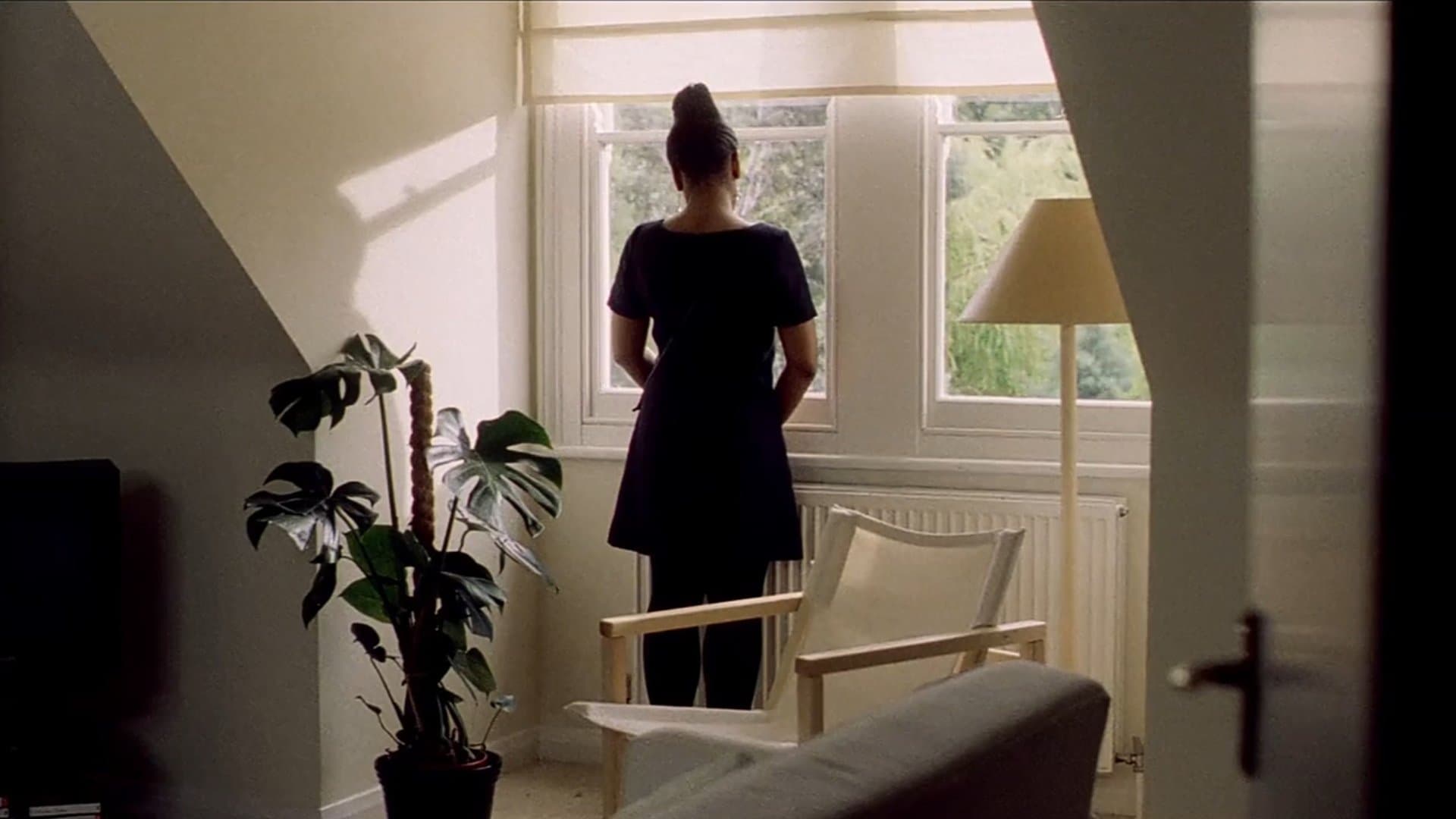
The filming schedule relied heavily on real domestic locations in North London’s residential streets and terraced houses, giving the film its characteristic sense of lived-in ordinariness. A photographic studio interior, where Timothy Spall’s character Maurice works, was also a key set, constructed to feel functional and modest rather than cinematic. Cinematographer Dick Pope shot in a largely naturalistic style, eschewing dramatic lighting setups in favour of the kind of flat, domestic light you would find in the actual spaces. This approach demanded extraordinary performances from the cast since there was no visual grandeur to supplement the emotional material.
The film premiered at the Cannes Film Festival in May 1996 and won the Palme d’Or, the festival’s top prize, with the jury also awarding Brenda Blethyn Best Actress. October Films acquired US distribution rights and released the film in a limited theatrical run beginning in September 1996, which expanded steadily through the awards season as Blethyn received Academy Award, BAFTA, and Golden Globe nominations. The film was released in the UK by Artificial Eye. Its critical and commercial success significantly raised the international profile of British social realist cinema and of Mike Leigh as a filmmaker.
Awards and Recognition
Secrets & Lies received some of the most significant awards recognition of any British film of the 1990s, with its greatest triumph coming at the Cannes Film Festival in May 1996. The film won the Palme d’Or, the festival’s top prize, in a competition jury that recognized it as the best film of the year globally. Brenda Blethyn also won the Best Actress prize at Cannes, an extraordinary double for a British production at that scale.
At the Academy Awards, the film received five nominations: Best Picture, Best Director (Mike Leigh), Best Actress (Brenda Blethyn), Best Supporting Actress (Marianne Jean-Baptiste), and Best Original Screenplay (Mike Leigh). Jean-Baptiste’s nomination was historic: she became the first Black British actress to receive a BAFTA nomination for Best Supporting Actress, and her Oscar nomination similarly broke new ground for British performers of colour in mainstream awards recognition. The film ultimately did not win any Academy Awards, but its five nominations placed it among the most decorated British films of the decade in Hollywood terms.
At the BAFTA Awards, Brenda Blethyn won Best Actress and Mike Leigh won Best Original Screenplay. The film was also nominated for BAFTA Best Film, Best Supporting Actress (Claire Rushbrook), and Best Director. At the Golden Globes, Blethyn won Best Actress in a Drama, one of the most prominent US awards for an international film that year. The film’s sweep through the festival and awards circuit in 1996 and 1997 established it as a landmark of British cinema.
Critical Reception
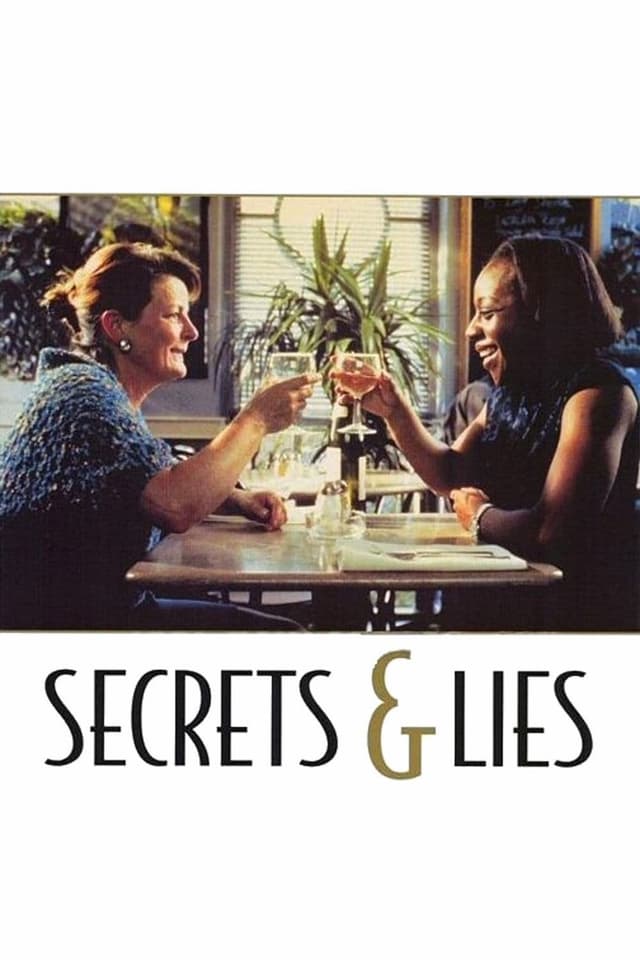
Secrets & Lies holds a 98% rating on Rotten Tomatoes, one of the highest scores for any British drama of its era, and is consistently ranked among the greatest British films of the 1990s. Critics praised the film for the extraordinary naturalism of its performances, the precision of Leigh’s observational writing and direction, and the emotional intensity of its central revelation scene, in which Cynthia and Hortense meet for the first time over coffee in a café, a scene that runs for several uninterrupted minutes and is widely cited as one of the finest single scenes in British cinema.
Roger Ebert gave the film four stars and described Brenda Blethyn’s performance as among the finest he had seen in years, calling the film a deeply observed study of shame, identity, and the way families manage what they cannot say to each other. The Guardian and the Observer praised the film on its UK release as a defining work of Mike Leigh’s career and an authentic portrait of contemporary London life across class and racial lines. The New York Times’ Janet Maslin described it as a film of devastating emotional honesty.
The film has aged exceptionally well. Its treatment of a mixed-race family reunion, class anxiety, and the cost of long-held secrets feels as relevant today as it did in 1996. Marianne Jean-Baptiste’s performance as Hortense is frequently cited by critics as one of the most underrated lead performances of the decade, and her historic BAFTA nomination has been revisited frequently in discussions of diversity in British awards culture. The film was added to the Criterion Collection, cementing its place in the canon of world cinema, and continues to be screened in repertory cinemas and film courses worldwide.
Frequently Asked Questions
How much did Secrets & Lies (1996) cost to make?
The production budget was approximately $5,000,000. CiBy 2000, Channel Four Films, and Thin Man Films co-financed the production, providing Mike Leigh with the resources to develop the film through his trademark improvisational rehearsal process.
How much did Secrets & Lies earn at the box office?
The film grossed $13,407,452 domestically and $30,600,000 internationally, for a worldwide total of approximately $14,000,000 in initial reporting that has been revised upward through subsequent releases. October Films handled the U.S. distribution effectively in art-house markets.
Who directed Secrets & Lies?
Mike Leigh wrote and directed the film. Leigh is renowned for his improvisational methodology, in which actors develop characters over months of rehearsal before any scripted dialogue is committed to paper, an approach he applied across Naked (1993), Vera Drake (2004), and Mr. Turner (2014).
Who stars in Secrets & Lies?
Brenda Blethyn stars as Cynthia, a working-class single mother. Marianne Jean-Baptiste plays her biological daughter Hortense, with Timothy Spall as Cynthia's brother Maurice, Phyllis Logan as his wife Monica, and Claire Rushbrook as Cynthia's other daughter Roxanne.
Did Secrets & Lies win the Palme d'Or?
Yes. Secrets & Lies won the Palme d'Or at the 49th Cannes Film Festival in May 1996. Brenda Blethyn was also awarded Best Actress at Cannes for her performance, completing one of the festival's strongest sweeps of the decade.
Did Secrets & Lies win any Academy Awards?
The film received five Academy Award nominations including Best Picture, Best Director for Mike Leigh, Best Actress for Brenda Blethyn, Best Supporting Actress for Marianne Jean-Baptiste, and Best Original Screenplay. It did not win in any category, with The English Patient sweeping the major awards.
Where was Secrets & Lies filmed?
Principal photography took place in London and surrounding suburbs, with the locations evoking the working-class East and South London communities that Leigh has documented across his career. Production was completed within a contained London-area schedule.
What did critics think of Secrets & Lies?
The film received exceptional reviews, with a 95% approval rating on Rotten Tomatoes and a 91 out of 100 score on Metacritic. It is widely regarded as Mike Leigh's masterpiece and one of the defining British films of the 1990s.
How long is Secrets & Lies?
The film runs 142 minutes, longer than many comparable British dramas of the era. The pace was a deliberate choice to allow extended single-take scenes, including the celebrated 7-minute and 25-second cafe sequence between Brenda Blethyn and Marianne Jean-Baptiste.
How does Secrets & Lies compare to other Mike Leigh films?
Secrets & Lies is widely considered the commercial and critical peak of Leigh's career, outperforming Naked (1993), Vera Drake (2004), Happy-Go-Lucky (2008), and Mr. Turner (2014) on the international art-house circuit. It remains his only Palme d'Or winner.
Build budgets like this one in Saturation
Start from an industry-standard feature film template, import the schedule and rates you already have, and let the cost report keep itself current as you spend. Real-time collaboration, no spreadsheets.