Right Now, Wrong Then Budget
Updated
Synopsis
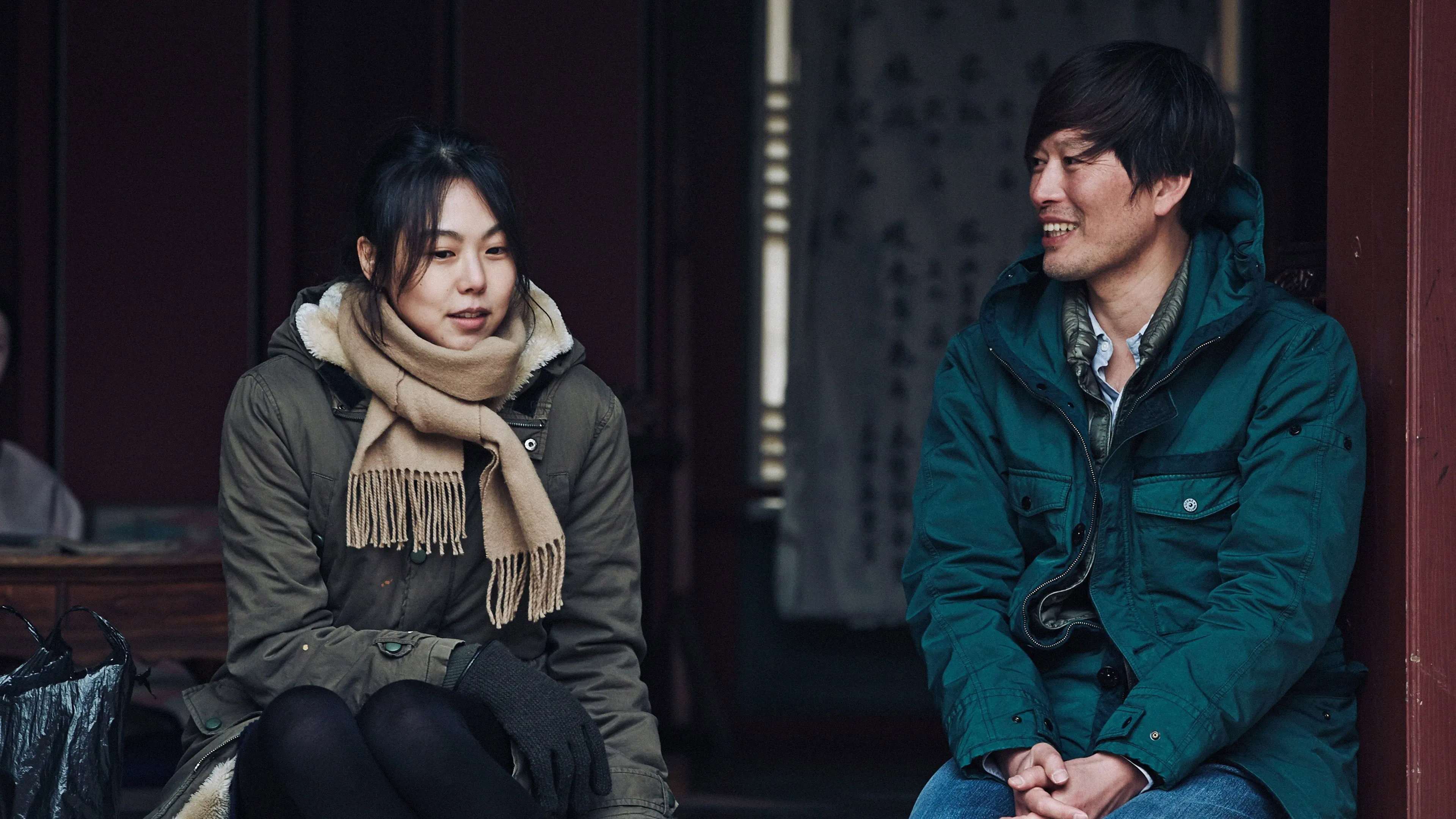
A respected art-house film director travels to Suwon a day early for a Q&A and meets a young painter outside a palace. The film presents their day together twice, with subtle but accumulating differences in dialogue and behavior that reshape the encounter's emotional outcome.
What Is the Budget of Right Now, Wrong Then (2015)?
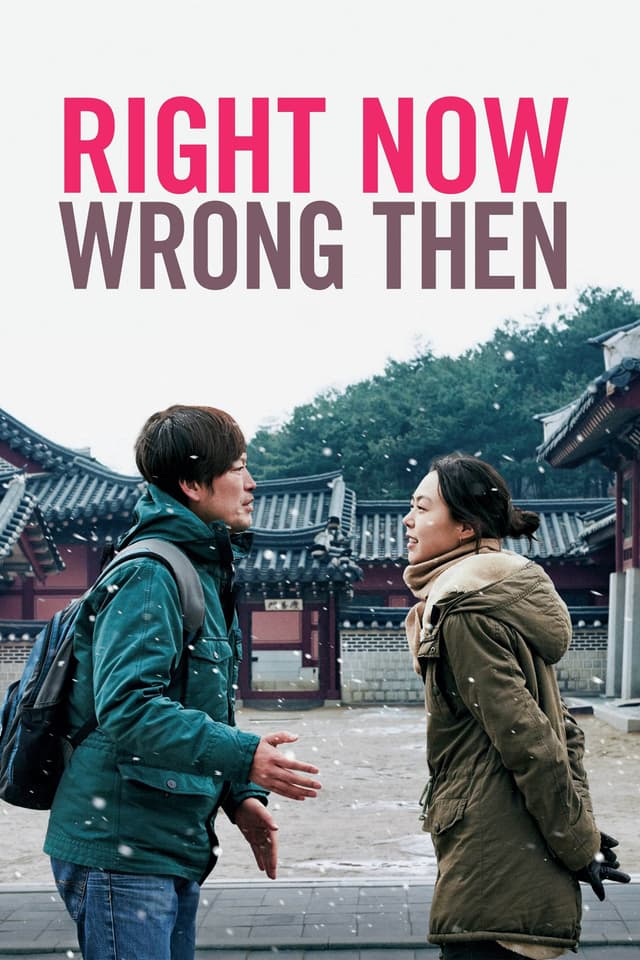
Right Now, Wrong Then (Jigeumeun matgo geuttaeneun teullida, 2015), directed by Hong Sang-soo and produced by his own Jeonwonsa Film Co., was made on an estimated budget of $100,000 to $200,000, in keeping with the director's established micro-budget production model. Hong has been self-financing and self-producing through Jeonwonsa since the late 2000s, working with a skeleton crew, a handful of locations, available light, and a writing-to-shooting timeline measured in weeks rather than months. No official figure was released.
The film was Hong's seventeenth feature and the project that broke through to international art-house prominence after winning the Golden Leopard at the 2015 Locarno Film Festival. The two-part structure (the same encounter told twice with subtle variations) was a development of the cyclical narrative architecture Hong had been refining across his preceding decade of work.
Key Budget Allocation Categories
The estimated budget was distributed across these production areas:
- Director-Producer Fee. Hong Sang-soo wrote, directed, photographed, edited, and self-produced the film through Jeonwonsa Film Co. His combined above-the-line role consolidated what would have been multiple separate line items in a conventional production into a single owner-operator structure.
- Lead Cast. Jung Jae-young and Kim Min-hee played the leads at compensation rates well below their commercial market value, working within Hong's established pattern of attracting major Korean stars to his low-budget productions on the strength of his auteur reputation rather than competitive fees.
- Crew. A crew of approximately ten worked on the production, including assistant director, sound recordist, and a small camera and lighting team. Hong's established repertory crew accepts reduced rates in exchange for the artistic freedom of his shooting model.
- Locations. The film shot at Suwon's Hwaseong Fortress, several neighborhood cafés and restaurants, and an artist's studio, with the location list compact enough to allow the entire shoot to take place in approximately fifteen days. Production permitting and location fees were minimal compared with industry-standard Korean productions.
- Camera and Equipment. Hong shot the film on consumer-grade digital cameras (Canon DSLR-style equipment) using available natural light and minimal supplementary fixtures. The compact, rapid-turnaround equipment setup is a foundational element of his production economy.
- Post-Production. Hong edited the film himself in his Seoul office across approximately two months. The score, by Hong himself, consisted of repeated piano motifs recorded in a single session. Post-production overheads were minimal.
How Does Right Now, Wrong Then's Budget Compare to Similar Films?
At an estimated $100,000 to $200,000, Right Now, Wrong Then sits among the world's lowest-budget award-winning art-house features:
- In Another Country (2012): Budget under $200,000 | Worldwide $231,500. Hong Sang-soo's Isabelle Huppert-led precursor cost essentially the same amount and earned a similar art-house return, confirming Hong's consistent budget model across his productions.
- Cemetery of Splendour (2015): Budget approximately $1,400,000 | Worldwide $282,664. Apichatpong Weerasethakul's contemporaneous Cannes-selected feature cost seven times Right Now, Wrong Then and earned a comparable worldwide gross, illustrating Hong's production efficiency relative to other contemporary art-house auteurs.
- Hard to Be a God (2013): Budget approximately $3,000,000 | Worldwide $251,500. Aleksei German's decade-in-the-making Russian art film cost roughly fifteen to twenty times Right Now, Wrong Then and earned a comparable worldwide return, highlighting the gap between conventional production scales and Hong's self-produced model.
- On the Beach at Night Alone (2017): Budget under $200,000 | Worldwide $169,300. Hong's next feature with Kim Min-hee, made two years later, confirmed his consistent production economy and his repeated collaborations with the same actor pool.
Right Now, Wrong Then Box Office Performance
Right Now, Wrong Then premiered at the Locarno Film Festival in August 2015, winning the Golden Leopard for Best Film. The festival win drove an art-house theatrical release across South Korea, France, the United States, and selected European territories through 2015 and 2016. The film grossed $680,728 worldwide across all theatrical markets.
Against an estimated $100,000 to $200,000 production cost, the financial outcome was a clear commercial success by Hong Sang-soo's self-production model:
Box Office Breakdown
Right Now, Wrong Then

The film returned between three and seven dollars in worldwide theatrical revenue for every dollar of production budget, an unusually high gross-to-budget ratio for an art-house drama. The home-video and streaming windows added an undisclosed additional revenue stream through Cinema Guild in the United States, MK2 in France, and Korean home-entertainment distributors.
The financial outcome confirmed the durability of Hong's self-produced micro-budget model. Jeonwonsa Film Co. has continued producing roughly two Hong features per year since the 2015 Locarno win, with the company's ongoing operation reflecting the cumulative success of the model rather than any single film's breakout return.
Right Now, Wrong Then Production History
Hong Sang-soo wrote the screenplay across the early months of 2015 following the completion of Hill of Freedom (2014). His habitual pre-production timeline is brief, with screenplay revisions continuing during filming rather than being locked beforehand. The two-part structure of the film was a development of the doubling and repetition strategies Hong had explored across multiple earlier features including Tale of Cinema (2005) and Oki's Movie (2010).
Principal photography took place across Suwon and Seoul, South Korea, over approximately fifteen days in early 2015. The Suwon Hwaseong Fortress sequences, several restaurant and café interiors, and the artist's studio scenes were shot in continuity within each of the two structural halves. The Korean Film Council's production tax incentives provided modest support, though Hong's self-financed model means his films generally clear that support without dependence on it.
The two halves of the film were shot back-to-back rather than in alternation, with the cast performing each version of the encounter as a discrete scene block. Hong's improvisational dialogue approach means each version was generated from the same underlying script but allowed actor variation, which produces the subtle accumulating differences that drive the structural premise.
Post-production wrapped in time for the Locarno premiere in August 2015. The Locarno Golden Leopard win, accompanied by the Best Actor award to Jung Jae-young, accelerated the film's international theatrical rollout through Cinema Guild (US), MK2 (France), and other art-house distributors who picked up rights in the months following the festival.
Awards and Recognition
Right Now, Wrong Then won the Golden Leopard (Pardo d'Oro) for Best Film at the 2015 Locarno Film Festival, with Jung Jae-young winning the Best Actor (Pardo per la migliore interpretazione maschile) prize. The double victory was Hong Sang-soo's biggest international festival win to date and elevated his profile in the international art-house circuit.
The film additionally won the Best Picture and Best Director prizes at the 2016 Korean Association of Film Critics Awards, the Best Director prize at the Buil Film Awards (Korea), and the Asia-Pacific Stars Award for Best Screenplay at the Asian Film Awards. It was included on the New York Times' year-end ten best foreign films of 2015 list and on Cahiers du Cinéma's 2015 best-of-year ranking.
Critical Reception
Right Now, Wrong Then received highly positive international reviews. The film holds a 94% approval rating on Rotten Tomatoes based on 53 critic reviews, with the critical consensus calling it "a delicately observed two-part character study that finds depth in the smallest of variations." On Metacritic, the film scored 81 out of 100, indicating universal acclaim. The film does not have a CinemaScore because of its specialty release pattern.
Critics responded to Hong Sang-soo's precise observational style, the performances by Jung Jae-young and Kim Min-hee, and the structural payoff of the doubled narrative. The New York Times' Manohla Dargis called it "a small miracle of construction, with each repetition deepening rather than diminishing the encounter." The Los Angeles Times' Justin Chang wrote that "Hong continues to prove that nothing happens in his films, except for everything that matters."
Detractors objected to the deliberately slow pace and the limited dramatic range, with The Hollywood Reporter's Deborah Young writing that "viewers without prior exposure to Hong's style may find the two-part structure more frustrating than illuminating." The film's relatively narrow audience reach reflects this divide between critics committed to the slow-cinema and art-house tradition and the broader filmgoing public. Subsequent collaborations between Hong and Kim Min-hee, who began a personal relationship publicly acknowledged in 2017, have continued the same observational style with similar critical reception.
Frequently Asked Questions
How much did Right Now, Wrong Then (2015) cost to make?
Hong Sang-soo and Jeonwonsa Film Co. did not disclose a budget. Industry estimates place the production in the $100,000 to $200,000 range, consistent with Hong's established micro-budget self-production model since the late 2000s. The director self-financed, self-produced, wrote, directed, photographed, edited, and scored the film.
How much did Right Now, Wrong Then earn at the box office?
The film grossed $680,728 worldwide across art-house theatrical markets in South Korea, France, the United States, and selected European territories from 2015 through 2016. The worldwide gross represented an unusually high return relative to the production budget, returning between three and seven dollars in revenue for every dollar of production cost.
Who directed Right Now, Wrong Then?
Hong Sang-soo, the South Korean auteur director who has worked through his own Jeonwonsa Film Co. since the late 2000s. Right Now, Wrong Then was his seventeenth feature and the project that earned his most significant international recognition to date when it won the Golden Leopard at the 2015 Locarno Film Festival.
What is the two-part structure of Right Now, Wrong Then?
The film presents the same encounter twice, with the lead characters (an art-house film director and a young painter) meeting outside Suwon's Hwaseong Fortress and spending the day together. The second half repeats the day with subtle but accumulating differences in dialogue and behavior that produce a substantially different emotional outcome.
Did Right Now, Wrong Then win any awards?
Yes. The film won the Golden Leopard (Pardo d'Oro) for Best Film at the 2015 Locarno Film Festival, with Jung Jae-young winning the Best Actor (Pardo per la migliore interpretazione maschile) prize. It also won Best Picture and Best Director at the 2016 Korean Association of Film Critics Awards and Best Director at the Buil Film Awards.
Where was Right Now, Wrong Then filmed?
Principal photography took place across Suwon and Seoul, South Korea over approximately fifteen days in early 2015. Key locations included the Suwon Hwaseong Fortress, several neighborhood cafés and restaurants, and an artist's studio. The shoot followed Hong Sang-soo's established compact, rapid-turnaround production model.
Who stars in Right Now, Wrong Then?
Jung Jae-young plays the art-house film director Ham Cheon-soo, and Kim Min-hee plays the young painter Yoon Hee-jeong. Yoon Yeo-jeong, Gi Ju-bong, Choi Hwa-jeong, and Seo Young-hwa appear in supporting roles as members of the painter's social circle.
What did critics think of Right Now, Wrong Then?
The film received highly positive reviews, holding a 94% approval rating on Rotten Tomatoes (53 critics) and a 81 out of 100 score on Metacritic. Critics responded to the precise observational style, the lead performances, and the structural payoff of the doubled narrative. It appeared on year-end best-of lists at the New York Times and Cahiers du Cinéma.
How long is Right Now, Wrong Then?
The film runs 121 minutes (two hours and one minute), with the two structural halves running approximately equal length. The pacing is deliberate, with extended dialogue scenes and long takes characteristic of Hong Sang-soo's observational style.
Is Right Now, Wrong Then a good entry point to Hong Sang-soo?
Yes. Critics widely consider Right Now, Wrong Then the most accessible entry point in Hong Sang-soo's filmography because the two-part structure makes his characteristic concerns with cyclical narrative and small variations immediately visible to first-time viewers. Subsequent works including On the Beach at Night Alone (2017) and The Day After (2017) continued the same observational style.
Filmmakers
Right Now, Wrong Then

Official Trailer
Build budgets like this one in Saturation
Start from an industry-standard feature film template, import the schedule and rates you already have, and let the cost report keep itself current as you spend. Real-time collaboration, no spreadsheets.