Revelations Budget
Updated
Synopsis
A Harvard astrophysicist whose young daughter has been murdered by satanists is approached by an Italian nun convinced that the events foretold in the Book of Revelation are happening in real time. Together they race across the world following signs and visions that could either confirm or avert an unfolding biblical apocalypse.
What Is the Budget of Revelations (2005)?
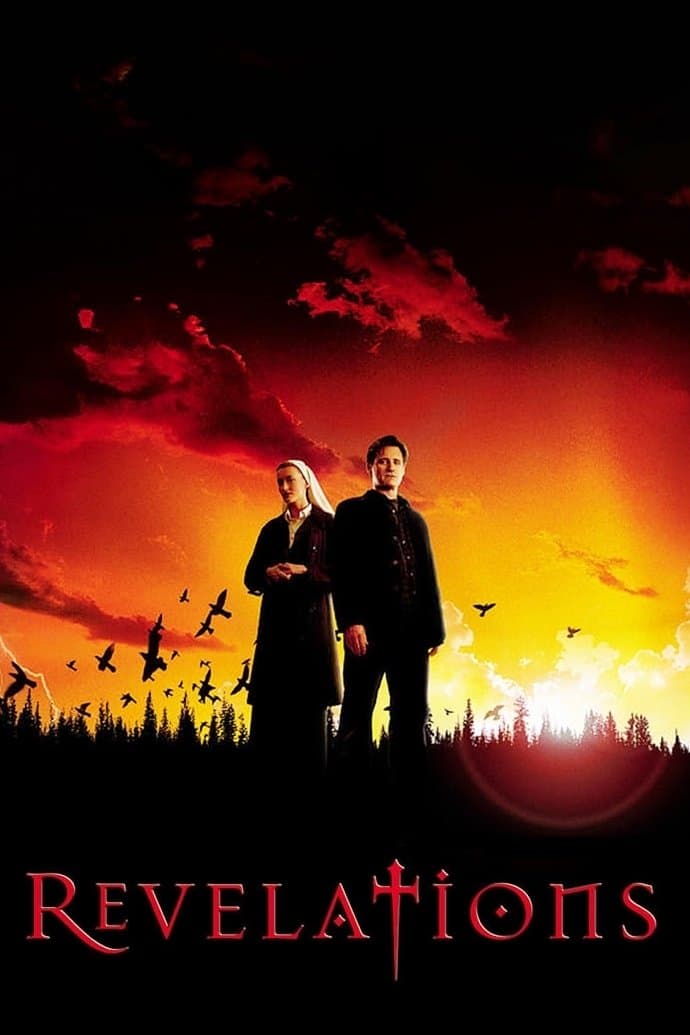
Revelations (2005) is a six-episode apocalyptic miniseries that aired on NBC from April 13 to May 25, 2005. The series was created by David Seltzer (the screenwriter of The Omen) and starred Bill Pullman as Dr. Richard Massey, a Harvard astrophysicist whose daughter has been murdered by satanists, opposite Natascha McElhone as Sister Josepha Montafiore, an Italian nun who believes the events of the Book of Revelation are happening in real time. The exact production budget for the series has not been publicly disclosed in network trade reporting. NBC primetime drama miniseries at the major-broadcaster commissioning tier in 2005 typically operated in the $2,000,000 to $4,000,000 per-episode range, which would suggest a total production investment in the $12,000,000 to $24,000,000 range across the six-episode commission.
Financing came through NBC as the commissioning broadcaster, with the series produced by NBC Enterprises (NBC's in-house production division) and Stillking Films (a Prague-based co-production company that handled the European location production). Stillking's involvement enabled substantial location work in the Czech Republic, Italy, and additional European territories, anchored by Czech Republic production incentives. The miniseries format was a deliberate counter-programming strategy by NBC to compete with the breakout first season of ABC's Lost (which aired in the same Wednesday 9:00 PM ET timeslot), with NBC betting that a six-week limited-run apocalyptic series with strong creative pedigree could pull serial-mystery viewers from the ABC competition.
Key Budget Allocation Categories
The estimated $2,000,000 to $4,000,000 per-episode budget across six episodes was distributed across the following areas characteristic of major-network primetime miniseries production:
- Above-the-Line Talent: Bill Pullman (Independence Day, Lost Highway) and Natascha McElhone (Ronin, The Truman Show) led the cast, with Fred Durst, Christopher Biggins, John Rhys-Davies, and Michael Massee in supporting roles. Pullman's casting brought a recognizable feature-film leading-man presence to the broadcast-television commission, with his rate the single largest above-the-line cost.
- Creator and Writer Fees: David Seltzer created the series and wrote multiple episodes, with additional rotating writing teams across the six-episode run. Seltzer's established credentials as the screenwriter of The Omen (1976) and Bird on a Wire (1990) anchored the creative pedigree and the writer-room compensation.
- European Location Shoot: Principal photography took place in the Czech Republic and Italy, with Prague-based co-production handled by Stillking Films. European location work covered Roman Catholic settings in Italy (including doubling for Vatican-adjacent locations), European urban locations standing in for the multiple international settings called for in the script, and substantial period and contemporary location work across the run.
- Production Design and Visual Effects: The apocalyptic plot required visual effects across multiple sequences including stigmata appearances, environmental disturbances, and the climactic confrontation sequences. Visual effects budget was modest by feature-film standards but elevated relative to typical primetime drama production, consistent with the apocalyptic-thriller genre demands.
- Score and Music: Christopher Franke (the former Tangerine Dream member who had scored Babylon 5) composed the original score, blending atmospheric synthesizer textures with traditional orchestral writing. The Babylon 5 connection brought genre-television scoring credentials to the project that supported the apocalyptic atmosphere.
- Marketing and Promotion: NBC marketing positioned the miniseries as a Lost competitor in the Wednesday 9:00 PM ET timeslot, with substantial promo spend across the 2004-2005 broadcast season finale window. While theatrical marketing-style P&A is not part of production budget, network promotional spend made up a meaningful adjacent expense.
How Does Revelations' Budget Compare to Similar Productions?
At an estimated $2,000,000 to $4,000,000 per-episode budget across six episodes, Revelations sat at the typical major-network primetime miniseries tier for 2005. The comparison set:
- Lost (2004 pilot): Pilot budget approximately $11,000,000 to $14,000,000 (ABC, one of the most expensive television pilots ever commissioned at the time). The Wednesday 9:00 PM ET competition that Revelations was designed to challenge operated at substantially higher per-episode budget once the series entered production.
- Threshold (2005): Budget undisclosed. The CBS Charles S. Dutton and Carla Gugino apocalyptic-thriller series that premiered in fall 2005 illustrates the broader category of apocalyptic primetime drama that NBC was attempting to lead with Revelations.
- Surface (2005): Budget undisclosed. The NBC sea-monster apocalyptic-thriller series that premiered in fall 2005 from the Threshold and Invasion broadcast cycle illustrates the network's sustained interest in apocalyptic-thriller drama.
- Invasion (2005): Budget undisclosed. The ABC apocalyptic-thriller series that aired in fall 2005 starring William Fichtner illustrates the broader competing-network commissioning across the same year.
- The Stand (1994): Budget approximately $28,000,000 across the four-part miniseries. The ABC Stephen King apocalyptic adaptation operated at substantially higher total production investment scale and illustrates the upper-end miniseries commissioning of the prior decade.
Revelations Broadcast Performance
Revelations premiered on NBC on April 13, 2005 in the Wednesday 9:00 PM ET timeslot, directly opposite the first-season Lost that had broken out as ABC's tentpole drama. The premiere drew approximately 13,400,000 viewers, a strong opening number for the limited-run miniseries format, but the subsequent five episodes declined steadily as the Lost competition held the timeslot and the Revelations narrative did not deliver the immediate genre-thriller mechanics that the marketing had promised. The finale on May 25, 2005 closed the run at approximately 6,500,000 viewers, less than half the premiere number.
As a major-network television commissioning rather than a theatrical release, Revelations did not generate a meaningful box-office figure. The recoupment picture is framed against broadcaster license fees, advertising revenue across the six-episode run, and downstream home-entertainment and international distribution:
- Production Format: 6-episode limited series, broadcast April 13 to May 25, 2005 on NBC
- Per-Episode Budget: estimated $2,000,000 to $4,000,000 (industry range for NBC primetime miniseries)
- Total Estimated Production Investment: estimated $12,000,000 to $24,000,000 across the six-episode commission
- Premiere Viewership: 13,400,000 viewers (April 13, 2005)
- Finale Viewership: 6,500,000 viewers (May 25, 2005)
- Recoupment Status: recovered partially through NBC license fees, primetime advertising revenue, and subsequent home-entertainment DVD and international territory licensing; series was not renewed and the season-one cliffhanger remains unresolved
Revelations did not receive a second-season order from NBC despite the unresolved cliffhanger ending of the May 25, 2005 finale. The combination of declining episode-over-episode viewership across the six-week run, the strong ABC Lost competition, and the broader network programming reset for the 2005 fall schedule (which prioritized Surface in the apocalyptic-thriller slot) ended the property. Home-entertainment DVD release in 2005 and 2006 recovered modest additional revenue, and the series subsequently received international territory licensing across European and Latin American broadcasters, but the property has remained dormant since.
Revelations Production History
Development of Revelations began at NBC Enterprises in 2003 under creator David Seltzer, who had pitched an apocalyptic-thriller miniseries explicitly designed around the Book of Revelation source material that he had previously drawn on for The Omen (1976). NBC committed to a six-episode limited-run order in early 2004, with the strategic intention of counter-programming against the breakout first season of ABC's Lost, which had premiered in September 2004 and rapidly become the strongest serial-mystery drama on broadcast television.
Casting Bill Pullman as Dr. Richard Massey brought feature-film leading-man wattage to the broadcast-television commission, with Pullman committing across the long-form miniseries schedule. Natascha McElhone, then transitioning between feature-film and television work, was cast as Sister Josepha Montafiore in late 2004. Supporting roles were assembled across late 2004 and early 2005, including Fred Durst (the Limp Bizkit frontman) in a notable casting choice as Hawk, Christopher Biggins as Cardinal Gabbi, John Rhys-Davies as Professor Lampley, and Michael Massee.
Principal photography ran across late 2004 and early 2005, with substantial location work in the Czech Republic and Italy handled by Stillking Films' Prague co-production base. The European location work covered Roman Catholic settings doubling for Vatican-adjacent environments, multiple international urban settings called for in the script, and the climactic apocalyptic-confrontation sequences. The series premiered on April 13, 2005 in the Wednesday 9:00 PM ET timeslot directly opposite Lost.
Awards and Recognition
Revelations received targeted recognition in the Saturn Awards genre-television categories and the Primetime Emmy technical categories. The series was nominated at the 2006 Saturn Awards for Best Television Presentation but did not win against competing nominees including the first season of Lost. It did not register at the major industry awards including the Primetime Emmys main categories, the Golden Globes television categories, or the Television Critics Association Awards.
The series' awards profile reflects both its limited cultural footprint (driven by the declining viewership across the six-episode run) and the genre ceiling that affects most apocalyptic-thriller broadcast television. David Seltzer's subsequent television career picked up with additional miniseries commissioning, while the broader apocalyptic-thriller programming category at NBC was redirected through Surface (2005) and additional development.
Critical Reception
Revelations received mixed reviews. The series holds a 6.7 user rating on IMDb based on viewer ratings collected since broadcast, with critical response at the time of premiere divided between viewers who appreciated the apocalyptic-thriller pacing and viewers who found the religious source material handled too literally for the broadcast-television format. The series did not receive coverage at scale on Rotten Tomatoes or Metacritic, consistent with the limited mainstream press coverage that broadcast-television miniseries of the period typically received.
The Hollywood Reporter's coverage of the April 13, 2005 premiere positioned the series favorably as "an ambitious apocalyptic thriller that demands sustained attention," while Variety was more skeptical, noting that "the Lost competition will be a tall order for an unproven property." Entertainment Weekly graded the premiere a B-, praising Bill Pullman's central performance while noting that the pacing across the six-episode order was uneven.
The series' legacy has been preserved through three subsequent developments: the unresolved cliffhanger finale that has generated ongoing fan discussion on television forums and apocalyptic-thriller retrospectives; David Seltzer's continued recognition for his work in the apocalyptic-thriller subgenre stretching back to The Omen (1976); and the broader pattern of NBC apocalyptic-thriller commissioning that the series anchored, leading to Surface, Heroes, and additional 2005-2007 NBC primetime development.
Frequently Asked Questions
What is Revelations (2005)?
Revelations is a six-episode apocalyptic-thriller miniseries that aired on NBC from April 13 to May 25, 2005. It starred Bill Pullman as Dr. Richard Massey, a Harvard astrophysicist whose daughter has been murdered by satanists, opposite Natascha McElhone as Sister Josepha Montafiore, an Italian nun who believes the events of the Book of Revelation are happening in real time.
How much did Revelations (2005) cost to make?
The exact production budget has not been publicly disclosed in network trade reporting. NBC primetime drama miniseries at the major-broadcaster commissioning tier in 2005 typically operated in the $2,000,000 to $4,000,000 per-episode range, which would suggest a total production investment in the $12,000,000 to $24,000,000 range across the six-episode commission.
Who created Revelations?
David Seltzer created the series and wrote multiple episodes. Seltzer is best known as the screenwriter of The Omen (1976), one of the most influential apocalyptic-thriller films of the 1970s, and brought that established Book of Revelation source-material credibility to the NBC miniseries commission.
Who starred in Revelations?
Bill Pullman played Dr. Richard Massey, a Harvard astrophysicist whose daughter has been murdered by satanists. Natascha McElhone played Sister Josepha Montafiore, an Italian nun who believes the events of the Book of Revelation are happening in real time. Supporting cast included Fred Durst (the Limp Bizkit frontman in a notable acting role), Christopher Biggins, John Rhys-Davies, and Michael Massee.
How many episodes of Revelations were made?
The series ran six episodes, broadcast on NBC from April 13 to May 25, 2005 in the Wednesday 9:00 PM ET timeslot. The series was commissioned as a limited-run miniseries rather than an ongoing primetime drama, although the finale ended on a cliffhanger that has remained unresolved.
Where was Revelations filmed?
Principal photography took place in the Czech Republic and Italy, with Prague-based co-production handled by Stillking Films. European location work covered Roman Catholic settings doubling for Vatican-adjacent environments, multiple international urban settings called for in the script, and the climactic apocalyptic-confrontation sequences. The Czech Republic location anchored the production financing through Czech production incentives.
Was Revelations renewed for a second season?
No. Despite the unresolved cliffhanger ending of the May 25, 2005 finale, NBC did not order a second season of Revelations. The combination of declining episode-over-episode viewership across the six-week run, the strong ABC Lost competition in the same Wednesday 9:00 PM ET timeslot, and the broader network programming reset for the 2005 fall schedule (which prioritized Surface in the apocalyptic-thriller slot) ended the property.
Why was Revelations created to compete with Lost?
NBC commissioned Revelations as a deliberate counter-programming strategy against the breakout first season of ABC's Lost, which had premiered in September 2004 and rapidly become the strongest serial-mystery drama on broadcast television. NBC bet that a six-week limited-run apocalyptic series with strong creative pedigree (David Seltzer, the screenwriter of The Omen) could pull serial-mystery viewers from the ABC competition.
What did critics think of Revelations?
The series received mixed reviews, with viewers and critics divided between those who appreciated the apocalyptic-thriller pacing and those who found the religious source material handled too literally for broadcast-television. It holds a 6.7 user rating on IMDb. Bill Pullman's central performance was widely praised, while the pacing across the six-episode order was the most common critical complaint.
Did Revelations win any awards?
The series was nominated at the 2006 Saturn Awards for Best Television Presentation but did not win against competing nominees including the first season of Lost. It did not register at the major industry awards including the Primetime Emmys main categories, the Golden Globes television categories, or the Television Critics Association Awards.
Filmmakers
Revelations

Official Trailer
Build budgets like this one in Saturation
Start from an industry-standard feature film template, import the schedule and rates you already have, and let the cost report keep itself current as you spend. Real-time collaboration, no spreadsheets.