Return to Silent Hill Budget
 MysteryDramaHorror1h 46m
Updated
Synopsis
When a man receives a mysterious letter from his lost love, he is drawn to Silent Hill, a once familiar town now consumed by darkness.
What Is the Budget of Return to Silent Hill?
Return to Silent Hill (2026) was produced on a budget of approximately $23 million, a modest investment for an international horror co-production adapting the beloved 2001 survival horror video game Silent Hill 2. The film was produced by Davis Films, Electric Shadow, Supernix, and WIP, and distributed in the United States through Cineverse and Iconic Events Releasing in a targeted theatrical release strategy rather than a wide rollout.
Director Christophe Gans, who helmed the original Silent Hill film adaptation in 2006, returned to the franchise with a focused interpretation of the Silent Hill 2 storyline, specifically its "lake ending." The $23 million budget reflects the film's European co-production structure, with filming split between Germany and Serbia to leverage lower production costs while maintaining the atmospheric visual quality central to the Silent Hill mythology.
Key Budget Allocation Categories
- International Locations (Germany and Serbia): Principal photography ran from April 2023 through February 2024 across Munich, Nuremberg, Lake Ammer, and Penzing in Germany, as well as Belgrade, Serbia. The extended schedule and dual-country logistics were offset by significantly lower daily crew rates and facility costs compared to a UK or US-based production.
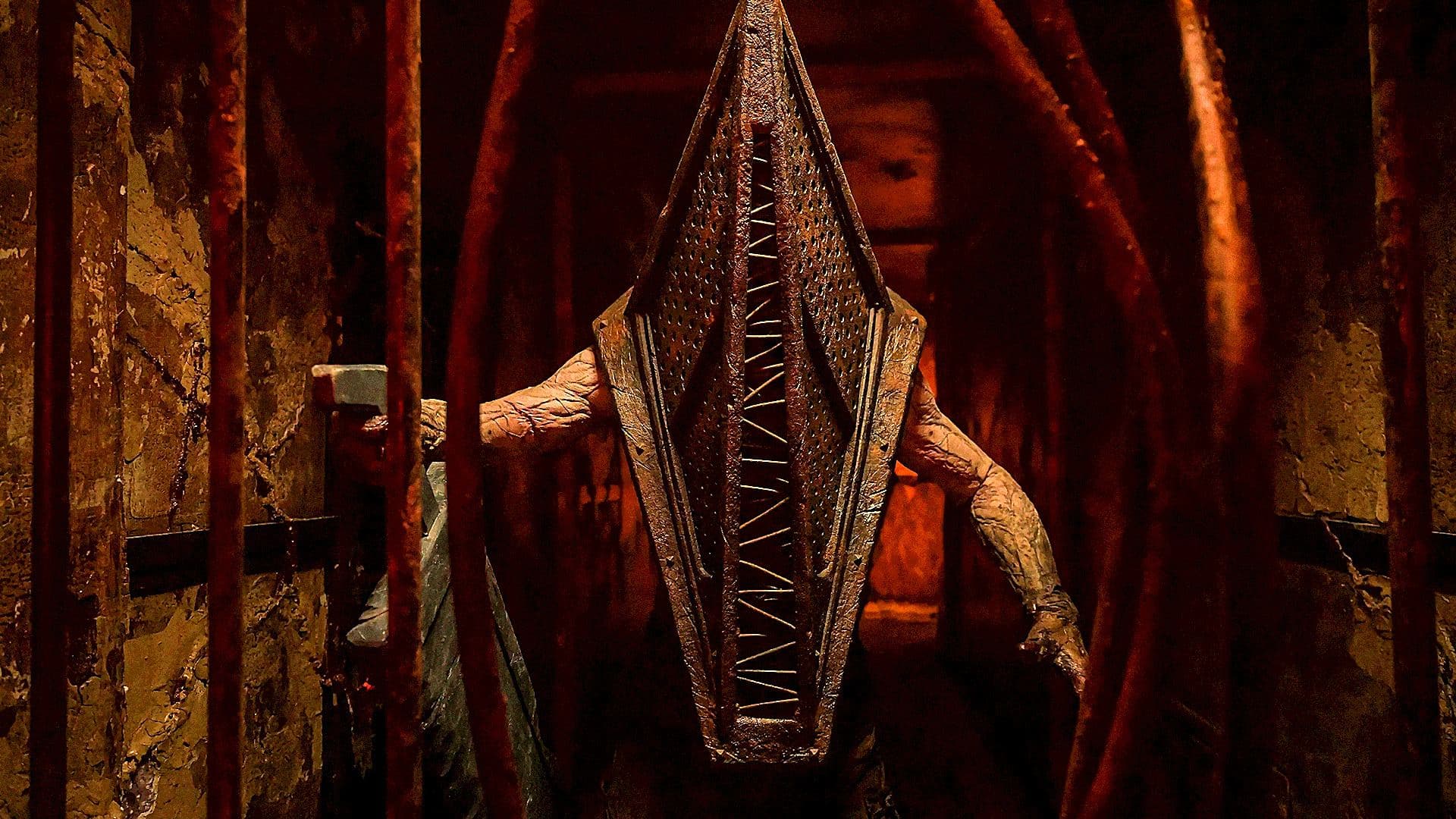
- Creature and Monster Performers: Gans cast professional dancers in prosthetic makeup to portray all monsters, a practical approach that avoided over-reliance on visual effects. The Pyramid Head character, portrayed by Robert Strange, required custom fabrication of the iconic helmet and weapon. Dancer rehearsal periods added pre-production cost but reduced post-production VFX expenditure.
- Cast: Jeremy Irvine (War Horse, Mamma Mia: Here We Go Again) stars as James Sunderland, with Hannah Emily Anderson playing multiple roles including Mary, Maria, Angela, and Moth Mary. The dual-country European cast structure kept above-the-line costs in the $4 to $6 million range.
- Production Design and Practical Sets: The film's visual identity relies heavily on practical sets built at facilities in Germany and Serbia rather than digital environments. Set construction for locations including the Brookhaven Hospital and Toluca Lake sequences consumed a meaningful portion of the below-the-line budget.
- Akira Yamaoka Score: Composer Akira Yamaoka, who created the iconic music for the Silent Hill video game series, scored the film. His involvement is both an artistic and marketing asset, connecting the adaptation to decades of franchise goodwill among the game's dedicated fanbase.
How Does Return to Silent Hill's Budget Compare to Similar Films?
Return to Silent Hill's $23 million budget places it in the mid-tier of video game adaptations and atmospheric horror productions, above the micro-budget horror spectrum but below major studio horror investments. Its worldwide gross of $47.8 million reflects a modest but commercially viable result for its budget tier.
- Silent Hill (2006): Budget $50M | Worldwide $97.5M. The original Christophe Gans adaptation carried more than twice the budget and performed proportionally better, benefiting from broader theatrical distribution and a larger pre-existing fanbase at the time.
- Resident Evil: Welcome to Raccoon City (2021): Budget $25M | Worldwide $41.8M. A comparable video game horror adaptation at a similar budget level, with a roughly equivalent box office result. Return to Silent Hill's $47.8M slightly outperformed this benchmark.
- Werewolf by Night (2022): Budget $20M | Disney+ premiere. A comparable practical horror production at a similar budget level that opted for streaming rather than theatrical, illustrating the distribution choices available to mid-budget genre films.
Return to Silent Hill Box Office Performance
Return to Silent Hill opened in the United States on January 23, 2026, through Cineverse and Iconic Events Releasing. The limited theatrical strategy targeted the video game franchise's dedicated fanbase rather than seeking wide mainstream appeal. The film grossed $47.8 million worldwide, with French distribution handled by Metropolitan Filmexport following the French theatrical release on February 4, 2026.
With a $23 million production budget and an estimated $15 million in prints and advertising for a limited theatrical release, the total investment was approximately $38 million. At a 50% average theater revenue split, the studio's share of the $47.8 million gross was roughly $23.9 million. The film covered its production costs through theatrical alone and was expected to generate further returns through home entertainment and VOD windows targeting the horror gaming community.
Box Office Breakdown
Return to Silent Hill

Return to Silent Hill earned roughly $2.08 for every $1 invested in production. The limited distribution model kept marketing costs down while the film's cult appeal sustained it in specialty markets. When VOD and home entertainment revenue are included, the full financial picture is more favorable than the theatrical multiple alone suggests. The film's success in finding its audience despite poor critical reception validates the niche theatrical strategy for established gaming IP.
Return to Silent Hill Production History
Christophe Gans's return to the Silent Hill universe began in development as a deliberate pivot away from the original film's original mythology toward a faithful adaptation of Silent Hill 2, widely considered the most critically acclaimed entry in the game series. Gans, working with co-writers Sandra Vo-Anh and Will Schneider, focused on the "lake ending" of the game, adapting the psychological horror story of James Sunderland's search for his deceased wife Mary.
Producers Victor Hadida, Molly Hassel, and David M. Wulf assembled an international co-production structure across Davis Films, Electric Shadow, Supernix, and WIP. The decision to film in Germany and Serbia rather than North America was driven by both budget considerations and the desire to capture a specifically European bleakness in the visual language that Gans felt matched the game's atmosphere.
Principal photography began in April 2023 and extended through February 2024, an unusually long production window that reflected the logistical complexity of filming across multiple countries and the extended preparation required for the practical monster performances. All creatures were portrayed by professional dancers in prosthetic costumes, a technique that required weeks of pre-production rehearsal. Akira Yamaoka composed the score, extending his involvement with the Silent Hill franchise from the games into a second film.
The film premiered in the United States on January 23, 2026, and opened in France on February 4. The critical reception was largely negative, with reviewers criticizing the film's pacing and narrative coherence while acknowledging its visual ambition and practical creature work. The Silent Hill fanbase showed meaningful support through opening weekend attendance despite the mixed press.
Awards and Recognition
Return to Silent Hill did not receive significant mainstream awards recognition, consistent with its limited distribution and 18% Rotten Tomatoes score. The film's most notable achievement was its fidelity to the source material, which earned praise from the Silent Hill gaming community and from Konami, the game's publisher. Akira Yamaoka's score, which incorporated themes from his decades of work on the game series, was highlighted by franchise enthusiasts as a standout element. The practical monster design and choreography received positive mention in genre-focused publications including Bloody Disgusting and Dread Central.
Critical Reception
Return to Silent Hill received a Rotten Tomatoes score of 18% from 67 critics and a Metacritic score of 34 out of 100 from 14 critics, indicating generally unfavorable reviews. Critics praised the film's practical creature design and Akira Yamaoka's score while criticizing the screenplay's pacing and emotional distance. Cinematographer Pablo Rosso's atmospheric work in Germany and Serbia was noted as a visual highlight despite the narrative shortcomings. The performance of Hannah Emily Anderson, who portrayed four distinct roles, was described as technically impressive if emotionally constrained by the material. Audience reception was more forgiving than critical consensus, with the gaming community treating it as a sincere if flawed tribute to the source material.
Frequently Asked Questions
How much did it cost to make Return to Silent Hill (2026)?
The production budget was $23,000,000, covering principal photography, cast and crew salaries, locations, sets, post-production, and music. Marketing and distribution (P&A) costs are estimated at an additional $11,500,000 - $18,400,000, bringing the total studio investment to approximately $34,500,000 - $41,400,000.
How much did Return to Silent Hill (2026) earn at the box office?
Return to Silent Hill grossed $5,544,971 domestic, $41,827,080 international, totaling $47,372,051 worldwide.
Was Return to Silent Hill (2026) profitable?
The film did not break even theatrically, earning $47,372,051 against an estimated $57,500,000 needed. Ancillary revenue may have improved the picture.
What were the biggest costs in producing Return to Silent Hill?
The primary cost drivers were above-the-line talent (Jeremy Irvine, Hannah Emily Anderson, Evie Templeton); talent compensation, location cinematography, and tension-driven editorial; international production across France, Japan, United States of America, United Kingdom, Germany.
How does Return to Silent Hill's budget compare to similar mystery films?
At $23,000,000, Return to Silent Hill is classified as a low-budget production. The median budget for wide-release mystery films in the 2020s ranges from $30 - 80M for mid-budget to $150M+ for tentpoles. Comparable budgets: The Secret World of Arrietty (2010, $23,000,000); Bad Santa (2003, $23,000,000); Chasing Liberty (2004, $23,000,000).
Did Return to Silent Hill (2026) go over budget?
There are no widely reported accounts of significant budget overruns for this production. However, studios rarely disclose precise budget overrun figures publicly. The reported production budget reflects the final estimated cost.
What was the return on investment (ROI) for Return to Silent Hill?
The theatrical ROI was 106.0%, calculated as ($47,372,051 − $23,000,000) ÷ $23,000,000 × 100. This measures gross revenue against production budget only - it does not account for P&A or exhibitor shares.
What awards did Return to Silent Hill (2026) win?
N/A.
Who directed Return to Silent Hill and who were the key crew members?
Directed by Christophe Gans, written by Christophe Gans, Sandra Vo-Anh, William Josef Schneider, shot by Pablo Rosso, with music by Akira Yamaoka, edited by Sébastien Prangère.
Where was Return to Silent Hill filmed?
Return to Silent Hill was filmed in France, Japan, United States of America, United Kingdom, Germany.
Filmmakers
Return to Silent Hill

Official Trailer
Build budgets like this one in Saturation
Start from an industry-standard feature film template, import the schedule and rates you already have, and let the cost report keep itself current as you spend. Real-time collaboration, no spreadsheets.