Resistance Budget
Updated
Synopsis
Set during the Irish War of Independence between 1920 and 1921, this five-part miniseries follows civilians, intelligence officers, and political organizers caught between Michael Collins' IRA campaign and the British Crown forces. A sequel to the 2016 series Rebellion, it tracks the run-up to Bloody Sunday and beyond.
What Is the Budget of Resistance (2019)?
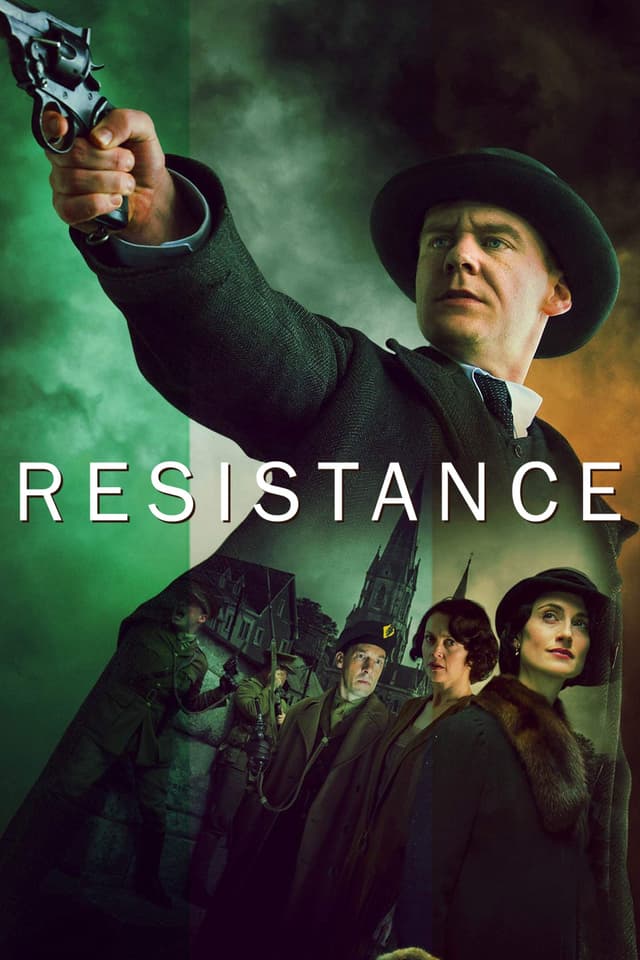
Resistance (2019), a five-part Irish television miniseries written by Colin Teevan and directed by Catherine Morshead and Aoife McArdle, was produced for the Irish public broadcaster RTÉ One. The exact production budget for the series has not been publicly disclosed. Industry estimates place the figure in the €5,000,000 to €6,000,000 range, broadly aligned with the publicly reported €6,000,000 budget of its 2016 precursor miniseries Rebellion, which RTÉ producer Catherine Magee confirmed at the time of broadcast.
Production was financed jointly by RTÉ and Section 481 capital, Ireland's film and television tax credit, which provides a refundable credit of up to 32% of qualifying Irish expenditure. Touchpaper Television, the same UK production company that produced Rebellion, returned for Resistance, with Tile Films coproducing. The financing structure was characteristic of large-scale RTÉ drama in the late 2010s, where a single public broadcaster commission was supplemented by Irish Film Board (Screen Ireland) project development funding and tax-credit capital.
Key Budget Allocation Categories
The estimated €5,000,000 to €6,000,000 budget was distributed across the following areas:
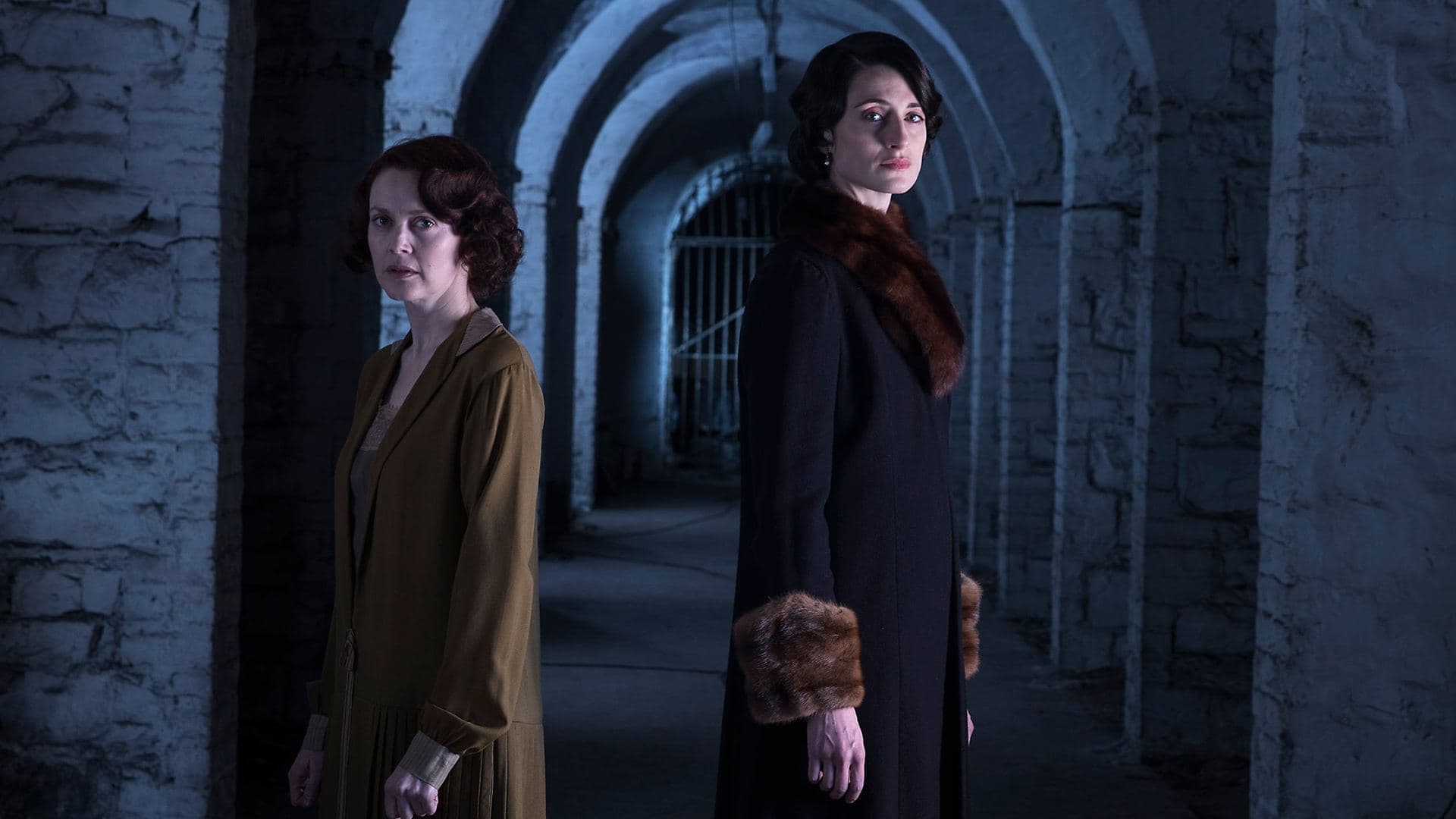
- Above-the-Line Talent: Screenwriter Colin Teevan, returning from Rebellion, anchored the creative team. Directors Catherine Morshead (Doctor Who, Endeavour) and Aoife McArdle (the breakout Irish film Kissing Candice) split the five episodes. The cast was led by Brian Gleeson as Jimmy Mahon, Sarah Greene as Frances O'Neill, and Simone Kirby as Agnes Lloyd, with Michelle Fairley, Brian F. O'Byrne, and a large Irish ensemble.
- Period Recreation: Resistance recreated Dublin during the Irish War of Independence, including streetscapes, the Custom House, military checkpoints, and the buildup to Bloody Sunday. Production designer Mark Geraghty and his team built standing sets at Ardmore Studios and dressed Dublin and Wicklow exterior locations.
- Ireland Production: Filming took place primarily in Ireland across late 2018, drawing on the Section 481 tax credit and the Wicklow film-industry infrastructure that anchored the Rebellion shoot.
- Costumes and Wardrobe: Costume designer Joan Bergin (a three-time Emmy winner for The Tudors) supervised the wardrobe for a large period ensemble cast, including British Army uniforms, Royal Irish Constabulary period kit, and civilian fashion of 1920 to 1921 Dublin and rural Ireland.
- Score and Music: Original score by composer Stephen McKeon, with traditional Irish music licensing used as period diegetic source. The score was recorded with the RTÉ Concert Orchestra.
- Visual Effects: Modest by drama-series standards, the VFX work covered period-appropriate cleanup of contemporary Dublin signage, muzzle flashes and ammunition effects for the action sequences, and digital crowd extension for the Bloody Sunday sequence at Croke Park.
How Does Resistance's Budget Compare to Similar Productions?
At an estimated €5,000,000 to €6,000,000 for five episodes, Resistance sat at the high end of the typical RTÉ Drama budget while remaining a fraction of the cost of pan-European or transatlantic premium drama. The comparison set:
- Rebellion (2016): Budget €6,000,000. The direct predecessor miniseries was made at a comparable scale, also five episodes, and established the production model that Resistance reused.
- Peaky Blinders (BBC Two, 2013 to 2022): Budget approximately £2,000,000 to £3,000,000 per episode in later seasons. The Steven Knight period drama covered overlapping Irish-revolutionary themes at a roughly equivalent per-episode cost once Resistance is amortized.
- The Crown Season 1 (Netflix, 2016): Budget approximately $13,000,000 per episode. Netflix's prestige period drama from the same era cost roughly 13x what Resistance did on a per-episode basis, illustrating the budget gap between public-broadcaster drama and streaming-financed premium drama.
- Versailles (Canal+, 2015 to 2018): Budget approximately €30,000,000 per season. The French-Canadian-Italian co-production cost roughly 5x Resistance per season at a comparable episode count, reflecting the difference between continental co-production budgets and a single-broadcaster Irish commission.
Resistance Broadcast Performance
Resistance premiered on RTÉ One on January 6, 2019 and aired weekly through February 3, 2019, with each episode running approximately 50 minutes. The series opened to 451,000 viewers on RTÉ One, a strong premiere by Irish public-broadcaster standards. Subsequent episodes averaged in the 350,000 to 400,000 range across the linear broadcast, supplemented by RTÉ Player streaming. The series was the highest-rated original Irish drama of the RTÉ winter 2019 season.
International distribution was handled by Banijay Rights. The series sold to UKTV in the United Kingdom, where it premiered on the Alibi channel in autumn 2019, and to additional broadcasters across Europe, Australia, and selected North American markets. As an RTÉ commission rather than a theatrical or streaming release, Resistance did not generate a box-office gross. Below is the financial picture as best as can be reconstructed from public sources:
- Production Budget: approximately €5,000,000 to €6,000,000 (five episodes)
- Per-Episode Budget: approximately €1,000,000 to €1,200,000
- Primary Funding Source: RTÉ commissioning fee plus Section 481 tax credit
- Total Worldwide Gross: not applicable; not theatrically released
- Estimated International Sales: undisclosed, distributed by Banijay Rights
- Estimated Recoupment: recovered through broadcaster license fees and Section 481 credit; no shareholder return target
As a public-broadcaster commission, Resistance was financed against an editorial mandate rather than a commercial-return target. Recoupment was achieved through the RTÉ broadcast fee, the Section 481 refundable tax credit, and international territory-by-territory sales handled through Banijay Rights. Production company Touchpaper Television generated additional value through library catalog inclusion and continuing distribution.
Resistance Production History
Development of Resistance began at Touchpaper Television and RTÉ following the broadcast of Rebellion in early 2016. Colin Teevan, who had written all five episodes of Rebellion, returned as showrunner and sole credited writer, deliberately moving the story forward by four years to capture the most active and violent period of the Irish War of Independence. The decision to position Resistance as a sequel rather than a Rebellion second season reflected both RTÉ's editorial preference and a producer recognition that the 1920 to 1921 period required a tonal recalibration.
Catherine Morshead, a veteran British television director with credits including Doctor Who, Call the Midwife, and Endeavour, signed on to direct three of the five episodes. Aoife McArdle, an Irish music-video director who had recently broken out theatrically with Kissing Candice (2017), directed the remaining two episodes, bringing a more stylized visual register. The directorial split allowed RTÉ to combine procedural reliability with an Irish-authored visual identity.
Principal photography ran from late summer 2018 through early winter 2018, with locations across Dublin, Wicklow, and Kildare anchored at Ardmore Studios. The production used Section 481 tax credit financing to underwrite the Irish-resident spend, and Joan Bergin's costume team drew on the standing wardrobe infrastructure built up across recent Irish period productions including Penny Dreadful and Vikings. The Bloody Sunday sequence at Croke Park was filmed across a multi-day shoot block in late 2018 with extensive digital crowd extension.
Awards and Recognition
Resistance received targeted recognition within Irish television awards bodies. The series was nominated for multiple Irish Film and Television Academy (IFTA) Awards in 2020, with cinematographer Tim Fleming receiving a nomination for Best Cinematography in Drama, and the production receiving a nomination for Best Drama. Brian Gleeson was nominated for Best Actor in a Lead Role in Drama. The series did not win in its major nominated categories, with the IFTA jury that year selecting alternative Irish drama for top honors.
Internationally, Resistance did not receive BAFTA, Emmy, or Royal Television Society recognition, consistent with the awards ceiling that affects Irish-language and Irish-public-broadcaster drama in transatlantic awards consideration. The series was, however, widely reviewed and recommended in UK and Irish press at the time of broadcast and has continued to circulate through licensed catalogs and Banijay's international distribution.
Critical Reception
Resistance received broadly favorable reviews. The Irish Times' Ed Power praised the series for its narrative ambition and Brian Gleeson's lead performance, calling it "an unusually serious-minded effort to dramatize a period Irish television has historically struggled to address with any complexity." The Guardian's Lucy Mangan, reviewing the UKTV broadcast, awarded four stars and wrote that the series "manages a remarkable balancing act between intimate domestic drama and historical event."
Critical attention focused on three elements: the structural ambition of dramatizing the run-up to and aftermath of Bloody Sunday across five linked episodes, the strength of the ensemble cast (particularly Brian Gleeson, Sarah Greene, and Simone Kirby), and the production design work in recreating 1920 to 1921 Dublin on an RTÉ budget. The Telegraph's Anita Singh noted that the series "doesn't quite reach the production polish of Peaky Blinders, but its political acuity and emotional intelligence put it in the same conversation."
Reviewers were more divided on the pace of the first two episodes, with some calling the multi-strand opening confusing for viewers unfamiliar with Rebellion. By the third episode, the consensus reading was that the series had locked in. Resistance's reputation within Irish drama has remained as one of the most ambitious public-broadcaster historical dramas of the late 2010s, frequently cited alongside Rebellion in academic discussion of Irish television approaches to the revolutionary period.
Frequently Asked Questions
What is Resistance (2019)?
Resistance is a five-part Irish television miniseries written by Colin Teevan and produced for RTÉ One. It dramatizes the Irish War of Independence between 1920 and 1921, building toward and beyond Bloody Sunday in November 1920. It is a sequel to the 2016 RTÉ miniseries Rebellion, which was set during the 1916 Easter Rising.
How much did it cost to make Resistance (2019)?
The production budget has not been publicly disclosed. Industry estimates place it in the €5,000,000 to €6,000,000 range across five episodes, broadly aligned with the publicly reported €6,000,000 budget of its precursor Rebellion (2016). Financing combined RTÉ commissioning fees and Ireland's Section 481 production tax credit.
Who wrote Resistance?
Colin Teevan wrote all five episodes. Teevan, an Irish playwright and screenwriter, also wrote all five episodes of the precursor miniseries Rebellion (2016). His other credits include the BBC adaptations Vexed and Charlie.
Who directed Resistance?
Catherine Morshead and Aoife McArdle co-directed the five-episode series. Morshead, a British television veteran, directed three episodes, drawing on credits including Doctor Who, Endeavour, and Call the Midwife. McArdle, the Irish director of Kissing Candice (2017), directed two episodes.
Where was Resistance filmed?
Principal photography ran from late summer through early winter 2018 in Ireland, with locations across Dublin, Wicklow, and Kildare anchored at Ardmore Studios. The production used Ireland's Section 481 production tax credit, a refundable credit of up to 32% on qualifying Irish expenditure.
Who stars in Resistance?
Brian Gleeson plays Jimmy Mahon, Sarah Greene plays Frances O'Neill, and Simone Kirby plays Agnes Lloyd. The ensemble includes Michelle Fairley (Game of Thrones), Brian F. O'Byrne, Pearce Quigley, Perdita Weeks, and Catherine Walker.
Is Resistance a sequel to Rebellion?
Yes. Resistance is a direct sequel to the 2016 RTÉ miniseries Rebellion, which dramatized the 1916 Easter Rising. The two series share screenwriter Colin Teevan, production company Touchpaper Television, and several returning cast members, with Resistance moving the story forward to the 1920 to 1921 Irish War of Independence period.
When did Resistance air?
Resistance premiered on RTÉ One on January 6, 2019 and aired weekly through February 3, 2019. International distribution by Banijay Rights led to UK broadcast on UKTV's Alibi channel in autumn 2019, plus additional sales across Europe and Australia.
What did critics think of Resistance?
The series received broadly favorable reviews. The Irish Times praised it for narrative ambition and Brian Gleeson's lead performance. The Guardian's Lucy Mangan awarded four stars and called it "an unusually serious-minded effort to dramatize a period Irish television has historically struggled to address." Critics most consistently praised the ensemble cast and production design.
Did Resistance win any awards?
The series received multiple Irish Film and Television Academy (IFTA) nominations in 2020, including Best Drama and Best Actor in a Lead Role in Drama (Brian Gleeson), but did not win in its major nominated categories. It did not receive BAFTA, Royal Television Society, or Emmy recognition.
Filmmakers
Resistance

Official Trailer
Build budgets like this one in Saturation
Start from an industry-standard feature film template, import the schedule and rates you already have, and let the cost report keep itself current as you spend. Real-time collaboration, no spreadsheets.