Puella Magi Madoka Magica the Movie Part III Rebellion Budget
Updated
Synopsis
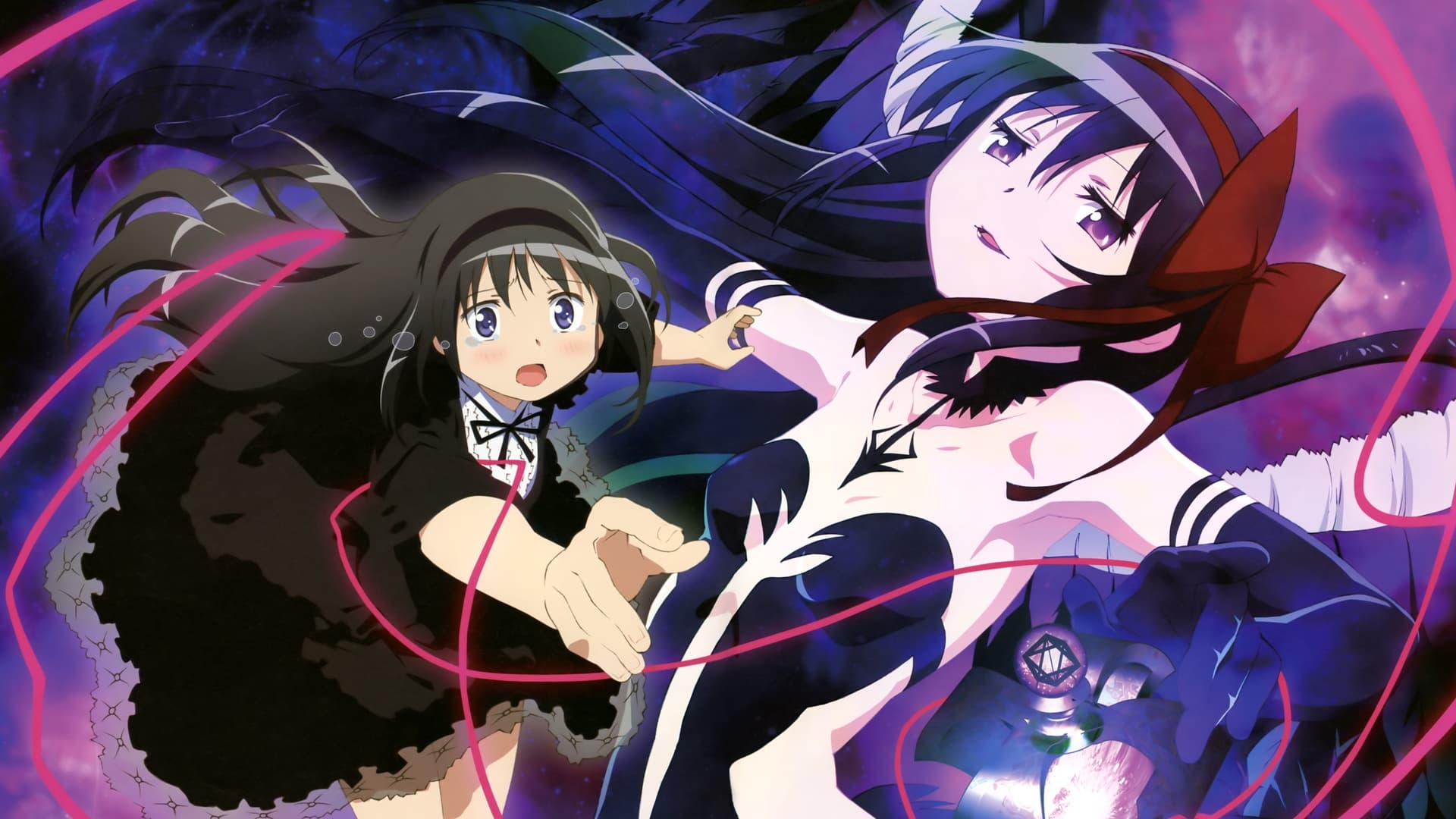
Puella Magi Madoka Magica the Movie Part III: Rebellion picks up after Madoka's rewriting of the universe at the end of the original television series. Homura Akemi finds herself in an idyllic and seemingly impossible Mitakihara Town where her friends are all alive and the magical-girl system appears benign. As Homura uncovers the construction of this reality, she is forced to choose between embracing the illusion and shattering it to reclaim the cosmic order Madoka established.
What Is the Budget of Puella Magi Madoka Magica the Movie Part III: Rebellion (2013)?
Puella Magi Madoka Magica the Movie Part III: Rebellion (2013), directed by Akiyuki Shinbo and Yukihiro Miyamoto and produced by Tokyo-based animation studio Shaft, was the third theatrical feature in the franchise following 2012's Beginnings and Eternal recap films. No production budget was publicly disclosed, which is typical for Japanese anime features, but industry observers estimate the cost at approximately ¥600,000,000 to ¥1,000,000,000 (roughly $6,000,000 to $10,000,000 USD in 2013) based on the scope of original animation, music licensing, and theatrical-release marketing.
The Madoka Magica franchise was co-financed by Aniplex (Sony Music Entertainment Japan's animation arm) and an industry production committee that included Shaft, Nitroplus, Magica Quartet (the creative collective behind the franchise), and various distribution partners. Rebellion was financed as an original anime feature rather than as another recap, with a fully new screenplay continuing the franchise beyond the events of the 2011 television series.
Key Budget Allocation Categories
Rebellion's budget was distributed across several Japanese theatrical anime cost categories:
- Original Animation Production: Shaft's Tokyo studio produced over 120 minutes of original 2D animation with extensive experimental sequences in Inu Curry's (Gekidan Inu Curry) signature mixed-media style. The animation pipeline ran from late 2011 through summer 2013 and required significantly more frames per minute than the 2011 television series.
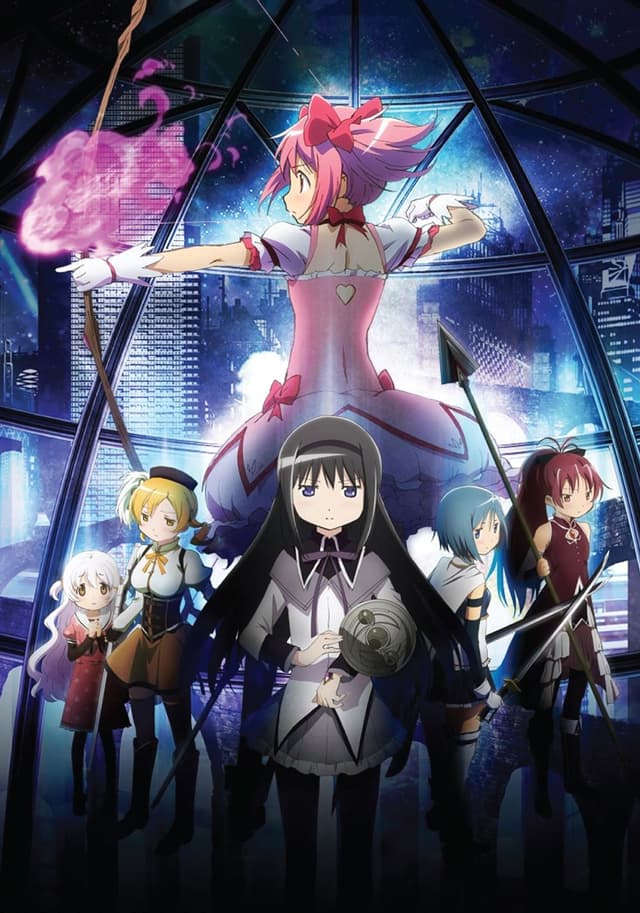
- Voice Cast: Returning lead cast Aoi Yuki (Madoka Kaname), Chiwa Saito (Homura Akemi), Eri Kitamura (Sayaka Miki), Kaori Mizuhashi (Mami Tomoe), and Ai Nonaka (Kyoko Sakura) recorded the film. Voice cast rates in the Japanese anime industry are typically modest relative to U.S. animation industry rates.
- Original Score: Yuki Kajiura, the Madoka Magica franchise composer (also known for her work on Sword Art Online and Demon Slayer), wrote an extensive new orchestral score that significantly expanded on the television series' musical themes.
- Theme Songs and Music Licensing: ClariS performed the opening theme "Colorful," and Kalafina performed the ending theme "Kimi no Gin no Niwa." Both groups' label and label sync fees added significant music line items.
- Theatrical Release: Aniplex coordinated the Japanese theatrical release in October 2013 across approximately 130 screens, with extensive cinema advertising, theatrical merchandise, and printed program books for the franchise's dedicated fanbase.
- International Distribution: Aniplex of America and various international anime distributors arranged subtitled and dubbed releases in the United States, the United Kingdom, Australia, France, and other markets through late 2013 and 2014.
How Does Rebellion's Budget Compare to Similar Films?
At an estimated ¥600,000,000 to ¥1,000,000,000 ($6,000,000 to $10,000,000 USD), Rebellion sits in the upper tier of original Japanese theatrical anime:
- Your Name. (2016): Budget approximately ¥850,000,000 ($8,000,000 USD) | Worldwide $358,000,000. Makoto Shinkai's contemporaneous original anime feature cost roughly the same range as Rebellion and grossed dramatically more.
- A Silent Voice (2016): Budget approximately ¥500,000,000 ($4,500,000 USD) | Worldwide $33,000,000. Kyoto Animation's Naoko Yamada feature illustrates the lower end of theatrical anime budgets.
- Eva 3.0 You Can (Not) Redo (2012): Budget undisclosed | Japan box office ¥5,290,000,000. Khara's contemporaneous Rebuild of Evangelion film offers the closest franchise-sequel anime theatrical comparison.
- Demon Slayer: Mugen Train (2020): Budget approximately ¥1,750,000,000 ($16,500,000 USD) | Worldwide $507,000,000. The Ufotable-produced franchise film cost roughly twice Rebellion and became the highest-grossing Japanese film of all time.
Madoka Magica: Rebellion Box Office Performance
Puella Magi Madoka Magica the Movie Part III: Rebellion opened in Japanese theaters on October 26, 2013 and grossed ¥2,000,000,000 ($20,500,000 USD) on its initial theatrical release, making it one of the highest-grossing original anime features of 2013. The film expanded its Japanese release across several screening windows and added international theatrical and subsequently home-video releases through 2014.
Box Office Breakdown
Puella Magi Madoka Magica the Movie Part III Rebellion

Rebellion returned approximately $2 to $3 in worldwide theatrical revenue for every $1 invested, a strong outcome for an original anime franchise feature. The film also drove substantial multi-year revenue across Blu-ray and DVD sales, the franchise's extensive merchandise lines (figurines, manga, soundtracks, mobile games), and the eventual launch of the franchise's mobile game Magia Record in 2017.
The film's commercial success solidified Madoka Magica as one of Aniplex's tentpole anime franchises and led directly to the announcement of a fourth feature, Walpurgis Night Rising, which was finally released as Madoka Magica: Walpurgisnacht Rising in late 2025 after a decade-long development gap. The franchise has remained one of the most consistently profitable original anime properties of the 2010s and 2020s.
Madoka Magica: Rebellion Production History
Development on Rebellion began in late 2011, immediately after the conclusion of the original twelve-episode Madoka Magica television series. The franchise creative team, known collectively as Magica Quartet (director Akiyuki Shinbo, character designer Ume Aoki, screenwriter Gen Urobuchi, and animation studio Shaft), conceived the film as an original sequel rather than a continuation of the established television canon.
Gen Urobuchi (Fate/Zero, Psycho-Pass) wrote the original screenplay across 2011 and 2012, working to extend the meta-textual and philosophical themes of the television series into a feature-length narrative. The screenplay's climactic plot twist, in which the previously secondary character Homura Akemi assumes the role of antagonist by overwriting reality itself, was the most contentious franchise decision and divided fans on initial release.
Animation production at Shaft ran from late 2011 through summer 2013. The team's established collaboration with Gekidan Inu Curry (the mixed-media art collective responsible for the original television series' nightmare-witch sequences) produced extensive new abstract animation, including a 22-minute opening "fake school" sequence that established the film's reality-bending premise. The 130-minute final runtime made Rebellion one of the longest theatrical anime features of its era.
Awards and Recognition
Puella Magi Madoka Magica the Movie Part III: Rebellion won the Best Animation Film award at the 37th Japan Academy Film Prize ceremony in 2014, the most significant industry recognition for the franchise. The film also won the Animation of the Year award at the 19th Animation Kobe Awards and was nominated for several Newtype Anime Awards including Best Theatrical Film.
The Tokyo Anime Award Festival also recognized the film with multiple jury awards. International recognition included nominations at the Annecy International Animation Film Festival in France in 2014, where the film screened as part of the festival's feature anime selection. The film's critical and industry standing has only grown in the decade since release, regularly appearing on greatest-anime-of-all-time lists in both Japanese and international publications.
Critical Reception
Rebellion received broadly positive reviews from anime critics, with strong commendation from Japanese press and mixed-to-positive coverage from international Western critics. The film holds an 86% approval rating on Rotten Tomatoes based on a limited critic count (anime features typically receive less Western critical aggregation than Hollywood releases). Metacritic does not aggregate the film. The film does not carry a CinemaScore because it bypassed wide U.S. theatrical release.
Japanese press, including Animage and Newtype, treated the film as a thematically audacious continuation that took meaningful risks with the established franchise canon. International anime critics, including Anime News Network's Theron Martin, called the film "a stunning visual and narrative achievement that simultaneously deepens and complicates the philosophical underpinnings of the television series."
The film's climactic plot twist, in which Homura Akemi rewrites the cosmology established at the end of the television series, divided fans on initial release. A significant subset of the franchise's audience treated the ending as a betrayal of the original series' resolution, while another contingent embraced it as a thematically consistent extension of the series' themes of love, sacrifice, and unilateral choice. The decade-long fan debate has only intensified the film's cultural footprint within anime fandom.
Frequently Asked Questions
How much did Madoka Magica: Rebellion cost to make?
Aniplex and Shaft did not publicly disclose the production budget. Industry observers estimate the cost at approximately ¥600,000,000 to ¥1,000,000,000 (roughly $6,000,000 to $10,000,000 USD in 2013) based on the scope of original animation, music, and theatrical marketing.
How much did Madoka Magica: Rebellion earn at the box office?
The film grossed approximately ¥2,000,000,000 ($20,500,000 USD) in Japan on its initial theatrical release, with worldwide gross including international theatrical and home video estimated at approximately ¥2,500,000,000 ($25,000,000 USD). It was among the highest-grossing original anime features of 2013.
Who directed Madoka Magica: Rebellion?
Akiyuki Shinbo and Yukihiro Miyamoto co-directed the film. Shinbo is the longtime director of Shaft's output including the Bakemonogatari series, while Miyamoto worked on the original Madoka Magica television series as an episode director.
Is Madoka Magica: Rebellion a sequel?
Yes. Rebellion is the third theatrical feature in the franchise and serves as an original sequel to the events of the 2011 Madoka Magica television series. The first two features (Beginnings and Eternal, released in October 2012) were recap films that retold the television series.
Did Madoka Magica: Rebellion win any awards?
Yes. Rebellion won the Best Animation Film award at the 37th Japan Academy Film Prize ceremony in 2014, the most significant industry recognition for the franchise. It also won the Animation of the Year award at the 19th Animation Kobe Awards.
What did critics think of Madoka Magica: Rebellion?
The film received broadly positive reviews from Japanese press and mixed-to-positive coverage from international Western critics. Anime News Network called it "a stunning visual and narrative achievement that simultaneously deepens and complicates the philosophical underpinnings of the television series."
Who composed the music for Madoka Magica: Rebellion?
Yuki Kajiura composed the original score. Kajiura is the franchise composer, also known for her work on Sword Art Online, Demon Slayer, and Fate/Zero. ClariS performed the opening theme "Colorful" and Kalafina performed the ending theme "Kimi no Gin no Niwa."
Is there a sequel to Madoka Magica: Rebellion?
Yes. A fourth franchise film, Madoka Magica: Walpurgisnacht Rising, was announced in 2021 and released in 2025 after a decade-long development gap. The film concludes the storyline begun in Rebellion.
When was Madoka Magica: Rebellion released?
Rebellion opened in Japanese theaters on October 26, 2013 and expanded across several Japanese release windows through late 2013 and 2014. International theatrical, home video, and streaming releases followed in the United States, the United Kingdom, Australia, France, and other markets through 2014.
Why did Madoka Magica: Rebellion divide fans?
The film's climactic plot twist, in which Homura Akemi rewrites the cosmology established at the end of the original television series, divided the franchise's fanbase on initial release. A significant subset treated the ending as a betrayal of the original series' resolution, while another contingent embraced it as a thematically consistent extension of the series' themes of love, sacrifice, and choice.
Filmmakers
Puella Magi Madoka Magica the Movie Part III Rebellion

Official Trailer
Build budgets like this one in Saturation
Start from an industry-standard feature film template, import the schedule and rates you already have, and let the cost report keep itself current as you spend. Real-time collaboration, no spreadsheets.