Prisoners of the Ghostland Budget
Updated
Synopsis
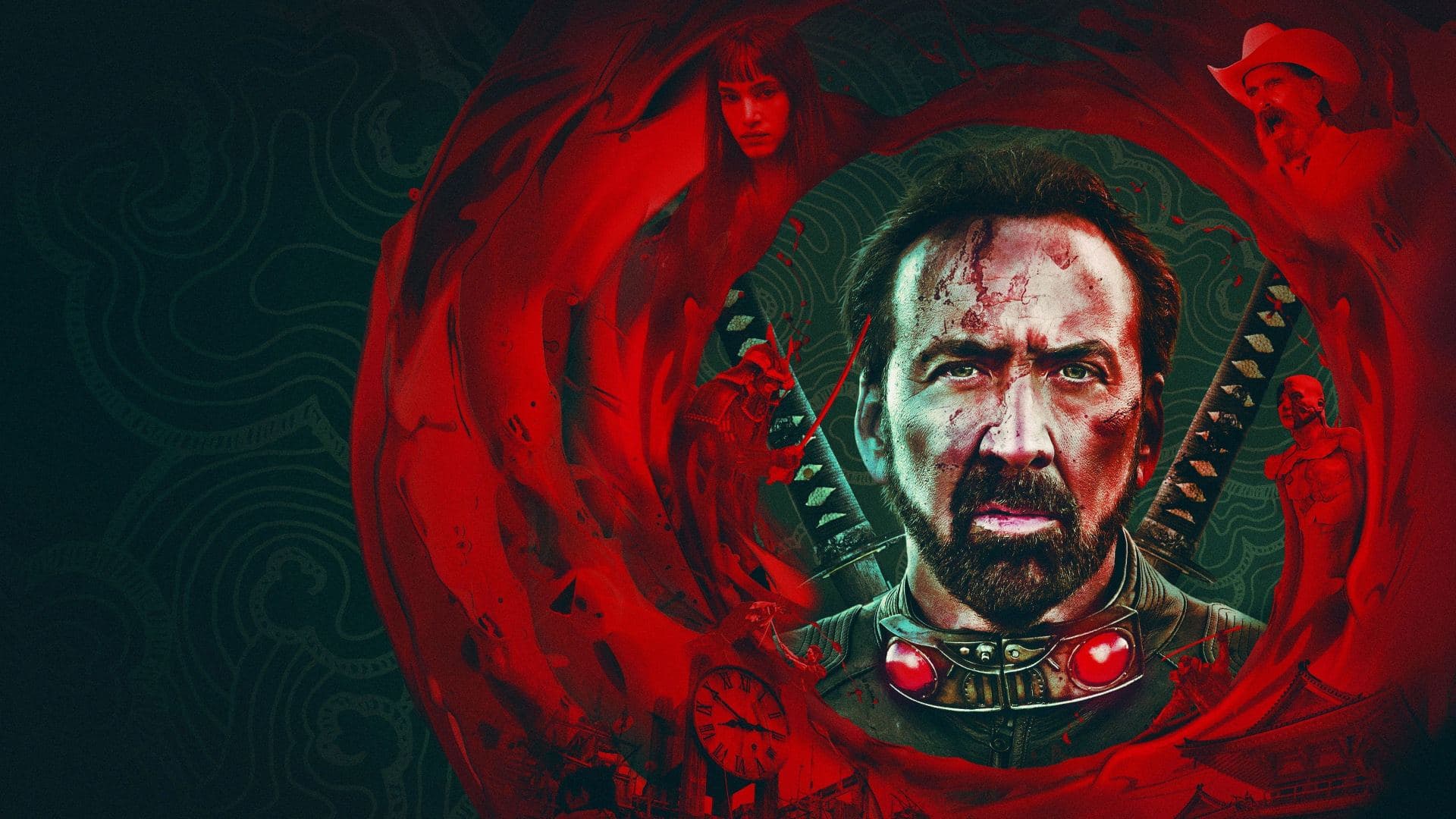
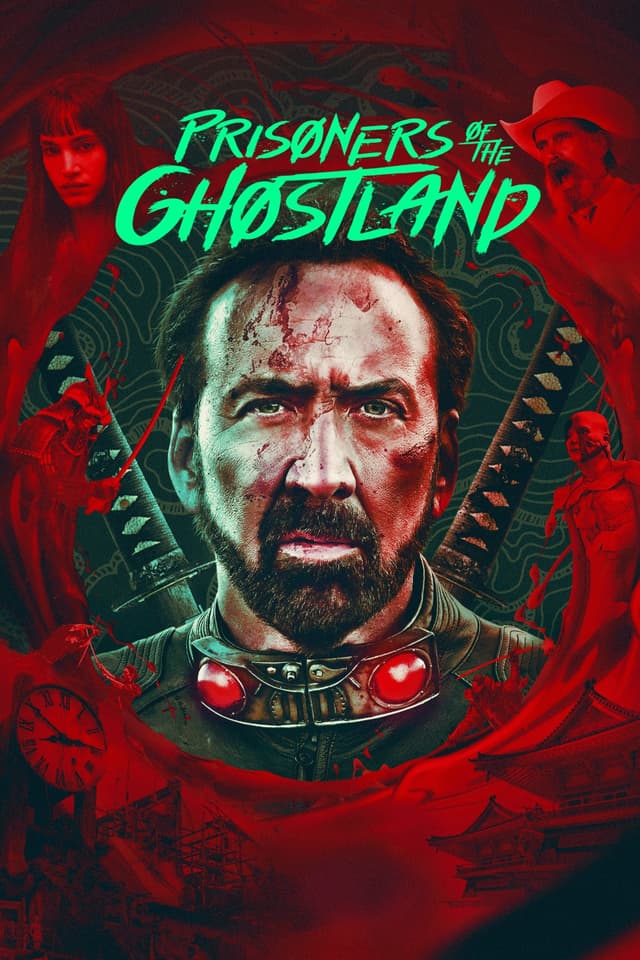
In a quarantined region of Japan where an accident has fused samurai-era iconography with frontier Americana, a notorious criminal known only as Hero is fitted with an explosive leather bodysuit and sent into the irradiated Ghostland to retrieve the Governor's missing adopted granddaughter. As Hero confronts mutated outcasts, his own buried memories, and the five-day countdown wired to his suit, he must decide whether to deliver the young woman back to her captor or stand with the Ghostlanders against him.
What Is the Budget of Prisoners of the Ghostland (2021)?
Prisoners of the Ghostland (2021), Sion Sono's English-language debut and a Japan/United States co-production, never received an officially disclosed production budget. Industry observers place the figure in the mid-range indie genre tier, somewhere between $5 million and $15 million, a band consistent with Sono's prior practice, the demands of a Tokyo and Los Angeles shoot, and the salaries commanded by Nicolas Cage, Sofia Boutella, Bill Moseley, and Nick Cassavetes. The financing came through Patriot Pictures, Untitled Entertainment, Union Patriot Capital Management, Boss Boss Bang Bang, Eleven Arts, Cage's own Saturn Films, and XYZ Films, a stack of independents that almost always keeps headline numbers off the trade press.
Whatever the precise spend, Prisoners of the Ghostland leveraged it across a maximalist production design fusing samurai cinema, spaghetti Western, post-apocalyptic dystopia, and neon Yakuza-movie iconography. Cage himself called it "the wildest movie I've ever made," a remark that captures both the creative ambition and the cost pressure of bringing Sono's signature scale to an English-language production. The film's enormous Samurai Town set, the Ghostland wasteland, the bomb-rigged leather bodysuit prop, and a Japanese cast and crew working alongside an American above-the-line lineup all consumed line items a typical $5 million indie would never absorb.
Key Budget Allocation Categories
Although the exact figure is undisclosed, these are the categories that absorbed the bulk of the spend on a Sion Sono genre production of this scale:
- Above-the-Line Cast: Nicolas Cage in the lead, Sofia Boutella, Bill Moseley, and Nick Cassavetes anchored the English-language cast, with Tak Sakaguchi providing the Japanese star presence as Yasujiro. The combined name-actor fees, particularly for Cage as both star and co-producer through Saturn Films, were the single largest budget line and the primary reason the project could secure international financing.
- Production Design and Sets: Sono's vision required the construction of Samurai Town, a sprawling hybrid set blending Edo-period Japanese architecture with Old West storefronts, neon-lit modern signage, and bombed-out post-apocalyptic dressing. The Ghostland exterior, the Governor's compound, and the cult enclave each demanded distinct visual languages, making physical design one of the most visible cost centers on screen.
- Filming in Japan and Los Angeles: Principal photography began on November 6, 2019 in Japan and continued on March 31, 2020 in Los Angeles, California after a COVID-19 interruption. The split-country shoot required two full production infrastructures, international cast and crew travel, dual labor arrangements, and a hard logistical bridge between the original Japanese unit and the LA finishing days.
- Costume and Practical Effects: The bomb-rigged leather bodysuit worn by Cage's Hero became an iconic prop, requiring multiple identical builds with practical squib charges at the testicle, arm, and neck detonation points. Pre-modern samurai costuming, geisha-inspired wardrobe for the Governor's captives, mutant prosthetics for the Ghostland residents, and the Governor's mannequin sex-doll army all required dedicated wardrobe, makeup, and creature departments.
- Cinematography and Camera Package: Sôhei Tanikawa shot the film with a stylized lighting palette that demanded a heavy lighting package and specialty rigging, particularly for the neon-saturated Samurai Town night exteriors and the eerie Ghostland sequences. Anamorphic glass, Steadicam coverage of Cage's traversal sequences, and crane work on the climactic confrontation added meaningful camera-department cost.
- Music and Score: Composer Joseph Trapanese, whose credits include Tron: Legacy and The Greatest Showman scoring work, delivered an orchestral and electronic hybrid score recorded with a sizable ensemble. Music licensing for the diegetic Japanese pop and Western cues threaded through the film added additional rights-clearance cost on top of the original composition.
- Visual Effects and Post-Production: Although practical effects carried the creature and squib work, the film still required digital cleanup, set extensions of Samurai Town and the Ghostland wasteland, blood and impact augmentation, and color grading to lock the heightened palette. The post timeline was extended by the pandemic-era completion of the LA pickup shoot.
- Marketing and Distribution Costs: After RLJE Films acquired US rights at the 2021 Sundance Film Festival and Elysian Film Group took the UK, the partner distributors funded festival positioning, trailer cuts, key art, and a hybrid theatrical and video-on-demand launch on September 17, 2021. Marketing spend sits outside the production budget but defined the film's commercial footprint.
How Does Prisoners of the Ghostland's Budget Compare to Similar Films?
Placing Prisoners of the Ghostland alongside other Nicolas Cage genre vehicles and stylized indie auteur features puts its scale into context:
- Mandy (2018): Budget approximately $6,000,000 | Worldwide $1,400,000. Panos Cosmatos's neon revenge picture is the closest tonal sibling, another international co-production built around a maximalist Cage performance and a stylized visual palette. Its disclosed budget suggests Prisoners of the Ghostland likely sat in a similar or slightly higher range given the larger ensemble and dual-country shoot.
- Color Out of Space (2019): Budget approximately $6,000,000 | Worldwide approximately $740,000 theatrical. Richard Stanley's Lovecraftian Cage feature followed the same Sundance-or-genre-festival to RLJE Films to VOD release pattern that Ghostland used two years later, illustrating the indie distribution playbook the film was financed against.
- Willy's Wonderland (2021): Budget approximately $4,000,000 | Worldwide $1,300,000. Released seven months before Ghostland, this Cage-starring practical-effects horror operated at a smaller scale with no Japanese co-production element, showing how much additional spend a Tokyo shoot and Sono's design ambition added to a comparable Cage vehicle in the same year.
- Pig (2021): Budget approximately $3,000,000 | Worldwide $3,500,000. Michael Sarnoski's restrained Portland-shot drama released two months before Ghostland represents the opposite end of the 2021 Cage spectrum, a stripped-down chamber piece whose lower spend and quieter craft generated significantly more critical acclaim and a stronger ROI.
- Bullet Train (2022): Budget $90,000,000 | Worldwide $239,300,000. David Leitch's Japan-set studio action picture demonstrates what the same hyper-stylized neon Tokyo aesthetic looks like at roughly six to fifteen times the spend, with major-studio marketing and the casting muscle to convert visuals into mass-market box office that Ghostland was never structured to achieve.
- Tokyo Tribe (2014): Sono's earlier hip-hop musical and gang-war epic, an entirely Japanese-language production, provides the clearest stylistic predecessor in his own filmography. Prisoners of the Ghostland scaled that maximalist mode up for an English-language cast and international distribution, with the corresponding step-up in above-the-line and logistics cost.
Prisoners of the Ghostland Box Office Performance
RLJE Films released Prisoners of the Ghostland in a hybrid theatrical and video-on-demand launch in the United States on September 17, 2021, following its world premiere at the Sundance Film Festival on January 31, 2021. The release strategy was tailored to the genre community and Cage's cult audience rather than a wide commercial push, and the film never expanded beyond a small theatrical footprint before its commercial life shifted to home viewing platforms.
The available financial breakdown:
Box Office Breakdown
Prisoners of the Ghostland

At a reported worldwide gross of $80,425, Prisoners of the Ghostland performed as expected for a limited-release genre title rolled out in the pandemic-era US theatrical landscape. Box office is not a meaningful measure of success for a film of this scale and release pattern: hybrid VOD launches for indie genre titles are commercially driven by digital rental revenue, streaming licensing, and international territorial sales rather than ticket receipts.
The film's longer-term commercial life played out across digital platforms, where the Cage and Sono pairing drove strong VOD rental performance, AVOD streaming windows, and international distribution deals brokered by XYZ Films. For the financiers and Japanese coproducers, the Sundance premiere and RLJE acquisition delivered the festival prestige and platform visibility that justified the production spend independent of theatrical receipts.
Prisoners of the Ghostland Production History
Prisoners of the Ghostland began as a passion project assembled around Sion Sono's overseas ambitions and Nicolas Cage's appetite for unconventional collaborations. The screenplay by Aaron Hendry and Reza Sixo Safai, set in a quarantined region of Japan combining samurai-era iconography with American Western tropes, drew Sono's interest as an opportunity to translate his maximalist Japanese style into an English-language feature. In December 2018, the project was announced as Sono's first overseas production, with Cage attached to star and the director publicly describing it as his English-language debut.
Casting expanded in February 2019 when Imogen Poots was initially attached to a starring role, but pre-production was halted shortly after when Sono underwent emergency surgery following a heart attack. Production restarted in November 2019 with a reconfigured ensemble: Sofia Boutella replaced Poots in the lead role of Bernice, with Ed Skrein, Bill Moseley, Young Dais, and Tak Sakaguchi joining the cast. The producing team of Reza Sixo Safai, Laura Rister, Michael Mendelsohn, Ko Mori, and Nate Bolotin formalized the financing through Patriot Pictures, Untitled Entertainment, Boss Boss Bang Bang, Eleven Arts, Cage's Saturn Films, and XYZ Films.
Principal photography began on November 6, 2019 in Japan, with cinematographer Sôhei Tanikawa heading the camera department. The Tokyo-area production constructed the elaborate Samurai Town set and shot the Ghostland sequences entirely on Japanese locations, integrating local crew with the visiting American principals. The schedule was interrupted by the early 2020 onset of the COVID-19 pandemic, and the production returned for a final shoot day on March 31, 2020 in Los Angeles, California to capture additional material with Cage. The dual-country shoot, while logistically demanding, gave the film the authentic Tokyo-shot production design that distinguishes it from American-soundstage approximations of the aesthetic.
Post-production was completed through 2020 with editor Taylor Levy and composer Joseph Trapanese, and the film was selected for the 2021 Sundance Film Festival, premiering virtually on January 31, 2021. RLJE Films acquired North American distribution at the festival, and Elysian Film Group took the United Kingdom rights, leading to the September 17, 2021 hybrid theatrical and VOD release in the US. The production's combination of an established American star, a cult Japanese auteur, and a genre-bending screenplay made it one of the most anticipated independent genre titles on the 2021 festival circuit.
Awards and Recognition
Prisoners of the Ghostland's highest-profile recognition came through its selection at the 2021 Sundance Film Festival, where it premiered in the Midnight section on January 31, 2021. The Midnight slot, reserved for genre features with festival breakout potential, gave the film the platform that drove the RLJE Films acquisition and shaped the marketing campaign that followed. Sundance recognition is itself a meaningful credit for a genre film of this scale, validating the project for international distributors and downstream streaming partners.
Beyond Sundance, the film played a circuit of genre festivals including Fantasia International Film Festival in Montreal and the BFI London Film Festival, where genre programmers responded to Sono's English-language transition and Cage's central performance. Nicolas Cage's work as Hero received particular attention from genre press, with multiple year-end critic lists citing the performance among the most committed of his prolific 2021 release year. The film's production design by Toshihiro Isomi and costuming by Chiemi Karasawa drew technical recognition from specialty horror and genre awards bodies, reinforcing Ghostland's reputation as a stylistic achievement even where critical opinion on the screenplay was divided.
Critical Reception
Prisoners of the Ghostland received mixed reviews from critics, holding a 61% approval rating on Rotten Tomatoes from 160 reviews with an average rating of 5.80 out of 10, and a Metacritic score of 53 out of 100 from 33 critics, indicating mixed or average reviews. The Rotten Tomatoes critics' consensus read, "Prisoners of the Ghostland is far from Sono's most distinctive work, but viewers in the mood for a deliriously gonzo genre mash-up featuring an explosive performance from Nicolas Cage just might have a ball." The verdict was largely echoed across the broader critical response.
Clarisse Loughrey at The Independent gave the film four out of five stars and wrote, "Sono may indulge in madness, but it's not madness without reason," praising the director's ability to weld his signature excess to a coherent thematic spine. Screen Daily was similarly enthusiastic about Cage's central performance, noting, "The film is held captive by its myriad influences, but Cage is so high-spirited that you won't mind being its prisoner." Variety took a more mixed-to-positive line, observing wryly, "Somehow, it doesn't actually seem surprising that Cage would partner with Sono," and treating the pairing as the most cohesive element of an otherwise scattered film.
The dissenting view was sharper. Nick Allen at RogerEbert.com gave the film two stars out of four, writing, "No movie with Nicolas Cage, directed by the wonderfully weird Japanese director Sion Sono, should be this taxing, drawn out, and plainly boring," articulating the position of critics who felt the maximalist style suffocated the storytelling. HorrorBuzz settled at six out of ten stars, splitting the difference. Across the critical spread, the consistent throughline was admiration for the production design and Cage's commitment paired with skepticism about narrative drive, a pattern familiar to Sono's English-language transition and characteristic of his divisive Japanese filmography as well.
Frequently Asked Questions
How much did it cost to make Prisoners of the Ghostland (2021)?
Prisoners of the Ghostland's production budget was not publicly disclosed. As an independent Japan/United States co-production financed by Patriot Pictures, Untitled Entertainment, Eleven Arts, Saturn Films, XYZ Films, and other partners, industry observers place the spend in the mid-range indie genre tier, somewhere between $5 million and $15 million, with the bulk going to above-the-line cast, the elaborate Samurai Town production design, and the dual Tokyo and Los Angeles shoot.
How much did Prisoners of the Ghostland earn at the box office?
Prisoners of the Ghostland grossed $80,425 worldwide per Box Office Mojo, reflecting its limited hybrid theatrical and video-on-demand release. RLJE Films opened the film in the United States on September 17, 2021. Theatrical revenue is not a primary success metric for a film of this scale; the bulk of its commercial life came through digital rentals, streaming licensing, and international territorial sales.
Who directed Prisoners of the Ghostland?
Japanese auteur Sion Sono directed Prisoners of the Ghostland from a screenplay by Aaron Hendry and Reza Sixo Safai. The film was announced in December 2018 as the first overseas production and English-language debut for Sono, a director known for maximalist Japanese genre features including Suicide Club, Love Exposure, and Tokyo Tribe.
Where was Prisoners of the Ghostland filmed?
Principal photography began on November 6, 2019 in Japan, with cinematographer Sôhei Tanikawa shooting the elaborate Samurai Town and Ghostland sequences on Japanese locations. The production returned for a final shoot day on March 31, 2020 in Los Angeles, California after a COVID-19 interruption to capture additional material with Nicolas Cage.
Did Prisoners of the Ghostland premiere at Sundance?
Yes. Prisoners of the Ghostland had its world premiere at the 2021 Sundance Film Festival on January 31, 2021, in the festival’s Midnight section. The Sundance slot generated the prestige and distributor visibility that supported the subsequent RLJE Films acquisition for North America and Elysian Film Group acquisition for the United Kingdom.
Who acquired Prisoners of the Ghostland for distribution?
RLJE Films acquired North American distribution rights to Prisoners of the Ghostland at the 2021 Sundance Film Festival, and Elysian Film Group acquired United Kingdom rights. RLJE released the film theatrically and on video on demand in the United States on September 17, 2021.
Why did Nicolas Cage call Prisoners of the Ghostland his wildest movie?
Cage made the remark in December 2018 when the project was first announced, describing Prisoners of the Ghostland as one of the wildest movies he had ever made. The comment reflected the script's hybrid of samurai cinema, spaghetti Western, post-apocalyptic dystopia, and Yakuza-movie iconography, combined with the practical bomb-rigged bodysuit prop, the elaborate Samurai Town set, and the prospect of working with Sion Sono, whose maximalist Japanese style was new to American audiences.
What did critics think of Prisoners of the Ghostland?
Critics gave the film mixed reviews. Prisoners of the Ghostland holds a 61% Rotten Tomatoes approval rating from 160 reviews with an average rating of 5.80 out of 10, and a Metacritic score of 53 out of 100. Reviewers praised the production design and Nicolas Cage’s committed central performance, while detractors found the maximalist style overextended at 103 minutes. Clarisse Loughrey at The Independent awarded four out of five stars; Nick Allen at RogerEbert.com gave two out of four.
Was Prisoners of the Ghostland affected by COVID-19?
Yes. The production began principal photography on November 6, 2019 in Japan and was forced to pause when the COVID-19 pandemic began in early 2020. The final shoot day occurred on March 31, 2020 in Los Angeles, California, after which post-production proceeded under pandemic conditions, ultimately leading to the virtual Sundance premiere on January 31, 2021 and the September 2021 hybrid theatrical and VOD release.
Who composed the score for Prisoners of the Ghostland?
Joseph Trapanese composed the score for Prisoners of the Ghostland, blending orchestral and electronic elements to support the film’s hybrid of samurai cinema, Western, and post-apocalyptic styles. Trapanese, whose credits include collaborative work on Tron: Legacy and scoring on The Greatest Showman demos, was a notable name attachment for a film of this independent scale.
Filmmakers
Prisoners of the Ghostland

Official Trailer
Build budgets like this one in Saturation
Start from an industry-standard feature film template, import the schedule and rates you already have, and let the cost report keep itself current as you spend. Real-time collaboration, no spreadsheets.