Primate Budget
 HorrorThriller1h 29m
Updated
Synopsis
A group of friends' tropical vacation turns into a terrifying, primal tale of horror and survival.
What Is the Budget of Primate?
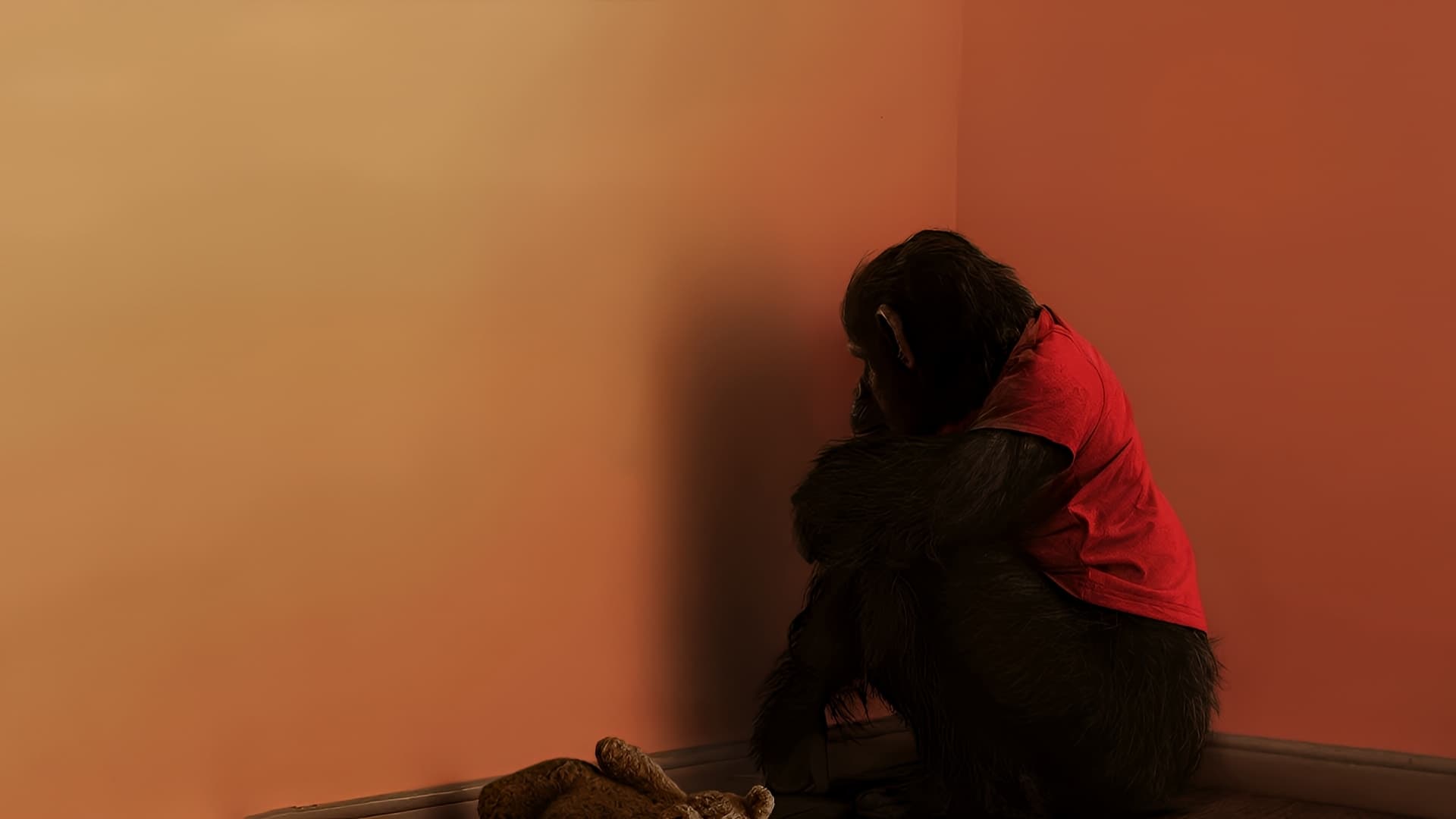
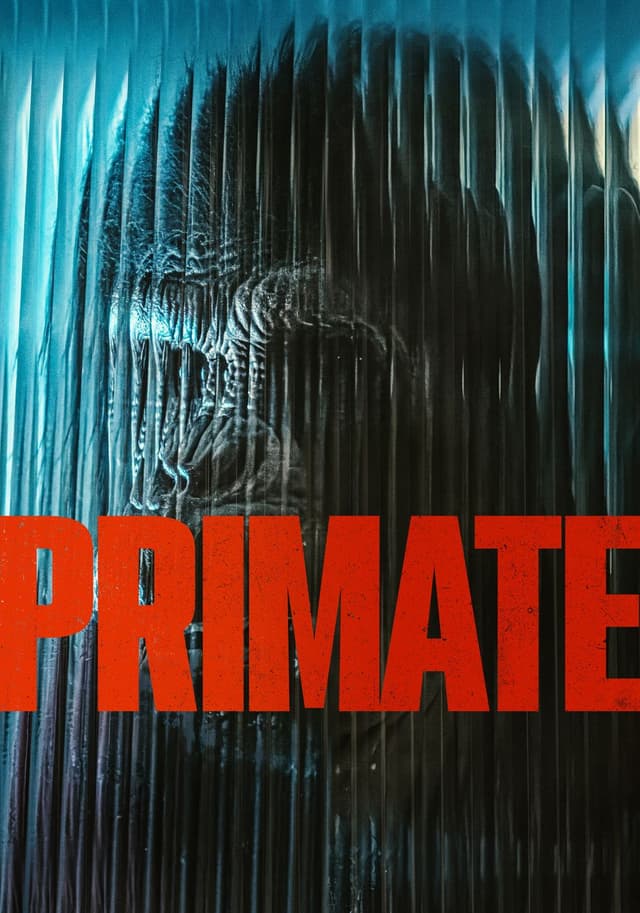
Primate (2026) was produced on a budget of approximately $21 to $24 million, a mid-tier investment for a creature horror film from Paramount Pictures and 18Hz Productions. Directed by Johannes Roberts, whose 47 Meters Down franchise demonstrated his ability to extract maximum tension from contained aquatic settings, Primate relocates his signature approach to London sound stages, following a Deaf father and his hearing daughter as they encounter a terrifying primate threat with apparent supernatural properties.
The film had its world premiere at Fantastic Fest on September 18, 2025, and opened theatrically on January 9, 2026, through Paramount Pictures. It grossed $41.6 million worldwide before moving to VOD on February 10, 2026, and physical media on April 21. The casting of Troy Kotsur, the Academy Award-winning Deaf actor from CODA (2021), as the father was both a creative and commercial differentiator.
Key Budget Allocation Categories
- Troy Kotsur and Johnny Sequoyah: Kotsur, the first Deaf man to win an acting Oscar, brought exceptional credibility to the father role of Adam Pinborough. His casting is both a meaningful creative choice for Deaf representation in mainstream horror and a significant marketing asset. Johnny Sequoyah leads the film as his hearing daughter Lucy. The above-the-line package, led by two performers at very different career stages, was structured to give Kotsur appropriate billing while keeping total cast costs within a mid-budget framework.
- London Sound Stage Production: All principal photography took place on sound stages in London from September 16 through November 4, 2024, a compact seven-week shoot. UK production qualifies for the British Film Tax Relief, returning up to 25% on qualifying UK expenditure. The controlled stage environment allowed Roberts and cinematographer Stephen Murphy to pre-rig complex creature encounter sequences with precise lighting control.
- Creature Design and Practical Effects: The primate threat at the center of the film required practical creature design work, a consistent priority for Roberts who favored tangible threats over fully digital monsters in his 47 Meters Down films. The creature budget for a $21 to $24 million film is constrained, but the stage environment allowed for tight control of what the creature needed to accomplish per sequence.
- ASL-Integrated Production: Working with a Deaf lead required ASL consultants, ASL coaches for hearing cast members, and on-set interpreters throughout production. The accessibility investment was modest in absolute cost but meaningful to the production's creative authenticity. Sequences designed around Kotsur's character's Deafness required additional choreography and timing coordination compared to a conventional horror production.
How Does Primate's Budget Compare to Similar Films?
Primate occupies the mid-tier creature horror space, comparable to Roberts's own prior films and other Paramount horror investments at similar budget levels. Its result of $41.6 million worldwide against a $21 to $24 million investment is a positive outcome for the studio.
- 47 Meters Down (2017): Budget $5.3M | Worldwide $44.3M. Roberts's breakthrough creature horror film at a tiny fraction of Primate's budget, with a comparable worldwide result. The comparison illustrates how the studio system inflates costs as a director moves up.
- A Quiet Place (2018): Budget $17M | Worldwide $340M. The gold standard for sensory-focused family-horror. Primate's Deaf protagonist DNA connects it thematically to A Quiet Place, though its commercial result is significantly more modest.
- M3GAN (2023): Budget $12M | Worldwide $181M. A Paramount horror film at a lower budget with a far stronger result, demonstrating the range of outcomes possible for the studio at this genre tier.
Primate Box Office Performance
Primate opened on January 9, 2026, through Paramount Pictures following its Fantastic Fest premiere in September 2025. The January release window, historically hospitable to horror films that can benefit from low competition, produced a total worldwide gross of $41.6 million. The CinemaScore of B- from opening-weekend audiences indicated that the film's specific tonal combination of Deaf representation, creature horror, and family drama required more precise marketing communication than the opening weekend delivery achieved.
With an estimated $22 million mid-point production budget and approximately $25 million in prints and advertising for a wide Paramount release, the total investment was approximately $47 million. At a 50% average theater revenue split, the studio's share of the $41.6 million gross was roughly $20.8 million. The film did not reach theatrical break-even and required VOD and streaming revenue to complete its financial picture.
Box Office Breakdown
Primate

Primate earned roughly $1.89 for every $1 invested in production at the theatrical level, a break-even or slight-loss result depending on where the production budget settles in the $21 to $24 million range. The film's 78% Rotten Tomatoes score suggests quality that should translate to strong VOD performance. Paramount's partnership with streaming platforms means the home entertainment window was an expected component of the film's financial model from the start.
Primate Production History
Primate was developed by 18Hz Productions and Paramount Pictures following Johannes Roberts's commercial track record with creature-based horror. Roberts and co-writer Ernest Riera, his collaborator on the 47 Meters Down films, developed an original story that centered on a Deaf father and his hearing teenage daughter, a dynamic that allowed the film to explore sound and silence as both narrative tools and horror devices. Producer Walter Hamada, the former head of DC Films at Warner Bros., brought major studio experience to the 18Hz team alongside producers John Hodges and Bradley Pilz.
The casting of Troy Kotsur was a strategic and creative anchor for the project. Kotsur's Oscar win for CODA (2021) had dramatically raised his profile, and his involvement gave Primate critical visibility that a comparable film without a major Deaf talent would not receive. Johnny Sequoyah, known for the supernatural drama Believe, was cast as his daughter Lucy. Jessica Alexander and Victoria Wyant played supporting roles. The production greenlit in July 2024 and began principal photography on September 16, 2024.
The seven-week London sound stage shoot wrapped November 4, 2024, unusually quickly for a creature feature. Cinematographer Stephen Murphy and editor Peter Gvozdas shaped the film's visual rhythm in post. Composer Adrian Johnston provided the score, his work calibrated to support the film's use of silence as a tension device in sequences designed around Kotsur's character's perspective.
The Fantastic Fest premiere on September 18, 2025, was well received by the genre audience, generating positive advance word that supported the January 9, 2026, theatrical release. The B- CinemaScore on opening weekend from general audiences suggested some expectation mismatch with the film's tonal combination, though the 78% Rotten Tomatoes score indicated critical respect for the execution.
Awards and Recognition
Primate's Fantastic Fest premiere generated genre community recognition for the film's combination of Deaf representation and creature horror. Troy Kotsur's casting drew coverage from Deaf advocacy organizations and mainstream press in the lead-up to release. The film was not in contention for major awards, though the Academy's Deaf community allies noted the commercial visibility that Kotsur's casting brought to Deaf performers in leading roles in major studio genre films. The 78% Rotten Tomatoes score placed it among the more critically well-regarded wide-release horror films of early 2026.
Critical Reception
Primate received a Rotten Tomatoes score of 78% from critics and a Metacritic score of 58 out of 100, indicating mixed-to-positive reviews. Audience response measured by CinemaScore was B-, below the critical consensus. Critics consistently praised Troy Kotsur's performance and the film's use of Deafness as both character authenticity and horror mechanism, drawing favorable comparisons to the sensory-focused design of A Quiet Place. Johannes Roberts's controlled direction and cinematographer Stephen Murphy's atmospheric London stage work received positive notices. Critical reservations centered on the film's pacing in the second act and the creature design, which some reviewers found less inventive than the film's premise promised. The combination of 78% Rotten Tomatoes and B- CinemaScore is unusual, suggesting critics and general audiences had meaningfully different experiences with the film.
Frequently Asked Questions
How much did it cost to make Primate (2026)?
The production budget was $21,000,000, covering principal photography, cast and crew salaries, locations, sets, post-production, and music. Marketing and distribution (P&A) costs are estimated at an additional $10,500,000 - $16,800,000, bringing the total studio investment to approximately $31,500,000 - $37,800,000.
How much did Primate (2026) earn at the box office?
Primate grossed $25,635,665 domestic, $15,926,446 international, totaling $41,562,111 worldwide.
Was Primate (2026) profitable?
The film did not break even theatrically, earning $41,562,111 against an estimated $52,500,000 needed. Ancillary revenue may have improved the picture.
What were the biggest costs in producing Primate?
The primary cost drivers were above-the-line talent (Johnny Sequoyah, Jessica Alexander, Troy Kotsur); practical creature effects, atmospheric cinematography, and psychologically engineered sound design.
How does Primate's budget compare to similar horror films?
At $21,000,000, Primate is classified as a low-budget production. The median budget for wide-release horror films in the 2020s ranges from $30 - 80M for mid-budget to $150M+ for tentpoles. Comparable budgets: Blockers (2018, $21,000,000); Death at a Funeral (2010, $21,000,000); Everybody's Fine (2009, $21,000,000).
Did Primate (2026) go over budget?
There are no widely reported accounts of significant budget overruns for this production. However, studios rarely disclose precise budget overrun figures publicly. The reported production budget reflects the final estimated cost.
What was the return on investment (ROI) for Primate?
The theatrical ROI was 97.9%, calculated as ($41,562,111 − $21,000,000) ÷ $21,000,000 × 100. This measures gross revenue against production budget only - it does not account for P&A or exhibitor shares.
What awards did Primate (2026) win?
N/A.
Who directed Primate and who were the key crew members?
Directed by Johannes Roberts, written by Ernest Riera, Johannes Roberts, shot by Stephen Murphy, with music by Adrian Johnston, edited by Peter Gvozdas.
Where was Primate filmed?
Primate was filmed in United States of America.
Filmmakers
Primate

Official Trailer
Build budgets like this one in Saturation
Start from an industry-standard feature film template, import the schedule and rates you already have, and let the cost report keep itself current as you spend. Real-time collaboration, no spreadsheets.