Poseidon Budget
 AdventureActionDramaThriller1h 38m
Updated
Synopsis
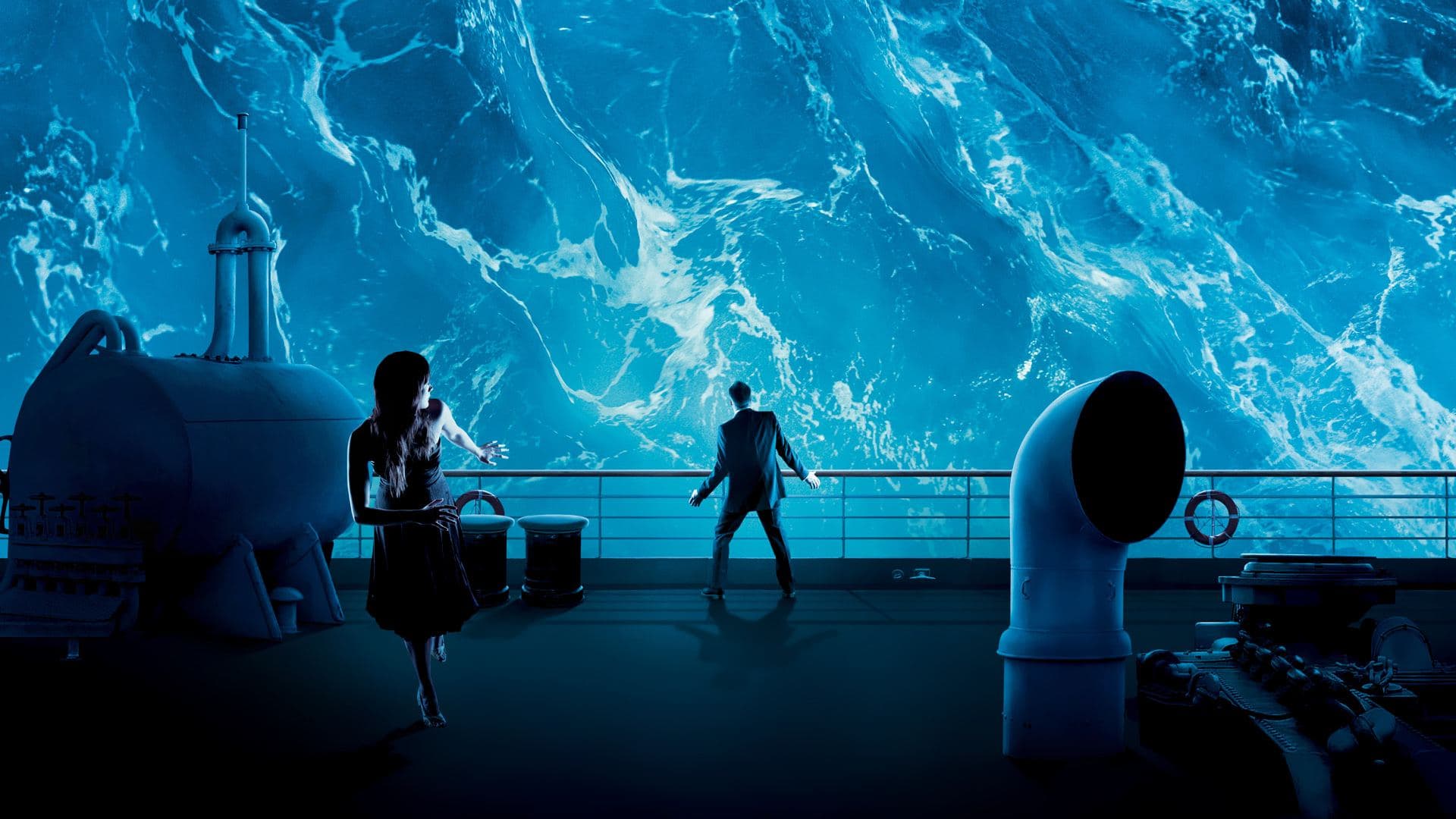
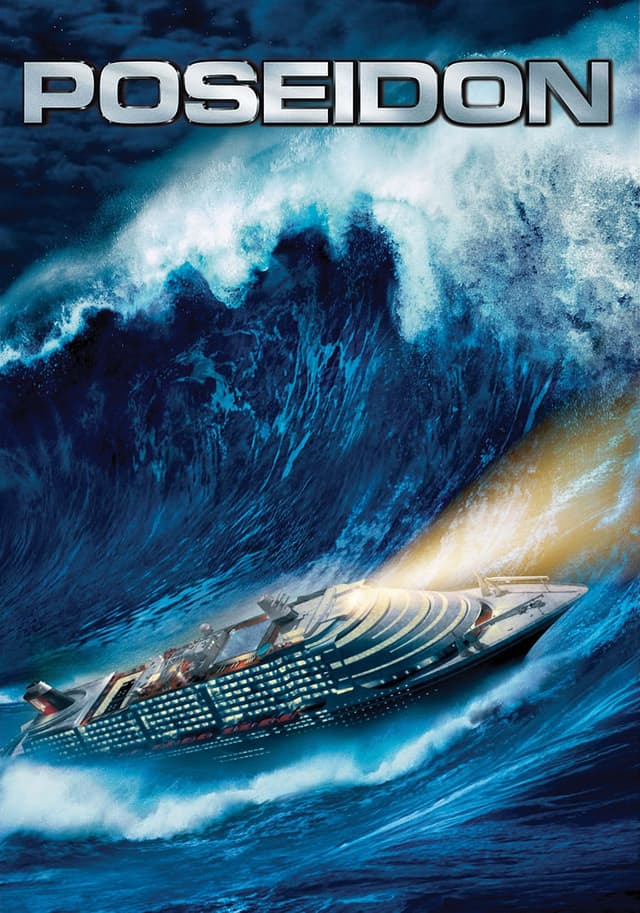
"Poseidon" (2006) is a thrilling disaster film that reimagines the classic 1972 movie "The Poseidon Adventure." The story unfolds on New Year's Eve aboard the luxurious cruise ship, the SS Poseidon, which is celebrating the turn of the year with a grand party. However, the festivities take a catastrophic turn when a massive tidal wave strikes the ship, capsizing it and leaving the passengers in a fight for survival.
As chaos ensues, a diverse group of survivors must navigate the treacherous, upside-down wreckage of the ship. Led by former New York City mayor Robert Ramsey, played by Kurt Russell, the group includes a single mother, a young couple, and a resourceful stowaway. Together, they face numerous obstacles, including flooding, fires, and the looming threat of the ship sinking further into the ocean.
The film captures the harrowing journey of these characters as they confront their fears, forge unexpected alliances, and strive to escape the doomed vessel. With intense action sequences and emotional moments, "Poseidon" explores themes of courage, resilience, and the human spirit in the face of overwhelming odds.
What Is the Budget of Poseidon (2006)?
Poseidon (2006) was produced with a budget of $160,000,000, making it one of the most expensive disaster films of the 2000s. Directed by Wolfgang Petersen and distributed by Warner Bros. Pictures, the film was a reimagining of the 1972 classic The Poseidon Adventure, itself based on Paul Gallico's 1969 novel. The production was a massive undertaking that required the construction of elaborate sets, extensive visual effects work, and a simultaneous IMAX release, all of which contributed to its enormous price tag.
The $160 million figure represented a significant gamble by Warner Bros. Petersen had previously delivered blockbuster returns with The Perfect Storm ($328M worldwide on a $120M budget), but the disaster genre had cooled since the late 1990s heyday of Twister and Titanic. Despite the pedigree of its director and a strong ensemble cast, the studio ultimately lost an estimated $70,000,000 to $80,000,000 on the film after accounting for marketing and distribution costs.
Key Budget Allocation Categories
The $160 million budget was driven by the film's reliance on massive practical sets, water effects, and cutting-edge visual effects:
- Visual Effects and Water Simulation — The film's centerpiece, the capsizing of a cruise liner by a rogue wave, required extensive CGI water simulation and digital environments. The visual effects team created photorealistic ocean sequences and interior flooding that pushed the boundaries of what was possible in 2005. This work earned an Academy Award nomination for Best Visual Effects.
- Practical Set Construction — Production built full-scale interior sections of the overturned ship at Warner Bros. Studios in Burbank, California. These sets had to be structurally engineered to function upside-down, with working water systems capable of flooding corridors and compartments on cue. The physical set work was essential for creating convincing claustrophobic tension as the characters navigate the inverted vessel.
- Above-the-Line Talent — The ensemble cast included Kurt Russell, Josh Lucas, Richard Dreyfuss, Emmy Rossum, Jacinda Barrett, Mike Vogel, and Andre Braugher. While no single star commanded a $20M+ salary, the combined cost of an experienced ensemble, plus director Petersen's fee, represented a substantial above-the-line investment.
- IMAX Conversion and Release — Poseidon was released simultaneously in standard and IMAX formats, requiring additional post-production work to optimize the film for large-format projection. This dual-format release added cost but was intended to position the film as a premium theatrical experience.
- Marketing and Prints — Warner Bros. spent heavily on the worldwide marketing campaign, with estimates of $60,000,000 to $80,000,000 in prints and advertising costs. The studio positioned Poseidon as a major summer tentpole, competing against Mission: Impossible III, X-Men: The Last Stand, and The Da Vinci Code for audience attention.
How Does Poseidon's Budget Compare to Similar Films?
Poseidon's $160 million production budget placed it among the most expensive films of 2006. Compared to other disaster and action spectacles of the era:
- The Poseidon Adventure (1972) — Budget $5,000,000 | Worldwide $125,000,000. The original film that inspired the remake earned 25 times its budget, becoming one of the highest-grossing films of the 1970s. Poseidon cost 32 times more to produce but earned only $181 million worldwide, illustrating the diminishing returns of big-budget remakes.
- The Perfect Storm (2000) — Budget $120,000,000 | Worldwide $328,700,000. Petersen's previous water-based disaster film demonstrated his ability to deliver returns on large-scale productions. The studio likely greenlit Poseidon based on this track record, but the disaster genre had shifted by 2006.
- Titanic (1997) — Budget $200,000,000 | Worldwide $2,264,000,000. James Cameron's maritime disaster epic set the standard for the genre. Titanic proved that audiences would turn out for disaster films with strong emotional cores, but its success was an outlier that no subsequent disaster film has replicated.
- Superman Returns (2006) — Budget $204,000,000 | Worldwide $391,000,000. Another Warner Bros. tentpole from the same year, Superman Returns similarly underperformed relative to its enormous budget. Both films demonstrated that high production costs do not guarantee proportional returns.
- The Day After Tomorrow (2004) — Budget $125,000,000 | Worldwide $544,300,000. Roland Emmerich's disaster film succeeded commercially just two years before Poseidon's release, suggesting the genre still had an audience. However, Day After Tomorrow benefited from a topical climate change angle that gave it cultural relevance beyond spectacle.
Poseidon Box Office Performance
Poseidon opened on May 12, 2006, earning $22,155,410 in its domestic opening weekend from 3,555 theaters. The opening was considered disappointing for a film of its budget and marketing scale, landing below studio expectations of $30 million or more. The film dropped steeply in subsequent weekends, finishing its domestic run with just $60,674,817.
International markets provided some relief, contributing an additional $121,025,183 to bring the worldwide total to $181,700,000. However, this figure fell far short of profitability. Using the standard industry formula where a film needs to earn approximately 2 to 2.5 times its production budget to break even (accounting for marketing costs and exhibitor revenue splits), Poseidon needed roughly $400,000,000 to $480,000,000 in worldwide gross to turn a profit.
- Production Budget: $160,000,000
- Estimated Marketing/P&A: $60,000,000 to $80,000,000
- Domestic Opening Weekend: $22,155,410 from 3,555 theaters
- Domestic Total: $60,674,817
- International Total: $121,025,183
- Worldwide Total: $181,700,000
- Estimated Studio Loss: $70,000,000 to $80,000,000
- ROI: -49% to -54% ((Worldwide Gross - Total Cost) / Total Cost x 100)
The financial failure of Poseidon was attributed to several factors: audience fatigue with disaster films, competition from other major releases in a crowded summer 2006 slate, and reviews that praised the visual effects but criticized the thin characters and screenplay. The film's 98-minute runtime, unusually short for a $160 million spectacle, suggested that the studio may have cut the film aggressively to improve pacing, potentially at the expense of the character development needed to sustain audience engagement.
Poseidon Production History
Development of Poseidon began in the early 2000s when Warner Bros. acquired the rights to remake The Poseidon Adventure (1972). Wolfgang Petersen, fresh off the success of Troy (2004) and The Perfect Storm (2000), was attached to direct, bringing his experience with large-scale maritime productions. Mark Protosevich wrote the original screenplay, with an uncredited rewrite by Akiva Goldsman, who streamlined the story and reduced the ensemble to focus on a smaller group of survivors.
Principal photography began in July 2005 at Warner Bros. Studios in Burbank, California. The production built massive interior sets representing the overturned luxury liner, engineered to flood on command with thousands of gallons of water. The cast performed many of their own stunts in these water-filled sets, with Kurt Russell, Josh Lucas, and the other leads spending extended periods submerged. John Seale, the Oscar-winning cinematographer of The English Patient, handled the challenging underwater and low-light photography.
The film underwent significant post-production to complete its visual effects, particularly the opening rogue wave sequence that capsizes the ship. Industrial Light & Magic and other VFX houses created the digital ocean, the exterior ship, and numerous environment extensions. The simultaneous IMAX release required additional formatting work to optimize the film for large-format projection.
Warner Bros. released Poseidon on May 12, 2006, positioning it as the studio's early summer tentpole. The release date placed it one week after Mission: Impossible III and two weeks before The Da Vinci Code, creating a competitive corridor that left little room for underperforming films to recover through word of mouth. Klaus Badelt composed the score, continuing his collaboration with productions in the Zimmer/Remote Control orbit.
Awards and Recognition
Poseidon received an Academy Award nomination for Best Visual Effects at the 79th Academy Awards, recognizing the technical achievement of its capsizing sequence and water simulation work. The film lost to Pirates of the Caribbean: Dead Man's Chest, which featured similarly ambitious digital water effects. The nomination validated the visual effects team's work even as the film struggled commercially.
On the opposite end of the spectrum, Poseidon received a Razzie nomination for Worst Remake or Rip-off at the 27th Golden Raspberry Awards. The nomination reflected the critical consensus that the remake failed to justify its existence relative to the 1972 original, which had earned two Academy Awards (Best Original Song and a Special Achievement Award for visual effects). The dual recognition, an Oscar nomination alongside a Razzie nomination, captured the film's split identity: technically impressive but dramatically hollow.
Critical Reception
Poseidon holds a 33% approval rating on Rotten Tomatoes based on 204 reviews, with a critics' consensus that the film delivers impressive visual effects but lacks the character depth needed to make audiences care about the survivors' fates. On Metacritic, the film scored 50 out of 100, indicating mixed reviews that leaned negative.
Audiences were somewhat kinder, giving the film a CinemaScore of B, suggesting that those who did attend found the experience serviceable if not exceptional. The gap between the 33% critical approval and the B audience score reflects a film that works as a competent survival thriller when evaluated purely on its set pieces, but fails the deeper scrutiny that critics apply to pacing, character, and narrative structure.
Many critics noted the irony that Petersen's version, despite costing 32 times more than the 1972 original, told a less engaging story with less memorable characters. Richard Dreyfuss's presence created an implicit connection to the original (Gene Hackman had led the 1972 cast), but the screenplay gave him and the rest of the ensemble little to work with beyond the mechanics of survival. The 98-minute runtime, while keeping the pace relentless, left no room for the character moments that made the original resonate.
Frequently Asked Questions
How much did it cost to make Poseidon (2006)?
Poseidon had a production budget of $160,000,000, making it one of the most expensive disaster films of the 2000s. Director Wolfgang Petersen and Warner Bros. invested heavily in practical sets, visual effects, and a simultaneous IMAX release to bring the capsizing luxury liner to life.
How much did Poseidon (2006) earn at the box office?
Poseidon earned $60,674,817 domestically and $181,700,000 worldwide. The film opened to $22,155,410 from 3,555 theaters on its opening weekend of May 12, 2006, well below studio expectations.
Did Poseidon (2006) lose money?
Yes. Warner Bros. reportedly lost $70,000,000 to $80,000,000 on Poseidon. With a $160 million production budget and an estimated $60 to $80 million in marketing costs, the film needed roughly $400 to $480 million worldwide to break even but earned only $181.7 million.
Who directed Poseidon (2006)?
Poseidon was directed by Wolfgang Petersen, the German filmmaker known for Das Boot (1981), In the Line of Fire (1993), and The Perfect Storm (2000). The screenplay was written by Mark Protosevich with an uncredited rewrite by Akiva Goldsman.
Is Poseidon (2006) a remake?
Yes. Poseidon is a reimagining of The Poseidon Adventure (1972), which was based on Paul Gallico's 1969 novel "The Poseidon Adventure." The 1972 original, starring Gene Hackman, earned $125 million worldwide on a $5 million budget and won two Academy Awards.
Who stars in Poseidon (2006)?
Poseidon features an ensemble cast including Kurt Russell, Josh Lucas, Richard Dreyfuss, Emmy Rossum, Jacinda Barrett, Mike Vogel, Mia Maestro, Jimmy Bennett, and Andre Braugher. The cast performed many of their own stunts in water-filled sets.
Was Poseidon (2006) nominated for any Oscars?
Yes. Poseidon received an Academy Award nomination for Best Visual Effects at the 79th Academy Awards but lost to Pirates of the Caribbean: Dead Man's Chest. The film was also nominated for a Razzie for Worst Remake or Rip-off.
What are the Rotten Tomatoes and Metacritic scores for Poseidon (2006)?
Poseidon holds a 33% approval rating on Rotten Tomatoes based on 204 reviews and a 50 out of 100 on Metacritic. Audiences gave the film a CinemaScore of B. Critics praised the visual effects but criticized the thin characters and screenplay.
Where was Poseidon (2006) filmed?
Poseidon was filmed at Warner Bros. Studios in Burbank, California. The production built full-scale interior sets of the overturned cruise ship, engineered to flood with thousands of gallons of water on command. Principal photography began in July 2005.
How does Poseidon compare to the original Poseidon Adventure?
The 1972 original cost $5 million and earned $125 million worldwide, while the 2006 remake cost $160 million and earned $181.7 million. Critics noted that despite costing 32 times more, the remake told a less engaging story. The original won two Oscars; the remake received one nomination and lost.
Filmmakers
Poseidon

Official Trailer
Build budgets like this one in Saturation
Start from an industry-standard feature film template, import the schedule and rates you already have, and let the cost report keep itself current as you spend. Real-time collaboration, no spreadsheets.