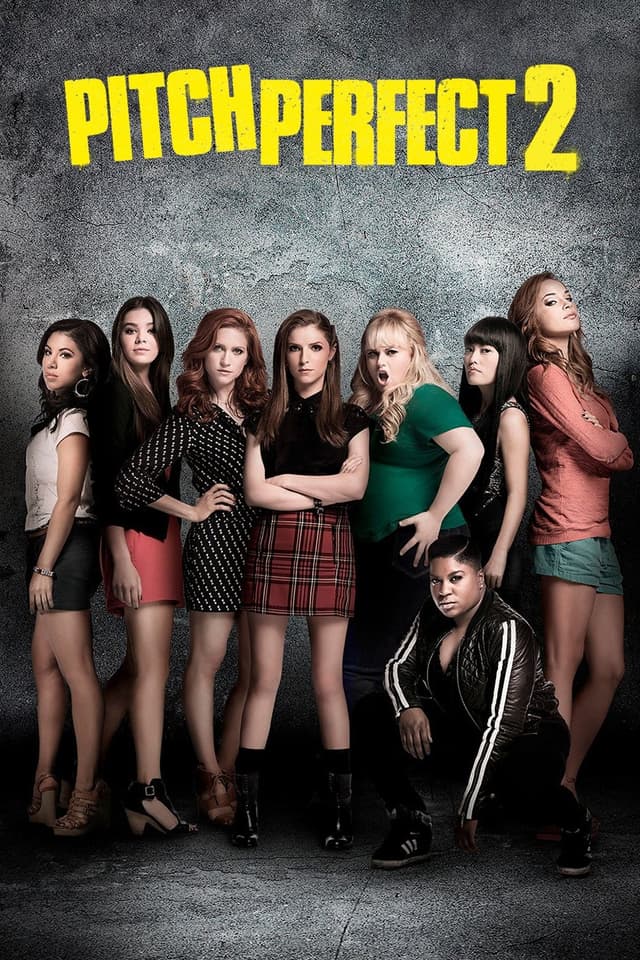
Pitch Perfect 2 Budget
 ComedyMusic1h 55m
Updated
Synopsis
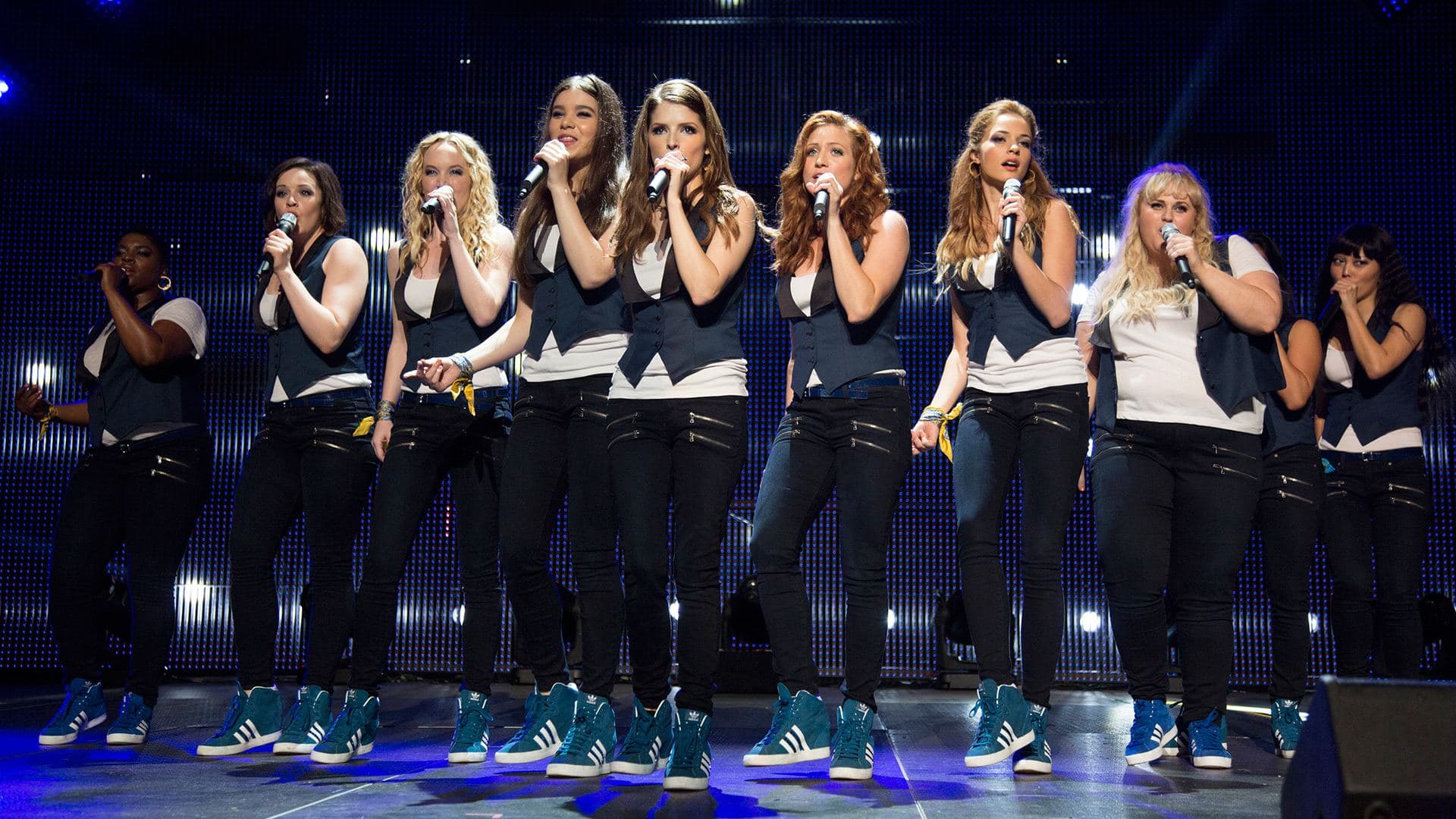
After a humiliating wardrobe malfunction during a command performance for President Obama, the Barden Bellas are stripped of their national championship and barred from defending their title. To reclaim their standing, the Bellas must do what no American team has ever done: win the World A Cappella Championships in Copenhagen against the formidable German juggernaut Das Sound Machine. Elizabeth Banks makes her feature directorial debut as the Bellas navigate graduation, identity, and one last riff-off together.
What Is the Budget of Pitch Perfect 2 (2015)?
Pitch Perfect 2 (2015), directed by Elizabeth Banks in her feature directorial debut and distributed by Universal Pictures, was produced on a reported budget of $29,000,000. The sequel arrived three years after the surprise 2012 hit and represented one of the studio's most efficiently scaled franchise plays of the mid-2010s, doubling down on the a cappella ensemble formula without bloating production costs around expensive locations, marquee creative hires, or visual effects. Gold Circle Films and Brownstone Productions co-financed the production with Universal, with Banks producing alongside her husband Max Handelman and Gold Circle's Paul Brooks.
That investment proved to be one of the most leveraged spends in Universal's 2015 slate. With a final worldwide gross of $287,144,079 against the modest production outlay, Pitch Perfect 2 returned nearly ten times its negative cost in theatrical revenue alone, before factoring in soundtrack royalties, home entertainment, and the franchise value that justified a third installment greenlit while the second was still in theaters.
Key Budget Allocation Categories
Pitch Perfect 2's reported $29,000,000 budget was distributed across several core production areas:
- Above-the-Line Talent: Anna Kendrick returned as Beca Mitchell with a significant pay bump from the first film, while Rebel Wilson, whose Fat Amy had emerged as the franchise's breakout character, also commanded a larger fee. Elizabeth Banks took a directing salary in addition to her producing and on-screen Gail role, and newcomer Hailee Steinfeld was cast as freshman Bella Emily Junk on the strength of her Oscar-nominated True Grit turn. Returning ensemble Brittany Snow, Anna Camp, Skylar Astin, Adam DeVine, and John Michael Higgins fit inside disciplined sequel quotes.
- Music Licensing and Original Compositions: An a cappella film lives or dies on song clearances. The film featured medleys spanning Pat Benatar, Beyoncé, Carrie Underwood, Tears for Fears, Iggy Azalea, and dozens of others, plus the original song "Flashlight" written by Sia, Sam Smith, and Jason Moore for the Emily Junk character. Master recording rights and publishing fees consumed a substantial share of the production budget, with the Universal Music Publishing infrastructure providing internal pricing on a portion of the catalog.
- Choreography and Vocal Production: Choreographer Aakomon "AJ" Jones returned to design the riff-off, the Worlds finale, and the Green Bay Packers locker-room number. Vocal producer Deke Sharon handled all on-screen a cappella arrangements, working with the cast for weeks of pre-production rehearsal in Los Angeles before the company moved to Louisiana. The combined rehearsal block was one of the largest soft costs outside cast salaries.
- Louisiana Production Base: Principal photography ran in and around Baton Rouge with Louisiana State University doubling as fictional Barden University, anchored by Louisiana's 30% film tax credit (plus the 5% payroll uplift on local hires). The incentive package effectively reduced the net cash spend on below-the-line crew, stage rental at Celtic Media Centre, and locations.
- Production Design and Costumes: Production designer Jefferson Sage built the Worlds competition arena set, the Bellas' Barden house interiors, the Green Bay Packers locker room sequence, and the riff-off underground venue. Costume designer Salvador Pérez supplied dozens of performance ensembles across the Bellas, Das Sound Machine, the Tone Hangers, the Treblemakers, and the Worlds finalist groups, with multiple identical sets for stunt and choreography blocking.
- Visual Effects and Music Editing: Although the film carried no creature or environment effects, the production funded extensive split-screen and concert lighting cleanup work, plus an unusually elaborate music editorial process to sync live vocal performance with playback-augmented final mixes. Editor Craig Alpert worked with music editor Mike Higham to lock the medley sequences against Mark Mothersbaugh's underscore.
How Does Pitch Perfect 2's Budget Compare to Similar Films?
At $29,000,000, Pitch Perfect 2 sits at the lower end of the studio-musical comedy bracket while massively outperforming most of its peers. The comparison set illustrates how its ROI broke the genre's normal ceiling:
- Pitch Perfect (2012): Budget $17,000,000 | Worldwide $115,398,019. The original cost 42% less and earned 60% less worldwide, but the sequel's incremental $12,000,000 spend generated an additional $171,000,000 in box office, one of the highest sequel-to-original gross multipliers in recent comedy history.
- Pitch Perfect 3 (2017): Budget $45,000,000 | Worldwide $185,000,000. The third installment cost 55% more and earned 36% less worldwide, capping the franchise on a clear law-of-diminishing-returns curve and validating Universal's discipline on the second film.
- School of Rock (2003): Budget $35,000,000 | Worldwide $131,282,949. Richard Linklater's music-and-misfits comedy was the genre benchmark a decade earlier, costing more than Pitch Perfect 2 while earning less than half its worldwide haul.
- La La Land (2016): Budget $30,000,000 | Worldwide $447,016,758. Damien Chazelle's musical drama spent roughly the same amount and out-grossed Pitch Perfect 2 by 56%, although on the back of an awards campaign rather than a pre-summer comedy release.
- Bridesmaids (2011): Budget $32,500,000 | Worldwide $306,400,000. Universal's prior female-led comedy phenomenon offers the closest internal studio comp, with Pitch Perfect 2 spending 11% less and earning 6% less, while building a property that supported two more theatrical releases.
- Trainwreck (2015): Budget $35,000,000 | Worldwide $140,800,000. Released by Universal two months after Pitch Perfect 2, the Amy Schumer comedy spent 21% more and earned 51% less worldwide, illustrating how dependable the Pitch Perfect ensemble had become inside the studio's 2015 slate.
Pitch Perfect 2 Box Office Performance
Pitch Perfect 2 opened on May 15, 2015, against the second weekend of Mad Max: Fury Road and delivered one of the most disruptive results in modern comedy distribution. The film grossed $69,201,395 over its opening three days, the largest opening weekend ever recorded for a movie musical at the time, beating Mad Max for the top spot and quadrupling the original Pitch Perfect's entire domestic opening. Pre-tracking had projected the sequel in the $40,000,000 to $45,000,000 range, and the actual result reset Universal's expectations for the franchise in real time.
Against a reported production budget of $29,000,000, the film needed approximately $80,000,000 in worldwide gross to reach profitability when accounting for marketing and distribution costs. Here is the financial breakdown:
Box Office Breakdown
Pitch Perfect 2

Pitch Perfect 2 returned approximately $9.90 in theatrical revenue for every $1 invested in production, one of the best comedy ROI figures of the 2010s. The domestic share of the gross was $184,296,230 against an international share of $102,847,849, a 64/36 split that confirmed the property's primarily North American footprint while showing meaningful penetration in the United Kingdom, Australia, and Germany on the back of the Das Sound Machine antagonist storyline.
The performance also drove the soundtrack, released on Republic Records, to platinum status in the United States, with "Flashlight" reaching the Hot 100 top 40 and earning a Critics' Choice nomination for Best Song. Universal greenlit Pitch Perfect 3 within weeks of the opening, and the franchise extended into a Peacock spin-off series, Pitch Perfect: Bumper in Berlin, in 2022.
Pitch Perfect 2 Production History
Universal began developing a sequel almost immediately after Pitch Perfect opened to $14,800,000 in October 2012 and held in the marketplace through Christmas. Kay Cannon, the original's screenwriter and a Saturday Night Live and 30 Rock veteran, returned to script the follow-up, building the plot around the Barden Bellas representing the United States at the World A Cappella Championships in Copenhagen. Producer Paul Brooks and Brownstone Productions partners Elizabeth Banks and Max Handelman, who had championed the first film when it was a marginal Gold Circle bet, returned to produce.
Banks transitioned from supporting cast member to director in October 2013 after Jason Moore, who had directed the first film, departed to commit to The Guilt Trip and other projects. Universal's decision to elevate Banks to her feature directing debut was both a creative reward for the years she had spent shepherding the property and a budget-conscious move: a first-time director and a returning ensemble locked the above-the-line spend at a level that would have been impossible with an outside hire. Banks set out to expand the world while protecting the riff-off and Bellas-house chemistry that had defined the original.
Principal photography began on May 21, 2014, in Baton Rouge, Louisiana, with Louisiana State University standing in for the fictional Barden University campus. The state's 30% transferable film tax credit plus 5% payroll uplift was a primary reason the production based the entire shoot in Louisiana rather than splitting between Georgia and a coastal city. Stage work was anchored at Celtic Media Centre in Baton Rouge, and the Worlds finale arena sequence was filmed at the Cajundome in Lafayette. A second-unit insert shoot captured Copenhagen exteriors and the European tour visual language.
The Green Bay Packers locker-room cameo, featuring Clay Matthews, Aaron Rodgers, Donald Driver, David Bakhtiari, and three other team members, was filmed during the Packers' offseason in Wisconsin in a single day with Banks directing the players against playback. President Obama also recorded a brief cameo in late summer 2014, which the production cut into the Lincoln Center Kennedy Honors opening sequence. The film wrapped principal photography in late July 2014 and entered post-production in Los Angeles, where editor Craig Alpert and composer Mark Mothersbaugh finalized the medley locks against Deke Sharon's vocal arrangements through the fall and winter.
Awards and Recognition
Pitch Perfect 2 won the 2015 Teen Choice Award for Choice Movie: Comedy and Choice Movie Actress: Comedy for Anna Kendrick. At the 2016 MTV Movie & TV Awards, the film won Best Kiss (Kendrick and Skylar Astin) and was nominated for Best Movie and Best Comedic Performance for Rebel Wilson. The People's Choice Awards named it Favorite Comedic Movie of 2015.
On the music side, "Flashlight," performed by Jessie J and written by Sia, Sam Smith, and Jason Moore, received nominations at the Critics' Choice Movie Awards (Best Song), the Hollywood Music in Media Awards, and the Guild of Music Supervisors Awards. The soundtrack album reached number three on the Billboard 200 and was certified platinum by the RIAA. The film did not factor into the major Academy or Golden Globe conversations, which was consistent with the studio comedy ceiling of the era, but it cleared a comprehensive sweep of the audience-voted ceremonies.
Critical Reception
Pitch Perfect 2 received mixed-to-positive reviews. The film holds a 66% approval rating on Rotten Tomatoes based on 235 critic reviews, with a critical consensus that said it "doesn't hit all the notes of its predecessor, but should still prove pleasant enough for the franchise's fans." On Metacritic, the film scored 63 out of 100, indicating generally favorable reviews. Audiences surveyed by CinemaScore gave the film an A-, identical to the original and a clear signal that the core franchise audience felt the sequel delivered on its core promise.
Critics praised the musical numbers, particularly the second-act riff-off and the Worlds finale "Flashlight" performance, along with Rebel Wilson's extended comedic showcase and the introduction of German rivals Das Sound Machine led by Birgitte Hjort Sørensen and Flula Borg. Variety's Justin Chang wrote that the film "captures the high-energy, harmoniously inspired spirit of the original while staking out plenty of new comic territory of its own," and The Hollywood Reporter's Sheri Linden called it "a sequel that mostly hits its marks."
Less favorable reviews flagged a baggier narrative middle, a Bumper and Fat Amy romantic subplot that critics found uneven, and culturally insensitive jokes around the Guatemalan Bella character Flo, played by Chrissie Fit. The New York Times' Stephen Holden noted that the film "lacks the cohesion of the original but compensates with sheer enthusiasm," while The A.V. Club's A.A. Dowd argued the screenplay leaned too heavily on the formula it had established. Even so, the consensus held that the film delivered the singing, the chemistry, and the comic spectacle audiences had come for, which the opening weekend numbers and the A- CinemaScore decisively confirmed.
Frequently Asked Questions
How much did it cost to make Pitch Perfect 2 (2015)?
The reported production budget was $29,000,000. Universal Pictures co-financed the production with Gold Circle Films and Elizabeth Banks and Max Handelman's Brownstone Productions. The budget was kept disciplined by basing the entire shoot in Louisiana to capture the state's 30% transferable film tax credit and a 5% payroll uplift on local hires.
How much did Pitch Perfect 2 earn at the box office?
The film grossed $184,296,230 domestically and $102,847,849 internationally, for a worldwide total of $287,144,079. It opened to $69,201,395 in the United States, the largest opening weekend ever recorded for a movie musical at the time of release.
Was Pitch Perfect 2 a financial success?
Yes, decisively. Against a $29,000,000 production budget and an estimated $35,000,000 to $45,000,000 in marketing spend, the film returned approximately $9.90 in worldwide gross for every $1 invested in production. The performance prompted Universal to greenlight Pitch Perfect 3 within weeks of the opening.
Who directed Pitch Perfect 2?
Elizabeth Banks directed the film as her feature directorial debut, working from a screenplay by returning original writer Kay Cannon. Banks had played Gail Abernathy-McKadden in the first film and produced both installments through her Brownstone Productions banner with her husband Max Handelman.
Where was Pitch Perfect 2 filmed?
Principal photography began on May 21, 2014 in Baton Rouge, Louisiana, with Louisiana State University standing in for the fictional Barden University campus. Stage work was anchored at Celtic Media Centre in Baton Rouge, and the Worlds finale arena sequence was filmed at the Cajundome in Lafayette. A second-unit shoot captured Copenhagen exteriors. The Green Bay Packers locker-room cameo was filmed in Wisconsin during the team's offseason.
How does Pitch Perfect 2 compare to Pitch Perfect (2012) and Pitch Perfect 3 (2017)?
Pitch Perfect (2012) cost $17,000,000 and earned $115,398,019 worldwide. Pitch Perfect 2 spent $12,000,000 more and out-grossed it by $171,000,000 worldwide, the largest jump in the trilogy. Pitch Perfect 3 (2017) cost $45,000,000 and earned $185,000,000 worldwide, a clear diminishing-returns result that capped the theatrical franchise.
How much did Pitch Perfect 2 make on its opening weekend?
Pitch Perfect 2 opened to $69,201,395 over the May 15 to 17, 2015 weekend, finishing first at the domestic box office ahead of the second weekend of Mad Max: Fury Road. It was the largest opening ever recorded for a movie musical at the time and roughly quadrupled the entire domestic opening of the 2012 original.
Why is the Louisiana tax credit important to Pitch Perfect 2?
Louisiana's 30% transferable film tax credit, plus a 5% payroll uplift on local hires, was the primary reason Universal based the entire production in Baton Rouge rather than splitting between Georgia and a coastal city. The incentive package effectively reduced the net cash spend on below-the-line crew, stage rental at Celtic Media Centre, and locations, and was a meaningful contributor to the film's sub-$30 million negative cost.
What did critics think of Pitch Perfect 2?
The film received mixed-to-positive reviews, with a 66% approval rating on Rotten Tomatoes (based on 235 critics) and a 63 out of 100 score on Metacritic. Audiences gave it an A- CinemaScore, identical to the original. Critics praised the musical numbers and Rebel Wilson's comedic showcase while flagging a baggier narrative middle and culturally insensitive jokes around the Flo character.
Did Pitch Perfect 2 win any awards?
The film won the 2015 Teen Choice Award for Choice Movie: Comedy and Choice Movie Actress: Comedy (Anna Kendrick), the 2016 MTV Movie Award for Best Kiss, and the People's Choice Award for Favorite Comedic Movie of 2015. The original song "Flashlight" was nominated at the Critics' Choice Movie Awards. The soundtrack reached number three on the Billboard 200 and was certified platinum.
Filmmakers
Pitch Perfect 2

Official Trailer
Build budgets like this one in Saturation
Start from an industry-standard feature film template, import the schedule and rates you already have, and let the cost report keep itself current as you spend. Real-time collaboration, no spreadsheets.